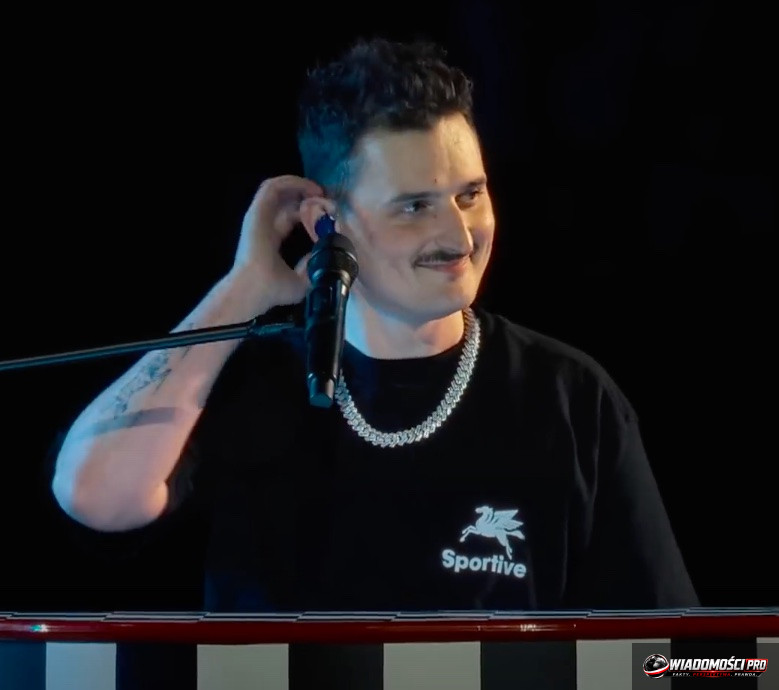
As part of the Obrotowy Tour 2026, Dawid Podsiadło performed at stadiums in Gdańsk, Wrocław, Poznań, Chorzów (two concerts), and Warsaw (two concerts). Seven stadium evenings attracted a total of several hundred thousand fans. This lineup served as the finale of the artist's stadium offensive announced on August 31, 2025, by the eBilet service.
Schedule and evolution of plans
The scheduling of the Obrotowy Tour 2026 was not a static process. The initial assumptions announced at the end of August 2025 evolved under the pressure generated by the market. The organizers did not close the list of cities in a single decision-making act. The first signals regarding the need to expand the schedule appeared as early as December 3, 2025, when it was announced that another stadium concert would be added. The situation gained momentum just two days later, on December 5, 2025, when the premiere of the music video for the song "Mori" was accompanied by the official confirmation of a second date in Chorzów.
This method of calendar management required flexibility from Podsiadło's team, which is often lacking in stadium logistics. Instead of planning everything a year in advance with a rigid list of dates, they opted for reactivity. Each announcement of an additional date built a new wave of interest, which in practice meant that the tour lived in the media for many months before the first guitar note was played. For fans, this meant constant vigilance, and for the concert industry – a lesson in demand management.
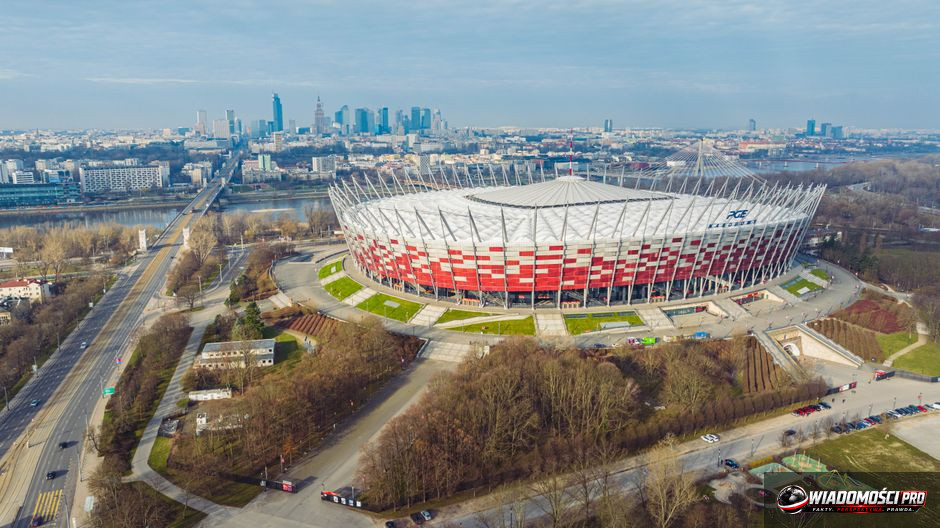
The locations were not chosen by accident. Gdańsk, Wrocław, Poznań, Chorzów, and Warsaw are the only Polish centers capable of handling a production of such high technical volume. Choosing metropolises with extensive transport infrastructure was a necessity given the scale of the undertaking, which involved hundreds of thousands of people. Each city became the center of Polish music for a few days, which also generated local tourist traffic.
The logistics of seven performances required precise planning. Setting up and dismantling the stage design at stadiums is a multi-day process, fraught with weather and technical risks. The requirement to maintain an identical show standard in every city – from Gdańsk to Chorzów – posed challenges for the technical crew that domestic artists rarely face. The attendance success at all these venues proved that the decision to choose these specific cities was a bullseye, even though for residents of smaller towns, traveling to one of the metropolises became the only chance to participate in the event.
Ticket distribution strategy and its consequences
The ticket sales process for the Obrotowy Tour 2026 was a textbook example of building tension by rationing the pool of tickets. Instead of releasing all available tickets to the market on the day sales started, the organizers decided on a "drip-feed" method. This allowed for maintaining a high temperature of discussion on social media throughout the autumn and winter.
The last tickets entered official circulation on March 26, 2026. This move, made a few months before the summer season, closed the sales process but simultaneously caused a huge stir among those who had lost hope of purchasing in the first round. However, such a strategy has its dark sides. The long waiting time for a "last chance" became fuel for the secondary market. Prices of tickets resold through unofficial channels reached levels that were prohibitive for the average fan. Although official prices were set at a level accessible to a wide audience, speculation effectively limited this accessibility.
From the organizer's point of view, this method was pure profit. It minimized the risk of unsold seats and allowed them to react to demand on an ongoing basis. If a given city "exploded" with interest, the team could decide more quickly to add a second concert. However, for the end customer, i.e., the listener, the process resembled a lottery. The uncertainty of whether one would manage to get a ticket accompanied fans for almost the entire year.
It is worth noting that this aggressive sales policy did not kill interest. On the contrary – it convinced the audience that the Obrotowy Tour was a "must-see" event. In crowd psychology, every subsequent pool of tickets that disappeared within minutes of sales starting acted as a confirmation of the musical product's quality. This mechanism is difficult to replicate by artists with less breakthrough power, which is why Podsiadło's tour became an isolated case of such effective monetization of stadium reach in 2026.
Production and technical standards
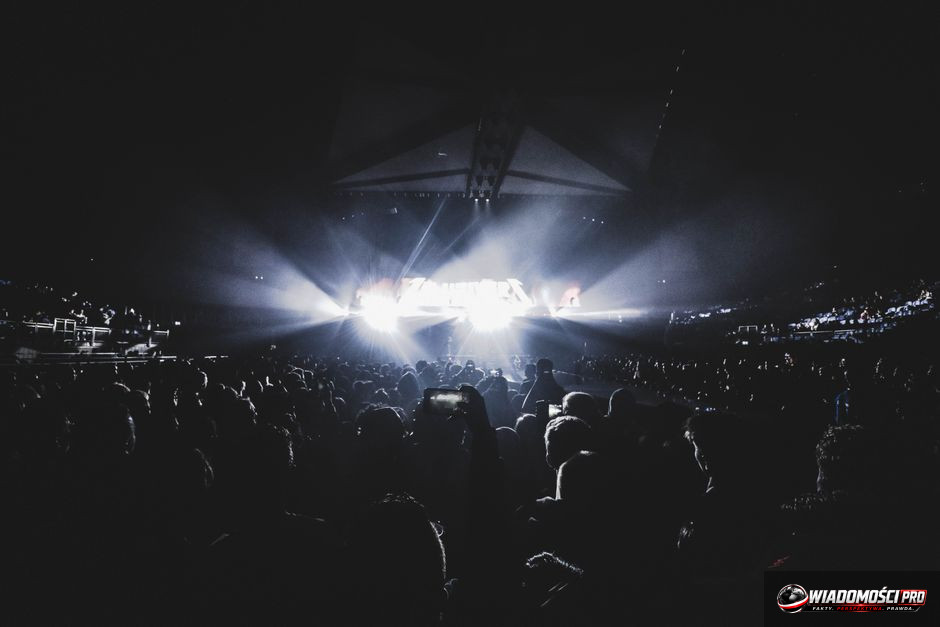
The Obrotowy Tour 2026 was not just a series of concerts. It was a showcase of technical capabilities that, on the Polish music market, had previously been reserved for the world's biggest stars like Coldplay or Beyoncé. The stage design, sound system, and visual setting were designed in such a way that a viewer in the last row would feel just as engaged as someone right under the stage.
The key to success was the integration of technology with music. The clip for "Mori," published in December 2025, was only a foretaste of what was prepared for the stadium audience. The visualizations that formed the background of the performances were not just an ornament, but a coherent part of the narrative of each concert. Reviewers, including the Trojmiasto.pl team describing the performance in Gdańsk on June 21, 2026, unanimously emphasized that the performance and technical level left no room for discussion. This was not "Polish quality," but world-class quality, delivered in a domestic edition.
For the Polish event industry, this tour became a benchmark. Other artists planning their own stadium performances must now reckon with the fact that the bar has been set extremely high. An audience that has once seen a show at such a level will no longer accept half-measures. The Obrotowy Tour forced promoters to invest in more modern stage solutions, which in the long run may raise the standards of all large shows in the country.
However, high technical requirements also generate costs. Podsiadło could afford such a production thanks to the huge scale of sales. Smaller artists trying to copy this model risk financial disaster. This is the paradox of this tour's success – it set a path that few will be able to follow without a huge financial backing and a guarantee of selling out stadiums. Concert production has therefore become not only an artistic matter but, above all, a business challenge requiring iron discipline in budget management.
Impact on the music market and the future of stadiums
The Obrotowy Tour 2026 changed the balance of power on the Polish concert market. Before 2026, there was a belief that the stadium was the domain of foreign performers, and a Polish artist could at best fill an arena. Dawid Podsiadło tore down this wall. He showed that a Polish performer can attract several hundred thousand people as part of one tour without needing the support of Western stars.
For the industry, this is a warning signal and an inspiration at the same time. On one hand, Podsiadło's success exhausts the availability of stadiums in the summer season. Promoters have to fight for free dates, which raises the costs of renting facilities and complicates logistics for other performers. On the other hand, this success proves that the Polish audience is ready to pay for a high-quality product. The music market in Poland in 2026 is not insatiable, but it is very demanding.
However, the dominance of one artist in the stadium segment can lead to a phenomenon of "monoculture." If all the largest budgets and dates go to one performer, the diversity of the concert offer decreases. Industry observers are wondering if this phenomenon is permanent. Will we see equally spectacular tours in 2027, or will there be "material fatigue"? At this moment, the answer is unknown, as the artist's team remains silent regarding plans for the coming years.
Such silence after the end of the tour is extremely eloquent. The lack of announcements about continuing the format suggests that the Obrotowy Tour was intended to be a one-time event, a certain closed stage of a career. If so, Podsiadło disappeared from the stadiums at the moment of his greatest glory, leaving the industry with the question: what next? This approach is a risky but effective marketing move. It builds the legend of a tour that can no longer be repeated, which increases the value of fans' memories and the significance of this event in the history of Polish popular music.
Balance of success: Data and facts
The end of the tour in June 2026 summarized a period in which the Polish stadium scene experienced its renaissance. According to data published on May 4, 2026, by the Kulturalne Media portal, this tour was the most significant musical event of the year. The numbers do not lie – several hundred thousand tickets were sold at a pace that surprised even the most optimistic market analysts.
It is worth looking at the structure of this tour once again to understand its scale:
- Gdańsk (stadium)
- Wrocław (stadium)
- Poznań (stadium)
- Chorzów (two concerts)
- Warszawa (two concerts)
That is a total of seven stadium evenings. Each of them was a logistical operation on a military scale. From efficiently admitting several tens of thousands of people to the technical security of sound and image. In each of these cities, attendance was close to the maximum capacity of the facilities, which confirms that the "Podsiadło" brand has become a guarantee of a full stadium.
For fans, this experience was unique. Many people traveled hundreds of kilometers to take part in one of these seven events. The secondary market, although problematic, showed how huge the demand for tickets was. Even a few days before the concerts in Warsaw or Chorzów, social media groups were bursting at the seams with inquiries about tickets. This attendance frenzy confirmed that a stadium concert tour in Poland has potential that no one dared to dream of a decade ago.
Perspective for the listener: Was it worth the wait?
For an outsider, the success of the Obrotowy Tour 2026 is a matter of statistics and sales charts. For a fan, it is a matter of emotions and experiences that cannot be converted into currency. But was it worth waiting for the last pool of tickets, risking a high price and uncertainty? The answer to this question depends on how much we value participating in an event that redefines our concept of Polish music.
Many viewers who appeared at the concerts unanimously claimed that the quality of the show compensated for the hardships of obtaining tickets. This is an important conclusion for future organizers. If a product is good enough to defend itself with the quality of execution, fans will forgive the inconveniences associated with the sales process. Podsiadło won not only because he is popular, but because he delivered a show that many considered the best they had ever seen in their lives at a Polish stadium.
What does this mean for the Polish fan? First of all, a signal that it is worth supporting domestic creativity. If a Polish artist can organize a world-class tour, then the support of the audience is the only fuel that allows for the continuation of such projects. The Obrotowy Tour showed that the Polish audience is mature, quality-conscious, and ready for large, ambitious undertakings.
Finally, it is worth emphasizing that the silence coming from the artist's camp after the end of the tour is a sign of the times. In an era where artists feel the pressure of constant presence, Podsiadło allows himself a break. This is a luxury he worked for for years, and the 2026 tour was its culmination. Regardless of whether this will be the end of the stadium era or just a short breath before the next move, the Obrotowy Tour will remain in memory as an event that changed the rules of the game on the Polish concert scene.
Questions and answers
In which cities did Dawid Podsiadło perform in 2026?
As part of the Obrotowy Tour 2026, the artist performed at stadiums in Gdańsk, Wrocław, Poznań, Chorzów, and Warsaw.
How many concerts took place as part of the Obrotowy Tour 2026?
A total of 7 stadium concerts were organized, two of which took place in Chorzów and two in Warsaw.
Were all tickets for the concerts sold out?
Yes, the sales process ended in success, and the last pools of tickets reached recipients on March 26, 2026.
What was the role of the "Mori" music video in promoting the tour?
The music video for the song "Mori," published on December 5, 2025, served as an announcement of the second concert in Chorzów and heralded an innovative approach to the tour's stage design.
When was the full stadium schedule announced?
The first details regarding the stadiums in 2026 were announced by the eBilet service on August 31, 2025.
Was a continuation of the tour in 2027 announced?
At this moment, there is no official information about plans regarding the artist's stadium performances in 2027.
How was the quality of the concert in Gdańsk assessed?
The performance in Gdańsk, which took place on June 21, 2026, was described by local media as a world-class show, distinguished by technical quality and performance energy.
What was the total scale of attendance on the tour?
According to reports from June 4, 2026, the estimated number of viewers participating in the entire tour was several hundred thousand people.
Did the tour influence the Polish concert market?
Yes, the Obrotowy Tour became a benchmark for domestic stadium productions, setting new logistical and technical standards for the entire concert sector in Poland.
Sources
- Dawid Podsiadło for hundreds of thousands of fans. Two concerts each in Chorzów and Warsaw - rp.pl
- Dawid Podsiadło Obrotowy Tour 2026 – the biggest concert tour of the year - Kulturalne Media
- Dawid Podsiadło adds another stadium concert in 2026 [DATE, TICKETS] - Open FM
- Dawid Podsiadło released the last tickets for his stadium concerts - cgm.pl
- Dawid Podsiadło at stadiums in 2026. Get to know the dates and cities! - eBilet
- Dawid Podsiadło publishes concert clip "Mori". Announcement of the second stadium concert in Chorzów 2026 - Open FM
- Dawid Podsiadło returns to stadiums. "Obrotowy Tour" already in 2026 - Kultura Onet
- Dawid Podsiadło thrilled the crowds in Gdańsk. He showed how to do a world-class show - Trojmiasto.pl
Article prepared by the Wiadomości PRO editorial team with the support of artificial intelligence. Facts come from the sources provided above.
Komentarze (0)
Ładowanie komentarzy...