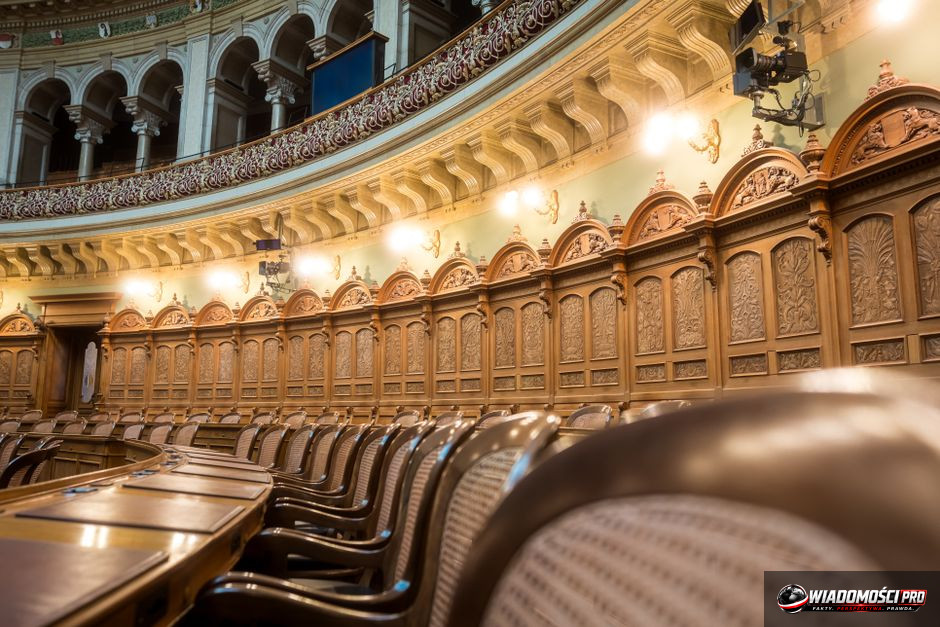
The government has adopted a draft with a deficit of 289 billion PLN, which necessitates increased debt financing while maintaining spending on defense and healthcare. This means stability for social benefits while simultaneously creating pressure for efficiency in public spending. For the citizen's wallet, this translates into the maintenance of key social transfers, while carrying the risk of sustained elevated inflation and higher mortgage servicing costs, which result directly from the necessity of financing such massive state borrowing needs on external markets.
Financial structure of the 2025 budget: The mechanics of debt
The draft budget for 2025 defines the state of public finances through the prism of gigantic liabilities. The deficit of 289 billion PLN is the result of three overlapping factors: debt servicing costs, defense priorities, and the maintenance of existing social programs. The Ministry of Finance, in preparing these calculations, had to account for rising external financing costs. On an annual basis, at the current level of interest rates and treasury bond yields, debt servicing will consume over 80 billion PLN. This is an amount that limits the room for maneuver in the budgeting of other ministries.
The priorities in this plan are clear. The document focuses on two pillars: national security and investments in healthcare. The Council of Ministers, in adopting these assumptions, clearly indicated that despite the high deficit, it does not intend to cut spending in these areas. The question, however, is how long this balance can be maintained without drastic cuts in other sectors. Every billion spent by the state is currently being analyzed in terms of return on investment, because the margin for error in managing such a large budget hole has practically ceased to exist.
For the taxpayer, this means stability in the wallet, but at the same time uncertainty regarding the quality of public services. The administration must face the challenge of maintaining standards of healthcare and security while limiting operating expenses. Financial markets are observing these actions with great attention. Investors who finance Polish debt through the purchase of treasury bonds require specific fiscal consolidation plans from the government. If these assumptions do not withstand the collision with market reality, debt servicing costs may rise even further, which will translate into inflation and the cost of money in the economy.
Why did the deficit reach 289 billion PLN?
A budget deficit of 289 billion PLN did not appear in a vacuum. It is the effect of the collision of government ambitions with the hard reality of public finances. The foundation of this result is defense obligations. The modernization of the army, the purchase of modern equipment, and the expansion of defense potential require billions that cannot be postponed without harming the country's security. At the same time, the ruling team decided to maintain rigid social spending. In the face of an economic slowdown, cuts in this area would be politically risky, and for many families – catastrophic. The state takes on the burden of maintaining the standard of living of citizens, knowing that funds allocated to transfers mean fewer funds for development investments.
To this equation, one must add the rising costs of servicing public debt. Interest on previously incurred liabilities is becoming a burden that consumes an increasing portion of tax revenue. The government has found itself in a trap: it must finance the deficit on external markets, which, under current conditions, costs a fortune. The cost of debt servicing has jumped by over a dozen percent compared to previous years, which forces the Ministry of Finance to adopt a very aggressive debt issuance policy. This is not just an accounting entry; it is a clear message: the time of free spending is over. Now, funds spent by the state will be scrutinized from every angle, because with a 289 billion deficit, there is no room for financial slack.
Parliamentary debate: Political party positions and the budget dispute
The budget process has become an arena for disputes over the shape of the state. In parliament, extreme narratives regarding the condition of the state treasury clashed. The opposition did not mince words, labeling the project a "collapse budget," especially in the area of healthcare. In turn, government representatives, refuting the accusations, consistently pointed to the necessity of financing the army and maintaining social benefits as the foundations of social stability.
The situation is further complicated by friction between the government and the president. As media reports from January 2026 indicate, the president made a decision regarding a key act, which opened the way for unexpected scenarios. Karol Nawrocki is openly threatening the government, which forces Finance Minister Andrzej Domański to grit his teeth and wait in tension for further developments. The government's position is also weakened by the issue of the discharge (absolutorium), which the Sejm discussed in July 2026.
Here are the main points of contention that dominated the parliamentary debate:
- The opposition called the document a "collapse budget," highlighting the risks of underfunding key public services, especially healthcare.
- Government representatives argued that such a high deficit is the price for ensuring the country's security in an unstable geopolitical environment.
- The Finance Minister had to face political pressure, including open threats from figures such as Karol Nawrocki, which heated up the dispute.
- Agreement to such a high deficit forces the state to intensively finance debt, which in practice means that funds spent in excess of revenue must be generated through increased efficiency in managing public funds.
For the citizen, this means a state of suspension. On one hand, the government guarantees the payment of benefits; on the other, it opens the door to cuts in less exposed, though important, ministries. Voices appeared in parliament that such a budget structure limits Poland's development opportunities in the long term. The debate showed that the biggest problem is not the lack of funds, but the way they are allocated in the face of huge debt servicing costs.
Healthcare: Will the money be enough for reforms?
A budget deficit of 289 billion PLN puts healthcare in an unprecedented situation. The government decided to maintain sector funding at a level guaranteeing the stability of benefits, however, the price of this compromise raises serious doubts. The promise to maintain spending does not automatically mean an increase in the efficiency that patients are counting on so much. The regulations concerning healthcare included in the current budget plan evoke extreme emotions among experts. On one hand, we have assurances of social security; on the other, real pressure for cuts in other areas to plug the budget hole.
The president, in his January speeches, did not leave a dry thread on the proposed solutions, directly pointing to the risks of underfunding key medical facilities. His voice is an alarm signal for hospital systems in regions that may hit a wall. The government's rhetoric about stability clashes with hard reality. Even if funds flow to the ministry's accounts, there is a lack of a clear plan on how they are to translate into shortening queues or the availability of specialists.
In the current financial situation of the state, funds spent on health must be scrutinized twice. The government is trying to balance between the necessity of maintaining the defense front and the challenges in healthcare, which in practice means that systemic reforms have been sidelined. If the money is eaten up by the inflation of hospital operating costs, there will simply be no funds left for real changes in the quality of treatment. Patients therefore remain in limbo, hoping that the budget promises will not turn out to be merely an accounting entry without coverage in actual medical care.
Local governments and the NIK: Challenges in the shadow of the central budget
The budget deficit is not just a figure in government tables. It is a signal that the state is entering a phase of deep pressure on public spending. The first victims of this policy are already visible. The government decided to limit funds for the Supreme Audit Office (NIK). This is a clear message to the institution that is supposed to keep an eye on the authorities. Less money for oversight means that in an era of massive state debt, effective supervision of spending becomes a luxury that the budget does not want to afford.
Simultaneously, a quiet battle for financial liquidity is taking place in local governments. Local budgets are under enormous pressure resulting from uncertainty regarding central subsidies. The government provides only ad-hoc relief. An example is the deferral of settlements related to civil defense. Local governments were given until the end of March to close these matters, which is only a cosmetic postponement of the deadline, not a solution to the systemic problem of underfunding.
Key parameters and deadlines for the public finance sector:
- Budget deficit — 289 billion PLN (government assumptions).
- Deadline for settling civil defense subsidies — by the end of March.
- NIK funding — reduction of funds.
The stability of social benefits, maintained at all costs, has its flip side. It means the necessity of looking for savings in oversight bodies and shifting financial risk onto local governments. For the citizen, this means that although social transfers will arrive on time, the quality of public services provided locally will be drastically dependent on the financial condition of a specific municipality or county. Local government officials warn that with such tight central budgets, the burden of financing basic services, such as street lighting, waste collection, or local road maintenance, will fall on them.
Many municipalities are already signaling that they will have to raise local taxes to balance the shortages in subsidies from the state budget. This is a hidden cost of the deficit, which in 2025 will be felt by every property owner or entrepreneur running a business. Limiting funds for the NIK further weakens oversight mechanisms, which, combined with financial pressure on local governments, creates a risky environment for the transparency of public spending.
Work schedule: What awaits us in the coming months?
The Sejm has received the government's budget draft, which marks the beginning of the legislative machinery. This is a process that will determine the state of public finances in the coming months. The deficit of 289 billion PLN written into the document forces the authorities to adopt a very cautious debt policy. At the same time, rigid spending frameworks for defense and healthcare have been maintained, which in practice means that other funds in the budget will be scrutinized from both sides.
The ball is now in the parliamentarians' court. The project has gone to the public finance committee. It is there that the most important battle for the shape of spending will take place. We expect an avalanche of amendments that may modify the assumptions prepared by the finance ministry. The opposition is already announcing a desire for deep correction in the area of public spending efficiency, arguing that with such a gigantic deficit, cuts in government administration are necessary.
There is little time for discussion. The Constitution is merciless – the final deadline for passing the act is the end of the calendar year. If parliament does not make it, the president gains the right to shorten the term of the Sejm. This is a scenario that none of the factions want to implement. The stability of social benefits seems unthreatened, but politicians will have to face pressure to tighten the public spending system. Every committee meeting will be a test of whether defense and health priorities will indeed remain untouched, or whether the inflation of needs will force us to revise plans.
For the citizen, this means a nervous autumn. Promises to maintain the standard of living will clash with the hard reality of borrowing. The government must prove that it can manage debt without cutting fundamental public services. From the editorial perspective, the biggest threat is the lack of a long-term plan to exit such a high level of deficit. Current actions are ad-hoc and focus on current survival, which does not solve the structural problems of the Polish economy.
What this means for you
Below we present the concrete consequences of adopting a budget with such a high deficit for your household:
- More expensive loans: The state, as the largest debtor on the market, competes for capital with the private sector, which raises the cost of money for individuals and companies.
- Risk of higher inflation: Financing the deficit through the issuance of bonds increases the money supply, which may erode the real value of your savings and raise prices in stores.
- Higher local fees: Local governments, struggling with underfunding, will be forced to raise property taxes and fees for waste collection or street lighting.
- Reduction in the quality of public services: Less control over spending, resulting from cuts to the NIK, and tight local government budgets may translate into poorer maintenance of local roads and less availability of certain medical services.
- Currency risk: If the government seeks capital outside of Poland, the exchange rate of the zloty may become more susceptible to fluctuations, which will directly affect the prices of imported products.
- Employment uncertainty in the public sector: Pressure for spending efficiency in administration may lead to wage freezes or staff reductions in offices not directly related to security.
Questions and answers
Does the 2025 budget provide for tax increases?
The current draft does not contain direct tax rate increases, however, the 289 billion PLN deficit suggests the necessity of looking for savings in administration and potential changes in tightening the tax system.
What are the government's main spending priorities?
The government points primarily to armaments and maintaining healthcare spending, despite criticism from the opposition regarding the efficiency of these outlays.
What happens if the Sejm does not pass the budget on time?
In the event of a failure to pass the budget within the constitutional deadline, the government works based on the budget draft, which is an emergency situation that may lead to the shortening of the Sejm's term by the president.
How will the deficit affect my loans?
A high budget deficit forces the issuance of a large amount of treasury bonds, which may maintain pressure for higher interest rates in the economy, translating into higher loan servicing costs for citizens and companies.
Why is the NIK losing funding?
Limiting funds for the NIK is part of a broader policy of cuts in administration, which aims to find savings in the face of a huge deficit, although this raises controversy in the context of oversight of public spending.
Are social benefits at risk?
In the 2025 budget draft, the government maintains all existing social benefits, treating them as a political priority, which means that in the near future, one should not expect their reduction.
Who will feel the effects of this budget the most?
All taxpayers will feel the effects of the budget through inflation risk and potential limitations in the quality of public services provided by local governments, which are struggling with underfunding.
What role does the president play in the budget process?
The president has the right of veto and the possibility of shortening the Sejm's term in the event of a failure to pass the budget, which makes him a key player in political negotiations around the budget act.
What are the main threats to the implementation of this budget?
The main threat is the unpredictability of debt servicing costs and the necessity of maintaining high spending on the army, which, during an economic slowdown, may lead to an even higher deficit than planned.
Is the situation in local governments stable?
Local governments are in a difficult financial situation, forced to carry out tasks with insufficient subsidies, which forces them to look for savings or raise local fees and taxes.
Financial analysis indicates that the state is in a phase where rigid expenditures have dominated the budget structure. This means that in the event of any external crisis, the government no longer has any financial cushion. Everything that has been planned is calculated on the verge of solvency. The citizen must prepare for the fact that even in the absence of official tax increases, the cost of living will rise due to inflation generated by an excessive money supply in the system. This is the price we pay for maintaining security and social peace in difficult times. One should carefully observe subsequent announcements from the Ministry of Finance, as any change in GDP growth forecasts will immediately correct the real possibilities of the budget. In this state of affairs, caution in managing one's own personal finances is advised more than ever in the last decade. The situation requires constant monitoring, as the financial stability of the state in 2025 depends on parameters that remain outside the control of the average consumer. Dependence on foreign markets and the necessity of servicing debt of such a large scale creates risks whose effects may be felt for years, regardless of current political declarations. Every citizen should be aware that the 2025 budget is a document that, in its essence, is an attempt to reconcile fire with water – defense needs with fiscal constraints. Whether this strategy proves effective, we will find out upon the publication of the first quarterly data on budget execution. Until then, one should adopt an attitude of waiting, but also of great vigilance toward the actions of the finance ministry, which in the coming months will decide on the scale of debt security issuance. Every fluctuation in bond yields will have a direct impact on the state of Poles' wallets, which makes this budget not only a political issue, but above all a personal matter for each of us. It should also be remembered that all government forecasts are based on macroeconomic assumptions which, in the current, unstable environment, may undergo drastic verification. For this reason, household spending planning should include pessimistic scenarios, including further, even indirect, pressures on the prices of basic goods. A budget with a deficit of 289 billion PLN is a signal that the times of financial carelessness have passed irrevocably, and Poland faces a period of intense discipline, even if at the level of government declarations we hear about stability. Will it be possible to avoid deeper cuts? This question remains open, and the answer to it depends on many variables, starting from the geopolitical situation and ending with global financial markets. The citizen must be aware that in this arrangement, he himself remains the last link that must absorb the consequences of these decisions.
Sources
- Sejm made a decision regarding the budget. The government received a discharge - Polskie Radio 24
- President made a decision regarding the budget. "This is a collapse budget in healthcare" - rynekzdrowia.pl
- Budget in the president's hands. Unexpected scenario on the table? - Money.pl
- Karol Nawrocki threatens the government regarding the budget. Domański grits his teeth and waits in tension - Wyborcza.biz
- Sejm voted on the budget. What about the discharge for the government? - wiadomosci.dziennik.pl
- Budget blow to PiS, but not only. Less money will also go to the NIK. Now it's time for Karol Nawrocki's move - Business Insider Polska
- 2026 budget. President decided on a key act - Interia Biznes
- Local governments gained time until the end of March. It's about money for civil defense - Portal Samorządowy
Article prepared by the Wiadomości PRO editorial team with the support of artificial intelligence. Facts come from the sources provided above.


Komentarze (0)
Ładowanie komentarzy...