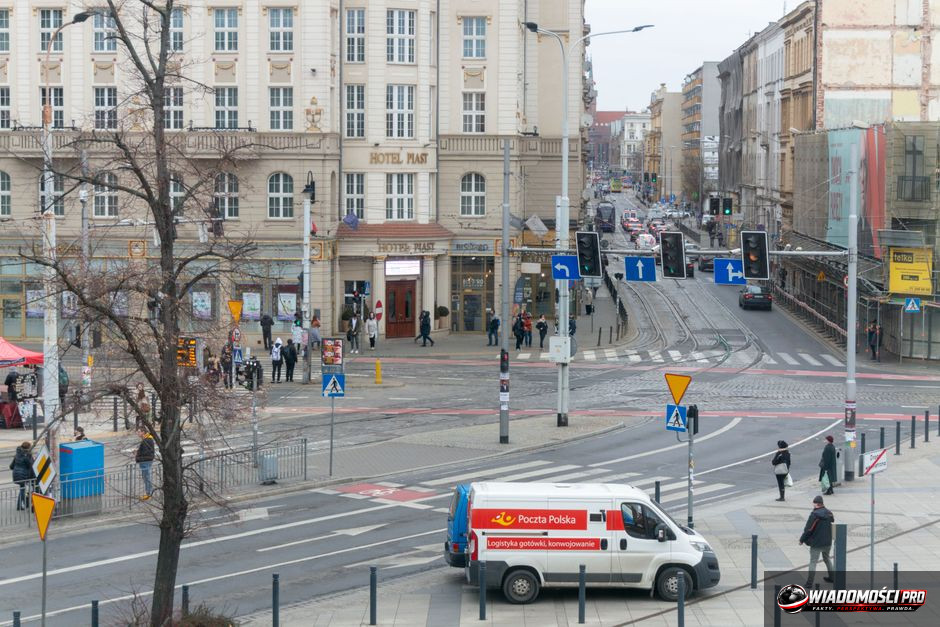
Yes, the government has adopted a draft project providing for the loss of a driver's license for running a red light, and a fine of 4,000 PLN for driving through a railway crossing when prohibited. In mid-September 2026, the Council of Ministers decided to radically tighten traffic regulations, thereby ending a period of relative tolerance toward drivers who ignore traffic signals. The new guidelines are a response to a series of road incidents that forced the legislator to seek more effective tools for disciplining road users.
Draft changes: Loss of driver's license for a red signal
The legislation adopted by the government assumes that driving past a signal showing a red light will result in the automatic loss of driving privileges. This is an administrative sanction, which the drafters intend to use to eliminate reckless behavior at intersections. Previous solutions relied mainly on penalty points and financial penalties, which in many cases did not constitute a sufficient barrier for drivers disregarding the rules.
The mechanism for losing a driver's license is intended to be fast and inevitable. The document will be suspended in an administrative mode, meaning that the body conducting the proceedings will not have to wait for a court verdict to deprive a driver of the right to operate a vehicle. This is a systemic change. The Ministry of Infrastructure argues that running a red light is one of the most dangerous offenses, directly threatening the lives of other road users. Drivers who decide to perform such a maneuver risk not only a fine, but above all, permanent exclusion from road traffic.
The project also refers to specific conditions prevailing around railway-road crossings. This infrastructure is particularly sensitive, and human error on the tracks rarely ends in just a collision. For this reason, the ministry decided to separate penalties for entering the tracks from standard traffic offenses. The introduction of such rigid administrative liability is intended to force a change in habits that have previously often oscillated around the limit of risk. Drivers who counted on leniency in situations where the traffic signal is just changing must change their approach. The law will be interpreted strictly. Every violation of the signal will become the basis for initiating the procedure to revoke driving privileges.
4,000 PLN fine for entering the tracks: New rates
Financial sanctions in the new project have been raised to a level intended to be felt even by wealthy drivers. A fine of 4,000 PLN for entering a railway crossing while a red light is displayed is becoming the new standard. This amount is not accidental. Ministerial analyses indicated that previous penalties of several hundred zlotys were treated by many drivers as a "cost of passage" rather than a real penalty for breaking the law. Raising the rate to 4,000 PLN is intended to eliminate this type of calculation.
In addition to the fine, the driver must face the risk of losing their driver's license. The regulations are constructed in a way that combines a financial penalty with an administrative sanction. Such a two-track system is intended to be as severe as possible. A person who consciously ignores the signal will lose not only cash but also the ability to legally drive a car for a specified period. This solution is intended to directly strike at people who notoriously break the rules, for whom previous penalties were inadequate to the scale of the threat.
It is worth noting the method of enforcing these penalties. The system will not rely solely on the presence of police officers in the field. The government anticipates full automation of surveillance at railway crossings. This means that every instance of running a red light will be recorded by monitoring devices, and the fine will be issued based on the video record. The lack of a patrol at the scene will not protect the driver from consequences. This construction of the regulations shifts the burden of proof to modern technology, which eliminates discussions with officers during a traffic stop.
The 4,000 PLN rate is one of the highest in the history of the Polish fine tariff. The legislator decided that only such drastic amounts are able to influence the imagination of drivers in situations where railway traffic safety is at stake. For many households, such an amount is equivalent to several monthly loan installments or a significant part of monthly income, which makes this fine a real deterrent instrument.
New technology and powers of the Railway Security Guard
The implementation of the regulations requires technical support. The government project assumes the installation of additional monitoring devices at railway crossings, which will work closely with a central system. These devices are tasked not only with recording violations but also with documenting the technical status of the signaling at the time of the incident. This is intended to eliminate frequent arguments from drivers about alleged malfunctions of warning devices.
A key element of the reform is the expansion of the powers of the Railway Security Guard (SOK). This formation, which until now dealt mainly with the protection of railway property, will gain the right to actively control the behavior of drivers in the immediate vicinity of the tracks. SOK officers will receive tools allowing for the identification of perpetrators of offenses, and in many cases, they will be able to independently conduct fine proceedings. This is a departure from the traditional scope of this service's competencies, however, the ministry justifies this decision by the need to increase the presence of uniformed services at particularly dangerous points.
Cooperation between the police and the Railway Security Guard is to be strictly coordinated. The system for exchanging information about offenses will take place in real-time. If a driver ignores a light at a crossing, information about this fact will go to a central database, and then to the system handling the suspension of privileges. This modern approach to surveillance will mean that a driver will not be able to avoid responsibility by changing their route or avoiding contact with the police.
The technology that will reach the crossings is primarily high-resolution cameras with automatic license plate recognition (ANPR) functionality. These systems already operate on highways, but their adaptation in urban and suburban conditions at railway crossings is a new direction. Officials emphasize that it is not about punishing for minor mistakes, but about eliminating gross irresponsibility. Each device will have a legalization certificate, which is intended to protect the system against accusations of measurement imprecision.
Tragedy in Sokolniki Suche as an impulse for change
The event that became a catalyst for such deep changes in the law was the tragic railway disaster in Sokolniki Suche. This accident, in which a train collided with a passenger car at a railway crossing, exposed the weakness of the existing security system and the audacity of some drivers. The wave of criticism that poured out on the services after this incident forced the government to take immediate legislative action. The project, which is currently being implemented, largely reflects the demands made by public opinion just after the tragedy in Sokolniki.
This accident was not an isolated case, but for the legislator, it became a turning point. Before the disaster in Sokolniki Suche, the debate about safety on the tracks was conducted in a scattered manner. After the tragedy, it became a priority on the Ministry of Infrastructure's agenda. The government decided that it would not wait for further accident reports, but would introduce solutions intended to act preventively through the fear of a high penalty.
Drivers who pass through railway crossings in Sokolniki Suche and other similar places must now reckon with the fact that any attempt to bypass the gates or enter on a red light will be recorded with the utmost care. The tragic events in Sokolniki Suche have thus become a permanent element of political discourse, which forced the state to adopt the role of a strict regulator. In the eyes of the government, tightening the regulations is a debt owed to the victims of the disaster and their families, intended to prevent a repeat of such events in the future.
Criticism of the changes: Fight for safety or populism?
Despite the government's assurances about the need to improve safety, the new regulations have met with a wave of criticism from transport experts and organizations representing drivers. The main charges concern primarily the nature of the changes, which are described by many observers as pure populism. The critics' argumentation is based on the assumption that simply raising penalties does not solve infrastructural problems, which are still significant in Poland.
In the columns of "Rzeczpospolita," it was pointed out that tightening sanctions after a high-profile accident is the simplest method of showing the ministry's activity, while real safety improvement requires modernization of crossings, installation of better warning systems, or the construction of grade-separated intersections. According to skeptics, a 4,000 PLN fine is an amount that may worsen the economic situation of drivers, but will not necessarily influence their habits in situations where the infrastructure is poorly designed or the signaling is malfunctioning.
There is also a fear of abuse by the services. Concern is raised by the fact that the Railway Security Guard will gain such broad powers in relation to road traffic. Experts raise the question of whether SOK officers will be able to reliably assess the situation on the road, which often requires taking into account many factors, and not just looking at the signal. There is a risk that in the pursuit of fine statistics, guards will punish drivers in situations that did not carry a real threat, but only violated the letter of the law.
On the other hand, supporters of the changes emphasize that there is no room for compromise when it comes to safety on the tracks. Every intrusion onto the tracks is a potential threat to hundreds of train passengers. From this perspective, even if the new regulations are strict, they serve an educational function. A driver who pays 4,000 PLN once will think twice before entering a crossing the second time. It is a school of humility, which in the long term is intended to bring about a decrease in the number of accidents. The dispute between supporters of a hard hand and defenders of systemic infrastructural solutions will likely not be resolved by one act, however, it is this act that will be in force from 2026.
What awaits drivers in 2026?
From 2026, Polish roads will become a place where a driver's mistake will cost much more than ever before. The government project, which was adopted in September, is a signal to all motorists that the era of leniency for mistakes at traffic signals has come to an end. Anyone planning a route must take into account that passing through intersections and railway tracks will be subject to rigorous control.
These changes mean that a driver cannot rely solely on their own assessment of the situation. They must obey the signaling, even if they think they will "make it." The tariff provides for a 4,000 PLN fine for entering the tracks on a red light. The loss of a driver's license for simply ignoring a signal at an intersection is, however, a change that could affect thousands of people annually. For the average driver who uses a car for daily commutes to work, this means the necessity of a complete change of habits.
It is worth noting that the government has not provided a transition period for these regulations. After they enter into force, police officers and the Railway Security Guard will enforce the new penalties with full severity. The introduction of such restrictive provisions is also a challenge for IT systems, which must handle an increased number of offense cases. Drivers who decide to ignore the regulations must reckon with the fact that the process of regaining a driver's license will be long and expensive, which will additionally increase the severity of the penalty.
Does this mean the end of freedom on Polish roads? For many drivers, certainly yes. Increased surveillance, new powers for guards, and ruthless financial penalties create a system in which the margin for error is minimal. Anyone who sits behind the wheel must be aware that a decision made in a split second before the gates can determine their financial and professional future.
What this means for you
Drivers must prepare for the fact that every entry on a red light will be treated as an offense of the highest degree of harm. Pedestrians and other road users gain, as they can feel safer, but the price for this is a high financial risk for motorists. The main catch is the automation of surveillance – the lack of a police officer in the area does not mean that the offense will not be detected and punished.
Questions and answers
Will I lose my driver's license for every entry on a red light?
The government project provides that entering an intersection on a red light will involve the mandatory loss of driving privileges in an administrative mode.
How much will I pay for entering the tracks on a red light?
According to the new regulations, for entering a railway crossing while a red light is displayed, the driver will be punished with a fine of 4,000 PLN.
Can the railway guard stop me now?
Yes, the new regulations grant Railway Security Guard officers the power to control the behavior of drivers within railway crossings and to issue fines for traffic offenses in this area.
Sources
- Government adopted new regulations. Run a red light, lose your driver's license - Interia Motoryzacja
- Loss of privileges for driving under a barrier. Government supported changes in regulations - InfoSecurity24
- Will you enter a crossing on a red light? You may lose your driver's license, there will be new regulations - Polskie Radio 24
- New penalties for drivers. Loss of driver's license threatens for this maneuver - Money.pl
- Drivers under the microscope. Will the government tighten penalties for offenses on the tracks? - MotoGuru.pl
- Fine for driving through a crossing on a red light. Driver will pay 4,000 PLN - Forsal.pl
- Additional devices at crossings. New powers of the railway guard - TVN24
- Changes in the law after the railway disaster in Sokolniki Suche are just populism - Rzeczpospolita
Article prepared by the Wiadomości PRO editorial team with the support of artificial intelligence. Facts come from the sources listed above.


Komentarze (0)
Ładowanie komentarzy...