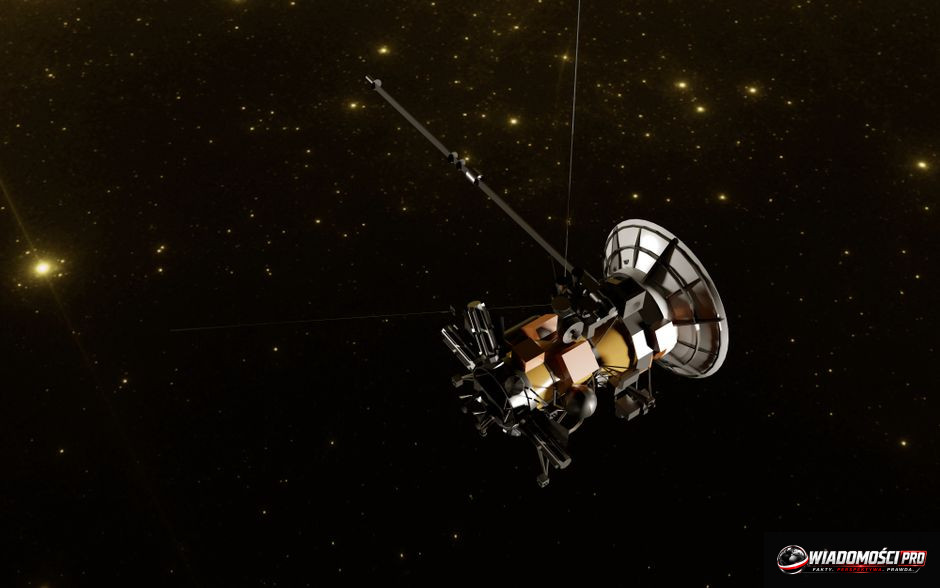
The budget for the Europa Clipper mission is estimated at approximately $5 billion, and its main goal is to investigate the potential for supporting life in the ocean hidden beneath Europa's icy crust. The probe began its journey in October 2024, and its arrival in the Jovian system is scheduled for 2030. It is NASA's most complex undertaking in the planetary mission sector, based on the precise use of nine advanced research instruments designed to provide answers about the biological potential of this distant moon.
Mission schedule and launch
October 2024 marks a milestone in the history of space exploration. The Europa Clipper probe left Earth, beginning a multi-year flight toward the largest planet in the Solar System. The flight to Jupiter does not follow a straight trajectory. Engineers have planned complex gravity-assist maneuvers that will allow the craft to gain the speed necessary to cover the vast distance. In 2030, the probe will enter orbit around Jupiter, beginning a series of close flybys of Europa.
The mission strategy is based on a unique approach to studying this moon. Instead of entering a tight orbit around the satellite itself, which would expose the electronics to the deadly radiation generated by Jupiter's magnetic field, Europa Clipper will perform dozens of flybys. Each pass near the object is an opportunity to collect data. After each flyby, the probe will move away from the moon, giving its systems time to transmit data to Earth and partially recover. This method is safer, though it requires extraordinary precision in navigation.
The Jovian environment is one of the most hostile places in our neighborhood. Powerful radiation belts bombard any objects entering the planet's sphere of influence with high-energy particles. The probe's electronics must withstand conditions that would destroy standard satellite components in a short time. Engineers used special shielding, often called a "vault," to enclose the most sensitive elements of the onboard computer and measurement apparatus. Any malfunction in this environment is irreversible, which is why system redundancy became a design priority.
Scientific goals and geological research
Understanding Europa's geological activity is the foundation of the entire undertaking. Scientists suspect that beneath an icy crust ranging from a few to several dozen kilometers thick, there is an ocean of liquid water. The volume of this reservoir could be twice that of all Earth's oceans combined. However, the mere presence of water is not enough for biological processes to occur. Energy sources and the right chemical composition are also needed.
Observations conducted over the years suggest that the ocean floor may be a site of intense volcanic activity. There are hypotheses pointing to the presence of hydrothermal vents. On Earth, such places are oases of life, where organisms use chemical energy instead of photosynthesis. Europa Clipper will look for evidence of whether similar mechanisms can function in total darkness, under a thick layer of ice. Analyzing the chemical composition of material plumes from the moon's interior, which may be ejected into space through cracks in the icy crust, will allow scientists to assess whether the water is rich in minerals and organic compounds.
Another issue is water temperature. The probe will search for thermal anomalies on the surface that could indicate warmer areas beneath the ice. If the ocean is dynamic and exhibits convective flows, the chances of maintaining stable conditions for microorganisms increase significantly. However, scientists are not looking for life forms directly, but rather for "traces" that could indicate the moon's biological past or present.
Instruments on board: The probe's technological eyes
A set of nine scientific instruments constitutes the strength of this mission. Each device performs a different function, and their combined work is intended to create a complete picture of Europa's environment. A key tool is MISE (Mapping Imaging Spectrometer for Europa). This imaging spectrometer operates in the infrared and is tasked with mapping the distribution of ice, salts, organic compounds, and other chemical materials on the surface. Thanks to it, we will learn whether molecules necessary for building biological structures are present in geologically active areas.
No less important is the REASON instrument (Radar for Europa Assessment and Sounding: Ocean to Near-surface). This is an advanced radar that uses waves at two different frequencies to probe the moon's interior. REASON is tasked with penetrating the icy crust to detect the presence of water pockets within the ice and precisely determine the thickness of the ice layer. It is data from this radar that will allow for the verification of geological models suggesting the existence of a subsurface ocean.
The third key instrument is EIS (Europa Imaging System). This is a high-resolution camera system that will provide images of the moon's surface. EIS will allow for mapping Europa's geology with a precision never before achieved. Thanks to it, scientists will be able to identify young geological formations, cracks, ridges, and areas where material from the depths may have been brought to the surface. This set is complemented by, among others, the ECM magnetometer and instruments for analyzing plasma particles, which will check how the moon interacts with Jupiter's magnetic field.
Budget and mission economics
The funding for the Europa Clipper project, totaling approximately $5 billion, reflects the immense technological complexity and operational risk. This amount covers not only the construction of the probe itself, but also years of testing in vacuum and radiation chambers, the creation of long-range communication systems, and the maintenance of a team of experts throughout the mission's life cycle. Unlike cheaper research projects, every part of Europa Clipper was designed with extreme durability in mind.
Most of this sum was invested in radiation protection technologies and advanced optics. The probe must be able to perform measurements in conditions where normal electronics would degrade within a few weeks. This cost also includes launching the probe into space, which required the use of a powerful launch vehicle, and years of analyzing the data that will be transmitted to Earth after 2030.
From NASA's perspective, this is an expenditure to verify one of science's most important questions. Critics point to the high unit cost, noting that several smaller missions to other regions of the Solar System could be conducted for the same amount. However, the agency determined that Europa is the place with the highest probability of finding an environment conducive to life, making this project a priority in the strategy of searching for biosignatures beyond Earth. Funding is secured for the entire operational period, which is intended to prevent the interruption of research during the critical flyby phase.
A message in a bottle and symbolic dimension
The mission also has a social aspect. NASA invited the public to participate in the project through a symbolic campaign. Thousands of names of people from around the world were inscribed on a special plate installed on board the probe. This is a reference to the historical "messages in a bottle" that were sent into space in previous decades. In times when space exploration seems to be the exclusive domain of large corporations and government agencies, such gestures are intended to bring science closer to ordinary people.
Of course, placing names on board the probe does not change the technical parameters or increase the chances of detecting life, but it builds a bond with a mission that will last many years. For many people, it is a chance for symbolic participation in a journey that spans beyond the frame of a single generation. However, it is worth separating these image-related aspects from hard science. The Europa Clipper probe is primarily a chemical and geological laboratory, not a carrier of sentiments. Its success depends solely on the quality of data collected by MISE, REASON, or EIS, and not on how many signatures were found in its digital memory.
The costs of such promotional activities are marginal in relation to the total budget. However, they are a necessary element of the agency's communication with taxpayers. In an era of competing for audience attention, NASA tries to show that behind the billions of dollars are concrete goals that concern the entire human species. Will these actions convince skeptics? Probably not, but they certainly increase the educational reach of the mission, which in 2030 will become the center of attention for the entire scientific world.
What this means for the future of astrobiology
The success of the Europa Clipper mission will mean a breakthrough in our understanding of the habitability of celestial bodies outside the so-called "habitable zone." Until now, most searches for life have focused on planets orbiting stars at distances allowing for the existence of liquid water on the surface. Europa turns this model upside down. If life can develop in oceans hidden under ice, thanks to energy derived from Jupiter's tidal forces, it means that the number of potentially inhabited worlds in the galaxy is much larger than previously assumed.
From an editorial perspective, the greatest threat to the mission is the uncertainty of the results. NASA has invested huge resources in equipment that does not have the ability to physically collect a sample. Every interpretation of the data will be based on remote measurements. If the instruments confirm the presence of complex organic compounds, we will be witnessing the greatest discovery in the history of astronomy. If, however, the data prove inconclusive, the agency will have to face the question of whether another mission, this time with a lander, is even financially and technically feasible.
It is worth noting that Europa Clipper is a machine that does not forgive mistakes. Any limitation in data transmission, any problem with power or instrument degradation in Jupiter's strong magnetic field will be felt in the final quality of the results. Astronomers are waiting for the year 2030, treating this moment as a verification of their own theories about the structure of icy moons. Regardless of the result, the data collected by the probe will form the foundation for all future missions in the Jovian system. This is an investment in knowledge whose value is difficult to convert into any monetary units, even though the price for this insight into the nature of the universe is extremely high.
Questions and answers
Why was Europa chosen, and not another moon of Jupiter?
Europa has a vast ocean of saltwater beneath its icy crust, which theoretically could contain the chemical ingredients necessary for life. Other moons, like Ganymede or Callisto, also have oceans, but Europa is considered the most promising due to its geological activity and the direct contact of ice with the substrate.
When will the probe reach its destination?
The journey of the Europa Clipper probe to the Jovian system will end in 2030, when the machine enters orbit around the planet and begins a series of flybys of the moon.
Will the probe land on the surface of Europa?
No, Europa Clipper is designed as an orbiter that performs numerous flybys close to the moon's surface. The lack of a lander is due to high costs, technical risk, and the need to protect the equipment from Jupiter's strong radiation.
What exactly is the "vault" inside the probe?
The "vault" is a specially armored shield made of titanium and aluminum, in which the main electronics and onboard computers are enclosed. It protects the devices from the destructive influence of Jupiter's radiation belts, enabling the instruments to operate during the multi-year mission.
Can the mission confirm the existence of life directly?
The probe does not have instruments capable of directly detecting living organisms. Its task is to search for biosignatures, i.e., chemical traces that could indicate biological processes occurring in the ocean. The final interpretation of the results will be up to scientists on Earth.
What challenges await the probe during the flybys?
The biggest challenge is precise steering in Jupiter's strong magnetic field and the need to transmit huge amounts of data to Earth with limited flyby time. The probe must also efficiently manage solar energy, which at Jupiter's distance from the Sun is much weaker than near Earth.
Why is the REASON instrument so important for the mission?
REASON allows us to look beneath Europa's surface without the need for drilling. Thanks to radar waves, scientists can map the structure of the ice and search for liquid water under the crust, which is a necessary condition for the existence of potential biological niches.
Can the mission budget increase?
In the history of space exploration, multi-billion dollar projects often exceed initial estimates. Although the budget is estimated at approximately $5 billion, potential technical difficulties during the mission could affect the final operational costs, which is a risk inherent in such advanced research projects.
What is the role of the MISE instrument?
MISE is responsible for mapping the chemical composition of the surface. Thanks to it, we will learn whether organic compounds necessary for life are present in places where the ice cracks and exposes deeper layers. It is a key element of Europa's chemical puzzle.
Are there more missions to Europa planned after 2030?
Currently, Europa Clipper is the only mission dedicated to this moon. However, the results collected by the probe will be crucial for decisions about potentially sending a lander in the future. Any subsequent mission will depend on whether Clipper provides sufficiently intriguing evidence that Europa's ocean is inhabited.
Sources
- Europa Clipper probe to search for life on Europa - Urania - Polish Astronomical Portal
- Europa Clipper mission launch [BROADCAST]. Americans to overtake Europeans in the search for life on Europa - Wyborcza.pl
- Beginning of the Europa Clipper mission - Kosmonauta.net
- Europa Clipper has launched. It will investigate whether there are conditions for life on Jupiter's moon - Polish Radio 24
- Searching for life in the Solar System beyond Earth. NASA sends a mission - Geekweek Interia
- Flying to search for life. NASA mission launch in just three weeks - Antyweb
- NASA sends a "message in a bottle" into space. You can sign it! - Radio ESKA
- Probable volcanoes on the ocean floor beneath Europa's surface - astronet.pl
Article prepared by the Wiadomości PRO editorial team with the support of artificial intelligence. Facts are derived from the sources listed above.


Komentarze (0)
Ładowanie komentarzy...