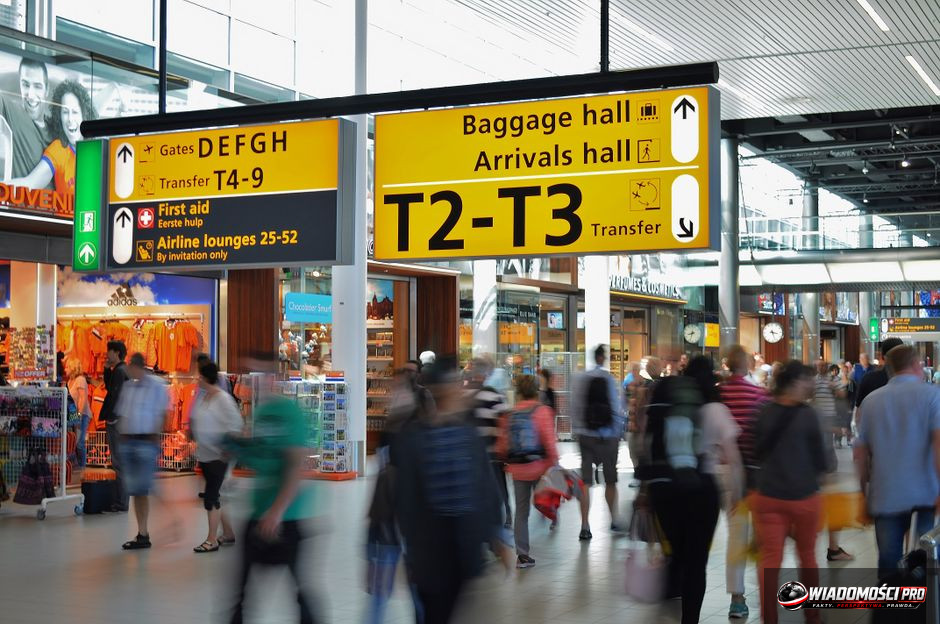
The cause of the evacuation was luggage left in the departure area, which forced an intervention by pyrotechnic services. After the operations were completed, flight operations were resumed. The incident on September 15, 2026, led to a halt in passenger traffic at a key moment during the afternoon rush hour.
Security procedures in the face of a threat
Airport security services and Border Guard officers operate based on rigid protocols that do not allow for discretionary interpretation of the situation. Once unattended luggage is detected, the priority is to isolate the area. It does not matter whether the bag looks like it was forgotten out of absent-mindedness or if it arouses suspicion due to its appearance. Every such item is treated as a potential explosive device until the pyrotechnic team verifies it.
The actions, which began shortly after 5:30 PM on Tuesday, were based on a full evacuation of the terminal. Passengers were directed outside the building, which generates congestion under conditions of a high volume of flight operations. Border Guard officers designated security zones, cutting off access to the suspicious object. Pyrotechnicians equipped with specialized equipment for X-raying luggage contents conducted a reconnaissance. This is a process that requires time and precision, as an error in risk assessment could result in catastrophic consequences for the port's infrastructure.
After the pyrotechnic operations were completed and the threat was ruled out, the terminal was reopened to travelers. The resumption of flight operations took place in stages to avoid additional chaos associated with the re-screening of all people who had to leave the building. However, the effects of this event were felt for several hours. The flight network was disrupted, and aircraft that were supposed to take off during the operation had to wait for takeoff slots to be cleared by air traffic control.
Mechanisms of operational paralysis
Chopin Airport is a high-capacity hub where every minute of downtime translates into specific financial and logistical losses. When services decide to close the terminal, the domino effect is immediate. Passengers in the restricted area lose the ability to reach their gates, and those who were yet to pass through security are blocked outside the terminal.
The delays reported by the media on September 15 did not only concern individual flights. Blocking the main terminal causes flight crews to exceed their working time limits, which often ends in the cancellation of return flights. Airlines must then organize accommodation for passengers and redirect aircraft, which is a costly process. It is worth emphasizing that crisis management in such a large facility is based on close cooperation with the Polish Air Navigation Services Agency. When the terminal is shut down, arriving aircraft often have to wait on the aprons because passengers cannot be safely disembarked into the building.
On the day of the incident, the services did not provide detailed data regarding the exact number of evacuated people, but the scale of the crowd visible in journalistic reports indicates thousands of passengers affected by the disruptions. The airport functions as an organism where every element must work in harmony. Leaving luggage, even if it results from the owner's pure absent-mindedness, is treated by the system as a breach of critical infrastructure security.
Legal and financial liability
From the point of view of aviation law and regulations on the protection of strategic facilities, leaving luggage unattended can entail serious consequences for the perpetrator. Border Guard officers who conduct operations on-site often identify the owner of the abandoned item using video surveillance. In such cases, the perpetrator may be fined for disturbing public order or violating the rules of conduct in force at the airport.
The issue of financial claims is more complicated. Airlines that have suffered losses resulting from delays or flight cancellations could theoretically seek damages from the person responsible for the incident. In practice, this is difficult because it requires proving intentional fault or gross negligence. Often, however, the stress and administrative consequences are a sufficient punishment for the traveler, especially if the incident leads to the loss of a connecting flight.
Security services emphasize that passenger education is the only effective preventive tool. Announcements about the need to watch over luggage are broadcast periodically by the terminal's public address systems, but in their haste, travelers often ignore them. From an editorial perspective, the problem is not a lack of vigilance by the services, but a lack of social awareness regarding the costs generated by simple forgetfulness. Every "suspicious" object involves units that could be performing other operational tasks at the same time.
Dynamics of pyrotechnic service operations
The work of pyrotechnicians at Chopin Airport is a highly formalized process. After receiving a report of abandoned luggage, officers do not take risks. First, an exclusion zone is designated, often using warning tape and physical barriers. Pyrotechnicians enter the action in full protective gear. Their first task is a visual assessment of the item, followed by the use of portable X-ray devices or pyrotechnic robots if the situation requires it.
These actions must be carried out in a way that minimizes the risk in the event of a detonation. Therefore, the evacuation of the terminal is necessary – a shockwave or shrapnel in the event of an explosion could injure hundreds of people in the departure hall. It is these rigorous procedures that cause the airport to become an inaccessible facility for several dozen minutes. After confirming that the luggage contains only personal items, the services proceed to the procedure of securing evidence and identifying the owner.
Modern airports are designed to allow for rapid evacuation, but the number of checkpoints and the specific architecture of the terminal at Okęcie mean that the entire process usually takes between forty and ninety minutes. Only after obtaining certainty that the area is safe does the incident commander make the decision to resume operations. This is an administrative decision that ends the paralysis but does not remove the effects of delays in the flight schedule.
Impact on the flight network
Tuesday, September 15, 2026, went down in the history of the Warsaw airport as a day when one irresponsible behavior affected thousands of travel plans. Delays in departures caused a domino effect that affected not only passengers in Warsaw but also people waiting for arrivals from Okęcie at other European ports. In civil aviation, an aircraft that does not take off on time loses its slot at the destination port. This means that the crew must wait for a new landing clearance, which often shifts the entire work schedule of the machine until the end of the day.
For passengers, this often means hours spent in the terminal without clear information about the new departure time. Airlines in such situations try to minimize losses, but in the face of a terminal evacuation, their room for maneuver is limited. Passengers often do not understand why check-in takes so long after the airport resumes work. This is due to the fact that all passengers who were evacuated from the terminal must go through security again. This is a process that, with the terminal at full capacity, requires time and the full efficiency of security personnel.
This situation shows that even the most modern air traffic management systems are defenseless against the human factor. Aviation security is based on the assumption that every passenger is aware of the consequences of their actions. When this assumption fails, the entire system shifts into defensive mode, which is felt by travelers as an annoying paralysis.
The role of video surveillance in the investigation
In a modern airport, a video surveillance (CCTV) system is a key tool supporting the work of security services. In the case of the September 15 incident, Border Guard officers were able to almost immediately trace the path of the abandoned luggage. High-resolution cameras allow for the identification of the person who left the item, which is crucial in the process of explaining the causes of the event.
Services rarely share recordings with the public before the investigation is concluded, but for law enforcement agencies, they are the basis for holding the perpetrator accountable. It is worth noting that the development of image analysis technology now allows for the automatic detection of items left unattended. These systems are becoming increasingly sensitive, which on one hand increases security, but on the other – as Tuesday's incident showed – can lead to more frequent alarms.
Are these systems too sensitive? This is a question that airport managers always answer in the same way: security is not negotiable. Even if 99 percent of alarms turn out to be false, that one percent that could pose a real threat justifies every minute of downtime. For a passenger who misses a flight, this is poor consolation, but in the context of the global threat of terrorism, a rigorous approach to abandoned luggage is a standard from which there is no turning back.
Crowd psychology in a threat situation
Terminal evacuation is a high-stress situation. A crowd of people, often confused and anxious, must be efficiently led out of the facility. Airport services are trained in crowd management techniques to prevent panic. On September 15, despite the chaos, there were no reports of uncontrolled passenger behavior, which testifies to correct communication within the terminal at a critical moment.
Passengers who find themselves in an evacuation situation often react with frustration resulting from a lack of full knowledge about the threat. Announcements made over the public address system are usually laconic so as not to cause unnecessary fear. However, this approach raises questions about the transparency of actions. Is it sufficient to inform passengers that the cause of the evacuation is luggage, rather than, for example, a specific type of bomb threat? Experience shows that providing precise information shortens the waiting time in uncertainty and allows passengers to better prepare for delays.
However, it is worth remembering that in crisis situations, every second is precious. The task of the services is primarily to ensure physical safety, not to provide detailed explanations while the operation is ongoing. Expecting full transparency from the services during a pyrotechnic operation is unrealistic from the point of view of operational security.
Perspectives on aviation security development
Events such as the one on September 15, 2026, become an impulse to modify procedures. Chopin Airport managers analyze every incident to check if the response time was optimal. In the future, we can expect even wider use of artificial intelligence systems to monitor passenger traffic. AI can distinguish faster than a human between luggage that has been temporarily set aside by a traveler and that which has been intentionally abandoned.
Another area is education. Information campaigns aimed at travelers, emphasizing the importance of taking care of luggage, are conducted, but their effectiveness is sometimes limited. Perhaps a solution would be to introduce more severe financial penalties for leaving luggage, which would act as a strong financial incentive? Currently, such a solution is not widely used, but in the face of rising operational costs, this topic may return in discussions on amendments to aviation regulations.
From a passenger's perspective, remaining vigilant remains key. An airport is a place where absent-mindedness is treated as a serious offense against the safety of others. Every traveler should treat their personal belongings as an integral part of their safety. If everyone follows basic rules, the number of terminal evacuations will drop drastically, which will translate into traffic fluidity and fewer delays.
Summary of the September 15 operations
Tuesday, September 15, 2026, will remain in the memory of Chopin Airport passengers as a day of logistical challenge. The services rose to the occasion, eliminating the potential threat in a quick and professional manner. Flight operations were resumed, and order in the terminal was restored. This incident, however, was a costly lesson that reminded us of the fragility of the aviation system.
Could the paralysis have been avoided? Yes, if the owner of the luggage had exercised the required caution. Did the security systems work correctly? Yes, they confirmed their effectiveness in threat situations. Will passengers learn from this? Time will tell. The only certainty is that the rigorous security rules at Okęcie will not be relaxed. For travelers, this means that in the future, they must count on similar scenarios if unattended items appear in public areas.
Ultimately, the safety of thousands of people in the terminal is worth every hour of delay, even if for an individual passenger it is an extremely frustrating situation. The pyrotechnic services, which worked at full capacity that day, did their job according to the highest standards, protecting us all from the consequences of one person's irresponsibility.
Questions and answers
Which services participated in the operation at Chopin Airport?
The Border Guard and specialized pyrotechnic units, responsible for verifying the abandoned luggage and securing the terminal, participated in the operations.
Did the evacuation pose a threat to the health or life of passengers?
No, the evacuation was carried out in a controlled manner and in accordance with security procedures; no injuries were reported.
What are the consequences for a passenger who left luggage?
The perpetrator may be held accountable for disturbing the peace; services may also take legal steps to identify the person and impose a penalty provided for by airport regulations.
Did all flights take place as scheduled after the airport resumed work?
After resuming operations, the airport focused on minimizing delays, but the flight network was disrupted for several hours, which affected the schedule of departures and arrivals in the evening hours.
Is there a financial penalty for leaving luggage?
Yes, airport regulations allow for the imposition of fines for behaviors that threaten safety, and in extreme cases, it is possible for carriers to pursue civil law claims.
Why didn't the services check the luggage where it was found?
Security procedures mandate the evacuation of the area because pyrotechnicians must be sure that in the event of an explosion, the effects on infrastructure and people will be minimal; checking luggage in a crowded terminal would be extremely irresponsible.
Are security systems at the airport too sensitive?
Airport managers consider current standards necessary; in the face of terrorist threats, any deviation from rigorous procedures would be an unacceptable risk to passenger safety.
How can passengers check the status of their flight after the incident?
The best sources of information are departure boards in the terminal, carrier websites, and the official website of Chopin Airport, which updates data in real-time.
Did the incident affect the functioning of public transport to the airport?
The evacuation mainly concerned the terminal, while public transport functioned without changes, although passengers could encounter difficulties entering the building at the peak of the services' operations.
Are changes to security procedures planned in the future?
The airport constantly optimizes its procedures, but the foundations of security remain unchanged; the priority remains the elimination of threats before they occur, which forces the maintenance of the current rigor of pyrotechnic operations.
Can passengers who missed their flight due to the evacuation count on compensation?
Compensation issues depend on the regulations of individual airlines; evacuation for security reasons often qualifies as "extraordinary circumstances," which may limit the carrier's liability.
What was the airport staff's reaction to the situation?
Airport personnel followed the crisis management plan, directing passengers to emergency exits and informing them of the need to remain calm.
Do similar incidents happen often?
Leaving luggage unattended is one of the most common reasons for pyrotechnic interventions; despite information campaigns, traveler absent-mindedness remains a constant element of operational challenges for airport security services.
Did travelers have to go through security again after the evacuation?
Yes, all passengers who were led out of the terminal had to go through security checkpoints again before entering the departure area, which was necessary to restore full security of flight operations.
Where is luggage most often left?
Most often in the vicinity of catering points, duty-free shops, and waiting areas before gates, where travelers in a hurry or through a moment of inattention leave their personal belongings.
Do the services have technology for remote luggage neutralization?
Yes, the pyrotechnicians' equipment includes specialized devices, including robots, that can safely move or neutralize a suspicious object if necessary, which avoids direct danger to the officers.
Did the incident affect flight safety at other airports in Poland?
No, the event was local in nature and concerned only Warsaw's Chopin Airport, not extending to other airports in the country.
Can passengers receive a refund for lost time?
A refund for lost time is not a standard procedure; passengers should seek assistance from their carriers as part of customer service policies in situations of delays caused by force majeure or security considerations.
What is the most important lesson from this event?
Awareness of responsibility for one's own luggage in public space; one careless gesture by a passenger has a real impact on the functioning of critical infrastructure and thousands of other people.
Did the services inform what exactly was inside the luggage?
No, due to the protection of personal data and the nature of the procedures, details regarding the contents of the luggage are not made public; it was only confirmed that it did not pose an explosive threat.
Sources
- Chopin Airport has resumed work. Pyrotechnic operations concluded - TVN24
- Evacuation at Chopin Airport. Luggage found - WP News
- Alarm at Chopin Airport. Travelers evacuated - Onet Travel
- Evacuation of Chopin Airport. Pyrotechnicians check luggage - Newsmax Poland
- Terminal evacuation at Chopin Airport. They left it in the departure area - Radio ESKA Warsaw
- Evacuation at Chopin Airport. Services on-site - Warszawa w Pigułce
- Total paralysis at Okęcie! Terminal evacuation due to one piece of luggage - Super Express
- Urgent evacuation of Chopin Airport in Warsaw. Services on-site - NewMedia24
Article prepared by the Wiadomości PRO editorial team with the support of artificial intelligence. Facts are derived from the sources listed above.


Komentarze (0)
Ładowanie komentarzy...