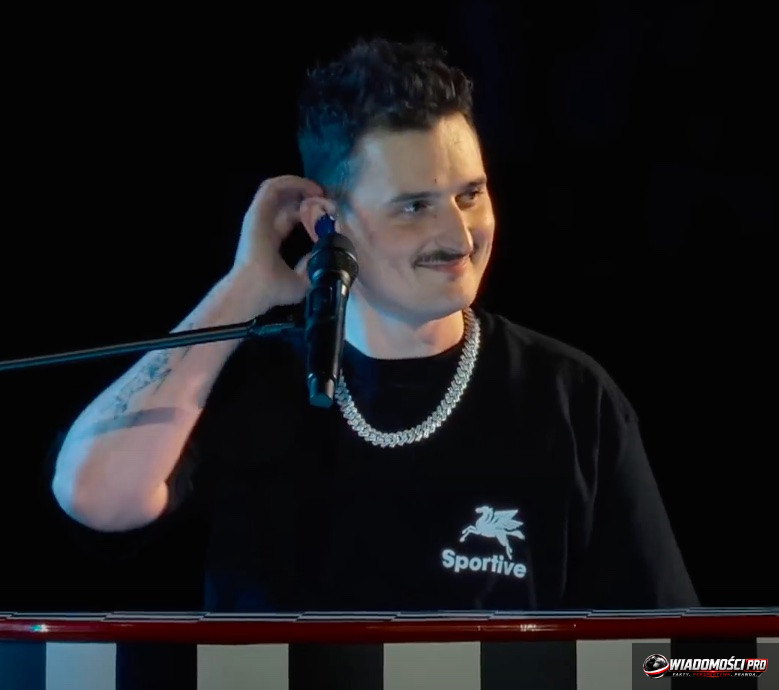
Dawid Podsiadło sold out all tickets for seven concerts in Poland's largest cities, gathering, among others, 90,000 spectators during a single performance at the Silesian Stadium (Stadion Śląski) in Chorzów. This compilation of numbers makes him the first Polish artist to dominate the country's largest sports arenas in such a short time. These results end the era in which stadiums were reserved exclusively for global music icons.
This success was not a matter of chance. It was the result of precise management of ticket pools, which had to satisfy gigantic demand in the very first minute after sales launched. Server systems supporting the tour faced traffic exceeding tens of thousands of requests per second. While dynamic data flow management is standard for events of this scale, in Podsiadło's case, interest repeatedly exceeded seat availability. Organizers had to react on the fly, rather than just planning everything before the tour started.
Ticket sales took place in stages. Decisions to add subsequent concert dates were made based on hard data from booking systems. An example is Gdańsk, where after the first pool sold out, it was necessary to announce an additional date at the Polsat Plus Arena Gdańsk. This strategy allowed for cash flow control and spectator service logistics, spreading the organizational burden over a longer period. The lack of constant ticket availability in open sales, and instead the rationing of dates, maintained tension among fans for many months.
The artist announced the seventh concert as early as December 2023, suggesting that June 2024 would be the most intense month of his career. This narrative about the uniqueness of the event translated into the speed of sales conversion. Fans knew that the limited number of seats in the 360-degree format ruled out the possibility of buying tickets at the last minute. This eliminated the need for long-term advertising campaigns, as the market drove its own demand.
Detailed price ranges for all ticket categories were not publicly disclosed. However, the concert market in 2024 set high standards, where tickets for stadium floors and premium sectors reached prices typical of the world's largest productions. The sales dynamics confirmed that the Polish consumer is ready to accept higher participation costs as long as the quality of the show is guaranteed by the performer's brand.
The use of a 360-degree stage defined the logistics of the entire tour. In a traditional stadium layout, the stage occupies one end of the floor, which excludes a significant part of the stands from use due to limited visibility. Placing the structure in the central point of the stadium allowed for the use of almost all sectors, which translated directly into the number of tickets sold.
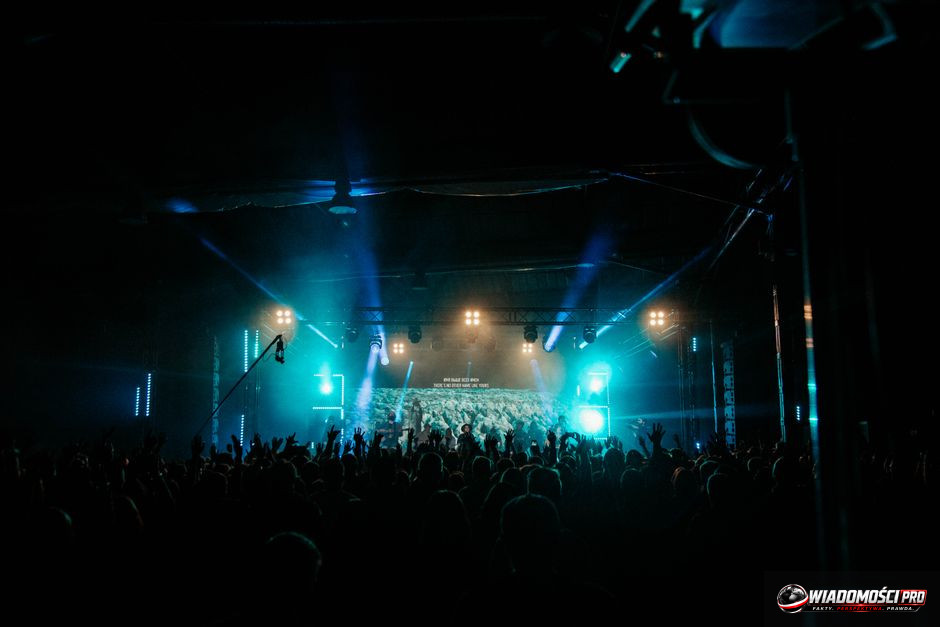
This configuration imposed strict requirements. The central stage required an extensive lighting and sound system, which had to be evenly distributed around the artist. Sound engineers had to solve the problem of echo and message clarity in stadium conditions, which is a much greater challenge than with a classic front-facing stage. The sound had to travel longer distances in different directions, which often leads to reception problems with stadium acoustics.
The logistics of setting up such a stage also forced a different organization of movement on the stadium floor. Viewers surrounding the artist on all sides created a ring, which changed the way security services and catering points operated. The success of this solution confirmed that Polish sports facilities, such as the Silesian Stadium or Tarczyński Arena in Wrocław, are ready to handle such non-standard installations, provided that teams specializing in large-format concerts are involved.
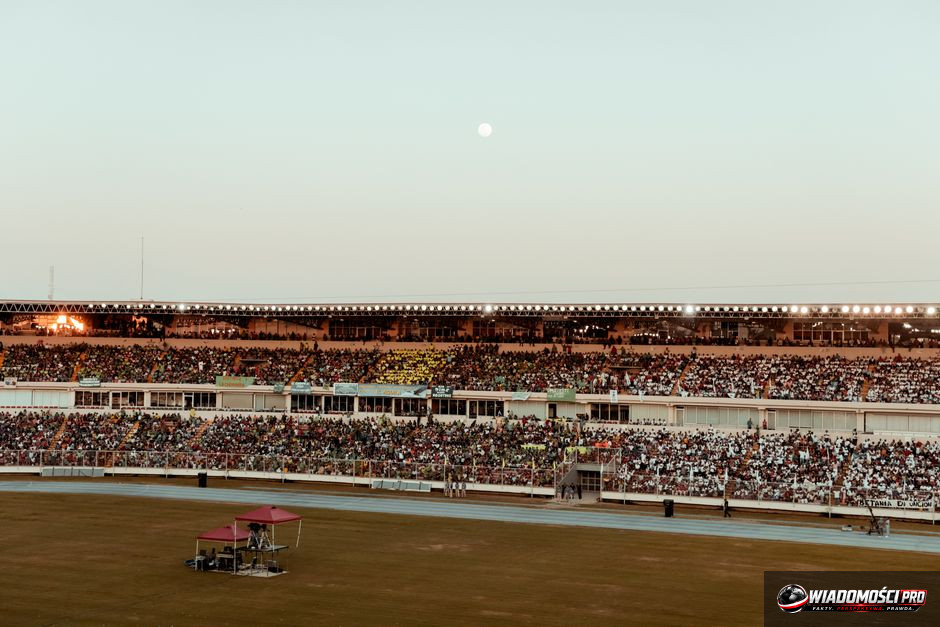
The concert in Chorzów, which attracted 90,000 people, is a logistical operation on a scale rarely tested in the country. With such a number of participants, the main problem is not the ticket sales themselves, but the fluidity of communication inside the facility and the evacuation process after the show ends.
Industry media pointed out problems that arose with such a huge density of the audience. The main complaint was the sound system. In the conditions of a stadium with a capacity of 90,000 spectators, the physics of sound becomes a brutal limitation. Some participants in the further rows reported difficulties with receiving clear sound. For the organizer, this is a compromise between the desire to maximize revenue from attendance and the technical capabilities of sound reinforcement in an open space.
With 90,000 people, any error in the logistics of entering or leaving the facility would lead to congestion. Organizers had to implement procedures similar to those used during high-risk matches or major state events. This scale shows that the Silesian Stadium has become a hub for the largest music projects in the country, but the viewer's experience at such a concert is significantly different from what smaller arenas offer.
The success of Dawid Podsiadło's 2024 tour set a new benchmark for Polish artists. For years, the belief dominated that only foreign stars were able to fill stadiums in Poland. Podsiadło changed this perspective, showing that the brand of a domestic performer is strong enough to compete with the biggest names on the global scene.
For the industry, this means a change in investment planning. Concert organizers will more often lean towards stadiums, knowing that with proper marketing and 360-degree technology, the financial risk is lower. This puts pressure on artists regarding the quality of the production. The audience, paying for tickets to a stadium show, expects a production that is not just a music concert, but a full-scale visual experience.
The question of market saturation arises. Is the Polish audience able to maintain such purchasing dynamics for subsequent projects? Every stadium sold out at lightning speed is a signal for the industry to expand further, but at the same time a signal to fans that they have to fight for tickets in dynamic sales systems. This leads to the phenomenon of the secondary market, where tickets often end up being resold at inflated prices, which is an inevitable consequence of huge demand with a fixed supply of stadium seats.
The announcement of the Obrotowy Tour 2026, which took place on September 1, 2025, is a logical step after the success of 2024. The artist, instead of retreating to smaller venues, decided to continue the stadium format. This confirms that the business model developed in previous years brought the expected financial results.
The Obrotowy Tour 2026 will be a test of whether the stadium formula has been exhausted. Maintaining interest at the level of tens of thousands of viewers with each subsequent project requires the artist to constantly evolve. If the 360-degree formula from 2024 was a success, the next tour must introduce a new quality to avoid audience fatigue.
It should be remembered that stadium tours are ventures with a huge carbon footprint and complex transport logistics. Preparing seven or more concerts at facilities of this scale is months of planning that must be synchronized with the stadium calendar, often occupied by sports events. For fans, this means that ticket availability will always be limited, and the fight for them will remain an element of concert culture in Poland.
Concerts at stadiums are not only a profit for the organizer, but a significant financial injection for cities. Wrocław, Gdańsk, or Chorzów, hosting Podsiadło's performances, record an increase in turnover in the services, hotel, and catering sectors. The scale of events, like the one from 2024, employs thousands of service, security, and logistics staff.
Stadiums such as Tarczyński Arena in Wrocław, after announcing concerts, often launch dedicated communication channels with residents. This is an attempt to minimize the inconvenience associated with organizing such large crowds in urban space. The artist's attendance success forces cities to improve public transport systems, which in effect serves residents even after the artist's technical crew leaves.
Skeptics ask about the costs of maintaining these facilities in a state of readiness for such large events. Are cities beneficiaries of these concerts to a degree sufficient to cover the costs of operating the stadiums? The answer to this question is not unambiguous, but attendance figures show that stadiums in Poland are finally beginning to fulfill the role for which they were designed – centers of major mass events.
An analysis of Dawid Podsiadło's activities over the years 2023–2025 shows that success was not a result of chance, but of skillful use of scale. The artist has become for the Polish market what the biggest pop stars are for global markets – an entity that can attract 90,000 people to one place.
The key to understanding this phenomenon is the combination of technology with the psychology of sales. What is an exciting concert for a fan is a complicated logistical puzzle for the organizer, where the margin for error is minimal. Technical problems, such as sound or crowd logistics, remain a challenge that the industry will have to face with every subsequent stadium project.
The future will show whether the Obrotowy Tour 2026 model will maintain its growth pace. The market is currently saturated with stadium productions, and the quality bar set by Podsiadło is becoming a standard below which it will be difficult to go. For the reader and fan, the most important conclusion is: Polish popular music has entered a phase of maturity where stadiums have ceased to be the domain of foreign visitors and have become a real workplace for domestic creators. Acoustic and logistical challenges remain the price to pay for participating in a mass spectacle on such a scale.
This event is also proof of a change in the business model of Polish concert agencies. Instead of counting on single profits, the companies organizing Podsiadło's tour bet on a multi-month product life cycle, which was the concert. Each subsequent stadium is an opportunity to optimize costs. The more concerts, the cheaper the logistics of transporting the 360-degree structure. This is pure mathematics, which in 2024 worked in favor of the organizers.
The role of Tarczyński Arena in Wrocław in this process cannot be ignored. It was there, as early as December 2023, that June 2024 was announced as a time of a great test. The city had to prepare to receive thousands of fans, which required the involvement of local municipal services to a degree previously unseen for concerts by Polish artists. The success of the Wrocław concert became a model for other cities.
For a market observer, it is also important how quickly fan perception is changing. In the past, a stadium concert was a rare holiday. Today, thanks to tours like the Obrotowy Tour, it has become an element of the regular cultural calendar. However, this accessibility has its price. The fight for tickets in dynamic systems has become the new norm, which frustrates many recipients. The lack of price transparency in official communications raises questions about how the emotions associated with live music are valued today.
It is worth returning to the issue of acoustics at the Silesian Stadium. Reports after the concert for 90,000 viewers were unambiguous: the scale exceeded the technical capabilities of the sound system. The sound that reached the further rows was distorted. This is a signal that even with the best equipment, the laws of physics remain relentless. Organizers have the task of solving this problem in future tours, including the Obrotowy Tour 2026. Otherwise, they risk losing the trust of the most demanding fans.
The entire undertaking is also a huge challenge for the road infrastructure around the stadiums. Cities like Gdańsk or Chorzów, after major concerts, turned into huge parking lots, and public transport systems worked at the limit of their capacity. This is the price for the prestige of being the host of the largest events in the country. Residents who did not participate in the event felt its effects for many hours after the show ended.
The artist, by announcing another tour in 2025, proved that he is not afraid of a high bar. Obrotowy Tour is not just the name of a tour, it is a declaration of constant movement. The music market in Poland after 2024 is no longer the same place. Standards have been pushed so high that any other performer planning a stadium show will have to face comparisons to Podsiadło.
This phenomenon, however, has a flip side. If everyone focuses on stadiums, smaller clubs and halls may lose their importance, and consequently, their funding. The Polish music scene needs diversity, not just large stadium productions. But will fans want to return to smaller venues, having seen what a show for 90,000 people looks like? This question remains open.
Every ticket sold for these seven concerts was proof that the Polish music industry can generate an export product of the highest quality. Even if technical or logistical problems appeared, the final financial and attendance balance is overwhelming for the competition. Podsiadło won the market, but at the same time placed a huge responsibility on himself for future editions.
This success is also a lesson for local governments. A stadium that stands empty for most of the year earns its keep during a concert like this. Cities have understood that it is worth investing in concert infrastructure because it pays off in taxes from tourism and catering services. Anyone who visited Chorzów or Wrocław in June 2024 knows that the city lived for this event all weekend.
In the final analysis, the 2024 tour will remain in the textbooks of Polish music marketing as the moment when a Polish artist ceased to be "local" and became a global standard in stadium management. Logistics, 360 technology, sales psychology – all this added up to a result that will be a benchmark for years to come. But will fans be able to maintain this level of engagement in 2026? Time will tell if the Obrotowy Tour will be a repeat of success or the beginning of a search for a new path.
Questions and answers
How many people took part in the concert at the Silesian Stadium?
90,000 people took part in Dawid Podsiadło's concert at the Silesian Stadium in Chorzów in June 2024.
How many concerts did the 2024 stadium tour include?
The 2024 stadium tour included seven concerts in the largest Polish cities.
Is Dawid Podsiadło planning more stadium tours?
Yes, in September 2025, the artist officially announced a new concert tour for 2026, which was named Obrotowy Tour.
What technology allowed for an increase in the number of spectators at stadiums?
The use of a 360-degree stage allowed it to be placed in the central point of the stadium, which enabled the use of almost all sectors of the stands and increased the facility's capacity.
What technical problems did concert participants report?
Some participants, especially during the concert in Chorzów, reported reservations about the sound quality, pointing to difficulties with receiving clear sound in more distant sectors of the stadium.
Did the organizers provide ticket prices for the 2024 tour?
Publicly available sources regarding the 2024 tour did not provide official price ranges for all ticket categories, although the concert market set high price standards for stadium events at that time.
What was the main logistical challenge with 90,000 spectators?
The main challenge was organizing movement inside the facility, ensuring safety, and efficiently evacuating such a large group of people after the event ended.
Why were additional concerts announced during the tour?
Additional concerts were announced in response to huge demand that exceeded seat availability in the originally planned dates, which was a strategy of flexible reaction to market interest.
When was the Obrotowy Tour 2026 first mentioned?
The official announcement of the Obrotowy Tour 2026 took place on September 1, 2025.
Did the success of the 2024 tour affect concert organization standards in Poland?
Yes, this success forced the industry to raise logistical and technical standards, becoming a new benchmark for organizing large outdoor spectacles in the country.
Which city was mentioned as an example of a place with an additional concert?
Polsat Plus Arena Gdańsk was mentioned as a place where, due to high interest, it was decided to announce an additional performance date.
Was every concert on the 2024 tour sold out?
Yes, all tickets for the seven concerts as part of the 2024 stadium tour were sold out.
What significance did the location of the stage in the center of the stadium have for logistics?
The central location of the stage required a more complicated sound and lighting system, and also forced a change in the organization of movement on the stadium floor compared to traditional concerts with the stage set at the end of the facility.
Sources
- Dawid Podsiadło and his stadiums. In numbers - Red Bull
- Dawid Podsiadło - stadium tour in 360 format - Superauto.pl Silesian Stadium
- Dawid Podsiadło. Tickets sold out! There will be an additional concert at Polsat Plus Arena Gdańsk! - Gdańsk - official city portal
- Podsiadło put on a show in Chorzów for 90,000 people. It's a pity that half of them couldn't hear it - naTemat.pl
- Dawid Podsiadło announces seventh stadium concert on the tour! "I doubt that ever in my life, a month like June 2024 will await me" - Tarczyński Arena Wrocław
- Dawid Podsiadło returns to stadiums. Announced Obrotowy Tour 2026 - Spider's Web
- Dawid Podsiadło will play at Tarczyński Arena Wrocław in June 2024. Ticket sales start - wroclaw.pl
- Dawid Podsiadło on stadiums again. New tour in 2024 - Zwierciadło
Article prepared by the Wiadomości PRO editorial team with the support of artificial intelligence. Facts come from the sources listed above.
Komentarze (0)
Ładowanie komentarzy...