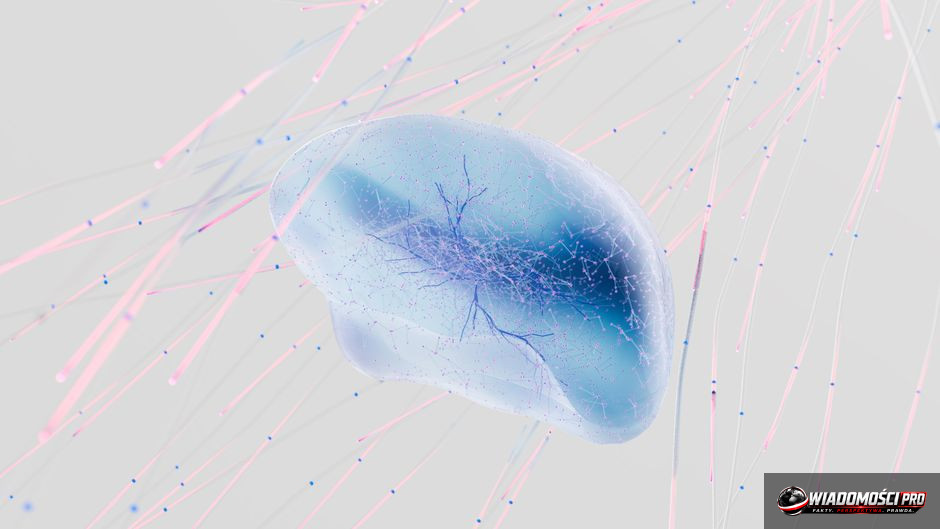
Scientists from the FlyWire consortium have mapped the full brain of an adult fruit fly (Drosophila melanogaster), identifying 139,255 neurons and 50 million synaptic connections, which enabled the creation of a digital model capable of interacting within a video game environment. The publication in the prestigious journal "Nature" in October 2024 marks the culmination of years of work by teams led by Gregory Jefferis of the University of Cambridge and Mala Murthy of Princeton University. This achievement is not merely another entry in the annals of molecular biology, but a technical foundation for a brand-new branch of neuroinformatics, in which the boundary between a "dead" connectome and a living reaction becomes blurred.
The FlyWire Project: How were 139,000 neurons mapped?
For decades, neurobiologists were content with models covering only fragments of nervous systems. Drosophila melanogaster, due to its relatively simple yet highly functional brain, became the ideal research model. However, the FlyWire project is not just another theoretical study. It is a database of a scale unprecedented in the history of neurobiology, created by joining the forces of scientists from all over the world.
The mapping process resembled assembling a giant, three-dimensional puzzle, where each piece must fit with micrometric precision. Advanced high-throughput electron microscopy was used, providing raw images with a resolution that allowed for the distinction of individual cell membranes. However, the images were not the most difficult stage; their interpretation was. Machine learning algorithms came to the rescue, performing preliminary image segmentation and isolating neuron shapes from the dense network of connections.
The real work began where the algorithms failed. Thousands of hours of human verification, working within the FlyWire platform, allowed for the removal of segmentation errors. It was this hybrid work model – human supporting machine – that resulted in a full picture of the connectome. Gregory Jefferis and Mala Murthy emphasize that this is not just a static map, but a dynamic database that allows for tracing the path of an impulse from the visual receptor to the wing muscles. Nevertheless, the scientists openly admit that the structural map is only half the success. The question of the chemical dynamics of synapses remains. We do not know if a given synapse behaves identically in every situation, which makes our model an idealization rather than an exact replica of the biological original.
From microscope to code: The architecture of the digital fly
Transferring biology to the world of silicon required creating an advanced mathematical layer. Each neuron in the model is not just a point in space, but a node in a graph where edges represent physical synaptic connections. To bring this graph to life, scientists overlaid an electrical model simulating action potentials.
A simulation environment based on physics engines, often used in modern video games, was utilized, allowing the model to be tested in virtual reality conditions. Instead of waiting for the insect's reaction in a laboratory, researchers subject the "digital fly" to stimuli inside the simulation engine, which ensures that the laws of physics – such as gravity or air resistance – are consistent with the insect's biology. In this virtual world, the fly must avoid obstacles and react to moving objects.
Critics rightly note that success in a virtual environment may be the result of "tuning" algorithms for a specific game, rather than an actual understanding of biology. If the fly in the simulation performs well, is it due to the correctness of the neural model, or because engineers designed the game parameters so the fly could survive in it? The lack of full documentation regarding how the "weight" of individual synapses translates into behavioral decisions in the game remains a significant limitation. The study's authors did not publish detailed data on signal transmission delays within the virtual environment itself, which may suggest that at the current stage, the simulation does not operate perfectly in real-time.
Why is a video game the ideal research testing ground?
A traditional laboratory is an unpredictable environment. Temperature changes, minimal vibrations of the laboratory table, or even the chemical composition of the air can affect the experiment's result. A video game solves these problems by offering absolute control over variables. In an environment where every pixel is the result of calculations, researchers can isolate specific stimuli. We can check exactly how neuron X reacts to stimulus Y, without the background noise that always accompanies living organisms.
Verifying the model in such an environment is the only way to check if the synapse map is functional. If the virtual fly starts to exhibit behaviors that we did not predict, and which are consistent with what we know about biology, it will be proof that our map is complete. Currently, however, most of the virtual fly's interactions with the video game environment are limited to simple avoidance reflexes.
We lack evidence that the model is capable of learning. A biological fruit fly shows the ability to adapt to new environmental conditions. If our digital fly does not become even slightly "smarter" after a thousand attempts in the same virtual maze, it means the model is merely an advanced puppet. Confirming this thesis would require the FlyWire consortium to release data on synaptic plasticity in the model, which for now remains a matter of conjecture. A video game gives us the illusion of life, but it is still just a highly sophisticated algorithm controlled by a static structure of connections.
The scale of the challenge: 50 million synapses under algorithmic control
Maintaining a simulation of 50 million synapses in real-time is a challenge that exceeds the capabilities of an average workstation. For the model to function smoothly in a game environment, it is necessary to use server clusters with high computing power. According to technical data, the system requires clusters equipped with high-performance graphics processing units (GPUs) and massive resources of HBM3-type operational memory, which allows for instantaneous access to huge connection matrices.
The problem lies in memory architecture. Each synapse must be calculated in a fraction of a second to maintain the fluidity of the simulation. In practice, this means using HPC (High Performance Computing) infrastructure, where computing nodes communicate with each other using fast data buses, such as InfiniBand. Without such powerful infrastructure, the model "chokes" on its own complexity, leading to a drastic drop in frame rate in the virtual environment.
The costs of such an operation are astronomical. It is not just about purchasing equipment, but primarily about the massive energy consumption needed to cool the servers. The authors of the FlyWire project did not provide information on the exact latency between a virtual event and the model's reaction, which is crucial in assessing computational performance. If the latency is too high, the model becomes useless from the point of view of neurological dynamics research.
Key technical parameters of the project:
- Number of mapped neurons: 139,255.
- Number of synapses: approximately 50,000,000.
- Required environment: high-performance GPU clusters with fast memory access (HBM3).
- Goal: real-time simulation in a 3D game environment.
It is worth noting that engineers from the FlyWire consortium are silent on whether the model will be able to support real-time learning processes. Currently, the simulation seems to be "frozen" in the structure that was mapped, making it more of a digital exhibit than a living, learning organism.
Artificial intelligence vs. biological patterns
Artificial intelligence engineers have been trying to mimic the efficiency of the brain for years. A biological fly's brain consumes microwatts of energy while performing tasks that modern neural networks handle only with massive power consumption. Is the FlyWire project the beginning of the era of neuromorphic computers?
There are many indications that copying the brain's architecture is a dead end if we do not understand the "software," i.e., the rules by which the brain processes information. The success of the mapping shows that technology allows us to peek at the hardware, but does not give us access to the source code of consciousness. AI engineers, looking at the fly's brain map, may seek inspiration in it for designing more efficient neural networks, however, transferring these patterns to silicon is complicated. Silicon transistors work completely differently than biological neurons.
It has not been confirmed whether any technology company has attempted to forge this map into a specific integrated circuit. We remain in a phase where we are simulating biology on von Neumann architecture, which is like trying to simulate an ocean in a glass of water. It is inefficient and counterintuitive. A real breakthrough will only occur when we manage to create systems that do not simulate neurons, but act like them. For now, the FlyWire project is a valuable lesson in humility for AI engineers. It shows that even an organism as "simple" as a fly has a structure so complex that attempting to fully understand it using today's AI methods is like trying to understand a poem by counting the letters in its text.
Ethics and the future: When does a simulation become a thinking machine?
Mapping a full insect brain opens a Pandora's box full of ethical questions. If we create a model that behaves 99% like a living organism, do we have the right to turn it off? Does a digital fly that exhibits avoidance of a virtual threat feel fear? At this moment, science does not have a definition of "digital suffering."
The debate over the status of such models is only just beginning. There are no legal regulations that would protect digital copies of nervous systems. While in the case of a fruit fly we treat it as a fascinating experiment, the prospect of mapping vertebrate brains – which theoretically could be the next step – already raises very real concern. However, no plans for mapping mammals in the coming years have been confirmed, which gives us time to create ethical frameworks.
The greatest controversy is the fact that we do not know where a simple reflex ends and consciousness begins. Skeptics point out that as long as we do not have proof of the existence of consciousness in the model, we can treat it as a tool. However, engineers warn: if the model becomes complex enough, our sense of "being human" may be put to the test. Is a machine that simulates every aspect of a biological brain something other than that brain? This is a question for which we will not find answers in laboratories, but in the offices of philosophers. The success of FlyWire is a huge step forward, but also a warning against excessive self-confidence.
What this means for you
For the average recipient, the FlyWire project is primarily proof of how advanced modern science is. However, there is one catch: the map is not the territory. Understanding the physical structure of a fly's brain does not bring us directly closer to understanding how human consciousness arises. It is only the first page of a textbook that has thousands of chapters.
For the technology industry, it is a signal that biology remains the most efficient computer we know. If we manage to transfer even a portion of this efficiency to our AI systems, we are in for a leap in computational performance. However, we must remember that without understanding the "software" that drives these neurons, we will remain mere observers who build increasingly accurate replicas of life without understanding what it consists of.
Questions and answers
Does this simulation think like a real fly?
No, the simulation faithfully reproduces the structure of connections, but its "thinking" is limited to determined reactions to virtual stimuli, which is far from biological consciousness or autonomous will.
Why was the fruit fly chosen?
The fruit fly possesses a relatively compact and well-understood brain (139,255 neurons), which is complex enough to study advanced behaviors, yet small enough to make its full mapping possible with current technology.
What are the benefits for the development of artificial intelligence?
This allows for the design of AI algorithms that operate in a more energy-efficient and effective manner, mimicking evolutionarily developed neurological pathways instead of relying on "brute force" methods.
Does the FlyWire project plan to map mammal brains?
At the moment, the consortium has not confirmed any plans to map mammal brains; the scale of difficulty and computational requirements for such complex systems exceed today's technical capabilities.
Is the simulation able to learn during the game?
There is no official confirmation of whether the model possesses the ability for real synaptic plasticity during operation; currently, the simulation seems to be based on the static structure mapped by the scientists.
What are the biggest barriers to the further development of this model?
The main barriers are the lack of full data on the chemical dynamics of synapses, the massive computational requirements of server clusters, and the lack of clear ethical guidelines regarding future, more complex simulations.
The FlyWire project is undoubtedly an impressive engineering feat that pushes the boundaries of what we understand by "connectome." However, looking at the dry data regarding 50 million connections, one cannot shake the impression that we are still at the beginning of the road. We have the digital wiring, but we still lack the "current" that would make this wiring start generating something more than just automatic reactions. Is this the beginning of digital consciousness? Rather the beginning of a fascinating, but very long debate that will define our relationship with machines in the coming decades. Science has provided us with a map. Now we must learn how to use it without losing the essence of what it means to be a conscious being. Every subsequent study in this area should be treated as a warning against too hastily equating complexity with intelligence. The digital fly is a wonderful tool for learning, but still just a tool. However, if the FlyWire project allows us to understand even one percent of how the brain makes decisions in a fraction of a second, it will be one of the most important milestones in the history of neurobiology. We cannot forget, however, that what is at stake in this game is understanding the foundations of our own existence, not just winning in a digital maze. Time will tell whether these 139,000 neurons are a sufficient number to generate something that deserves to be called a mind, or if we will remain stuck building increasingly complicated automatons that will never feel the weight of their own existence. We are left to wait for further reports from the consortium's work, hoping for greater transparency regarding the results of behavioral simulations. Only full access to data will allow scientists to independently verify whether the "digital brain" is a real entity or just an impressive data animation. In a world where the boundaries of technology shift every month, it is worth maintaining a healthy distance from optimistic announcements and focusing on hard evidence. The history of science teaches us that great discoveries often start with inconspicuous insects, but it is only our understanding of the mechanisms that control them that constitutes the true value of this research. FlyWire is the beginning. The end of this road is still unimaginably far away.
Article prepared by the Wiadomości PRO editorial team with the support of artificial intelligence. Facts come from the sources provided above.

Komentarze (0)
Ładowanie komentarzy...