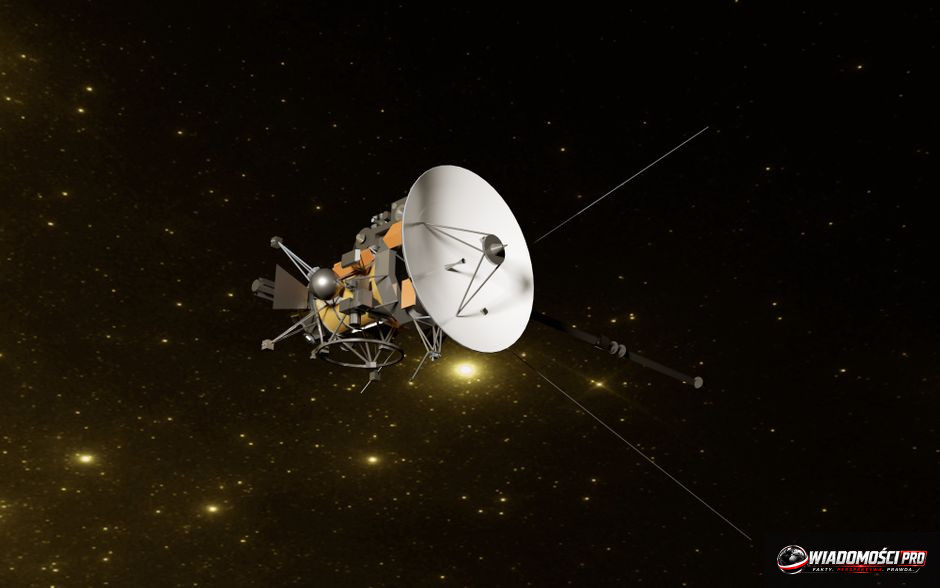
The construction and launch of the Europa Clipper probe cost approximately 5 billion dollars. The main goal of the mission is to investigate whether chemical and environmental conditions conducive to life exist beneath the icy shell of Jupiter's moon. This is the most ambitious undertaking in the history of astrobiology, intended to determine whether Earth-based biology is an exception or the rule on the scale of the Solar System.
The financial dimension of the search for life
Five billion dollars is a sum that shifts the center of gravity in space research. NASA is not carrying out a cheap expedition here, but a project of long-term strategic importance. These funds were spread over decades of planning, instrument construction, and maintenance of ground infrastructure. This capital is not used solely to send a probe into space, but primarily to protect it from the deadly radiation of Jupiter. The system of this gas giant is an environment of extreme magnetic activity, which forces engineers to use technologies not utilized in Mars or lunar missions.
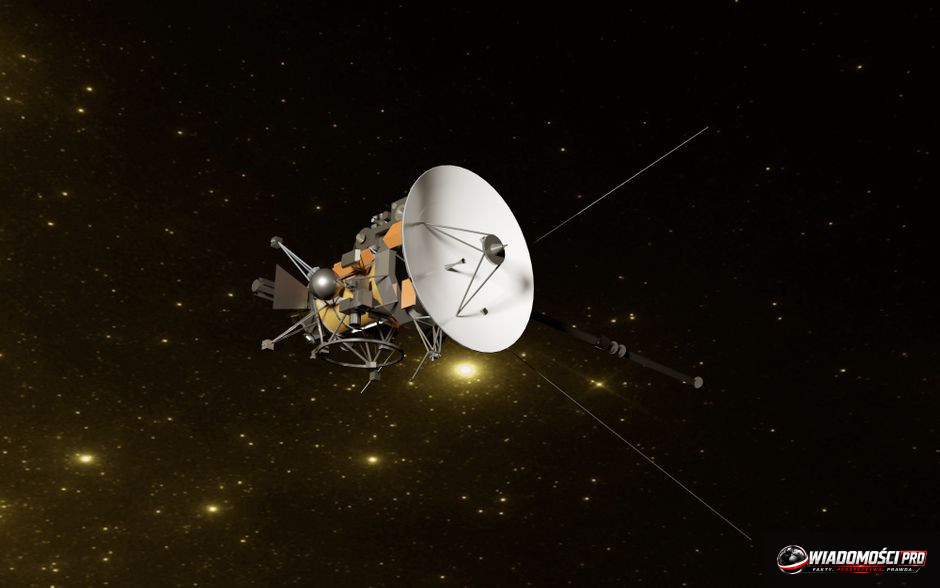
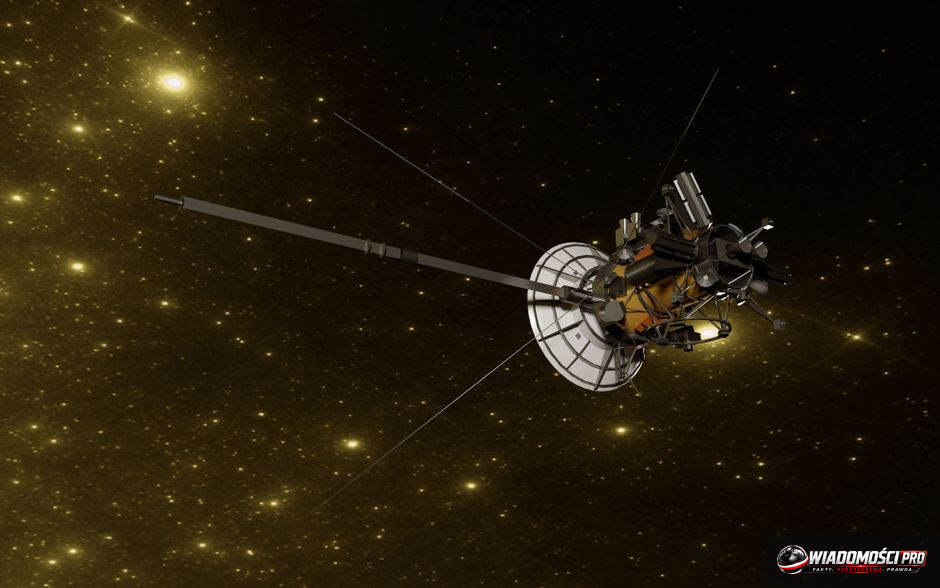
Every dollar of this sum has its justification in the technical specifications. Europa Clipper is not an ordinary satellite. It is a flying laboratory the size of a basketball court, considering the span of its solar panels. Such a scale of construction was necessary to ensure power at a distance of about 630 million kilometers from the Sun. In this region, light intensity is over 25 times weaker than in Earth's neighborhood. The ability to generate energy from such meager solar radiation resources defines the uniqueness of this mission.
Critics of the spending point to the risk that is an inherent element of space missions. If the probe fails due to electronics degradation caused by radiation, the investment will be considered a loss. However, from the perspective of astrobiology, this price is acceptable, provided that the data obtained by the instruments allow for determining the thickness of the icy shell and the composition of the ocean. The question of costs becomes secondary in the face of a potential discovery of biosignatures.
Research instrumentation: the probe's eyes and ears
The success of the mission depends on a set of nine main scientific instruments, which were selected to provide complementary data. The heart of the probe is the REASON system (Radar for Europa Assessment and Sounding: Ocean to Near-surface). This is an ice-penetrating radar tasked with examining the structure of Europa's shell. Scientists want to understand how thick the ice layer is and whether there are pockets of liquid water within it that could connect to the ocean underneath. REASON operates on radio waves that penetrate the ice, creating a geological map inaccessible to traditional cameras.
Another key tool is MISE (Mapping Imaging Spectrometer for Europa). This spectrometer analyzes light reflected from the moon's surface in the infrared. This allows for mapping the distribution of chemical substances: salts, organic contaminants, and water ice in various states of matter. Thanks to MISE, researchers want to identify organic compounds that are essential for the existence of life in the form known to us from Earth. It is MISE that is expected to point out places where surface chemistry suggests that matter from the depths of the ocean has been brought to the outside by geological processes.
One cannot overlook the EIS (Europa Imaging System). This is an advanced set of high-resolution cameras tasked with taking photos of the surface with extraordinary accuracy. EIS will map the geological structure, cracks in the icy shell, and any formations that might suggest cryovolcanic activity. This imaging is necessary to contextualize the chemical data provided by other instruments. Working alongside EIS is MASPEX (Mass Spectrometer for Planetary Exploration), which analyzes the composition of gases in Europa's thin atmosphere. MASPEX studies molecules released from the surface, which allows for remote sampling of the ocean's chemical composition without the need for landing.
Technological challenges in the shadow of Jupiter
Europa is not an easy target. It is located in a deep gravitational well of Jupiter, which means the probe must constantly correct its course. Additionally, Jupiter's magnetosphere accelerates charged particles to relativistic speeds, creating a radiation field that destroys silicon integrated circuits. To survive, the probe's most important electronics have been enclosed in a special vault made of titanium and aluminum nearly a centimeter thick. This "vault" acts as a shield that drastically reduces the amount of radiation reaching sensitive control systems.
NASA engineers also had to design a power system that could handle drastic temperature changes. During flights through the shadow of Jupiter or Europa itself, the temperature drops rapidly, which poses a huge challenge for batteries and the mechanisms moving the solar panels. The probe was tested in vacuum chambers simulating these conditions, but the reality of the Jovian system is always less predictable than the most accurate computer models.
The journey to the destination is spread over years. The probe must perform a series of gravity-assist maneuvers, using the magnetic fields of Earth and Mars to gain the necessary momentum. This is a stage where the devices remain in sleep mode or limited activity, saving resources. Every day of the flight is a test of patience for the engineers who monitor the technical condition of the probe from a distance of hundreds of millions of kilometers.
Why Europa?
Europa is considered the most promising object in the Solar System from the perspective of astrobiology. Unlike Mars, which is geologically dead, Europa shows signs of internal activity. Jupiter's tidal forces stretch and compress the moon, generating heat in its interior. This heat likely keeps an ocean of water in a liquid state, even though the temperature on the surface is extremely low. This ocean may contain twice as much water as all of Earth's oceans combined.
The presence of liquid water, however, is only one of the conditions. Life also requires energy and chemical elements. Scientists assume that hydrothermal vents, similar to those on Earth's ocean floor, may exist on the bottom of Europa's ocean. Such vents provide minerals and heat that could drive the metabolic processes of chemosynthetic organisms. If Europa possesses such places, the probability of finding traces of life increases significantly. Europa Clipper will not directly check the ocean floor, but it will investigate whether chemical molecules originating from the interior reach the surface.
Skeptics note that the ocean might be too salty or too acidic to support life. There is also the problem of ice thickness, which could range from a few to even several dozen kilometers. If the shell is too thick, the transport of nutrients from the surface to the ocean could be blocked. The Clipper mission is tasked with answering the question of how intense the exchange of matter between the surface and the depths is. This is a fundamental unknown that will decide the success or failure of the mission.
Rivalry in the shadow of science
Modern space exploration does not take place in a political vacuum. The American Europa Clipper program is an expression of NASA's desire to maintain its position as a global leader in planetary research. Although the mission is officially purely scientific, its implementation in the context of a race with other space agencies is obvious. Europa Clipper is a demonstration of engineering capabilities that allow for operations in the most hostile corners of our system.
The European Space Agency (ESA) is conducting its own project, JUICE (Jupiter Icy Moons Explorer), which is also studying the Jovian system. Both missions, however, are spread out over time and have slightly different priorities. NASA has opted for intensive, multiple flybys near Europa, performing nearly 50 of them. This allows for obtaining data from different areas of the surface at a relatively low cost compared to missions that would require a landing. Such a strategy allows for systematic "scanning" of the moon without the need to risk losing the probe during a complex landing procedure.
Cooperation between agencies remains a fact. Data obtained by Clipper will complement those provided by the JUICE mission. In the scientific community, the exchange of information is the norm, even if institutions compete for priority in publications. For the taxpayer who funds these billions, however, the result is what matters most. Is Europa a habitable world? This question dominates the public debate and sets the bar of expectations at a level that will be difficult to meet if the probe only provides data about dead ice.
Expectations vs. reality
NASA scientists openly admit that Europa Clipper does not have the tools to detect a living microorganism. The probe is looking for chemistry, not biology. This is a subtle but important difference that the media often overlooks. Success will be the detection of complex organic compounds or isotopes that, under Earth conditions, are an unambiguous indicator of biological processes. If, however, such traces are not found, it does not mean that life does not exist there. It may be hidden too deep or in a way that current instruments cannot interpret.
There is also a risk that the data will be ambiguous. In astronomy, we very often encounter signals that can be interpreted in many ways. The probe will transmit terabytes of data, the analysis of which will take years. During this time, the mission will be the subject of endless debates among astrobiologists. Are the detected salts the result of geological processes or a remnant of biological activity? We will not find the answer to this question immediately after the flyby.
For the general public, this mission is a symbol of our ambitions. We are a civilization that sends machines to places so distant and hostile just to check if we are alone. This search has an almost philosophical dimension. Regardless of the result, Europa Clipper will go down in history as a project that pushes the boundaries of what we can build and how far we can reach. If, however, it turns out that Europa is just a frozen block of ice, it will be a signal that life in space may be a much rarer phenomenon than we optimistically assumed in the 20th century.
What does this mean for the future?
The success of Europa Clipper will pave the way for subsequent missions. If the probe shows that conditions conducive to life exist under the ice, the next logical step will be to send a lander or even an autonomous submarine capable of breaking through the ice. This, however, would require a budget an order of magnitude larger than the current 5 billion dollars. NASA must first receive a "green light" from nature in the form of promising data.
If, on the other hand, the mission does not bring the expected evidence, NASA may turn its attention to other moons, such as Enceladus orbiting Saturn. Geysers ejecting water from a subsurface ocean have also been detected there, which provides direct access to samples of matter from the depths. Europa Clipper is therefore part of a broader plan to explore the oceans of the Solar System. Every piece of information gathered reduces uncertainty and allows for better planning of future flights.
Taxpayers must be aware that this investment will not bring a direct economic return in the form of consumer technologies or raw materials. Its return is knowledge. It is a long-term investment in understanding the mechanisms of the universe. In a world where immediate effect is increasingly valued, this mission reminds us of the value of patience and painstaking research work. Europa Clipper is our collective effort to define humanity's place in the cosmos. Now that the probe is on its way, it remains to wait for the first signals from the Jovian system, which may forever change the textbooks of Earth and space sciences.
Questions and answers
Will Europa Clipper land on the surface of the moon?
No, the probe was designed to perform numerous flybys near Europa to collect data from a safe distance from Jupiter's strong radiation. A landing would be too risky and expensive with the current state of technology.
When will the probe reach its destination?
The journey takes several years. The probe uses gravity-assist maneuvers, and the planned arrival at the Jovian system is scheduled for the turn of the decade, after a series of complex course corrections.
Can the mission definitively confirm life?
The probe is not equipped with devices for the direct detection of microorganisms. Its task is to investigate whether the chemical and environmental conditions on Europa allow for their existence. Confirming life would require taking a physical sample, which is beyond the current technical capabilities of the probe.
Why was Europa chosen and not another moon?
Europa has the strongest evidence for the existence of a vast, subsurface ocean of water in contact with a rocky floor, which is crucial for chemical processes that could support life.
What will happen to the probe after the mission ends?
After completing all planned flybys and collecting data, the probe will most likely be directed in a controlled manner toward Jupiter's atmosphere to avoid the risk of contaminating the moon with Earth microbes.
Sources
- Start of the Europa Clipper mission to Europa - astronet.pl
- Europa Clipper probe to search for life on Europa - Urania - Polish Astronomical Portal
- Start of the Europa Clipper mission [BROADCAST]. Americans to overtake Europeans in the search for life on Europa - Wyborcza.pl
- Beginning of the Europa Clipper mission - Kosmonauta.net
- Europa Clipper has launched. It will investigate whether there are conditions for life on Jupiter's moon - Polskie Radio 24
- Searching for life in the Solar System beyond Earth. NASA sends a mission - Geekweek Interia
- NASA sends a probe to Europa. Europa Clipper mission has launched - WP Tech
- Flying to search for life. Start of the NASA mission in just three weeks - Antyweb
Article prepared by the Wiadomości PRO editorial team with the support of artificial intelligence. Facts come from the sources listed above.

Komentarze (0)
Ładowanie komentarzy...