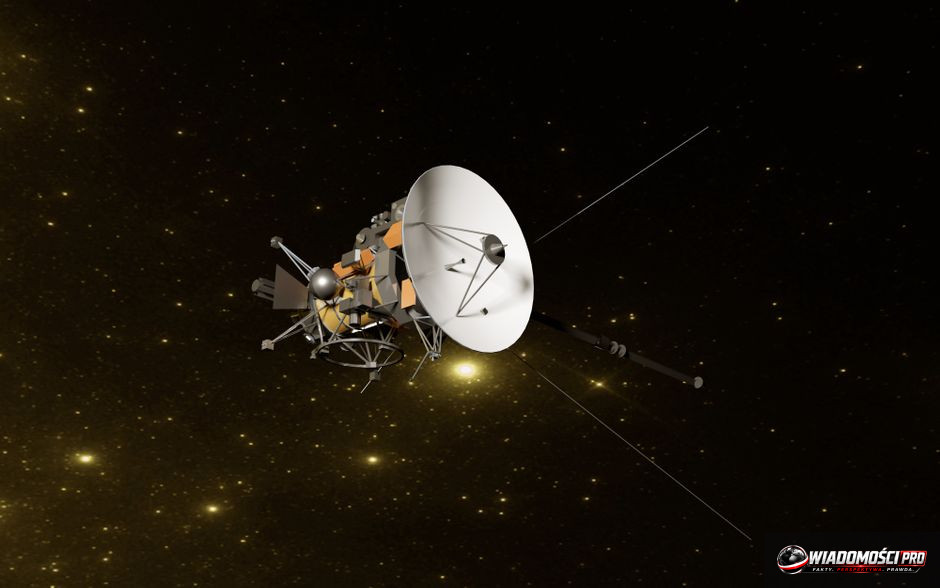
The construction and implementation of the Europa Clipper mission cost approximately 5 billion dollars. The probe was not designed to directly detect microorganisms, but to conduct a detailed analysis of environmental conditions that could support life. The mission focuses on verifying whether the ocean hidden beneath the icy crust possesses the necessary chemical ingredients, energy sources, and stable water resources.
Scientific goals of the Europa Clipper mission
Europa, the fourth-largest moon of Jupiter, is an object with a diameter of about 3,100 kilometers, making it slightly smaller than Earth's Moon. Beneath a thick, icy crust, with an estimated thickness of 15 to 25 kilometers, lies a global saltwater ocean. The volume of this reservoir could be twice as large as all of Earth's oceans combined. The main task of the Europa Clipper probe is to study three key pillars of habitability: the presence of liquid water, energy sources, and appropriate chemistry.
The probe will not land on the surface. Instead, it will perform nearly 50 close flybys of Europa at altitudes ranging from 25 to 2,700 kilometers. Each of these flybys is an opportunity to use a suite of advanced research instruments. A key tool is REASON (Radar for Europa Assessment and Sounding: Ocean to Near-surface). This radar instrument operates in two frequency bands and is designed to penetrate the icy crust, creating a map of its internal structure. This will allow scientists to locate potential water pockets trapped in the ice, which may be crucial for the exchange of matter between the surface and the depths.
In chemical studies, MISE (Mapping Imaging Spectrometer for Europa) will play an important role. This instrument will analyze the spectrum of reflected sunlight to identify the distribution of water ice, salts, organic compounds, and other materials on the moon's surface. These data will provide answers to the question of whether geochemical processes are occurring in the ocean that could deliver organic matter to the surface as a result of tectonic or cryovolcanic processes.
Another element of the equipment is EIS (Europa Imaging System), a set of high-resolution cameras that will create maps of the surface at a centimeter scale. In turn, E-THEMIS (Europa Thermal Emission Imaging System) will focus on detecting thermal anomalies. If warmer areas exist on the surface, it could indicate geological activity or recent water ejections from the moon's interior.
Budget and funding of the NASA project
Financing such a complex undertaking required a stable budget framework, which was, however, subject to adjustments during the multi-year design cycle. The 5 billion dollar figure covers the full spectrum of activities: from initial design work, through component production and assembly, to the costs of the launch vehicle and maintaining the operations team throughout the mission's duration.
An analysis of NASA's expenditures points to the logistical complexity of managing projects with such a long time horizon. In the context of American space programs, Europa Clipper fits into the priorities concerning the study of celestial bodies in the outer Solar System. Competition for funds with other projects, such as the Artemis program, forces engineers and mission managers to take a rigorous approach to operating costs. Each stage of the mission, from Phase A to Phase E, is strictly monitored for resource efficiency, as any delays in instrument production or environmental testing generate additional costs for the agency.
From the point of view of the economics of science, 5 billion dollars is a cost spread over nearly two decades of work by thousands of engineers, scientists, and specialists. This budget is not just the price for equipment. It is an investment in the development of technologies that may find application in other missions in the future, for example, in studies of Saturn's moons, Enceladus or Titan.
Probe technology and its equipment
The Europa Clipper probe is the largest spacecraft NASA has ever built for planetary exploration. When its solar panels are deployed, its span is over 30 meters, which is similar in size to a basketball court. This huge surface area is necessary because, in the vicinity of Jupiter, the intensity of sunlight is more than 25 times lower than near Earth.
At the heart of the probe is a "vault" – a special, thick-walled container made of titanium and aluminum. It protects the control electronics and research instruments from the deadly radiation generated by Jupiter. Without this shield, sensitive semiconductors would degrade within just a few days of being in the planet's intense radiation field.
In addition to the instruments mentioned earlier, on board is MASPEX (Mass Spectrometer for Planetary Exploration). It is a mass spectrometer that will study the chemical composition of Europa's atmosphere and particles ejected from its surface into space. MASPEX will allow for an extremely accurate analysis of gases, which may reveal the presence of organic compounds. It is supported by SUDA (Surface Dust Analyzer), which detects ice and dust particles hitting the probe during flybys. Analyzing the composition of these particles will allow us to understand what is on the moon's surface without having to touch it.
The last key instrument is PIMS (Plasma Instrument for Magnetic Sounding). The probe will measure the interaction of Jupiter's magnetic field with Europa. Europa, moving within Jupiter's magnetosphere, induces its own magnetic field, which is direct evidence of the existence of a current-conducting saltwater ocean beneath its surface. PIMS will allow for a precise determination of the thickness of the icy crust and the depth and salinity of the ocean.
Schedule of the journey to the Jupiter system
The flight trajectory of Europa Clipper is the result of advanced celestial mechanics calculations. The launch of the mission in October 2024 began a process that involves the use of gravity assists. The probe does not have the fuel that would allow for a direct flight in a straight line toward Jupiter while maintaining a high mass.
In 2025, the probe will perform a flyby near Mars, and in 2026 it will approach Earth again. These maneuvers will allow for a change in speed and flight trajectory, which is necessary to reach the target in 2030. Throughout the years of the journey, onboard systems will undergo periodic tests, and scientists will calibrate the research instruments.
The long time to reach the destination is a result of the technical limitations of launch vehicles. Despite the powerful thrust of the Falcon Heavy rocket engines, the probe's mass exceeding six tons forces economical energy management. Each maneuver is planned in advance to avoid unnecessary fuel consumption, which will be needed to perform braking maneuvers when entering Jupiter's orbit and for subsequent orbit corrections during flybys of the moon.
Environmental challenges in Jupiter's surroundings
Jupiter is the most powerful planet in the Solar System, and its magnetosphere is one of the most hostile environments for electronics. The planet's strong magnetic field traps charged particles, accelerating them to enormous speeds, which creates radiation belts of destructive intensity. For the Europa Clipper mission, this is the greatest operational challenge.
NASA engineers had to conduct thousands of tests to ensure that the materials used to build the probe would not suffer from fatigue under the influence of ionizing radiation. The titanium shield mentioned earlier has walls with a thickness of up to 9 millimeters. This solution allowed for limiting the radiation dose to which the probe's processors and memory are exposed to a level acceptable for space mission standards.
The probe will not stay in a permanent orbit around Europa, because staying in the moon's strongest radiation belts would lead to a power system failure in a short time. Instead, a strategy of elliptical orbits around Jupiter was adopted, which allows for flybys of Europa while simultaneously exiting the area of greatest radiation danger quickly. This "hit and run" tactic is crucial for the survival of the electronics throughout the planned four years of scientific operations.
A symbolic message in space
On board the probe, a plaque has been placed that serves as a kind of calling card for humanity. Made of metal, it contains engravings that combine science with culture. The plaque includes the names of the participants of the "Message in a Bottle" campaign, as well as nanostructures with sound waves of the word "water" in over a hundred languages of the world.
For engineers and astrophysicists, this is a gesture reminding us of the humanistic dimension of space exploration. Although the main goal remains hard science, the symbolic elements build a bond between the public and NASA's ambitious plans. It is worth noting that the inclusion of these elements did not significantly burden the budget and constitutes an important element of the mission's communication.
What this means for you
The Europa Clipper mission represents a turning point in astrobiology, because for the first time in history, we have instruments capable of such detailed analysis of an oceanic environment outside of Earth. If the mission results confirm the presence of chemical "building blocks" of life, i.e., amino acids, sugars, or other complex compounds in Europa's ocean, it will change the definition of habitability in our Solar System.
For the average observer, this means pushing the boundaries of what we consider possible. Even if the mission does not find direct evidence of the existence of organisms, the mere presence of an environment suitable for their development will be reason enough to consider it a success. On the other hand, potential negative results – that is, determining that the ocean is chemically dead – will force astrobiologists to verify models of the origin of life. In both cases, the probe will provide data that will be analyzed for decades to come. The cost of five billion dollars, although high, is the price for eliminating guesswork and replacing it with hard evidence from a distant part of space.
Questions and answers
Will Europa Clipper land on the moon's surface?
No. The probe was designed exclusively to perform a series of close flybys over Europa's surface. Landing would be too risky due to the unknown surface topography and extreme radiation.
When exactly will the probe reach the Jupiter system?
The probe is expected to reach the Jupiter system in 2030. The journey will take about six years, during which the device will use Earth and Mars gravity assists to gain the appropriate orbital speed.
What was the total cost of the project?
The construction, implementation, and operations of the Europa Clipper mission consumed about 5 billion dollars. This amount covers the full project lifecycle, from concept to technical support after launch.
Is the probe capable of directly detecting life?
Not directly. The instruments on board are used to analyze the chemical composition, temperature, structure of the icy crust, and magnetic properties of the moon. The goal is to check whether Europa's ocean possesses the ingredients necessary to support life, not to find the organisms themselves.
How does the probe protect itself from Jupiter's radiation?
Key electronic components are enclosed in a special vault made of titanium and aluminum. Additionally, the flight trajectory has been planned so that the probe spends as little time as possible in Jupiter's strongest radiation belts.
What happens if the electronics fail during the journey?
The probe has redundancy systems, but in the event of a critical electronics failure, the mission will end in failure. Therefore, engineers conducted rigorous stress tests on all components in conditions simulating Jupiter's extreme radiation.
Is the Europa Clipper mission the only project studying Europa?
Currently, it is the most important mission dedicated directly to Europa. Other probes, such as the European Space Agency's JUICE mission, are also conducting research in the Jupiter system, which allows for scientific synergy and data exchange between agencies.
Sources
- Start of the Europa Clipper mission to Europa - astronet.pl
- Europa Clipper probe will search for life on Europa - Urania - Polish Astronomical Portal
- Start of the Europa Clipper mission [BROADCAST]. Americans will overtake Europeans in the search for life on Europa - Wyborcza.pl
- Beginning of the Europa Clipper mission - Kosmonauta.net
- Europa Clipper has launched. It will study whether there are conditions for life on Jupiter's moon - Polskie Radio 24
- They are looking for life in the Solar System outside Earth. NASA sends a mission - Geekweek Interia
- NASA sends a probe to Europa. The Europa Clipper mission has launched - WP Tech
- NASA sends a "message in a bottle" into space. You can sign it! - Radio ESKA
Article prepared by the Wiadomości PRO editorial team with the support of artificial intelligence. Facts come from the sources listed above.

Komentarze (0)
Ładowanie komentarzy...