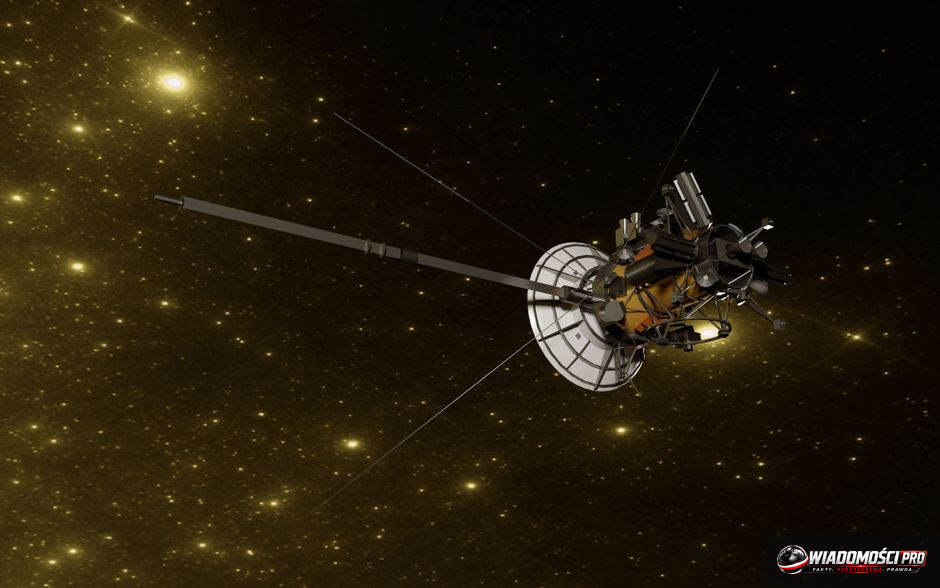
The Europa Clipper mission, with an estimated cost exceeding 5 billion dollars, is tasked with investigating whether conditions conducive to supporting life exist beneath the icy shell of Jupiter's moon. The probe launched on October 14, 2024, on its multi-year journey through the Solar System. Its primary goal is to determine whether the depths of the ocean hidden under the ice harbor an environment capable of sustaining biological metabolic processes.
Technology for searching for life in extreme conditions
Europa Clipper is not a lander. It is a powerful orbital probe that will use a suite of nine highly specialized scientific instruments during 49 close flybys of the moon. Each device plays a strictly defined role in the mosaic of research intended to allow for an understanding of the chemical and physical composition of this object.
The REASON radar (Radar for Europa Assessment and Sounding: Ocean to Near-surface) is the foundation of the mission regarding the study of the icy shell's structure. It emits radio waves that penetrate the ice to a depth of up to several kilometers. Thanks to this, scientists will receive data on the thickness of the ice cover and the location of potential pockets of liquid water within it. Understanding ice dynamics is crucial, as this is where the exchange of matter between the surface and the deep ocean may occur.
The Europa-UVS (Europa Ultraviolet Spectrograph) will, in turn, analyze the composition of the moon's atmosphere and search for water vapor plumes. If Europa ejects water or other volcanic compounds into space, this instrument will be able to capture the chemical signature of these ejections during the probe's flybys. This is complemented by the MISE (Mapping Imaging Spectrometer for Europa), which will create a map of the distribution of organic compounds, salts, and various types of ice on the surface.
Crucial for understanding the moon's interior is the ECM (Europa Clipper Magnetometer). Jupiter possesses an extremely strong magnetic field that induces electric currents in Europa's conductive ocean. By analyzing changes in the magnetic field caused by Europa itself, the ECM will allow for the determination of the depth at which the ocean is located, as well as its salinity. These data are of fundamental importance, as high salt concentration and access to chemical energy are basic requirements for the existence of life as we know it on Earth.
One cannot overlook the EIS (Europa Imaging System) camera. Its task is to take high-resolution photos of the surface, which will allow geologists to analyze tectonic processes and ice activity. EIS is tasked with identifying young geological formations where ice may have recently been displaced from deeper layers. The suite of instruments is complemented by dust and ion detectors, which are meant to directly "smell" particles released from the surface by bombardment from Jupiter's radiation.
The challenge of radiation and flight logistics
Jupiter is one of the most hostile environments in the entire Solar System. The planet generates gigantic radiation belts that are lethal to delicate electronics. The Europa Clipper probe was constructed to survive this constant bombardment. A key structural element is the so-called "Vault" – an armored safe made of titanium and aluminum with wall thicknesses reaching up to 9 millimeters. It houses the most important computing units and control systems, which must function for years for the mission to be considered a success.
Designing the probe for radiation resistance was the greatest engineering challenge. Each component had to undergo rigorous testing in chambers simulating Jupiter's environment. The probe does not have a permanent orbit around Europa itself, because staying within its radiation belts for an extended period would destroy even the best-armored equipment. Instead, the flight trajectory was planned as a series of flybys. The probe will enter the moon's sphere of influence, collect data, and then move away to allow the electronics to recover and avoid a cumulative dose of radiation.
The logistics of the journey itself are equally impressive. The probe launched in October 2024 but will not reach the Jovian system until 2030. To gain sufficient speed and precisely reach its destination, it uses gravity assists. It will first fly near Mars in February 2025, and then return to the vicinity of Earth in December 2026. These maneuvers allow for fuel savings, as the fuel supply had to be minimized in favor of heavy scientific equipment and radiation shielding. Every second of the maneuver is precisely calculated, and the margin for error in interplanetary navigation is extremely narrow.
A geopolitical race for scientific precedence
The rivalry for dominance in the space research sector in the Jupiter region is not limited to science alone. Europa Clipper is a manifestation of US technological power. By sending a probe with such a huge budget, the Americans are clearly communicating their aspirations. In the space industry, there is a belief that whoever first indisputably demonstrates conditions suitable for life on Europa will set the direction for the development of astrobiology for decades to come.
The European Space Agency (ESA) is carrying out its own JUICE (JUpiter ICy moons Explorer) mission, which also focuses on Jupiter's moons, including Europa. However, it is NASA, thanks to huge financial outlays, that managed to design a dedicated mission exclusively for Europa. Washington treats this as a priority that is intended to solidify the US position as a leader in deep space research. As Europa Clipper left Earth's orbit, it became clear that the American administration does not intend to concede the field to European or Asian partners in this prestigious area.
In this race, scientific curiosity mixes with superpower ambitions. For the research sector in Europe, every American achievement is a signal that project funding must be even more aggressive and better organized. NASA, despite a tight national budget, has bet everything on one card. Europa Clipper has become the agency's pride and joy, serving as a demonstrator of engineering capabilities. This is no longer just a research project; it is foreign policy carried out by means of a space probe.
A message in a bottle as a symbol of humanity
On board the probe is a metal plate on which millions of names of people who took part in the "Message in a Bottle" campaign have been engraved. This gesture, initiated in 2023, was intended to engage public opinion in a project of such a huge scale. From the engineers' point of view, placing a titanium plate does not change the mission parameters, but for the agency, it is a powerful tool for building social capital.
Faced with billion-dollar costs, NASA must justify its expenditures to taxpayers. Campaigns promoting human involvement in space missions serve to maintain the interest of the media and politicians. The question of whether such initiatives really bring us closer to space remains open. The signature on the titanium plate is more of a symbolic monument to the human need for discovery than a real scientific element. In the harsh radiation environment of Jupiter, this message will survive for centuries, being a silent witness to human presence in the Solar System, even if no one other than robots will have the opportunity to read it.
The irony of this situation is that we are sending our names to a place where the chance of finding any form of life is the subject of fervent scientific disputes. If Europa turns out to be a dead rock, the plaque will remain only an expression of human hope that we are not alone. However, if the instruments detect amino acids or other precursors of life, the signature will become part of one of the most important pages in human history.
The future of Jupiter research and consequences for science
The mission schedule is spread over years, and each phase of the flight carries technical risks. From the moment of launch on October 14, 2024, the probe has been in an autonomous phase, relying on life support and navigation systems. After arriving at its destination in 2030, the most intensive stage will begin. Data will flow to Earth with a delay resulting from the distance, and their analysis will take several more years.
Skeptics often raise the issue of costs. 5 billion dollars is a sum that could have financed thousands of smaller research projects on Earth. NASA, however, responds that space exploration forces the development of technologies that sooner or later find application in everyday life – from materials science to advanced electronics resistant to harsh conditions. Europa Clipper is a testing ground for technologies that in the future will allow us to build bases on the Moon or Mars.
The catch lies in the nature of the discoveries. Even if we find evidence of an environment conducive to life, this does not mean the automatic discovery of organisms. NASA is building apparatus capable of detecting organic chemistry, but whether these compounds are the product of biological processes will remain a subject of interpretation by researchers. This creates room for overinterpretation and years of disputes in the academic community. NASA must be prepared for the fact that their "most expensive empty note" may only be verified by subsequent generations of probes.
Conclusion: Is this a new era of exploration?
Europa Clipper is not the end of the road, but the beginning of deep exploration of Jupiter's icy moons. The conclusion for future missions is clear: if we want to search for life in places so distant and hostile, we must rely on multi-tasking robotic platforms that are able to survive in extreme radiation conditions. Future projects will have to further reduce the weight of instruments while simultaneously increasing their sensitivity, which in turn will force innovation in the field of miniaturization.
For the international community, this mission sets a new standard. It is no longer just about a simple flyby and sending a few photos, but a comprehensive in situ chemical analysis. If NASA confirms that Europa has an active, salty ocean with access to energy, then subsequent missions will have to focus on landing and collecting samples directly from the surface or even from plumes ejected into space. This will be the next, even more difficult step, requiring technologies that are only now beginning to emerge in laboratories.
The price for this knowledge is high, but on a civilizational scale – necessary. If it turns out that life can exist in such extreme conditions, then the definition of the "habitable zone" in the Solar System will be expanded to include the moons of gas giants. This will change our approach to searching for exoplanets and the way we look at our place in the universe. It remains to wait for the first data that will flow from the apparatus after 2030, as they will decide whether 5 billion dollars was well-invested capital in our future knowledge about life.
Questions and answers
When will the Europa Clipper probe reach its destination?
The probe will reach the Jupiter region in 2030, after performing a series of gravity assist maneuvers near Mars and Earth.
Why did NASA choose Europa and not another moon?
Europa has an ocean of liquid water beneath an icy shell, which makes it the most promising place in the Solar System in terms of conditions conducive to supporting life, surpassing even other moons of Jupiter or Saturn in this respect.
Is it still possible to sign up for the 'message in a bottle'?
No, the list of names was closed before the mission launch in October 2024; the data has already been engraved on the probe and is on its way toward Jupiter.
Which instruments are most important for the success of the mission?
Although all nine instruments are crucial, the greatest hopes are pinned on the REASON radar (studying the icy shell) and the ECM magnetometer (studying the ocean), which together are intended to answer the question about the moon's biological potential.
Will the probe land on the surface of Europa?
No, Europa Clipper is an orbital probe. The mission assumes only flybys of the moon, which results from the need to protect the probe's electronics from Jupiter's lethal radiation.
Sources
- Launch of the Europa Clipper mission to Europa - astronet.pl
- Europa Clipper probe will search for life on Europa - urania.edu.pl
- Launch of the Europa Clipper mission [BROADCAST]. Americans will overtake Europeans in the search for life on Europa - Wyborcza.pl
- Beginning of the Europa Clipper mission - Kosmonauta.net
- Europa Clipper has launched. It will investigate whether there are conditions for life on Jupiter's moon - Polskie Radio 24
- Searching for life in the Solar System outside Earth. NASA sends a mission - Geekweek Interia
- NASA sends a probe to Europa. Europa Clipper mission has launched - WP Tech
- NASA sends a "message in a bottle" into space. You can sign it! - Radio ESKA
Article prepared by the Wiadomości PRO editorial team with the support of artificial intelligence. Facts come from the sources provided above.


Komentarze (0)
Ładowanie komentarzy...