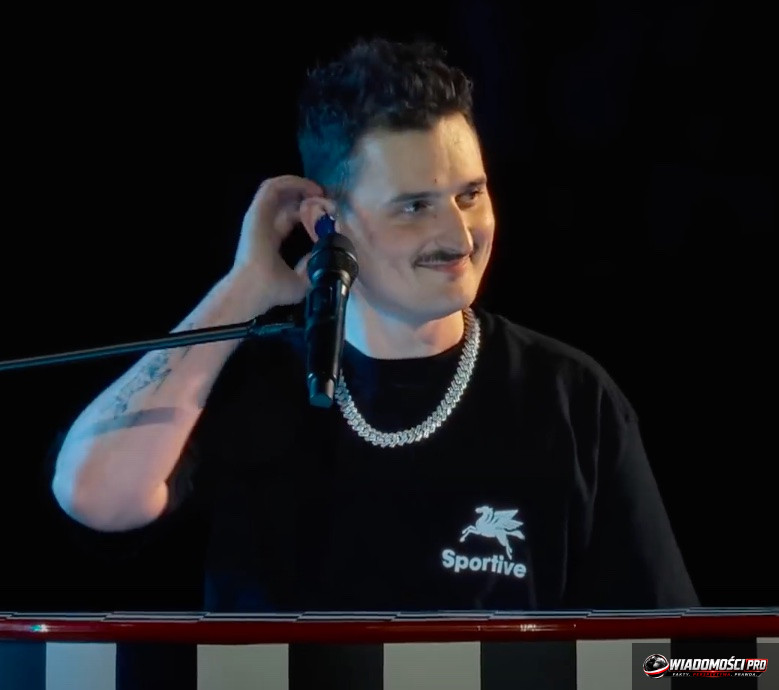
Dawid Podsiadło sold out all tickets for seven stadium concerts in 2024, and in 2026, during the "Obrotowy Tour," he attracted a total of 90,000 spectators to the Stadion Śląski in Chorzów. This success was based on a rigorous marketing strategy that involved dynamic management of ticket pools based on real-time demand analysis, which allowed for the rapid addition of dates in cities with the highest interest. Specialized event agencies were responsible for the logistics and technical support of such massive undertakings, having to synchronize the work of hundreds of subcontractors to meet the requirements of a 360-degree stage.
Mechanics of success: The 2024 season
The 2024 stadium season did not start in June, but half a year earlier. A key moment was the decision on December 21, 2023, when the seventh concert of the tour was announced. This decision was made in response to data from the sales system, which indicated that the initial number of concerts would not satisfy the market. The team managing the artist's career adopted an operational model in which financial risk was minimized by verifying demand before officially confirming the full tour.
Tarczyński Arena in Wrocław and Polsat Plus Arena in Gdańsk became testing grounds for this model. The organizers did not rely on intuition, but on hard analytics. When the ticket pool in Gdańsk was exhausted at a rate exceeding forecasts, a decision was made to add another date. This approach forced logistics teams to perform rapid technical reconfigurations between concerts. Transporting tons of lighting and sound equipment between cities required a precise schedule in which every hour had an assigned cost value.
The ticket sales systems for these events were not just transactional tools. They served as a barometer of sentiment. Thanks to the implementation of advanced queuing algorithms, server overloads—which often paralyze sales for large events—were avoided. Ticket prices in this model were rarely fixed. Mechanisms were used that allow for revenue optimization in the event industry, which, on the scale of seven stadiums, translated into multi-million turnovers. From a business perspective, the seven concerts in June 2024 were the most intense month in Podsiadło's career to date.
"Obrotowy Tour" 2026: Technical challenges
In June 2026, Dawid Podsiadło returned to stadiums, this time with the "Obrotowy Tour" project. The Stadion Śląski in Chorzów, which hosted 90,000 spectators over two days, became an arena where artistic ambitions clashed with the physical limitations of the architecture.
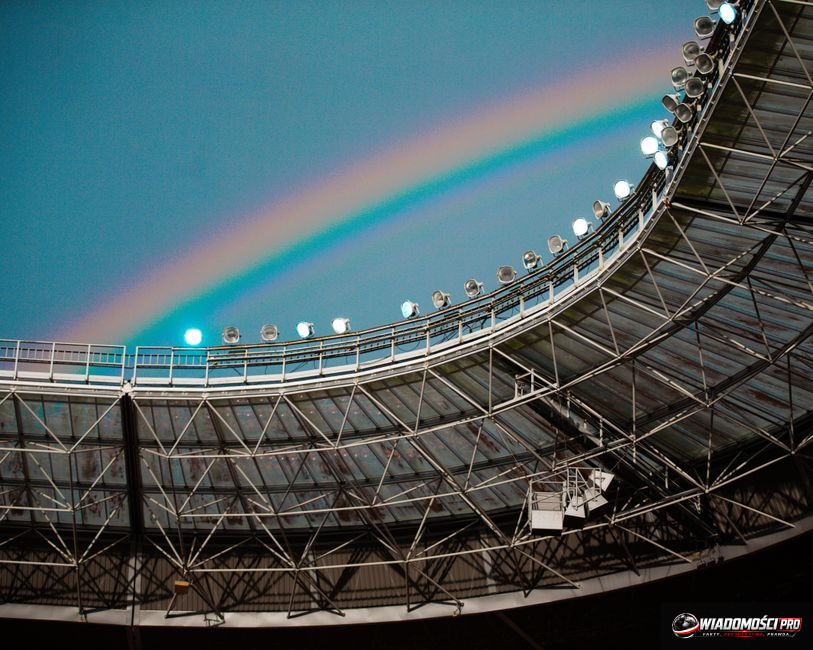
The central placement of the stage, characteristic of this tour, was theoretically meant to bring the musician closer to the audience. Practice showed, however, that a stadium with an open roof structure, like the Chorzów facility, poses a challenge for line-array systems. The sound, which was intended to reach all sectors with equal clarity, encountered obstacles in the form of reflections from concrete structures. Many reports after the concerts on June 6 and 7, 2026, indicated that for a significant portion of the audience, the music was muffled or distorted by echo.
This problem was not solely technical. With 45,000 people at one concert, every second of sound delay in delay systems becomes noticeable to the human ear as discomfort. Sound engineers had to balance the power of the sound system with its selectivity. Some viewers in the higher stands felt a dissonance between what they saw on the big screens and what reached them from the speakers. This phenomenon exposed the limits of technological capabilities in Polish stadium conditions. Even the most advanced sound systems cannot fully eliminate the physics of reverberation in such a huge, open space.
Logistics as a military operation
Crowd management at the Stadion Śląski during the "Obrotowy Tour" required coordination on the level of a military operation. The agencies responsible had to consider not only the throughput of entrance gates but also critical infrastructure, such as the availability of catering points and restrooms. With 45,000 people at a single event, even the smallest delay in the flow of people between sectors generates a risk of congestion.
Public transport planning in Chorzów was a component of the attendance success. The organizers cooperated with local authorities to secure additional transport lines. Without this cooperation, the logistics of leaving the stadium after the show would have taken hours, which would have been a serious problem in the context of safety. Every aspect of this event was scaled to the limits of the facility's capacity.
Operating costs for a tour of this size are enormous. Renting the stadium, technical security, salaries for hundreds of security and technical staff, and the costs of transporting equipment—all this adds up to budgets counted in tens of millions of zlotys. In this context, 90,000 tickets is not just an artistic success, but above all a necessity for the project to break even. Every empty seat in the stands is a loss that, at this scale, is unacceptable to the promoter.
Artist-audience relationship: The social dimension
In June 2026, during the concert in Chorzów, a situation occurred that became a symbol of Podsiadło's ability to build a bond with the audience. When nearly one hundred thousand fans sang "Sto lat" to Maja Chwalińska on June 7, the moment gained a life of its own on the internet. This is an example of using star status to create micro-communities within a stadium crowd.
Social media functions as an extension of the concert. Participants, recording these moments with their phones, create their own narrative of the event, which often overlooks technical shortcomings. From a sociological perspective, it is these moments that make a fan forgive poor sound or long wait times in queues. However, there is a clear difference between an emotional experience and musical quality.
For part of the audience, the stadium becomes a place for a shared ritual, where music plays the role of background. On the other hand, there is a growing group of technically aware listeners for whom a high ticket price is associated with the expectation of perfect sound. In Chorzów, these two groups came into conflict. The emotional success of the concert was undeniable, but the technical dissatisfaction left a question about whether the Polish market is able to provide sound quality that matches the scale of a stadium.
Ticket strategy and its effects
The ticket sales policy for Podsiadło's tours is based on a deficit model. Selling out tickets quickly creates a sense of exclusivity. When more concerts were added in 2024, it was not done chaotically. Each decision about a new date was preceded by an analysis of data from sales systems. This is an approach that excludes "shooting blindly" at stadium venues.
From the promoter's point of view, adding concerts in the same cities is financially safer than entering a new market. Logistical costs, such as assembling a 360-degree stage, are incurred once for the entire facility. Each subsequent day of a concert in the same place generates pure profit from tickets with minimized fixed costs. This is a corporate tour management model that has been perfected in Poland.
However, does this strategy not lead to saturation? Mass production of concerts makes them a market product more than a unique artistic experience. The risk of routine is real. Podsiadło's team must now face the expectations they created themselves. If the next stadium tour does not bring technical innovations that eliminate acoustic problems, the enthusiasm of fans may be replaced by a cold calculation of the profitability of buying an expensive ticket.
Economic importance of stadiums
Stadiums in Poland, built mainly for sports events, are experiencing a renaissance thanks to concerts. For venues like the Stadion Śląski or Tarczyński Arena, Dawid Podsiadło's tours are a key source of revenue. Sports do not generate enough events to maintain such extensive infrastructure. Concerts fill this gap.
However, using stadiums for musical purposes carries the risk of turf degradation and the need for costly maintenance. Promoters must cover these costs, which further burdens the event budget. Cities where concerts take place also benefit. Thousands of people arriving for the event mean profit for hotels, restaurants, and local transport. The multiplier effect in the service sector on concert days is noticeable in city statistics.
Nevertheless, logistical challenges remain a constant element of these events. Chorzów in June 2026 was paralyzed by traffic, which shows that urban infrastructure does not always keep up with the pace set by the concert industry. Podsiadło's attendance success forces host cities to revise their communication plans. This is no longer just a music concert; it is crisis management on a micro-scale.
The future of Polish stadium tours
The success of the "Obrotowy Tour" in 2026 confirms that the Polish listener is ready for regular participation in mass events. However, the music industry is hitting a wall. The acoustic problems at the Stadion Śląski are a warning signal. If sound quality does not become a priority on par with attendance, Polish stadiums may cease to be attractive to more demanding fans.
Subsequent tours will have to answer the question: how to reconcile 50,000 people in one space with audiophile requirements? The answer likely lies in investments in even more advanced sound systems that will be able to evenly cover every sector with sound, regardless of the facility's geometry. But this will entail an increase in ticket prices, which in turn may limit the accessibility of events for a wider audience.
Dawid Podsiadło has dominated the market, setting standards that other Polish artists can only envy. At the same time, he has become a hostage to his own success. Each subsequent event must be bigger, louder, and better organized. In this race, there is no room for mistakes, because each one is immediately caught and amplified by thousands of fans on social media. This makes the future of stadium tours in Poland a matter of balancing commercial success with technical perfection, which at such a huge scale is increasingly difficult to achieve.
Questions and answers
How many stadium concerts did Dawid Podsiadło play in 2024?
In 2024, the artist played seven stadium concerts, all of which were sold out.
What was the attendance at the Stadion Śląski during the "Obrotowy Tour"?
During the two June concerts in 2026 at the Stadion Śląski in Chorzów, a total of 90,000 spectators attended.
Why did the organizers decide to add an extra concert in Gdańsk in 2024?
The additional concert was announced in response to the rapid sell-out of the first pool of tickets, which was due to enormous market demand.
What technical problems did fans report after the concerts in Chorzów?
Viewers pointed to numerous acoustic problems, including sound distortion and echo, which resulted from the open construction of the Stadion Śląski and the challenges of placing sound equipment around a central stage.
Was the success of the 2024 tour planned over time?
Yes, the decision regarding the seventh concert was announced on December 21, 2023, which shows that the artist's team operated based on hard sales data, reacting to current market demand.
How did the "Obrotowy Tour" affect the technical reception of the concerts?
The central placement of the stage, although visually attractive, combined with the stadium's architecture, created serious challenges for sound engineers, which resulted in an uneven reception of the concert in different sectors of the facility.
Sources
- Dawid Podsiadło to play two concerts at Stadion Śląski in Chorzów - this weekend. "Obrotowy Tour" begins. Tickets sold out quickly... - Chorzów Nasze Miasto
- Nearly one hundred thousand fans of Dawid Podsiadło sang "Sto lat" to her. How Maja Chwalińska reacted - cgm.pl
- Dawid Podsiadło and his stadiums. In numbers - Red Bull
- Dawid Podsiadło. Tickets sold out! There will be an additional concert at Polsat Plus Arena Gdańsk! - Gdańsk - official city portal
- Podsiadło put on a show in Chorzów for 90,000 people. It's a pity that half of them couldn't hear it - naTemat.pl
- Dawid Podsiadło returns to stadiums in 2026. Where and when will he play? - 4FUN.TV
- Dawid Podsiadło announces seventh stadium concert on the tour! "I doubt that there will ever be a month in my life like June 2024" - Tarczyński Arena Wrocław
- Dawid Podsiadło returns to stadiums. "Obrotowy Tour" in 2026 - Kultura Onet
Article prepared by the Wiadomości PRO editorial team with the support of artificial intelligence. Facts come from the sources provided above.

Komentarze (0)
Ładowanie komentarzy...