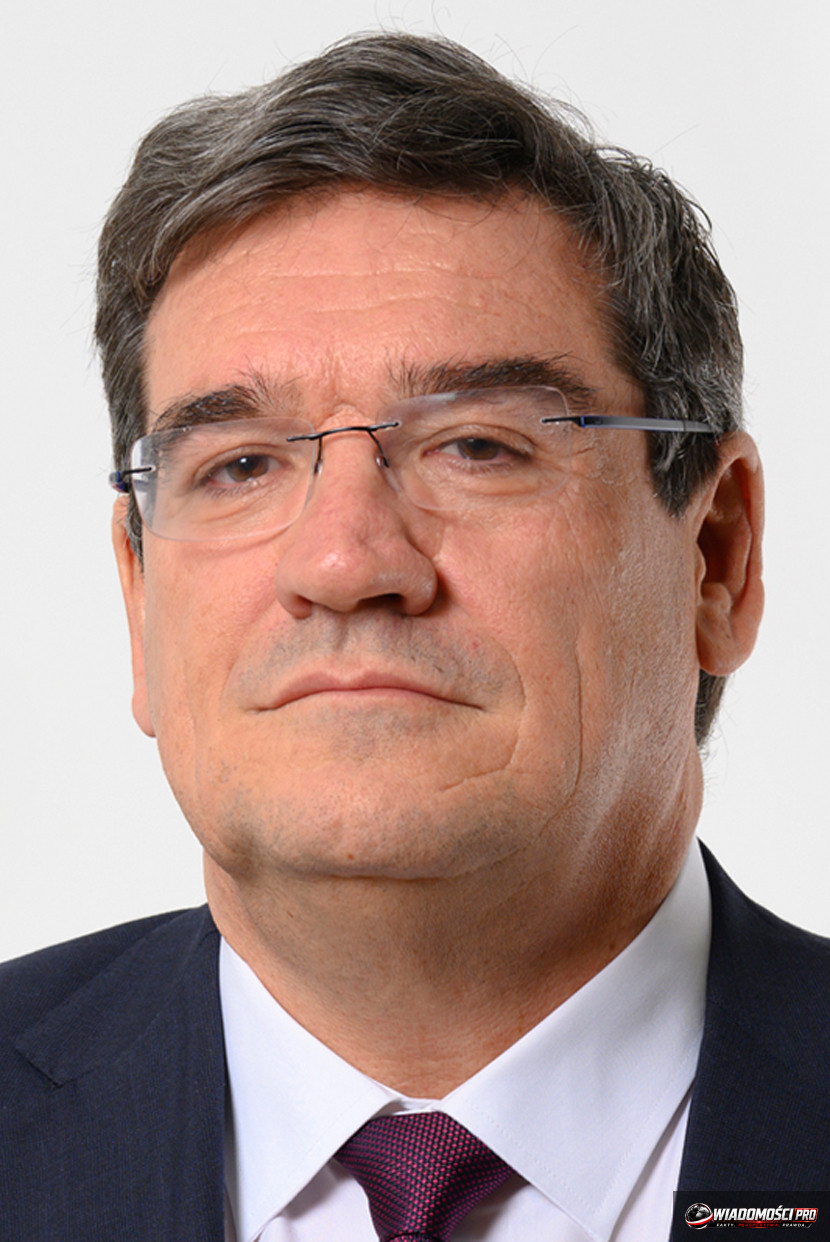
Pension reform in Spain was adopted without social upheaval, meaning the government managed to avoid mass protests while implementing the new regulations. This is a rare case in Europe, where changes to social security systems usually bring thousands of people out into the streets. Madrid opted for a strategy of long-term negotiations, abandoning the method of "fait accompli," which ultimately extinguished the potential for rebellion before it could escalate.
The mechanism of social consensus: how Spain won over the streets
The legislative success of Pedro Sánchez's cabinet was no accident. Spain implemented the reform in a technocratic manner, involving trade unions and employer organizations in the decision-making process at an early stage. This strategy, known as "Diálogo Social," allowed for the dissipation of social resistance through participation. Instead of imposing harsh cuts, the government negotiated the so-called Mecanismo de Equidad Intergeneracional (MEI), or the intergenerational equity mechanism. Social security contributions were increased, spreading the burden between employers and employees.
Unlike France, where attempts to raise the retirement age led to transport paralysis and months of strikes, Spain opted for evolution. Minister José Luis Escrivá, the architect of this reform, repeatedly stated that the stability of the system depends on predictability, not confrontation. They chose the path of increasing the system's revenue by gradually raising the contribution base for the highest earners and introducing the so-called "destopado," which is the removal of the upper limit on the contribution base, hitting the highest earners rather than the broad masses of the middle class or the poorest.
The effectiveness of this communication was based on hard numbers. The government presented demographic forecasts clearly indicating the need to secure the system against the retirement wave of the baby boomer generation. Trade unions, such as UGT and CCOO, although not thrilled with every provision, recognized that a compromise was better than chaos. The agreement to extend the pension calculation period from 25 to 27 years (with the option to deduct the two worst years) was accepted as a necessary evil rather than a reason to take to the barricades.
Analysis of economic effects: the burden shifted, but not rejected
The introduced changes directly affected the financial structure of companies and the pockets of employees. The increase in contributions under the MEI affected labor costs, which in other realities would have triggered immediate opposition from the business sector. The Spanish Confederation of Business Organizations (CEOE) ultimately accepted these terms, seeing them as a guarantee of long-term economic peace. Political stability became a higher priority for them than the immediate losses resulting from higher contributions.
For employers, the increase in labor costs is noticeable, but spreading this burden over time cushioned the shock. The MEI contribution is growing gradually, which allows companies to adjust their wage strategies. For employees, the key change is the extension of the period used to calculate the benefit amount. The previous model based on 25 years of work was more favorable for many. The new regulations force longer professional activity, which in practice means that a "full" pension will only become available after working for more years.
Economic experts emphasize that the Spanish model is a form of "quiet reform." Instead of a drastic increase in the retirement age, which is the most inflammatory point in all of Europe, the government opted for so-called flexibility. People with long service records can count on more favorable conversion factors, which rewards loyalty to the labor market. This approach made employees feel co-responsible for the system rather than its victims. The lack of sudden moves meant that the debate on pensions lost its most radical, protest-oriented character.
France vs. Spain: two different worlds of crisis management
A comparison with France shows why Spain managed to avoid a crisis. In Paris, the reform was often pushed through against the will of trade unions, which became the spark for an ideological conflict. In Madrid, the process was more arduous but led to a document signed by social partners. A signature on the reform means that trade unions took on part of the responsibility for its implementation. If the system starts to function inefficiently, the government cannot be blamed alone, as the unionists were co-authors of the mechanisms.
Effective communication of the changes relied on avoiding "cost-cutting" rhetoric. Instead, the government used the language of "strengthening system resilience." Anyone analyzing the Spanish case sees how important it is to avoid polarization. In Spain, pensions became a technical topic rather than a political weapon, which discouraged opposition parties from building capital on strikes. The lack of political fuel for radical opposition movements was the key to success.
Long-term stability: is this the calm before the storm?
The government's optimism must be confronted with demographic reality. Spain has one of the lowest fertility rates in the European Union. Even with effectively implemented contributions, the pension system remains under immense pressure over the next two decades. The lack of protests today does not guarantee that in fifteen years, future retirees will not feel cheated when it turns out that despite higher contributions, the real value of their benefits is not growing as expected.
There is a risk that the "bought" social peace is merely a postponement of the problem. The Sánchez government avoided confrontation but did not solve the fundamental problem, which is the low productivity of the economy and high unemployment among young people. Without dynamic economic growth, even the most refined contribution mechanisms will not be enough to maintain the solvency of the system at the current level. This point is the weakest link in the Spanish model.
Social policy in Spain has entered a phase of pragmatism, where the "here and now" counts. The lack of demonstrations on the streets of Madrid or Barcelona is proof that society is tired of uncertainty. Citizens accept higher taxes and contributions if, in return, they receive a promise that the state will not go bankrupt. It is a certain form of social contract, which is, however, extremely fragile. One major inflationary crisis is enough for this peace to be shattered.
The role of the European Union in the process of change
The Spanish reform was also closely linked to Brussels' requirements regarding the National Recovery Plan. Funds from EU resources were conditional on carrying out structural changes, which gave the government a strong argument in negotiations with the opposition and unions. "We must do this for Europe" – this slogan echoed many times in parliament. Thanks to this, difficult decisions were embedded in a broader European context, which weakened the arguments of populists claiming that the government was acting to the detriment of its own citizens.
Cooperation with the European Commission also allowed for avoiding accusations of arbitrary decision-making. The government could point to external experts and EU guidelines, removing the stigma of being solely responsible for unpopular cuts. This is a very clever political maneuver, which in Polish conditions might have been perceived as a "dictate from Brussels," but in Spain was accepted as a necessary element of state modernization.
Perspective for the employee: what has actually changed?
For the average employee in Spain, the reform primarily means the necessity of longer career planning. The system is no longer as "generous" regarding early retirement, and benefit conversion factors have become more rigorous. On the other hand, the guarantee of the system's solvency is crucial for many people. In a country where private savings are low and the real estate market is very expensive, the state pension remains the only certain source of income in old age.
Increasing the contribution base for the highest earners is also a nod to social justice. Although this draws opposition from corporations, for most employees, it is a signal that the system is not being built solely on their backs. This builds trust, which is so lacking in other European countries. The lack of protests is therefore the result of the feeling that "everyone contributed their brick, even the richest."
But is this change enough? The current reform is the third stage of the pension system modernization undertaken by the current administration. Previous stages also took place in an atmosphere of relative calm, which suggests that Spain has developed its own method of communicating with the citizen. It relies on continuity, not on radical, one-off cuts that always stir emotions. It is a school of politics where patience and the ability to listen to social partners count.
The future of the pension model in the face of crises
The real challenge for the Spanish model will be maintaining the pace of economic growth. If GDP starts to fall, all the contributions negotiated today will prove insufficient. The government will have to make further, even more painful decisions. Then, social peace may prove impossible to maintain. For now, however, Spain remains an example that even in difficult times, one can reform the state without taking to the streets.
What happened in 2023 is proof of the maturity of democratic institutions in Spain. Conflicts are resolved at the negotiating table, not in the fire of burning tires. It is a lesson for all of Europe that communication with citizens is just as important as the numbers in a spreadsheet. The Spanish government won this match, but it is a victory in one round, not the end of the entire tournament for the survival of the pension system.
It is worth following the further fate of the reform. Each subsequent year will bring new data on system revenues and benefit payouts. Only then will it become clear whether the adopted assumptions were realistic. Until then, Spain can enjoy the stability that its neighbors to the north and south of the continent envy.
Questions and answers
Did the pension reform in Spain trigger protests?
No, the reform was adopted without social upheaval, which distinguishes it from similar processes in other European countries.
When was this reform adopted?
The reform was officially recorded as adopted without upheaval in April 2023.
What was the main goal of the changes?
The main goal was to stabilize the pension system, which was achieved while maintaining social calm.
What was the MEI mechanism?
It is an intergenerational equity mechanism consisting of increasing social security contributions, sharing the burden between employers and employees.
Why did Spain avoid protests unlike France?
The key was the "Diálogo Social" strategy, i.e., including trade unions and employers in the negotiation process at an early stage, which allowed for a compromise to be reached.
What major changes were introduced for future retirees?
The pension calculation period was extended from 25 to 27 years, and the upper limit of the contribution base for the highest earners was removed.
Is the reform final?
The reform provides the foundation for stability for the coming decades, but its durability depends on the country's economic condition and demographic indicators.
What was the role of the EU in this reform?
The changes were part of the National Recovery Plan, which allowed the government to embed unpopular decisions in a broader context of state modernization supported by Brussels.
Who felt the effects of the reform the most?
They were felt most by the highest earners (through the removal of contribution limits) and companies (increase in labor costs).
Does the lack of protests mean full social acceptance?
No, the lack of protests is rather an expression of pragmatism and political fatigue of citizens who considered a compromise better than the paralysis of the system.
Sources
Article prepared by the Wiadomości PRO editorial team with the support of artificial intelligence. Facts come from the sources provided above.



Komentarze (0)
Ładowanie komentarzy...