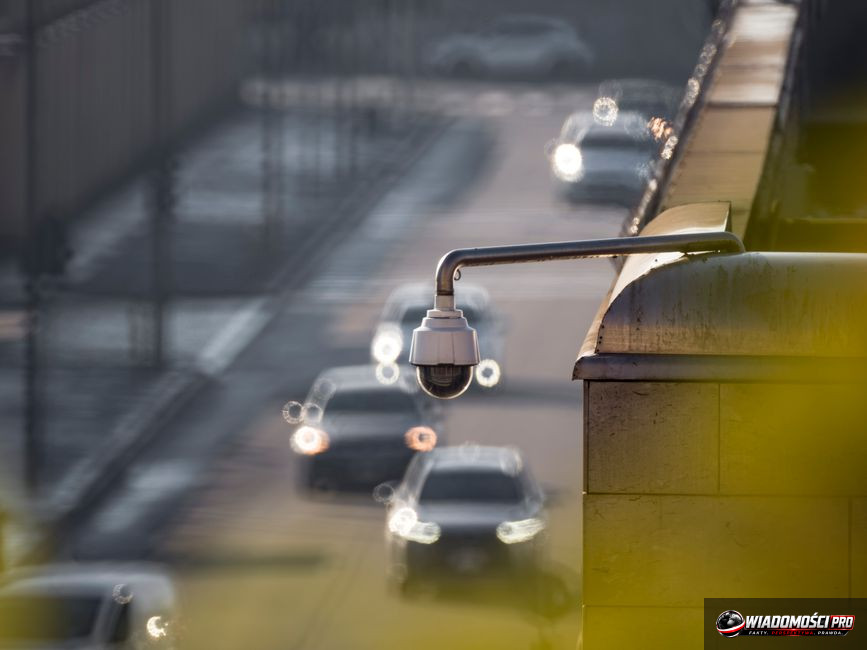
From September 14, a network of 2,800 intelligent cameras will automatically detect traffic offenses, such as driving past a signal when gates are closed, resulting in the immediate issuance of a fine. The system uses video detection integrated with the Central Vehicle and Driver Register (CEPiK) database, allowing for full automation of the penalty process without the direct involvement of a police officer. Data from the devices is sent directly to a central IT system operated by the Chief Inspectorate of Road Transport.
How does the network of 2,800 intelligent cameras work?
The implementation of a system based on 2,800 recording devices is a logistical operation on a scale unprecedented in Polish road engineering. Each camera features advanced analytical modules that process images in real-time. The system does not require a patrol on-site, as algorithms precisely distinguish between a vehicle waiting correctly before the gates and one that is violating regulations.
Upon detecting a prohibited maneuver, the system automatically secures the recording and takes a series of photos of the license plates. Data is transmitted digitally, which minimizes the time from the offense to the issuance of a notice. The driver does not need to be stopped by a patrol for the case to be recorded.
The technology eliminates subjective human assessment of the situation. The camera records not only the act of entering but also the time elapsed from the moment the red signal was activated to the vehicle entering the tracks. This allows for the reconstruction of the event in case of legal disputes. Introducing this technology nationwide changes the nature of enforcement from reactive to preventive.
The system integrates with the CEPiK database. Thanks to this, when an offense is registered, the system assigns it to the vehicle owner. This relieves the burden on uniformed services, which previously had to physically patrol the most dangerous road-rail intersections. Now, the role of officers is limited to verifying material in doubtful or interpretatively difficult situations.
Catalog of offenses: what exactly does the system record?
The automation of surveillance means that the margin of error for road users has been drastically reduced. Algorithms have been programmed to leave no room for interpretation of the regulations. Every violation threatening railway traffic safety is treated with the severity resulting directly from the fine schedule.
List of behaviors monitored by the system:
- Entering a railway crossing when the gates are in the process of lowering or have already been fully closed.
- Ignoring a red signal from a traffic light, even if the gates have not yet been lowered.
- Entering a crossing in a situation where the driver cannot continue driving, leading to the blocking of the tracks.
- Bypassing closed barriers or half-barriers by driving into the opposite lane before the railway crossing.
Bypassing barriers is particularly dangerous and often leads to head-on collisions or the vehicle being trapped between the gates. The camera systems have been calibrated to monitor not only the immediate track area but also the approaches to it. As a result, attempts to "squeeze through" past closed barriers are recorded as high-harm violations.
Drivers must be aware that the system has no leniency mode. If the traffic light indicates a prohibition to enter, every wheel of the vehicle crossing the stop line is treated as evidence of an offense. The digital eye of the camera treats every situation according to purely mathematical parameters: prohibitive signal versus vehicle position.
The Motycz and Miłocin case: infrastructure versus driver
Disputes regarding safety at crossings have focused on the technical efficiency of the devices. The example of Motycz and Miłocin from September 2020 illustrates the tension between infrastructure managers and the local community. Residents reported concerns about the operation of the gates, claiming that the devices failed in critical situations.
The infrastructure manager, in response, pointed to driver errors. According to official statements from that period, the devices operated according to technical standards, and incidents were the result of a lack of caution by drivers. The lack of hard data at the time made it impossible to determine who was right. This dispute was an example of a "word against word" conflict.
The introduction of the 2,800-camera system changes this power dynamic. Now, every infrastructure failure, such as a barrier jamming or a signaling error, will be recorded. If the cameras show that a driver entered the crossing during a device malfunction, this evidence will be used to pursue their rights. On the other hand, if video records confirm the gates were working, drivers' arguments about alleged failures will no longer be considered.
The implementation of monitoring is a tool for mutual control. On one hand, it disciplines drivers; on the other, it forces managers to keep devices in perfect technical condition. Every incident will be analyzed based on video material, which will allow for the rapid detection of potential faults in traffic control systems. This solution is more transparent than previous technical reports.
Experiences from Ostróda and Malbork
The analysis of driver behavior at crossings in Ostróda and Malbork formed the foundation for designing the nationwide system. Observations in these towns allowed for the verification of hypotheses regarding the causes of accidents. In Malbork, where cameras monitored the view of the platforms and Aleja Wojska Polskiego, hundreds of hours of material were collected, which served to train algorithms to recognize dangerous maneuvers.
In Ostróda, the verification of assumptions regarding monitoring allowed for the precise determination of which areas of the crossing require special supervision. It turned out that the most common driver error is not recklessness, but routine. Drivers passing through the same tracks every day stop paying attention to warning signals, assuming that since a train passed a minute ago, the road is clear.
These experiences show that technology is an effective way to fight "routine blindness." A driver aware that their behavior is being recorded, and that punishment is inevitable, automatically increases their attention. Monitoring in Ostróda and Malbork proved that the presence of a camera system changes the driving culture at railway crossings.
Monitoring in these cities initially served a research role. Today, thanks to these experiences, the system is becoming a law enforcement tool. Data analysis translates directly into real financial consequences. The lesson from these cities is simple: the system does not need a police officer to be effective.
Consequences for drivers: fines and penalty points
The automatic surveillance system eliminates time-consuming police procedures. After an offense is registered, data goes to a central system generating the documentation necessary to initiate penalty proceedings. The vehicle owner receives a notice by mail, containing information about the imposed penalty and the number of penalty points added to their record in the driver register.
The amount of fines for entering a railway crossing in prohibited situations is strictly defined in the fine schedule. A driver who ignores a red light or enters past closed gates must expect a financial penalty of 2,000 PLN. In the case of recidivism, this amount increases to 4,000 PLN. Penalty points for such an offense are among the highest in the schedule, which can quickly lead to the loss of driving privileges.
In addition to financial aspects, one must remember about criminal liability. In cases where a violation leads to a dangerous situation that could result in a land traffic disaster, the case may be referred to court. In that event, the fine is only one element of the penalty, and the verdict may include a ban on driving motor vehicles for a specified period.
The automation system aims to eliminate the gap of impunity. Many drivers counted on the fact that there was no police in a given place, so the risk of a fine was close to zero. Now, every crossing covered by the 2,800-camera system becomes a place where the risk is constant and high. This is a change in the safety management model, where technology takes on the role of the main arbiter on the road.
3 things you must do before September 14
The introduction of the 2,800 intelligent camera system means the end of the era of uncertainty at railway crossings. For most drivers following the rules, the change will be imperceptible in daily driving. However, for those treating traffic regulations as suggestions, September 14 will become a deadline. From this day on, a mistake costs directly and measurably.
To avoid trouble, take these three steps:
1. Verify your habits regarding signaling. Understand that a flashing red light is a signal prohibiting entry just as firmly as a lowered gate. Do not count on being able to pass before the barrier closes. Algorithms detect the crossing of the stop line in a fraction of a second.
2. Plan your route considering traffic intensity. Never enter a crossing if you are not sure you will exit it smoothly. If a traffic jam is forming on the other side, wait before the crossing. The camera system will automatically classify blocking the tracks as a high-harm violation, even if it was not your intentional goal.
3. Check the technical condition of your vehicle. An engine failure on the tracks is a scenario where you have no margin for error. If you notice any problems with your car, do not take the risk of crossing the tracks. If you get stuck between the gates, you must immediately leave the vehicle and go to a safe place, using the available alarm systems at the crossing.
Every offense registered by the system is proof of how many drivers still ignore basic safety rules. The digitalization of surveillance aims to eliminate these behaviors, which in the long term should translate into a decrease in the number of accidents on the tracks. For you as a driver, this means the need for greater concentration. A railway crossing has ceased to be an ordinary intersection. It has become a zone of increased surveillance, where every violation leaves a permanent mark in the database.
Questions and answers
Does the 2,800-camera system work at all crossings in Poland?
The system covers key railway-road intersections with the highest traffic intensity and places identified as high-risk points. The coverage includes all category A and B crossings of the greatest importance for safety nationwide.
Can I appeal a fine from a camera?
The appeal procedure remains in accordance with the provisions of the Code of Procedure for Misdemeanors. The recording from the system constitutes hard evidence in the case, which limits the possibilities of challenging guilt in situations where the video material is clear.
What if the gates break down while I am crossing and I get stuck on the tracks?
Monitoring systems are calibrated to distinguish infrastructure errors from intentional rule-breaking. In the event of a failure, the camera recording serves as proof that the driver did not violate the rules intentionally, which is crucial in the explanation process.
Does the system record other offenses, besides entering on red?
The main task of the system is the detection of offenses at railway crossings. Due to image recognition technology, the devices can be used to record other violations, such as crossing a solid line or improper overtaking in the immediate vicinity of the crossing.
Will I receive a warning instead of a fine after September 14?
In the case of an automatic offense detection system, the procedure was designed to eliminate discretion. The system generates a motion for punishment, which in practice means zero tolerance for registered violations. Warnings are not provided for within the system's operation.
Where can I check if a given crossing is monitored?
The railway infrastructure manager publishes maps of crossings equipped with safety systems. These lists include intersections with the highest risk class, especially those of category A and B.
What to do if I think a camera recorded me unfairly?
You should submit a request for access to evidence as part of the explanatory proceedings. You have the right to view the recording, which is the basis for issuing the fine. If the recording is ambiguous, the procedure provides for analysis by an expert or the officer handling the case.
Does the system work at night and in difficult weather conditions?
Yes, the cameras are equipped with advanced infrared systems and image enhancement systems for difficult weather conditions. Registration efficiency does not drop at night or during rain or snow, which guarantees the continuity of the system's operation around the clock.
How long are camera recordings stored?
Recordings are stored for the time necessary to complete penalty proceedings. After this period, materials that are not evidence in cases are automatically deleted from servers in accordance with personal data protection requirements.
Does the system detect emergency vehicles?
The system's algorithms are designed to recognize the signals of emergency vehicles. In situations where such a vehicle must pass through a crossing in a non-standard way, the systems are calibrated not to generate a motion for punishment in the case of obvious emergency necessity.
Safety at crossings is now a matter of technology that does not forgive mistakes. Every driver must understand that entering past the gates is not just a risk of an accident, but a certainty of receiving a fine. This change is permanent and will become the standard on Polish roads from September 14. There is no return to the times when the lack of a policeman at an intersection meant no consequences. Now, your judge is an algorithm.
The implementation of the system is a response to the growing number of incidents that have been downplayed by drivers for years. Statistics show that most accidents on the tracks result from haste and ignoring signals. The 2,800-camera system aims to force a change in these behaviors through a mechanism of immediate punishment. This is an approach aimed at saving lives, even at the cost of high financial expenses for those breaking the law.
Safety management today requires modern tools. Traditional patrol methods are unable to provide protection at thousands of crossings simultaneously. Automation, although it raises controversy, is the only way to ensure full supervision. A driver who treats a railway crossing with due attention does not need to fear a fine. The problem arises when routine takes over common sense.
It is worth remembering that the system is not just about penalties, but also about evidence. In disputed situations, when a collision occurs due to infrastructure fault, the video record will become a key document for the victims. This is a fairer approach than relying on internal reports from track managers. A digital footprint is impossible to forge.
For local communities, such as the residents of Motycz or Miłocin, the implementation of cameras is the end of the period of uncertainty regarding the technical condition of the barriers. If the gates actually fail, the system will show it. If, however, it is drivers who notoriously break the rules, the system will prove it. Transparency is the main advantage of this solution.
Finally, September 14 ends the time for discussions about whether drivers should be careful at crossings. From this day on, all road users are under constant observation. Responsibility for every decision made before the tracks rests entirely with the driver. It is worth it for each of us to take this into account at the next approach to a railway crossing. This is not a technical issue; it is a matter of your safety and your wallet.
The operation of the system is based on a simple assumption: every crossing is a high-risk zone. Regardless of whether it is a crossing in a large city or on a local road, the rules are identical. Automation eliminates discretion, which makes the law predictable. Every offense results in the same procedure, regardless of who is driving the vehicle.
The introduction of such a wide monitoring network is a signal to all drivers in Poland. Safety is no longer just a matter of declarations, but of hard data recorded in digital memory. Every crossing with gates is now a point where your behavior is evaluated by the system with a precision that no officer can achieve. This is a new reality that must be adapted to in order to avoid unnecessary expenses and the loss of a driver's license.
Observing the development of surveillance technology, it can be stated that this is only the beginning of changes in Polish road traffic. Railway crossings have become a testing ground for fully automated systems. If this solution proves itself in practice, one can expect the expansion of monitoring to other dangerous places. This is a natural evolution towards greater control and safety.
All technical data regarding the system's operation, including the method of connecting to CEPiK, confirm that this process is fully integrated. There is no possibility for a recording to disappear or be manipulated after being registered. The system is protected against interference by third parties, which makes it a fully reliable tool in the hands of services. This is a standard that should apply in every law enforcement system.
In summary, from September 14, the life of drivers at crossings changes definitively. Anyone planning a route must remember the presence of cameras and the rigorous adherence to regulations. This is not a suggestion, but a necessity. Responsibility for your own life and the safety of others at a railway crossing has never been as easily measurable and enforceable as it is now. It is worth remembering this every time you approach the tracks.
Sources
- Cameras at railway crossings in Ostróda – what are they really monitoring? We verified the assumptions - we have - Nasz Głos Ostróda
- Intelligent cameras will record driver offenses at railway crossings - Raport Kolejowy
- Railway ensures that gates in Motycz and Miłocin are working correctly. Drivers are said to be the cause of problems - Lublin112
- Malbork camera Aleja Wojska Polskiego - ul. Chopina live. View of the PKP station platforms and sugar refinery. - tvmalbork.pl
Article prepared by the Wiadomości PRO editorial team with the support of artificial intelligence. Facts come from the sources listed above.
Komentarze (0)
Ładowanie komentarzy...