Expansion in the USA through the planned acquisition of an FDA-certified factory and progress in procedures for MabionCD20 form the foundation for potential valuation growth, although the final rate of return depends on the success of the facility's integration. Yes, if the operating margin exceeds 15%, or no, if integration costs exceed 20% of the budget. Investors should view this move as a change in the company's operating model, shifting from a contract service provider to a full-fledged player in the American market, provided the management maintains spending discipline in the face of high entry costs.
[[FOTO:n]]
Schedule of key events for Mabion
An analysis of the company's actions requires referring to the chronology of recent management decisions that determine the current direction of development. In mid-June, a decision was made to implement a new strategy, placing emphasis on the American market. At the end of August, a meeting date with the FDA was set, which unlocked formal procedures regarding MabionCD20. In September, within two days, the search for a manufacturing facility was confirmed, which met with a reaction from market analysts assessing the potential profits for shareholders. Each of these events constitutes a separate stage in verifying the company's operational capabilities.
New strategy: From a Polish base to American standards
The strategy announced in June set a new goal: shifting the weight of the business to the American market. The management concluded that development in Poland no longer provides the appropriate scale for valuation growth. Presence in the vicinity of the American regulator has become a business necessity. The decision to acquire a ready-made facility is an attempt to bypass the multi-year certification path, which acts as a barrier to entry for biotechnology companies from outside the United States.
Building one's own facility from scratch involves the risk of waiting years for audits, which in the biopharmaceutical industry often end in Warning Letters and the necessity of costly corrections. By acquiring a facility that already has FDA approval, Mabion is buying an audit history. This allows for a faster introduction of MabionCD20 to the market, which is significant in the race against competitors for shares in the biological drugs segment.
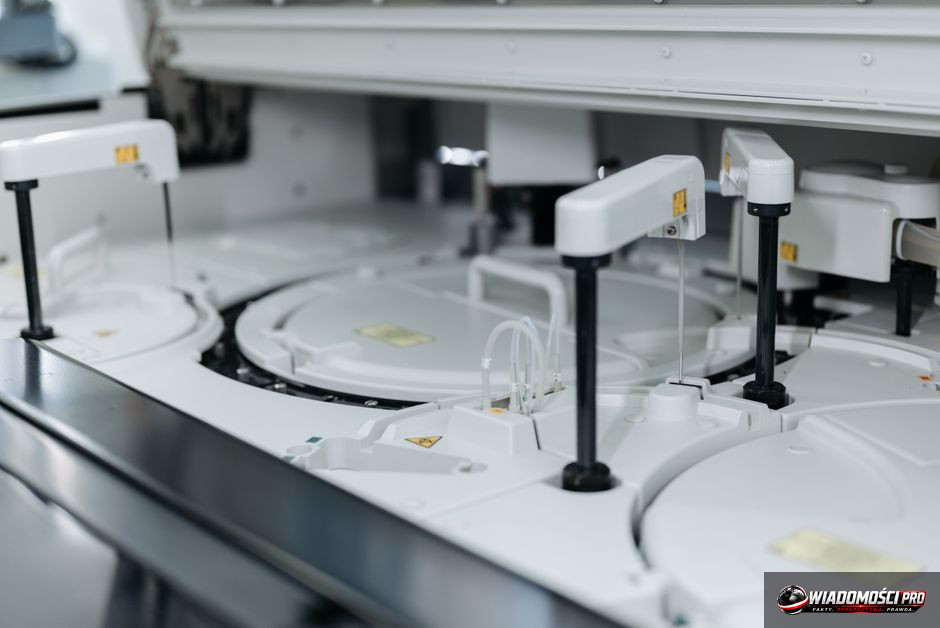
Currently, the company has not provided the official name or exact location of the factory it wants to acquire. This silence from the management means that investors are moving in the sphere of conjecture. The lack of information about a specific facility makes it difficult to estimate whether the chosen infrastructure requires only the adjustment of IT systems or a deep technical modernization. In biotechnology, every square meter of production space matters for maintaining sterility.
[[FOTO:n]]
The role of FDA certification in asset valuation
FDA certification for a manufacturing facility is, in the world of biotechnology, a license to generate revenue. Having such a facility in the USA eliminates the huge logistical risk associated with transporting biological substances across the ocean. Biological drugs, due to their molecular structure, are extremely sensitive to temperature changes and shocks during transport. On-site production reduces these risks, which directly translates into a higher margin for the final product.
The progress in procedures for MabionCD20, reported in August, signals that the American regulator is taking the company seriously. The meeting with the FDA is the moment when the company must present a complete set of clinical and manufacturing data allowing for commercialization. For the shareholder, this is a turning point. The company ceases to be a technological promise and becomes an entity in the middle of a concrete registration process.
Mabion's market valuation will oscillate around the pace at which the company conducts these talks. If the dialogue with the FDA is constructive, the market will value the company higher, discounting future revenues in dollars. Otherwise, any delay or request for additional clinical trials by the agency will trigger immediate pressure on the share price. The market does not forgive uncertainty in the regulatory area, which is why every meeting with the FDA is a market event with weight equal to financial results.
Operational risks and the financial dimension of integration
Buying a factory is a capital-intensive operation. It is estimated that in acquisition processes, the costs of operational integration – i.e., adjusting IT systems, personnel certification, and synchronizing quality processes – can consume from 15% to 20% of the company's annual operating costs. This is a real threat to cash flows if the company does not have sufficient cash reserves to carry out the process without taking on debt under unfavorable terms.
Technical integration is a challenge often underestimated by stock market investors. Transferring MabionCD20 production procedures requires not only equipment but, above all, human competence. The team that operated the factory before the acquisition must be fully trained in Mabion's technology. Every day of production downtime caused by teams getting up to speed is a financial loss. In biotechnology, where the cost of an hour of production line operation is counted in thousands of dollars, downtime resulting from management errors is the main cause of declining operating margins.
Investors must also take into account currency risk and differences in the American tax system, which will affect the final net profit. A Polish company entering the US market must adapt its reports to market requirements, which increases administrative costs. If Mabion's management does not demonstrate efficiency in cost control at the integration stage, the sales success of MabionCD20 may not translate into the expected dividend or share value growth.
[[FOTO:n]]
Stock market perspective and shareholder expectations
In recent months, the market has begun to value Mabion as an entity with American potential. Analysts point out that for shareholders, the most important metric is not the mere fact of owning a factory, but the ability to generate operating margin in dollars. Investors who have entered Mabion shares must be prepared for a period of high volatility.
Stock valuation in the biotech industry is very sensitive to execution risk. If the company announces that it is acquiring a facility, but the certification process for its own technologies in that facility is delayed by half a year, the market will react with a sell-off. Conversely, a quick and efficient implementation, confirmed by the FDA, can become fuel for sustained share price growth. Success in the USA is not just about selling a drug. It is proving that a Polish company can compete with giants on their own turf, which changes the perception of the Mabion brand in global markets.
For the individual investor, it will be crucial to track announcements regarding quarterly reports in terms of integration costs. If in subsequent reports these costs begin to exceed the assumed 20% of the budget, one should ask about the efficiency of the management. The ability to maintain financial discipline during such aggressive expansion is more important than the number of facilities owned. Mabion is facing an opportunity that happens once a decade in Polish biotechnology, but the price for this success is high and paid in cash and in the pace of plan execution.
Cultural and logistical challenges in the USA
Operating in the American market is not just about technical issues. It is also a cultural challenge in management. The American labor market in the biotechnology sector is extremely competitive. Mabion, entering the USA, must attract high-class specialists who know local FDA requirements inside out. The costs of hiring such staff are significantly higher than in Poland, which must be reflected in the company's financial model.
Logistics in the USA is a separate chapter. The geographical vastness of the market forces the creation of a complex distribution network. Even if Mabion produces the drug in the acquired factory, its delivery to end points, i.e., hospitals and clinics, requires having logistics partners who guarantee the integrity of the cold chain. Errors at this stage can lead to the loss of a batch of goods, which in the case of biological drugs means losses amounting to millions of dollars.
Mabion's management must therefore prove that it can manage not only the production process but the entire business ecosystem in the USA. The lack of experience in operations in this market is the biggest unknown. Investors should keep an eye on the management in the context of selecting American partners. Is the company building its own structures, or is it relying on external entities? Each of these solutions has its pros and cons, but at the current stage of the company's development, cooperation with local industry leaders may prove safer than trying to build everything from scratch.
Strategic importance of MabionCD20
MabionCD20 remains the apple of the company's eye and the main product that is to finance the entire American expansion. This drug, being a CD20 inhibitor, targets the demanding oncology and immunology market. The commercial success of this specific preparation is a necessary condition for the success of the entire plan. Without a strong product that has guaranteed sales in the USA, the factory will become merely a burden on the financial balance sheet.
The progress in regulatory procedures achieved in August is a signal that the drug is on the right track. However, the FDA requires not only evidence of clinical efficacy but also confirmation of the stability of the manufacturing process. It is here that the factory in the USA becomes a piece of the puzzle. Owning a facility that is vetted by the agency removes the risk that the drug will be rejected for purely manufacturing reasons. This is a defensive strategy that protects future profits.
Shareholders should be aware that MabionCD20 must compete with drugs produced by the world's largest pharmaceutical corporations. The American market is saturated. For Mabion to succeed, it must offer either a lower price or higher availability. Production in the USA allows for the realization of both these scenarios. Thanks to the reduction of transport costs and tariffs, the company gains pricing flexibility that companies exporting products from Poland would not have. It is precisely this flexibility that may be the factor that tips the scales of victory in favor of Mabion in the clash with the giants.
Questions and answers
Why does Mabion want to buy a factory in the USA instead of building a new one?
Purchasing an existing facility with FDA certification allows for almost immediate commencement of production, which is crucial for the speed of entry into the American market. Building a new facility from scratch involves the risk of multi-year audits, which could delay the commercialization of MabionCD20 by several years.
Is the meeting with the FDA a guarantee of the success of the MabionCD20 drug?
The meeting is a milestone in the procedures that opens the door to further certification, but it is not synonymous with the final approval of the drug for marketing. However, it is a clear signal of progress that reduces regulatory uncertainty.
What are the main benefits for shareholders?
The main benefit is a potential jump in revenue resulting from access to the US market, which, with operational success, should translate into a higher stock valuation. Shortening the supply chain and local production also increase product margins.
What financial risks does the integration of the facility entail?
Operational integration costs can consume from 15% to 20% of the operating budget. If the company does not manage these expenses effectively, it may lead to a weakening of the company's financial liquidity, which will affect the share price.
Does Mabion have a competitive advantage in the USA?
The advantage is intended to be the combination of its own MabionCD20 technology with an American production base, which will allow for lower logistics costs and increased price competitiveness relative to local producers.
What is the most difficult operational element for the company?
The most difficult challenge remains maintaining FDA quality standards in the newly acquired facility while simultaneously transferring its own technological processes. Any slip-up in the area of quality can result in the suspension of production by American supervisory authorities.
Investment risk analysis in the context of the acquisition
From a market perspective, the decision to acquire a factory in the USA is a classic example of a "make or buy" strategy. Mabion chooses "buy," which is rational in an environment of high interest rates and limited time to bring a product to market. However, investors should remain vigilant against so-called "hidden acquisition costs." It often happens that the purchased facility requires the replacement of critical infrastructure, such as HVAC systems or water and sewage installations, to meet the rigorous FDA standards for biological products.
One cannot ignore the fact that the American pharmaceutical market is based on highly developed component supply chains. Mabion, being a new entity in this ecosystem, must negotiate favorable terms for the purchase of raw materials and utilities. In Poland, the company has established relationships with suppliers, but in the USA, it will have to build them from scratch. Lack of experience in local negotiations can lead to inflated operating costs at the start.
An additional element, which is rarely mentioned in press releases, is the risk of "brain drain." Key engineers and quality specialists from the acquired facility may leave the company after the change of ownership if Mabion's organizational culture proves too different from American corporate standards. The loss of expert knowledge (tacit knowledge) about the specifics of a given production line is one of the greatest threats in the acquisition process in the high-tech sector.
Conclusions for the shareholder's portfolio
Investing in Mabion at this stage is a bet with high risk and a high potential rate of return. If the company successfully acquires the factory and maintains FDA certification without the need for a long-term production shutdown, we can expect a permanent revaluation of the share price. This success would confirm that a Polish entity can scale its business in a global biotechnology hub.
However, one should keep in mind the skepticism. The biotechnology market is full of companies that went bankrupt in the "aggressive expansion" phase, failing to close the integration budget. From the point of view of technical and fundamental analysis, Mabion is at a critical point. Every announcement from the FDA will now be treated by the market as a key buy or sell signal.
Recommendation for the investor: closely monitor the General and Administrative (G&A) expense ratio and reports on cash flows from operating activities in the third-quarter report. If these costs rise disproportionately to revenue, it will be the first signal that the process of integrating the facility in the USA is encountering difficulties that may threaten the profitability of the entire venture. It is also worth paying attention to any mentions of "unplanned infrastructure modernization expenses" in the footnotes to the financial statement, as it is there that the biggest operational problems of biotechnology companies in the growth phase are often hidden.
Mabion's final success will depend on whether the company can turn its ambitions into concrete, measurable financial results in dollars. Investors who expect stability may feel anxious, but for those looking for opportunities in the biotech sector, the current period is a time to verify whether Mabion's management is truly ready to play in the big leagues. It should be remembered that any error in quality management in the USA is irreversible in terms of image and finance, which is why patience in waiting for hard data from internal audits will be the most recommended strategy. Success in the USA is a multi-year process, not a one-time transaction, and the coming months will show whether Mabion has sufficient resources to survive the transition period without compromising its financial liquidity. Every investor should ask themselves: do I believe in the management's operational ability to run a factory on another continent, or only in the market potential of the MabionCD20 drug? The answer to this question will define the investment horizon for the coming quarters.
Sources
- Mabion is getting ready for America! This could bring profits to shareholders - FXMAG
- Mabion wants to acquire a factory in the USA approved by the FDA - stockwatch.pl
- Polish biopharmaceutical company wants to acquire a facility in the USA - Strefa Biznesu
- Mabion is preparing for expansion in the USA. It is investigating the possibility of acquiring a facility - Alert Medyczny
- Mabion already knows the date of the meeting with the FDA. The road for MabionCD20 is beginning to open wide - PolitykaZdrowotna.com
- Biotechnological bomb from Poland. Mabion is changing its strategy and accelerating strongly - Comparic.pl
Article prepared by the Wiadomości PRO editorial team with the support of artificial intelligence. Facts are derived from the sources provided above.

Komentarze (0)
Ładowanie komentarzy...