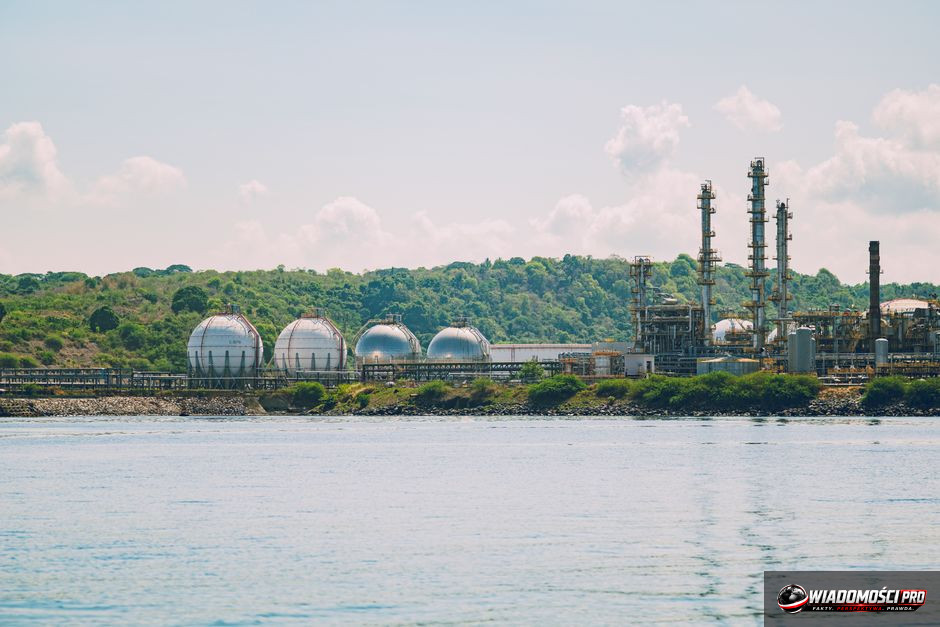
The profitability of the sector remains under pressure, as gas accounts for 70-80% of the production costs of nitrogen fertilizers; precise financial data for the third quarter of 2026 is not yet publicly available, but historical correlation indicates that at current TTF exchange prices hovering around 46 EUR/MWh, producer margins become negative. The Polish chemical industry is in a cycle where every session at the Dutch energy hub determines decisions on whether to continue or halt production installations.
Natural gas as the cost foundation of fertilizer production
The manufacturing of nitrogen fertilizers, such as ammonium nitrate or urea, is in reality a process of converting energy into a chemical form. In steam methane reforming technology, natural gas plays a dual role: it is the source of hydrogen necessary for ammonia synthesis and the fuel used to generate high temperatures and pressure in reactors. Such high energy intensity means that Polish plants, including Grupa Azoty or Anwil, do not compete in the fertilizer market solely through machine efficiency, but primarily through the price of raw materials.
When the price of gas on the TTF exchange exceeds 40 EUR/MWh, the variable costs of production exceed the market price of the final product. In the third quarter of 2026, prices fluctuated around 46 EUR/MWh, which means that every kilogram of fertilizer produced generated a loss. From the perspective of management accounting, halting production lines becomes a more rational action than operating at a negative margin. This is a shutdown mechanism that has become a permanent element of the strategy of domestic chemical giants in crisis situations in recent years.
The lack of financial reports for the mentioned quarter makes it difficult to assess the scale of losses, but it does not change the logic of the process. Stock market investors monitoring chemical company listings understand that at current energy prices, operating profits are impossible to generate without external protective mechanisms. Plants that maintain production continuity often do so with the support of long-term contracts or hedging, the details of which are not disclosed in public stock exchange announcements.
Financial situation of Grupa Azoty and Anwil
Grupa Azoty, as the largest domestic producer, is struggling with a huge burden of fixed costs that do not disappear when installations are shut down. Maintaining technical readiness, equipment maintenance, and debt servicing are costs that weigh on the balance sheet regardless of whether thousands of tons of fertilizer are coming off the lines or the factory is idle. The situation of Anwil, which is part of the Orlen Group, is slightly different due to synergies with the refining sector, but the cost mechanism remains identical. Natural gas is a raw material that cannot be replaced by another energy carrier in the ammonia synthesis process.
Historical financial data show that periods of high gas prices lead to a deterioration in company liquidity. When margins fall below zero, working capital is frozen in inventory, the sale of which does not cover the costs of raw materials. The boards of both companies face the challenge of optimizing their product portfolios. Focusing on specialty fertilizers, where margins are higher, is limited by market demand, which is largely based on simple nitrogen fertilizers.
The lack of official data for the third quarter of 2026 does not mean a lack of action within the structures. An analysis of management announcements suggests that the main task is currently to minimize losses through precise planning of production campaigns. If exchange gas prices remain at 46 EUR/MWh, every hour of installation operation must be justified by price-secured contracts. However, the companies do not state what percentage of production is currently covered by such protection, which leaves investors in the realm of speculation regarding the real financial result.
Risks for Polish agriculture and food prices
Agriculture in Poland is the first link to feel the effects of the chemical sector's problems. Nitrogen fertilizers are essential for achieving high yields of cereals, rapeseed, and corn. When domestic producers limit supply, imported products enter the market. When buying fertilizer, a farmer is guided primarily by price, which means that more expensive fertilizer from Polish factories loses out to cheaper products from outside the European Union, where energy costs are lower or subsidized by the state.
This mechanism leads to a situation where the Polish chemical industry loses market share, and farmers become dependent on global supply chains. The risk to food security is real. If imported fertilizers do not arrive on time or their quality turns out to be low, yields in the next season may be at risk. Farmers, lacking certainty about the prices of final products at procurement centers, limit fertilizer purchases, which in the long term results in a decline in agricultural production efficiency in Poland.
The impact on food prices is indirect but inevitable. The higher unit cost of fertilization translates into an increase in agricultural production costs, which ultimately burdens consumer budgets. When a fertilizer producer passes gas costs on to the farmer, the latter must pass them on to the buyer in the price of agricultural produce. This is a classic domino effect, which is particularly visible during periods of instability in energy commodity markets. The lack of predictability in fertilizer prices makes it impossible for farmers to effectively plan investments on their farms.
Food security and fertilizer imports
The import of fertilizers from countries outside the European Union, such as Egypt or countries in the Persian Gulf region, has become the new normal. Producers from these regions have access to their own cheap natural gas deposits, which gives them a cost advantage that is insurmountable for Polish plants. In a situation where the price on the TTF is 46 EUR/MWh, Polish production becomes economically unjustified compared to products imported by sea.
Dependence on imports is a challenge for supply chain stability. In crisis situations, when global trade is disrupted, fertilizer-producing countries may introduce export restrictions to protect their own agriculture. Poland, losing its own production capacity through the gradual shutdown of installations, becomes a hostage to global market sentiment. The lack of data for the third quarter of 2026 does not allow for a precise determination of the import volume in this period, but trends from recent years indicate a systematic increase in the share of foreign products in Polish warehouses.
This situation forces the state to discuss the strategic importance of fertilizer production. Is supporting domestic plants a cost worth bearing in the name of food security, or should full market liberalization be accepted? The answer to this question has not been provided, and chemical plants operate in conditions of constant regulatory uncertainty. Every decision to maintain production at high gas prices is treated as a defensive action aimed at maintaining technological and personnel continuity, rather than generating profits.
Survival strategies in the face of market uncertainty
Chemical companies are implementing a number of solutions aimed at reducing costs, although their effectiveness in the short term is limited. Modernizing ammonia installations toward lower gas consumption is a process that takes years and requires billions in investment outlays. In view of current profitability, most of these plans have been postponed or completely halted. Companies are focusing on current liquidity management, which means limiting development investments in favor of maintaining those that are necessary for process safety.
Diversifying gas sources through long-term LNG contracts is one of the steps intended to make companies resistant to fluctuations on the TTF exchange. Nevertheless, the price of LNG is still closely linked to the global gas market, which makes it impossible to completely cut oneself off from high energy prices. Company boards have not confirmed whether current contracts are able to fully cover demand while maintaining a positive margin, which suggests that the financial situation remains difficult.
Derivative instruments, such as price hedging, act as a safeguard against short-term price spikes, but do not protect against a sustained, high level of raw material prices. When the upward trend in gas persists for months, these tools expire, and companies must enter into new agreements on less favorable terms. This is a trap in which boards must balance between the risk of losing the market and the risk of deep financial losses. The lack of clear forecasts for the fourth quarter of 2026 stems from the fact that market volatility in gas precludes the preparation of reliable estimates for shareholders.
Industry forecasts for the coming quarters
The prospects for the Polish fertilizer chemical industry for the coming months are closely linked to the energy policy of the European Union. If Brussels does not decide to introduce mechanisms supporting energy-intensive industries, domestic plants will have to adapt to market realities, which may mean further production cuts. The lack of investment plans for 2027, mentioned in industry announcements, is a signal to the market that boards do not foresee a quick return to times of high profitability.
The energy transition, while necessary, is treated as a burden under current conditions. Replacing gas with other energy sources in ammonia synthesis is, at the current technological stage, impossible on an industrial scale. Therefore, the future of the industry depends on its ability to survive the period of expensive raw materials. Companies that have the healthiest balance sheets have a chance to survive, but their market position may be weakened by the lack of modernization of energy infrastructure.
For investors, the key indicator remains the price on the TTF. As long as prices do not fall below the 40 EUR/MWh threshold, production profitability will be marginal or negative. This situation puts the industry on the defensive, where success is maintaining liquidity and market position, rather than increasing company value. Uncertainty about future gas prices means that all forecasts are subject to a very high margin of error, which discourages capital risk-taking in the fertilizer sector.
What this means for you
An analysis of the situation in the Polish fertilizer sector leads to the conclusion that the biggest loser in this situation is the farmer, who bears the full costs of the state's energy uncertainty. From the shareholder's point of view, chemical companies have become hostages to global commodity prices, losing agency in shaping their own profitability. The catch is that the state's food security policy is at odds with market reality – maintaining fertilizer production in Poland at gas prices above 40 EUR/MWh is economically irrational, yet politically necessary for supply stability. As a result, end consumers must reckon with the fact that food prices will be permanently influenced by energy costs, regardless of whether the fertilizer comes from Polish plants or imports.
Questions and answers
Why do gas prices affect fertilizers so much?
Natural gas is the main raw material in the ammonia production process, which is the foundation of nitrogen fertilizers. Its share in production costs is between 70% and 80%, which means that any change in prices on the TTF exchange directly translates into the profitability of chemical plants.
Will Polish fertilizers become more expensive in 2026?
Fertilizer prices are correlated with gas prices. With prices at the 46 EUR/MWh level, producers are under cost pressure. If raw material prices do not fall below 40 EUR/MWh, farmers must expect sustained high prices or limited availability of domestic products, which forces the market to use more expensive imports.
Are we threatened by a lack of fertilizer in the fields?
A total lack of fertilizer is unlikely due to the possibility of importing from external markets. However, a real threat is the high price of fertilizer, which prompts farmers to limit doses, which in the long term can lead to a decline in yields and a weakening of the efficiency of Polish agriculture.
What actions are companies taking to survive?
The boards of companies such as Grupa Azoty or Anwil are focusing on optimizing production processes and managing price risk through derivative instruments. In critical periods, temporary shutdowns of installations are used to limit losses resulting from the mismatch between high production costs and market sales prices.
Can investments in new technology change the situation?
Investments in modernizing ammonia installations toward lower gas consumption are key, but they require huge financial outlays. In current conditions of high operating costs, most of these plans have been frozen, which means that energy efficiency improvements will not occur in the coming quarters.
Who loses the most in the current market situation?
The biggest losers are farmers, who face price uncertainty and the availability of means of production, and shareholders of chemical companies, whose profits are limited by the high energy intensity of production. The state, in turn, must balance supporting domestic industry with the cost of living for citizens, which rises along with food prices.
What is the role of imports in the current balance?
Imports fill the supply gap created by downtime in domestic plants. However, it is dependent on the global economic situation and energy prices in third countries, which makes Polish agriculture increasingly sensitive to disruptions in international supply chains.
Article prepared by the Wiadomości PRO editorial team with the support of artificial intelligence. Facts are derived from the sources provided above.


Komentarze (0)
Ładowanie komentarzy...