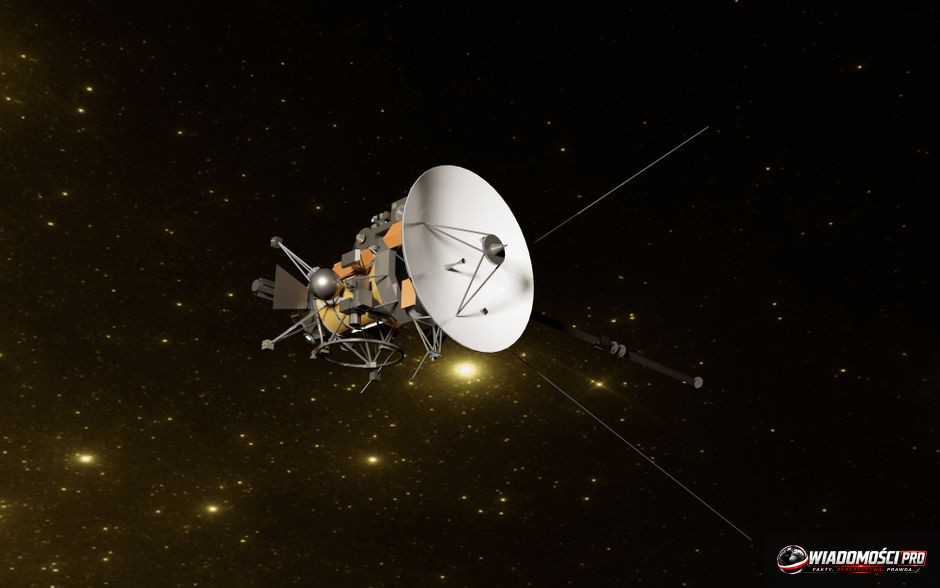
The NASA Europa Clipper mission costs approximately $5 billion and aims to determine whether conditions necessary to support life exist beneath Europa's icy shell. The probe was launched in October 2024, beginning a multi-year journey toward the Jupiter system. It is the most advanced laboratory ever sent toward an outer moon, designed to determine whether chemical processes enabling the emergence of biological life forms are occurring in the depths of the ocean hidden under kilometers of ice.
Europa attracts the attention of astrobiologists due to its geological activity. Data collected by the Galileo probe, which studied Jupiter at the end of the 20th century, suggested the existence of a salty ocean beneath the moon's surface. Robert Pappalardo, the project's lead scientist for Europa Clipper, has repeatedly emphasized that Europa is one of the most promising places in the Solar System where liquid water comes into contact with rocks, which could lead to the formation of complex organic compounds.
Unlike previous missions, Clipper will not orbit the moon itself. Jupiter possesses a powerful magnetic field that accelerates charged particles, creating a radiation environment that is lethal to electronics. Orbiting Europa would mean rapid degradation of the probe's systems. Instead, engineers have planned a trajectory involving nearly 50 flybys of the object. During these short encounters, the probe will collect data before retreating to safer regions of Jupiter's orbit.
The technological heart of the mission consists of three key instruments designed to provide answers about Europa's environment. The REASON (Radar for Europa Assessment and Sounding: Ocean to Near-surface) system is an ice-penetrating radar. Its task is to probe the structure of the icy shell and search for pockets of water that may be located relatively shallowly beneath the surface. Thanks to it, scientists will learn whether the ice is fractured or if melting occurs in certain places.
Another link is the MISE (Mapping Imaging Spectrometer for Europa) instrument. This imaging spectrometer will map the distribution of chemical components on the moon's surface. It will search for salts, organic compounds, and ice with varying degrees of contamination. Understanding what substances are on the surface will allow for conclusions to be drawn about the composition of the ocean, from which this material may have been ejected during geological processes or by geysers.
The third research pillar is EIS (Europa Imaging System). This is an advanced set of high-resolution cameras that will allow for the creation of topographic maps of the surface with unprecedented accuracy. EIS will enable the identification of the youngest geological formations, which is crucial for understanding where the surface is least stable and where an exchange of matter between the interior and outer space may have potentially occurred.
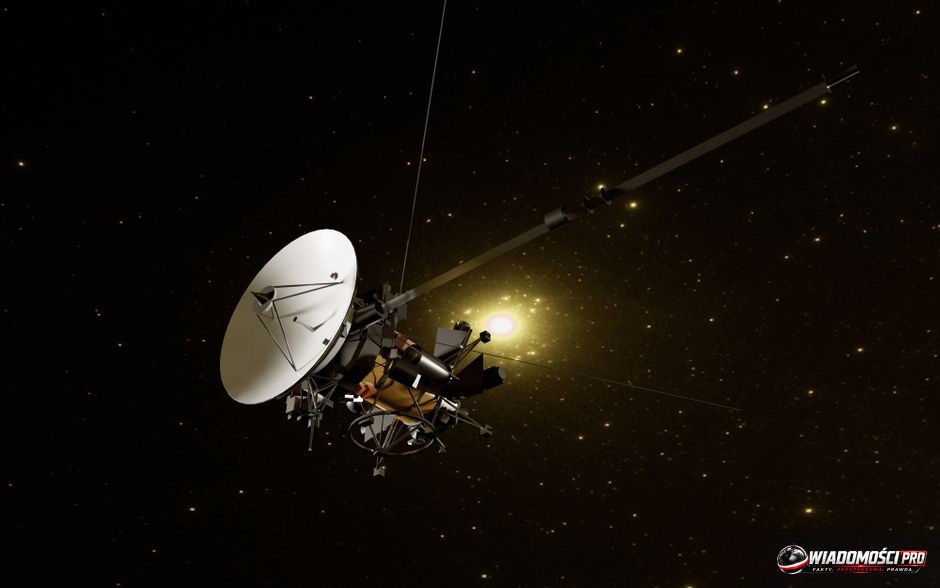
The probe's construction required the use of solutions that protect delicate electronic systems from radiation. The central element of the spacecraft is the so-called "vault"—a titanium-aluminum box housing the most important electronics. This shield allows it to survive in the Jovian magnetosphere, where radiation doses are many times higher than those considered safe for standard computer components. Without this protection, the probe would fail long before the end of the scientific phase.
The journey to Jupiter is a logistical challenge that cannot be accomplished with a simple straight-line flight. The probe uses planetary gravity assists to gain the speed necessary to leave the inner regions of the Solar System. These maneuvers allow for significant fuel savings but impose rigid time frames. The flight will take several years, during which the spacecraft's systems will be subjected to rigorous tests in a vacuum and under drastic temperature fluctuations.
Critics of the project point out that the high costs of the operation raise concerns among some taxpayers. In the scientific community, there are voices suggesting that such a huge budget could have funded a series of smaller missions that would have dispersed the risk of failure. However, NASA adopted a different strategy. The agency decided on one powerful project that is intended to definitively settle the question of Europa's habitability, rather than relying on fragmentary data from several smaller devices.
The question of the validity of such a large financial investment remains open until the first results arrive. However, there is a consensus in the astrobiological community that Europa is too important a target to ignore in the name of savings. If it turns out that conditions conducive to life actually exist under the ice, Clipper will become the most important mission in the history of space exploration, surpassing even the Moon landings or space telescopes in terms of its impact on science.
It is worth noting how the data will be interpreted. The mere presence of water and organic compounds does not constitute the existence of life. It is merely confirmation that the environment is chemically "alive." Scientists will need to analyze isotopic ratios and the dynamics of changes on the surface to assess whether the observed phenomena could be the result of biological processes. Interpreting this data will require years of work by teams from all over the world.
Europa Clipper is proof that space engineering has reached a level that allows for the study of extremely hostile environments. The challenge lies in the fact that the probe operates in remote mode. Every decision to change the operating parameters of the instruments must be made on Earth, taking into account the delay in radio communication. The operations team at the Jet Propulsion Laboratory in Pasadena must anticipate potential failures many months before they occur.
One of the most interesting aspects of the mission is the study of potential geysers. If Europa ejects matter from its interior into space, the probe will be able to fly through this plume and analyze the composition of the particles. Such a method of studying the moon's interior without the need for landing is a logistical masterpiece. It allows for direct contact with oceanic matter, provided, of course, that the geysers exist and are active at the moment of the probe's flyby.
The planned flybys of Europa have been designed to cover almost the entire surface of the moon. Each close approach is an opportunity to obtain data from a different hemisphere, which will allow for the creation of a three-dimensional model of the interior. Understanding whether the ocean is global or local is crucial for assessing the stability of biological conditions on a geological scale. If the ocean has been stable for billions of years, the chances for the evolution of life increase drastically.
It should be remembered that Europa Clipper does not have a lander. This decision was dictated by the mass of the spacecraft and the complexity of landing procedures on an object with such weak gravity and unknown surface structure. Landing would carry the risk of losing the entire project in the event of an impact on unstable terrain. The orbital approach ensures safety and allows for a much wider range of surface studies than a point landing in one location.
International cooperation on this mission is limited, which reflects the current geopolitical situation in space. NASA dominates, setting standards and dictating the pace. Europe, as a scientific partner, participates in data analysis, but it is the American agency that controls access to the instruments and the flyby schedule. This balance of power means that the success of the mission will be, above all, a success of American technological thought.
While the probe travels through interplanetary space, the preparation of theoretical models that will allow for the interpretation of the data is underway on Earth. Scientists are creating simulations of what signals from the REASON, MISE, and EIS instruments should look like depending on various scenarios of Europa's interior structure. Thanks to this, as soon as the data reaches Earth, the research team will be able to instantly compare it with the models.
Uncertainty is inherent in the nature of this mission. Even if everything goes according to plan and the instruments work flawlessly, there is a risk that Europa will turn out to be a chemically dead world. In such a case, the scientific value of the mission will not be undermined, as the knowledge about the structure of the moon and the processes occurring in its interior will be invaluable for planetary science. However, from the public's point of view, the lack of a discovery of life may be perceived as a disappointment.
The Europa Clipper probe is powered by huge solar panels. This solution was long debated because, in the region of Jupiter, the intensity of sunlight is many times lower than in Earth's orbit. Engineers had to design panels with a huge surface area that would be able to provide enough energy to power all research instruments simultaneously. This is another technical challenge that the probe's creators faced.
During the scientific phase, which will begin after reaching the Jupiter system, the probe will transmit data to Earth using high-gain antennas. Due to the vast distance, the link bandwidth will be limited. Every data packet will be extremely valuable, which is why prioritizing the transmitted information will become a daily challenge for the mission team. Not everything that is recorded will reach Earth in full resolution immediately.
Multiple flybys also allow for the observation of changes over time. Are new cracks forming on the surface? Is the geyser activity constant, or does it change to the rhythm of Jupiter's tidal interactions? These questions require collecting data over years. The mission is not a one-time shot, but a long-term observational process that will allow for capturing the dynamics of this fascinating world.
It is worth emphasizing the role of spectroscopic instruments. MISE will work in the infrared, which will allow for the identification of organic molecules that could be biological signatures. The challenge is that Europa's surface is bombarded by charged particles that can change the chemical composition of the ice. Scientists will have to distinguish compounds formed as a result of radiation processes from those that may have a biological origin.
This is a task requiring extreme precision. If Clipper detects amino acids or other complex compounds, the debate about their origin will likely last for decades. NASA will not announce the discovery of life based on a single reading. Correlation of data from the radar, spectrometer, and cameras will be needed to create a coherent picture of the environment.
Europa Clipper is a project that defines the ambitions of modern science. Going beyond the immediate vicinity of Earth to seek answers to the fundamental question about our place in the universe is an act of intellectual courage. Even at huge costs, the cognitive value of such an expedition is inestimable. Are we alone in the universe? The answer to this question, even if it is "not this time," is necessary for the development of our civilization.
Questions arise about what will happen after the mission ends. The probe, like other spacecraft studying Jupiter, will eventually be directed toward the gas giant, where it will burn up in the atmosphere. This is a standard procedure aimed at avoiding the contamination of Jupiter's moons with Earth microbes that could survive on board. Planetary protection is a key element in the planning of such missions.
At every stage of work on the mission, from design to the construction of the instruments, there was an awareness of the extreme risk. Radiation, low temperature, and the distance from Earth are factors that can eliminate the probe in a fraction of a second. However, NASA engineers have put enormous effort into ensuring system redundancy. Every critical component has its backup solution, which increases the chance of success.
For the average observer, the Europa Clipper mission is primarily a promise. A promise that in our neighborhood there exists a world that could support life. It is a hope for a paradigm shift in biology, which until now has been based on the example of only one planet. If Europa possesses an ocean in which chemical conditions conducive to life exist, then the probability of the existence of life throughout the universe becomes statistically much higher.
All these aspects—technological, scientific, and philosophical—create a picture of a mission that goes beyond the framework of an ordinary research project. It is a joint effort of humanity, aimed at learning the limits of the possibilities for the existence of life. Waiting for data from Jupiter will be a test of patience, but the reward could be the greatest discovery in the history of science.
Why is Europa the number one target for astrobiologists?
Europa, the fourth largest moon of Jupiter, has fascinated researchers for decades. Its icy shell, crisscrossed by a network of dark cracks, hides a secret that could change biology textbooks. Unlike other moons in the Solar System, Europa exhibits features that make it the most likely place for biological processes to occur.
The key is the ocean. Geophysical models indicate that beneath an icy layer 15 to 25 kilometers thick, there is a liquid ocean of water up to 100 kilometers deep. This means that Europa contains more liquid water than all of Earth's oceans combined. Moreover, this water is in direct contact with the moon's core, which enables the exchange of minerals and energy. These processes, known as hydrothermal circulation, are the source of life in the deep oceans on Earth, where sunlight does not reach.
Robert Pappalardo emphasizes that Europa is an ideal laboratory because it combines three basic ingredients of life: water, energy, and the right chemistry. Energy comes from tidal forces generated by Jupiter's gravity, which "stretch" the moon, generating heat in its interior. This heat keeps the ocean in a liquid state, despite the huge distance from the Sun.
The problem is that access to this environment is extremely difficult. We cannot send a rover that will drill through 20 kilometers of ice. We are doomed to observations from a distance, which makes the Clipper mission so demanding. Scientists must extract information about the ocean's interior by analyzing what is happening on the surface and in the immediate vicinity of the moon.
Modern astrobiology focuses on so-called biological signatures. These are chemical substances or isotopic patterns that could testify to the presence of life. On Europa, we are looking for simple organic compounds that could be the "building blocks" of life. If we find them in large quantities, it will be strong evidence that Europa's ocean is "alive."
Skeptics, however, note that this approach has its limitations. There are many abiotic processes that can produce organic compounds. Chemical reactions triggered by solar radiation on the surface of the ice can lead to the formation of complex molecules that have nothing to do with biology. That is why it is so important for the probe's instruments to be able to distinguish what is the work of inanimate chemistry from what could be a trace of life.
Europa is therefore a test for our research method. If the mission is successful, we will gain not only knowledge about the moon but also new tools for searching for life on exoplanets. Understanding Europa is understanding the principles by which life can emerge in environments radically different from Earth's.
Travel schedule: When will the probe reach its destination?
The flight toward the Jupiter system is a challenge for NASA engineers. The launch of the mission in October 2024 was only the beginning. For the probe to reach its destination, it must go through a series of complex gravity assist maneuvers. Using the gravity of the inner planets allows for gaining speed without the need to carry a huge amount of fuel, which would drastically increase the mass of the probe.
The flight plan assumes flybys near Earth and Mars, which act as "space catapults." Each such maneuver is a precisely calculated operation in which the margin of error is counted in fractions of a second. The probe must hit a specific point in space with extreme accuracy to receive the appropriate gravitational "kick."
Reaching the Jupiter system is planned for the beginning of the 2030s. Only then will Clipper enter orbit around the gas giant and begin the phase of flybys over Europa. All this time, lasting nearly a decade from the moment of launch, is a period in which the probe is in a state of hibernation of research systems or limited activity to save resources.
The mission schedule is divided into phases:
1. Cruise phase: travel through the Solar System using gravity assists.
2. Jupiter orbit insertion phase: a key moment in which the probe must slow down to be captured by the planet's gravity.
3. Flyby phase: a series of close encounters with Europa, during which scientific data is collected.
4. Final phase: data analysis and possible end of the mission through deorbiting.
From a financial point of view, every day of the flight is an operational cost. Managing a budget over such a long time horizon requires iron discipline from NASA. Engineering teams change during the mission, which adds challenges related to the transfer of knowledge and maintaining operational continuity over the years.
The success of the mission depends not only on technology but also on patience. In today's pace of technological change, designing a mission that lasts a decade is a huge risk. The probe that launched in 2024 uses technologies that were frozen at the design stage even earlier. Nevertheless, thanks to the modular design, NASA is able to update the probe's software during the flight, which allows for the optimization of its work.
What this means for you
Europa Clipper is an investment in our knowledge of the universe. If the probe confirms that conditions necessary to support life exist on Europa, the definition of a "habitable place" in space will change drastically. We will no longer look only for planets similar to Earth, but we will begin to look at icy moons as natural habitats for life.
For the average reader, this means that within the next dozen or so years, we may receive an answer to the question that has accompanied humanity since the beginning of observing the stars. Even if the result is negative, the very awareness that we have explored such a distant world is proof of the power of human intellect and determination in the pursuit of truth. It is an investment in our future that goes beyond the boundaries of one generation.
Questions and answers
Will the probe land on the surface of Europa?
No, Europa Clipper is an orbiter-type probe that will study the moon during numerous flybys to avoid strong radiation.
When do we expect the first results?
The first detailed scientific data will begin to flow to Earth after the probe reaches the Jupiter system and begins the flyby phase, which is planned for the beginning of the 2030s.
Why were flybys chosen instead of an orbit around the moon?
Jupiter generates an extremely strong radiation field that would destroy the vehicle's delicate electronics in a short time if it stayed too long near Europa.
Will the mission answer the question about life?
The mission will investigate whether the sub-ice environment is habitable, which is the first and most important step in the search for biological traces outside of Earth.
Sources
- Start of the Europa Clipper mission to Europa - astronet.pl
- Europa Clipper probe will search for life on Europa - Urania - Polish Astronomical Portal
- Start of the Europa Clipper mission [BROADCAST]. Americans will overtake Europeans in the search for life on Europa - Wyborcza.pl
- Beginning of the Europa Clipper mission - Kosmonauta.net
- Europa Clipper has launched. It will investigate whether there are conditions for life on Jupiter's moon - Polskie Radio 24
- NASA sends a probe to Europa. The Europa Clipper mission has launched - WP Tech
- They are looking for life in the Solar System outside of Earth. NASA sends a mission - Geekweek Interia
- It's flying to look for life. NASA mission launch in just three weeks - Antyweb
Article prepared by the Wiadomości PRO editorial team with the support of artificial intelligence. Facts come from the sources listed above.

Komentarze (0)
Ładowanie komentarzy...