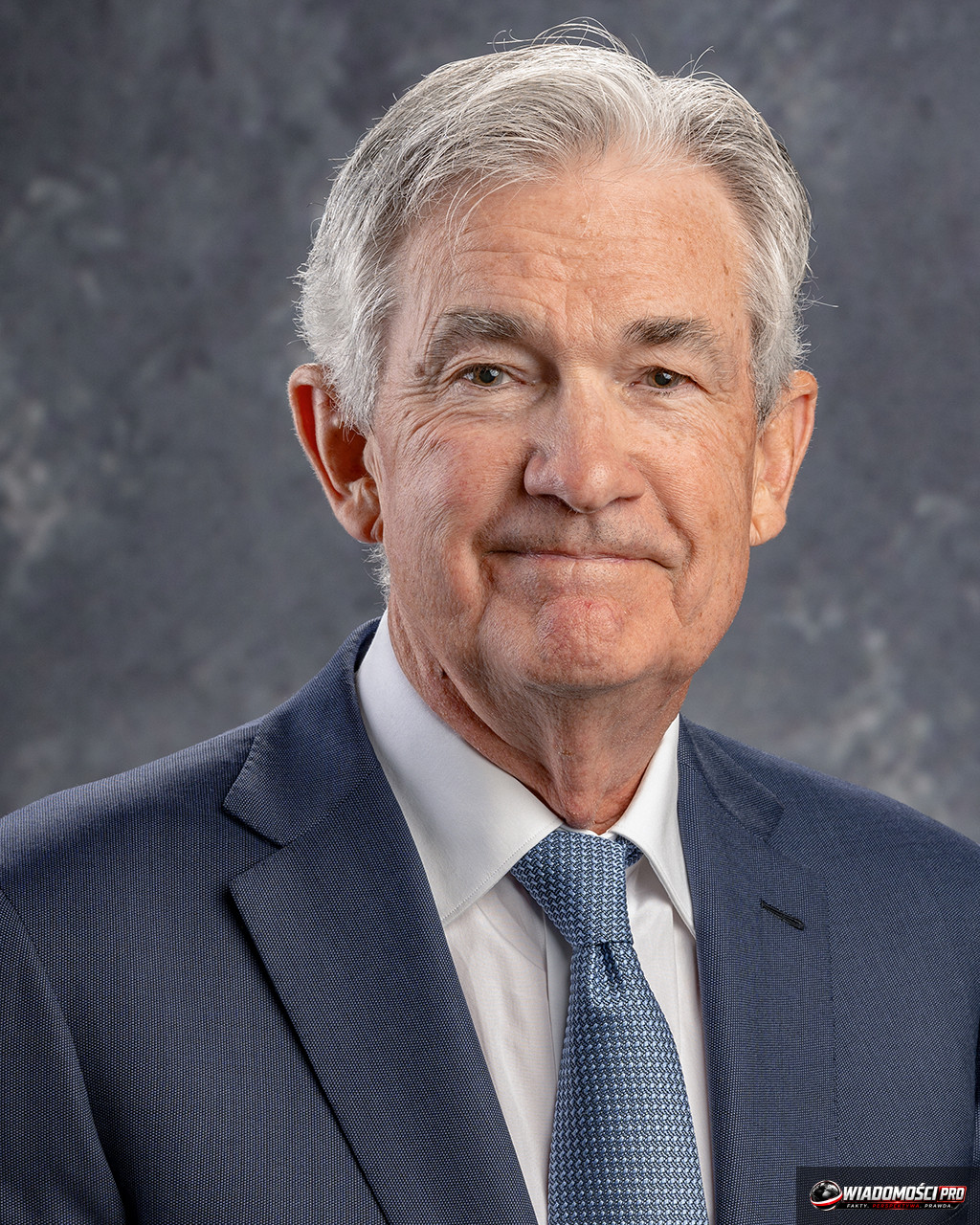
The Federal Reserve has cut interest rates by 50 basis points to a range of 4.75-5.00%, aiming to stimulate the economy and lower the cost of capital. This decision forces investors to immediately revise asset valuations, with particular focus on the dollar, which is losing attractiveness in the short term against emerging market currencies. Borrowers with USD-denominated liabilities will feel relief in debt service costs; however, for holders of deposits in American banks, this means a rapid decline in real returns on savings.
The mechanics of the September decision
The Federal Open Market Committee made the decision on September 10, 2026. After months of speculation, during which the market priced in a probability of a hike at over 50 percent as recently as the early weeks of September, the American regulator chose the path of easing. The scale of the move surprised some analysts who expected a more conservative stance. Jerome Powell, head of the Fed, had to face signals coming from the labor market and consumption data, which had slowed GDP growth in recent quarters.
From the point of view of financial mathematics, shifting rates to the 4.75-5.00% range changes the architecture of US bond yields. Investors who have built portfolios based on a high, safe coupon over the last two years must now look for alternatives. Historical data from September 2024 shows that rapid changes in monetary policy often trigger short-term panic on trading floors. Back then, economists were wrong in their forecasts, which led to significant losses for players who tried to "catch the lows" in the stock market too early.
The Fed's current action is an attempt to avoid a scenario where high interest rates, maintained for too long, stifle businesses. The cost of capital for corporations in the US is falling, which theoretically should translate into higher net margins in sectors such as technology or real estate. However, every cut carries the risk of reviving inflation. If the economy reacts to cheap money with too rapid an increase in demand, the central bank will be forced to tighten policy again in 2027. This creates the risk of a so-called "rate seesaw," which is deadly for long-term investment planning.
Evolution of expectations: From April fears to the decision
The financial market has lived in uncertainty since the beginning of 2026. As early as April, FXMAG analysts pointed out that a key piece of the puzzle would be personnel changes at the top of the Fed and pressure on the institution's new head. Investors treated every communication from Powell like an oracle. The debate about cuts had been ongoing since August 2025, when the Fed chair's public statements began to suggest a departure from restrictive policy.
Many investors felt confused. Early forecasts from September 2026, published even before the meeting, suggested the possibility of a hike, which resulted from the persistence of certain macroeconomic data. However, once the decision to cut was made, the market had to abandon high-rate scenarios in a fraction of a second. Such a change in sentiment triggered reshuffling in hedge fund portfolios. Capital began to flow out of money market funds, which had previously offered safe and high returns, toward riskier large-cap stocks.
It is worth looking at a context broader than just US data. Global liquidity is a connected vessel. Powell's decision is a signal to other central banks that the era of extremely expensive money has come to an end. However, if the American regulator made this move too late, it may not be enough to prevent a technical slowdown, which had been discussed behind the scenes since mid-2025. Investors should therefore carefully monitor leading indicators, not just the price reaction of stock exchanges on the day the announcement was made.
Financial market reaction: Volatility instead of calm
Stock markets reacted to the Fed's decision in a manner typical of a period of high uncertainty. Wall Street opened with a gap, which is proof of how divided the market was. There is no room here for long-lasting euphoria, as institutional investors are asking themselves one question: what does the Fed see in the data that we do not see yet? Some analysts suggest that the scale of the cut may be a signal of hidden problems in the banking sector or in the balance sheets of large corporations.
The technology sector, extremely sensitive to the cost of debt, initially gained in value. Lower rates mean a higher valuation of future cash flows, which in DCF models translates into higher stock prices. However, if the economy falls into a recession, even cheap credit will not compensate for the decline in revenue. Stock market players have therefore split into two camps. The first believes in a "soft landing," where lower rates will balance the slowdown. The second camp is selling stocks, fearing that this cut is the first act of an economic drama.
It is worth paying attention to the treasury bond market. Yields on ten-year papers fell sharply. This is a classic "flight to safety" move mixed with the expectation of further easing. If the yield curve starts to invert further or flatten sharply, it will be a clear message for investment portfolios: increase exposure to defensive assets, such as gold or selected dividend companies that are able to survive a period of turbulence.
Dollar on the defensive: What does this mean for capital?
The US dollar has lost its advantage of high interest rates. In recent years, the USD was a beneficiary of the so-called carry trade, where capital flowed to the US to take advantage of high rates with relatively low risk. Now, after the decision of September 10, 2026, this advantage is melting away. Investors who held dollars are starting to look around for markets where rates remain high, or for currencies that may gain from the weakening of the American unit.
For importers in Poland or Europe, this is a mixed signal. On one hand, a weaker dollar lowers the cost of purchasing raw materials priced in that currency, which may bring relief in production costs. On the other hand, rapid volatility in the currency market makes it difficult to secure hedging transactions. Entrepreneurs who do not have the appropriate tools for currency risk management may suffer losses resulting from sudden movements in currency pairs such as EUR/USD or USD/PLN.
Analysts point out that the market is currently pricing in further cuts at the end of 2026. If the Fed indeed follows this path, the dollar may find itself under long-term pressure. For the individual investor, this means that holding savings exclusively in dollars is no longer an optimal strategy. Diversifying a portfolio with other asset classes, including commodities or stocks from developed markets outside the US, is becoming a necessity, not just a choice.
The Polish backyard: Echoes of the decision in Warsaw
The decision from Washington hits the pockets of Polish borrowers more than one might think. Although interest rates in Poland are set by the Monetary Policy Council (RPP), the global cost of money determines the exchange rate of the zloty and inflationary pressure. Statements by NBP President Adam Glapiński, which in recent months have become increasingly outdated in the face of global changes, show how Polish monetary policy is a hostage to the actions of the American central bank.
Bank clients cannot count on the Fed's move automatically translating into lower installments for zloty loans. On the contrary. If global uncertainty leads to capital outflow from emerging markets, the zloty may lose value, which in turn will force the NBP to maintain high rates to protect the currency from depreciation and imported inflation. This is a vicious circle in which the Polish consumer pays for global instability.
For those with foreign currency loans, the situation is slightly different but equally demanding. The drop in US rates lowers the base rate for dollar loans, which provides a momentary breather. However, exchange rate fluctuations can quickly negate these benefits. Bank clients should monitor not only the amount of installments but, above all, the currency spread, which in periods of high volatility is often an opportunity for banks to increase margins. One should not be under the illusion that decisions made across the ocean will remain without impact on Polish wallets. September 2026 is a moment for Warsaw borrowers to audit their household finances.
Portfolio strategy: How to manage risk?
Individual investors are facing a challenge. What to do with a portfolio when the Fed changes course by 180 degrees? The first step is to abandon blind optimism. A 50-basis-point cut is not a signal to mindlessly buy everything that shines green. This is a moment for selection. Companies with low debt and strong cash flows are a safer haven than firms that have to roll over debt at variable rates.
It is worth focusing on instruments that historically perform well in an environment of falling rates, but with the simultaneous risk of recession. Gold remains a classic hedge against monetary chaos. Long-term bonds, in turn, can bring profits from price appreciation if the market starts pricing in a deep recession and further cuts. Investors who have so far kept most of their funds in cash in savings accounts should consider increasing the share of assets that will protect them from inflation if it returns in 2027.
One should avoid making decisions under the influence of emotions. The market often overreacts in both directions – first pricing in a catastrophe, and then euphoria. The best strategy in the current environment is dollar-cost averaging, rather than trying to "time the market." Every decision to change the portfolio structure should be preceded by an analysis of one's own risk tolerance. In an environment where the Fed has ceased to be a predictable guarantor of stability, flexibility becomes the investor's most valuable asset.
Outlook: What awaits us until the end of 2026?
The last quarter of 2026 will be a period of verification. The market no longer needs promises, but hard data from the labor market and inflation readings. If unemployment in the US starts to rise at a rate exceeding expectations, the Fed will have to cut rates even more, which could push global markets into a phase of panic. If, however, the economy proves resilient and inflation remains in check, we may see stabilization, which would be the best scenario for investors.
The most important factor will be Jerome Powell's communication. Every speech by the Fed chair will be analyzed for a "hawkish" or "dovish" stance. Investors should prepare for the fact that the volatility of September 10, 2026, was not a one-time incident, but a preview of what the end of the year will look like. Each subsequent month will bring new data that will change the market consensus.
Skeptics remind us that history teaches us one thing: easing monetary policy too quickly in the face of uncertain fundamentals often ends in stagflation. Investment funds that are aware of this are already building "anti-fragile" portfolios. This means holding assets that gain in various macroeconomic scenarios. For the reader, this means that it is not worth putting all your eggs in one basket. A diversified portfolio, resistant to currency fluctuations and interest rate changes, is the only strategy that allows you to sleep peacefully in times when the American central bank dictates terms to the whole world.
Questions and answers
By how much exactly were interest rates lowered?
The Federal Reserve lowered rates by 50 basis points, setting them in the 4.75-5.00% range.
When was this decision made?
The decision was announced on September 10, 2026.
Will this affect the dollar exchange rate?
Yes, a rate cut usually weakens the currency in the short term, which is already visible in the markets through the outflow of capital from dollar assets.
What does this mean for a Polish borrower?
It does not mean an automatic reduction in installments. Volatility in currency markets may affect the zloty exchange rate, which in turn may prompt the NBP to keep rates at a higher level than would result from the needs of the domestic economy alone.
Did the stock markets react to this decision?
Yes, the market reacted with high volatility, as investors had to immediately recalculate company valuations based on the new, lower cost of capital, while simultaneously weighing the risk of an impending economic slowdown.
Sources
- The decision on interest rates will be made today. "Glapiński's declaration has become outdated" - tvn24.pl
- Most bank clients will not be satisfied. There is an important decision - Business Insider Polska
- Fed rate hike in September 2026? The market prices it at over 50 percent - Business Insider Polska
- Will the Fed start cutting in September? The market expects a new boss - FXMAG
- Fed cuts interest rates sharply. Economists, however, were wrong - Bankier.pl
- The September Fed decision may disappoint the stock markets. Debate around a possible US interest rate cut - Strefa Inwestorów
- How will the markets react if the Fed returns to rate cuts - Analizy.pl
- When will the Fed lower interest rates? There is an announcement from Jerome Powell - Rzeczpospolita
Article prepared by the Wiadomości PRO editorial team with the support of artificial intelligence. Facts come from the sources listed above.



Komentarze (0)
Ładowanie komentarzy...