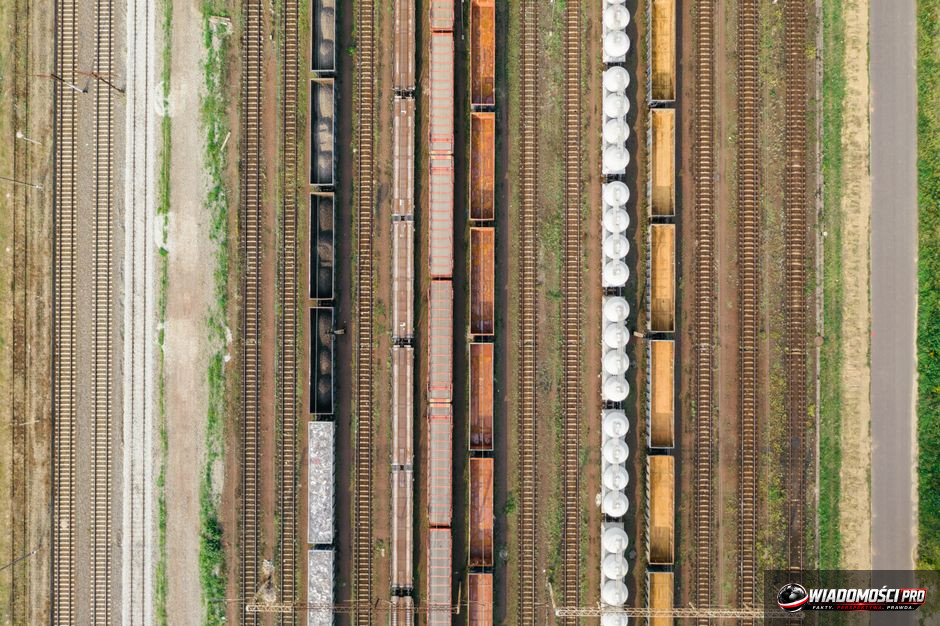
At the current pace of procurement, logistics has become a bottleneck: spending 30 billion euros in a short time while lacking industrial scalability threatens to paralyze deliveries for key modernization programs. No, given the current capacity of entities such as Mesko or Huta Stalowa Wola, the Polish defense industry is unable to handle the imposed pace of procurement without the risk of delivery paralysis. The public procurement system, instead of acting as an accelerator, has become a barrier to the seamless integration of components.
Modernizing the army requires the physical availability of components, raw materials, and qualified personnel, not just complex signatures on contracts. The "SAFE" report from May 2026 exposed a brutal truth: the public procurement system was designed to handle smaller volumes. When the flow of funding moves faster than the factories' ability to process steel or assemble electronics, an irreversible bottleneck is created. Money cannot shorten the delivery time of sub-assemblies if the plant does not have the appropriate machine park.
Military logistics is about managing the supply chain in real-time. If a Polish shipyard is waiting for fire control systems, and a subcontractor from the other side of the world reports delays, the project becomes a useless expense. "Rzeczpospolita" warned as early as February 2026 that money alone does not solve systemic problems. A lack of scalability means that plants operating on outdated processes are unable to react flexibly to a sudden spike in demand.
Challenges of integration with a Korean partner
The September 2026 MSPO confirmed that cooperation with South Korea is a process of deep technological and logistical integration, not just off-the-shelf purchases. Experts gathered in Kielce pointed to a fundamental problem: geographical distance combined with differences in production management standards. Polish logistics systems must now handle a complex flow of spare parts that must be available in Poland immediately.
The bottleneck appears at the level of second and third-tier cooperation. When a plant assembling Korean chassis waits for electronic sub-assemblies that are not produced domestically, any interruption in the supply of imported components halts the entire process. This risk became a reality in mid-2026, when congestion in ports and on logistical routes halted the assembly of artillery systems.
Managing this chaos requires tools that were not used a decade ago. The Polish defense industry must become a center for managing the global supply chain, not just an assembly plant. If this fails, every subsequent agreement with Seoul will only multiply operational problems. The pace of procurement has outpaced the pace of building service competencies in the country. Without efficient logistics, modern systems will become a maintenance burden rather than support for frontline units.
Industrial scalability today means a lack of machines, people, and efficient assembly lines. Politicians celebrate the signing of contracts, but engineers at PGZ plants face a reality where there is insufficient production capacity to execute all orders simultaneously. It is a race in which we start from a position of technological lag, trying to make up for lost time at a pace forced by the geopolitical situation.
Navy: A supply chain endurance test
The modernization of the Polish Navy is currently the most demanding area from the perspective of industrial logistics. Information provided by Newseria BIZNES in June 2026 indicates that naval programs have entered a phase where ambitions collide with brutal shipyard arithmetic. Building ships involves integrating thousands of electronic, hydraulic, and armament systems that must reach the shipyard in perfect synchronization.
The main problem remains the availability of specialized hull steel and higher-order components, such as combat management systems. Many of these elements come from foreign suppliers struggling with their own production inefficiencies. The Polish industry acts as a bottleneck in this process due to the limited capacity of docks and assembly halls.
Downtime in the assembly of one element causes a domino effect. If the shipyard does not receive engines on time, hulls take up space in the docks, blocking the start of subsequent projects. This is a paralysis that grows with every subsequent contract. Production management systems in Polish shipyards were designed for much smaller loads. Attempting to push the current volume of orders through them leads to the cannibalization of resources – the same companies that build ships must simultaneously service the existing fleet.
The lack of synchronization in deliveries is the biggest headache for these programs. It often turns out that components arrive at the plant in the wrong order or in batches that prevent work continuity. This is not the fault of the engineers, but of the lack of an efficient logistics network that should bind dozens of suppliers into one organism. Modernizing the Navy cannot rely solely on buying equipment. It must be based on building an ecosystem in which Polish companies provide components in the rhythm of the required series production. For now, this rhythm is disrupted by a lack of coordination.
Ammunition: Why budget is not everything
The ammunition crisis, warned about as early as January 2024 on the wnp.pl website, remains an unsolved Gordian knot to this day. The needs are enormous, and Polish production plants – despite financial outlays – have still not reached capacities corresponding to real operational needs. Money cannot produce gunpowder, casings, or fuses if raw materials and ready-to-use production lines are missing.
The ammunition problem is a symptom of a deeper illness in the Polish defense industry. For years, the need to scale production was ignored, with the hope that we could quickly increase capacity if needed. Today we see that this approach was wrong. Building ammunition factories is a process spread over years, not months. In the meantime, the Polish army must rely on external supplies, which is extremely dangerous in a crisis.
Defense logistics in this regard resembles a puzzle with the most important pieces missing. Each shell requires explosives, the production of which is a complicated and dangerous process. Many plants in Poland struggle with environmental and technical limitations that prevent three-shift work. Without a radical simplification of procedures and investment in new infrastructure, we will continue to buy ammunition abroad instead of producing it ourselves.
The mere desire for modernization, even supported by billions of euros, is not enough if there is no machine at the end of the chain to press the finished product. The Polish defense industry must undergo a transformation from an assembly model to a critical component manufacturer model. This requires a change in thinking about supply security. Instead of relying on the global market, we must build our own capacity. The current paralysis of ammunition deliveries is a lesson we cannot waste. If factories cannot keep up with the production of basic combat assets, what will happen with more complicated equipment?
PGZ: Responsibility in the era of a contract boom
The Polish Armaments Group (PGZ), as the main integrator, is at the center of the storm. During the June 2026 Defence24 Days, the PGZ management board emphasized the necessity of scaling production as the only way out of the crisis. This is an honest declaration, but also an admission that the existing management model has ceased to be sufficient. The Group must stop being merely an administrator of a portfolio of companies and become an active manager of the supply chain.
Responsibility for the cooperative chain means that PGZ must take control of processes that were previously dispersed. If a smaller partner has problems with timeliness, it affects the entire final product. PGZ must support its suppliers, not only by demanding timeliness but by offering help in financing investments in machine parks. This is a huge logistical operation requiring transparent communication and modern ERP resource management systems.
The market is watching these actions with concern. Investors and foreign partners know that any attempt to rapidly increase production capacity carries the risk of errors. The transition from assembly to full production management is a long-term process. In the meantime, the Polish army must wait. Do we have this time? This is a question with no easy answer.
The success of PGZ depends on whether it can break the silo mentality of companies within the group. It often happens that one PGZ company does not know about the problems of another, even though they work together on the same project. This is a lack of information flow that is deadly in modern logistics. If PGZ does not become one integrated organism, the contractual paralysis will continue. The money mentioned in reports will remain just numbers in accounts until it is turned into real equipment that reaches the soldiers.
Risk balance: What awaits us in the coming years?
Spending 30 billion euros in a short time is an operation that in 2026 ceases to be just a budgetary challenge and becomes a real threat to the continuity of supplies. Systemic deficiencies in the scalability of the Polish defense industry, when confronted with an avalanche of orders, create a dangerous disparity. Logistics, previously treated as support, is becoming a bottleneck that could block ambitious modernization programs, including those concerning the Polish Navy. Procurement enthusiasm is colliding with the hard reality of inefficient supply chains, which has been pointed out in the past as an insurmountable barrier under increased pressure on ammunition production.
The situation is complicated by the fact that the Polish industry does not operate in a vacuum. It must simultaneously fulfill its own priority orders and take into account international conditions, where arms supplies are a necessity for Ukraine and a challenge for the entire West. This dualism of responsibility, emphasized by the Polish Armaments Group, in practice means that any attempt to rapidly increase production capacity must compete for the same components and human resources. The scale of risks is measurable, and forecasts leave no illusions about potential bottlenecks.
Below is a summary of key data illustrating the scale of the challenges:
- SAFE Report (May 2026): Analysis of 30 billion euro expenditures in the context of industrial capacity.
- OSW (May 2023): Arms supplies for Ukraine as a challenge for Western logistics.
- wnp.pl (January 2024): Ammunition deficits as the main brake on the defense industry.
Capital alone, even counted in tens of billions, will not replace the throughput of production lines or logistical efficiency. Without a deep reform of supply chains, instead of a modern army, we will only receive piles of uncollected contracts that look impressive on paper but become useless in crisis conditions. Money is just the beginning, and the rest is management, which is currently lacking.
Advice for decision-makers: investment priority
Instead of announcing further multi-billion contracts, the government should implement an "Operational Capacity Audit" program for each of the key suppliers, including Huta Stalowa Wola and Mesko. Investments should be redirected from purchasing finished systems abroad to the immediate expansion of production infrastructure for second and third-tier subcontractors. It is there, in small plants supplying electronic and mechanical components, that the biggest delays occur. Without direct financial support for this layer of industry, no contract will be completed on time.
Questions and answers
Why does contract money not guarantee fast deliveries?
Money will not replace missing production capacity and bottlenecks in supply chains, which require long-term infrastructure expansion. Every investment in a new machine park takes time, and current contracts force a pace that existing production lines cannot handle without radical restructuring.
What is the biggest risk for Polish contracts with Korea?
The main risk is logistics: synchronizing component deliveries between Poland and South Korea at the current scale of orders. Distance and differences in production process management create natural bottlenecks that, without advanced coordination systems, could halt the delivery of key combat platforms.
Is the Polish industry ready for the modernization of the Navy?
The Polish industry is increasing its involvement in the modernization of the Polish Navy, but success depends on the stability of supplies and integration with foreign partners. Current shipyard capacities are burdened, and any failure in the higher-order component supply chain, such as electronic systems, drastically extends the completion time of every shipbuilding project.
***
In analyzing the situation of the Polish defense sector in 2026, we must go beyond simple budget comparisons. Money, while necessary, is only fuel. In an engine not prepared to run at high speeds, this will cause a breakdown, not acceleration. For years, the Polish defense industry lived under the conviction that having orders was enough to maintain capabilities. Today we know that this is not enough. A radical change in the approach to logistics is required, which must stop being treated as an auxiliary function and become the heart of modernization operations.
Every company in the supply chain, from the giant at PGZ to a small plant producing small electronic elements, must understand that it is no longer working in peacetime. Production management systems must be integrated, and the flow of information – transparent. If a shipyard in Gdynia or a plant in Stalowa Wola cannot see where their subcontractor is stuck, they will not be able to react. This transparency is what the Polish defense industry lacks most today.
The conclusions from the August Defence24.pl debate are clear: defense logistics has become a new battlefield. We are not winning it on training grounds, but in design offices, logistics warehouses, and on assembly lines. If we do not build a resilient supply system, every subsequent multi-billion investment will only increase the scale of bottlenecks. This challenge facing the Polish industry is much more difficult than simply obtaining funds. It requires a change in organizational culture, which, in structures as complex as our defense industry, is a task almost impossible to perform in a short time.
However, we have no choice. The geopolitical situation will not wait for Polish factories to learn how to manage global supply chains. We must do it while working at full capacity. It's like changing an engine on a plane while in flight. Every mistake costs not only money but, above all, time, which we never have in abundance in the area of state security. The answer to whether the Polish defense industry will bear this burden depends on how quickly we understand that modernization is not just equipment, but above all, logistics.
Even the most modern ammunition factory, built in record time, will not start if there is no one to operate it. The deficit of engineers and qualified machine operators in the defense sector is a real barrier that is too rarely discussed in the context of contracts. Money will not train an expert in a year. This requires a long-term educational strategy, which should be an integral part of every modernization program.
We are facing a challenge that defines our future in the area of security. Spending financial resources is the easiest stage of modernization. What happens next – that is, forging these resources into finished equipment – is the true test of the state's strength. If we do not pass this test, we will remain with an impressive arsenal on paper, while the actual combat readiness of units will stand still. The Polish defense industry must stop being a victim of its own success and start managing its resources in a way that brings real results on the battlefield, not just in budget reports.
What happens in the coming months will be crucial for the success of all programs. If logistics remains a bottleneck, we will witness a gradual fading of the enthusiasm that accompanied the signing of the agreements. If, however, we manage to seal the supply chains and integrate the actions of all entities, the Polish defense industry has a chance to become one of the strongest players in the region. This is not a matter of optimism or pessimism, but of hard data analysis and readiness for reforms that are necessary in the current, difficult times. Regardless of the costs, we must build a system that works, not just one that exists in plans. Every day of delay is a loss that cannot be made up.
Implementation requires all of us – decision-makers, industrialists, and citizens – to take full responsibility for every stage of this process. Only in this way can we be sure that the Polish defense industry will not drown in contracts, but will become a pillar of our defense for decades to come. Every step toward improving logistics is a step toward a safer future, which we must take care of with full determination. Our security cannot be a hostage to inefficient industrial processes. We must act now, using every available opportunity to improve the system, because tomorrow it may be too late for any changes. The consequences of current neglect could be catastrophic for the stability of the entire region. Understanding this fact is the first step to success, which is within our reach if only we can give up short-term successes for long-term stability and production capacity. This is the only true guarantor of security in the unstable times in which we have come to live. Every element of the supply chain must work flawlessly, because in the modern defense industry, there is no room for weak links that could thwart the effort of thousands of people working to ensure our army is modern, efficient, and ready to act in any conditions that modern geopolitical challenges may pose to it. This is our main task for the coming years, from which there is no turning back if we want to enjoy security and stability in an increasingly unpredictable world.
Sources
- MSPO 2026: Cooperation between Poland and Korea in the defense industry – opportunities and challenges - Defence24
- Defense logistics: conclusions from the Defence24.pl debate - Defence24
- SAFE: How to spend 30 billion euros in 30 days? A challenge for the industry and the state - Portal Obronny
- A major modernization program for the Polish Navy is underway. The involvement of the Polish industry is growing - Newseria BIZNES
- Responsibility, Scaling, and Mission: Polish Armaments Group summarizes its participation in Defence24 Days - Defence24
- How to develop the defense industry? Money alone is not enough. - Rzeczpospolita
- Critical challenge for the Polish industry. We need a lot of ammunition - wnp.pl
- Arms supplies – a necessity for Ukraine, a challenge for the West - osw.waw.pl
Article prepared by the Wiadomości PRO editorial team with the support of artificial intelligence. Facts come from the sources listed above.

Komentarze (0)
Ładowanie komentarzy...