In brief
- The proposal involves a $5,000 payout to every adult American as a form of economic stimulus.
- The US Constitution grants Congress the exclusive right to determine federal spending, making a unilateral presidential decision impossible without legislation.
- Experts warn of the risk of destabilizing public finances and potential accusations of violating election bribery laws.
Mechanism and scope of the presidential promise
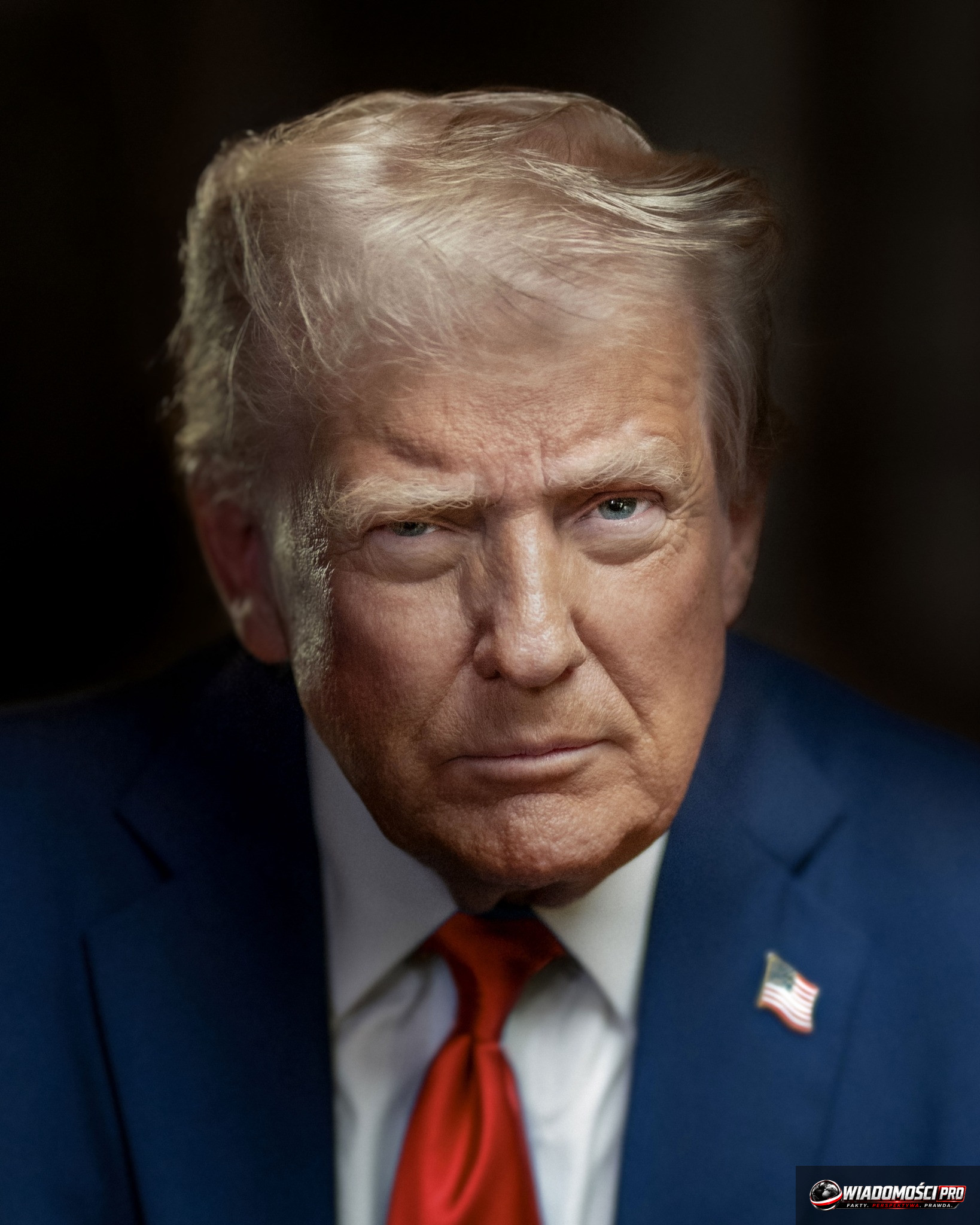
Donald Trump's proposal assumes a direct cash transfer of $5,000 to every adult in the United States. Trump argues that such a capital injection is intended to stimulate the American economy while simultaneously addressing the effects of inflation. A necessary condition for triggering this mechanism, as the former president notes, is a victory for the Republican Party in the Congressional elections.
In practice, however, this promise faces a hard legal barrier. According to the US Constitution, the legislature holds the exclusive power to allocate budget funds. The president does not possess the independent authority to pay out such sums from the federal treasury without the prior passage of appropriate legislation by both houses of Congress. Legal experts warn that any unilateral attempt by the White House to force such a transfer could be considered a violation of the Impoundment Control Act, which would consequently lead to long-term disputes in federal courts.
Furthermore, there is a lack of any technical details regarding the funding of this program. No sources for covering the expenses have been confirmed, nor has it been indicated whether these funds would be a one-time payment or spread out over time. Trump has also not presented calculations proving how such a massive cash injection would realistically affect price levels rather than simply fueling an inflationary spiral. The political puzzle is clear: without full Republican control over Capitol Hill, this plan remains merely a campaign declaration, devoid of real executive power. For the citizen, this means one thing – the promise of a payout is strictly dependent not on the president's will, but on the results of the parliamentary elections, making it a political tool rather than a ready-to-enact bill.
Constitutional barriers for the president
Constitutional barriers for the president
Article I of the US Constitution leaves no room for interpretation. Power over the federal budget, the so-called "power of the purse," belongs exclusively to Congress. Every dollar spent by the government must be previously authorized by law. Donald Trump, even with a strong social mandate, does not have the authority to unilaterally dispose of budget funds to make direct cash transfers to every adult American. A presidential signature on such an executive order would be, in light of current law, merely an empty gesture.
The White House does not function in a vacuum. In 1974, the Impoundment Control Act was introduced, which drastically limited the president's freedom to withhold or redistribute federal funds. Legal experts point out that an attempt to bypass Congress in such a significant financial matter would almost immediately end up in court. Federal judges, relying on the provisions of the 1974 act, would likely deem such an initiative an unconstitutional violation of budget procedures.
This means that the promise of $5,000 in hand is primarily a political declaration, not a technocratic plan ready for implementation. For such a sum to reach citizens' accounts, Trump would have to negotiate appropriate legislation with both houses of parliament. The scale of resistance in Congress, where party divisions paralyze even smaller expenditures, remains a great unknown. As of today, no bill has been presented that could serve as a legal foundation for such a costly operation. Voters must therefore distinguish between campaign rhetoric and the president's real executive capabilities, which in financial matters are strictly monitored by the legislature. Would Congress be ready for such a radical move? Currently, there are no signals indicating the existence of political will for such a deep interference in the budget.
Legal experts: Is it a gift or bribery?
Legal experts: Is it a gift or bribery?
The promise of a $5,000 payout to every adult American hits a hard constitutional wall. According to Article I of the US Constitution, it is exclusively the legislature, not the head of state, that has the right to allocate budget funds. Any attempt to transfer such a gigantic sum without Congressional authorization would have to be based on a creative interpretation of regulations, which is impossible in practice. A unilateral attempt to carry out such a transfer could be classified as an unconstitutional violation of the Impoundment Control Act, which opens the way for immediate lawsuits and the blocking of payments at the planning stage.
The legal situation is unclear, and the silence of institutions deepens the chaos. Currently, there are no official legal opinions from the Department of Justice that would confirm the feasibility of this plan. In public debate, lawyers are increasingly raising the issue of ethics and criminal law, noting that this promise borders on the limits of what is permissible in a campaign.
On this matter, experts point to specific risks:
- Lawyers point to a high risk of violating federal election laws, which prohibit offering financial gratuities in exchange for votes.
- Critics point to the unprecedented nature of this promise as a potential tool of political pressure, which undermines the standards of fairness in the democratic process.
- The lack of any documents or government analyses that would indicate the sources of funding for such a costly undertaking means that the proposal remains, for now, merely a rhetorical campaign slogan.
For the average voter, this means that the money will not appear in their account automatically after a potential inauguration. Without a specific bill passed by both houses of Congress, this declaration remains a legal shell that cannot be implemented by a simple executive order. The political gain from such a promise is obvious, but the legal cost of attempting to implement it could prove paralyzing for the administration.
Economic context: Where to get billions of dollars?
The promise of a $5,000 payout to every adult resident of the United States strikes at the foundations of the American financial system, ignoring the constitutional separation of powers. According to the US Constitution, it is exclusively Congress that has the prerogative to allocate budget funds. Any attempt to unilaterally transfer such gigantic amounts by the presidential administration without explicit legislative authorization would have to be blocked. Lawyers warn directly: such a move would constitute an overt attempt to circumvent the Impoundment Control Act, which in practice makes this promise legally unenforceable in the current political reality.
The scale of the necessary expenditures goes beyond any standard fiscal maneuvers. If the plan were to go into effect, the US Treasury would have to generate liquidity exceeding $1.3 trillion. In the face of the current deficit, the US economy does not have "free" funds that could be redirected to such a costly program without drastically cutting other expenditures or taking on massive debt. Financial experts have no doubt – such a sudden injection of cash into the market, without backing in real product, almost guarantees an inflationary spiral that would instantly negate the nominal value of the checks received.
Here is a summary of the key financial parameters of this proposal:
- Population of adult Americans — over 260 million (demographic data)
- Cost of the operation — over $1.3 trillion (financial estimates)
- Sources of funding — no confirmed information (the plan does not indicate specific budget reserves)
Currently, the Trump campaign has not presented any concrete bill that would secure these funds. We are therefore talking about a promise that, when confronted with legal and accounting reality, falls to pieces. This is pure arithmetic, not politics, which even the most creative accounting cannot bend. If the president does not obtain a consensus in both houses of Congress, the $5,000 will remain merely a campaign slogan, impossible to realize within the framework of the current constitutional order.
Comparison to stimulus programs from 2020-2021
The $5,000 payouts to every adult American mentioned by Donald Trump have no legal basis in the current executive system. History shows that direct cash transfers to citizens, like those from 2020–2021, required a complicated legislative path. Programs such as the CARES Act or the American Rescue Plan were not a gesture of goodwill by the president, but the result of a bill passed by both houses of Congress. It is the legislature, not the White House, that holds the exclusive constitutional right to allocate budget funds.
In practice, this means that the president does not have a magic button that triggers transfers from the Treasury Department. In 2020–2021, the administration's role was limited to processing payments through the IRS based on rules strictly defined in the laws. The mechanism was simple: the law defined the amounts, income criteria, and the source of funding, and the tax office was merely a technical executor. Any deviation from this procedure exposes the president to conflict with the Impoundment Control Act.
The key difference between the current promise and the actions from the pandemic period lies in the intent and the conditions. The checks at that time were a response to an economic crisis caused by lockdowns and received broad political support across party lines. Trump's proposal, however, is strictly tied to a specific election result, which changes its character from a tool of macroeconomic stabilization to a political instrument of pressure. Legal experts warn that a unilateral attempt to carry out such a transfer without Congressional consent would be immediately blocked in court. It is worth emphasizing that currently, no bill has been presented that would secure the funding for such a gigantic transfer, which makes this promise legally dubious.
Political implications and the future of the promise
The promise of a $5,000 payout to every adult American has become a cornerstone of the Republican campaign, but as of September 10, 2026, it remains merely a promise without legislative backing. The lack of any concrete legal framework for this project forces voters to question the reality of these declarations. Democrats, rightly pointing to the lack of precision, describe the proposal as extremely irresponsible and dangerous to democracy, suggesting that such promises are merely a tool of populism intended to cover up the lack of a coherent economic program.
In reality, the American political system places an insurmountable barrier here for a unilateral decision by the president. According to the US Constitution, it is Congress, not the head of state, that has the exclusive right to allocate budget funds. Every dollar transferred directly to citizens requires the consent of the legislature. An attempt to bypass this process by the White House would be legal suicide. Constitutional law experts are in agreement: a unilateral attempt to carry out such a transfer, without a budget act, would almost immediately be deemed an unconstitutional violation of the Impoundment Control Act.
Politically, the situation is a stalemate. Republicans are building a narrative of "returning money to citizens" based on this postulate, but they have not presented a single bill that would trigger this mechanism. Meanwhile, the opposition, focusing on sharp criticism, avoids a constructive debate on how such a huge expenditure could even be financed in the current state of the country's debt. At this moment, no official legislative project has been confirmed that could turn this campaign slogan into actual fiscal policy. Voters, hearing about $5,000, are receiving a vision that no legal mechanism currently supports.
What this means for you
For the average American, this promise sounds like a quick cash injection, but in reality, it is a political bargaining chip. The catch lies in the constitutional impossibility of its implementation without the full consent of Congress, which makes it more of a campaign manifesto than a real economic plan.
Questions and answers
Can the president unilaterally pay $5,000 to citizens?
No, the president does not possess such power; every payout of federal funds requires the passage of a bill by Congress.
Is this promise legal in light of election law?
Lawyers point to numerous controversies; offering financial benefits in exchange for an election victory can be interpreted as a violation of regulations regarding election integrity.
Are there any concrete legislative plans for this amount?
At this moment (09/10/2026), there is a lack of any formalized bills in Congress that would confirm such a payout.
Article prepared by the Wiadomości PRO editorial team with the support of artificial intelligence. Facts are derived from the sources provided above.


Komentarze (0)
Ładowanie komentarzy...