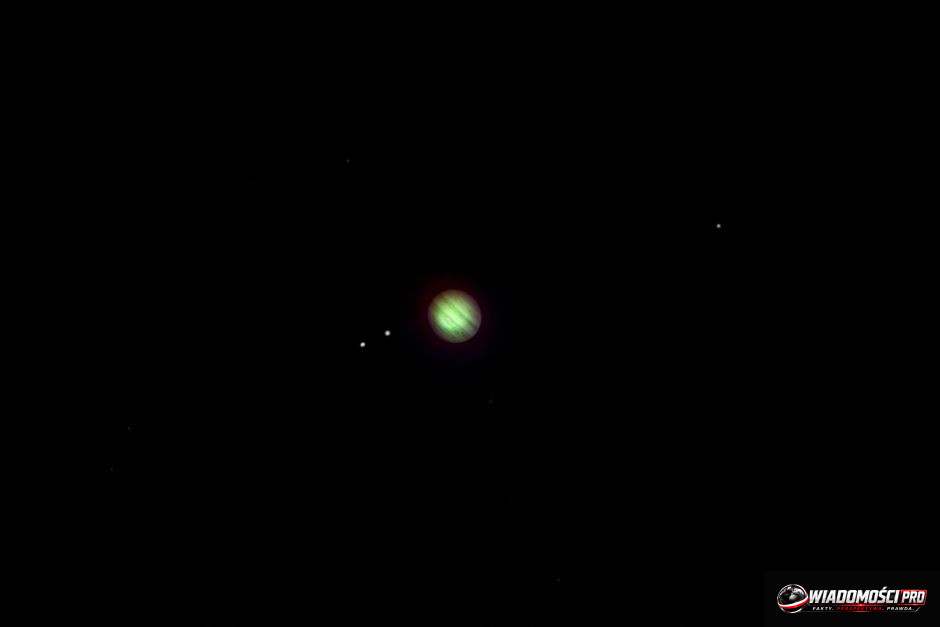
The Europa Clipper probe, launched in October 2024, does not carry equipment for the direct detection of organisms, but instead focuses on studying conditions favorable for life beneath the moon's icy shell. Its mission centers on analyzing the thickness of the ice shell and the chemical composition of the internal ocean, which will allow scientists to assess whether Europa's environment can support biological processes. Onboard instruments will conduct detailed geological and spectrometric surveys during a series of close flybys of this Jovian satellite.
Engineering challenges in the giant's maw
Building the Europa Clipper probe was primarily a battle against the extreme radiation present in Jupiter's environment. The planet generates a magnetic field so strong that it accelerates charged particles to speeds near the speed of light. In this environment, electronics degrade at a rate that would be unimaginable on Earth. NASA had to design a "vault" to protect the probe's most sensitive components. The walls of this shield were made of titanium and aluminum nearly one centimeter thick. Without this protection, the mission would have ended in power and communication system failure after just a few flybys.
The probe does not enter orbit around the moon itself, but rather orbits Jupiter. In doing so, it performs a series of forty-nine close flybys of Europa. Each such approach is a critical moment in which the probe dips into areas with the highest radiation intensity. Engineers programmed the flight trajectory so that Clipper spends as little time as possible inside the planet's radiation belts, using the gravity of the Galilean moons to correct its course. The cost of this endeavor, estimated at over five billion dollars, reflects the scale of the difficulty. Every component had to be tested for resistance to a radiation dose of several million rads.
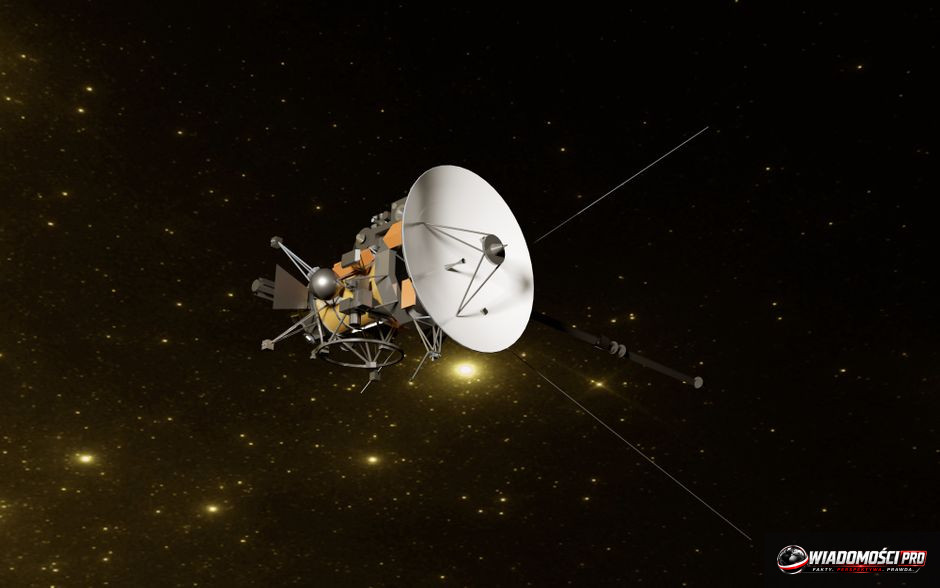
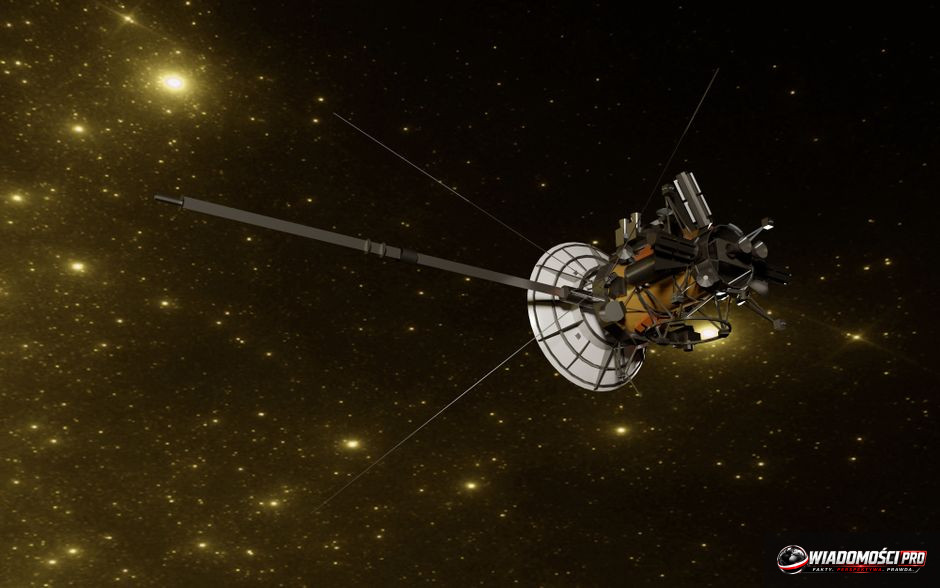
Powering the probe at such a great distance from the Sun presents another challenge. Europa is about five times further from our star than Earth, which means that the intensity of sunlight there is twenty-five times lower. Engineers opted for massive solar panels with a total surface area of over 90 square meters. When deployed, this structure has a span comparable to a tennis court. Thanks to them, Clipper is able to generate enough energy to operate nine scientific instruments and a data transmission system that must send gigabytes of information across millions of kilometers of void.
Instrumentation: How we look through the ice
Onboard the probe, we will not find biological microscopes or samplers collecting ice for on-site chemical analysis. Instead, Clipper carries a set of advanced sensors designed to provide the data necessary to create a model of the moon's internal environment. A key tool is the REASON radar, or Radar for Europa Assessment and Sounding: Ocean to Near-surface. Its task is to penetrate the ice shell using radio waves. Through it, scientists want to learn the structure of the ice – to check whether it is porous or compact, and exactly where the boundary between ice and liquid water lies.
Another instrument of critical importance is the MISE spectrometer, or Mapping Imaging Spectrometer for Europa. This device measures light reflected from the moon's surface in the infrared spectrum. This allows for mapping Europa's chemical composition, including the detection of salts, organic compounds, and water ice in various states of matter. Thanks to MISE, we will understand whether materials ejected from deep within the ocean during geological processes reach the surface and whether they are rich in the building blocks of life.
The EIS camera, or Europa Imaging System, will provide high-resolution images, reaching as much as half a meter per pixel under the most favorable conditions. This will allow for a detailed analysis of the moon's tectonics. The cracks, ridges, and chaos terrain that we see in old photos from the Galileo probe will be studied in a way that will allow us to understand how the ocean "breathes" and how heat escaping from the moon's interior shapes its surface. In combination with the MASPEX instrument, which studies the chemical composition of gas particles in the exosphere, scientists will receive a chemical picture of what is escaping from inside Europa through potential water vapor plumes.
Schedule: Journey to 2030
The mission launch in October 2024 was only the beginning of a long sequence of events. The probe is not flying directly to Jupiter, as that would require a gigantic amount of fuel. Instead, it uses gravity assists. In 2025, Clipper will fly past Mars, and in 2026 it will approach Earth again. These maneuvers allow the probe to accelerate to the speed necessary to enter a trajectory leading to the Jovian system.
According to the plan, Europa Clipper will reach its destination in April 2030. Only then will the actual research phase begin. Over years of flybys, the probe will gradually change its orbital inclination to observe different regions of the moon. Each approach is a precisely calculated sequence of events in which the operating time of the instruments is limited to a minimum to protect the electronics from destruction by radiation. After completing the series of flybys, the mission will be considered finished, and the probe will likely be directed into a safe orbit so as not to biologically contaminate the moon in the event of an emergency impact on its surface.
This approach, based on phasing, is an expression of NASA's technological maturity. Instead of risking sending a lander that might not survive the harsh conditions without prior reconnaissance, the agency is opting for orbiting. It is a strategy that allows for the collection of a massive amount of data without exposing the mission to a spectacular failure. For the scientific community, this is a time of patience. Data sent from a distance of 600-900 million kilometers will reach Earth with a significant delay, and their analysis will take years to come.
Ocean under the ice: Is it just statistics?
Europa fascinates scientists because of tidal energy. Jupiter, with its enormous gravitational forces, constantly kneads the moon, which generates heat in its interior. It is this heat that allows water to remain in a liquid state, even though the surface temperature is below minus 160 degrees Celsius. The question of whether this ocean is barren or chemically active remains the greatest mystery.
Scientists point to the potential interaction between the ocean and the rocky seafloor. If water has direct contact with rocks, chemical reactions similar to those we observe in Earth's hydrothermal vents could occur there. On Earth, such places teem with life that does not need the sun, but only chemical energy. Europa Clipper is to verify whether the chemical composition of the surface indicates that water from the depths actually contains minerals and organic compounds necessary for biology.
Skeptics note, however, that this is only a model. The ocean could be separated from the seafloor by a layer of high-pressure ice, which would prevent the exchange of matter. In such a scenario, life, even if it arose in the past, might not have access to the energy needed to sustain metabolism. The lack of biological apparatus on Clipper stems precisely from this uncertain state of knowledge. NASA prefers to spend billions on determining physical parameters rather than on a detection attempt that, with current knowledge, could yield a false negative result. This is a pragmatism that protects science from hasty conclusions, even if it disappoints sensation-seekers.
Geopolitics of space exploration
The launch of the Europa Clipper mission in October 2024 was perceived by experts as a clear signal of the dominance of the American space sector. While European agencies are also preparing their own research projects, such as the JUICE mission, it is NASA that possesses the resources allowing for the realization of such expensive and technologically demanding expeditions. The American space agency has created a standard in which data from American probes becomes the foundation for all other planetary science projects.
International cooperation within this project is visible, but it is NASA that holds the reins. The choice of instruments and the schedule of flybys were determined in American research centers, such as the Jet Propulsion Laboratory. For the rest of the world, participation in this endeavor is a chance for access to unique data that will define our understanding of the Solar System in the coming decades. Competition with other powers, such as China or the European ESA, drives funding, but it is the Americans who remain the main beneficiaries of the knowledge flowing from the mission.
For the reader, this means one thing: over the next decade, we will witness a flood of data about Europa that will change our textbook image of this moon. We will not find out if there are bacteria on Europa, but we will find out if Europa is habitable at all. This is the difference between finding proof and understanding possibilities. In science, it is the latter that is the foundation upon which the next steps are built.
What does this mean for future astrobiology?
The Europa Clipper mission represents a turning point for astrobiology. For decades, we have focused on Mars, which is a dried-up and largely dead planet. Europa is a completely different case – it is a world where liquid water is present in vast quantities. If data from Clipper confirms that conditions in this ocean are similar to Earth's deep-sea ecosystems, the priorities of space agencies around the world will change.
Then, the next step will be to send a lander, perhaps with a drill capable of piercing through the ice. Such a mission, however, would be much more difficult and expensive than the current one. Europa Clipper is paving the way for this challenge. Engineers will gain knowledge about the thickness of the ice shell in specific locations, which will allow for a safe landing in the future. Without this data, any attempt at landing would be a leap into the unknown.
Understanding that life can exist in such extreme conditions will also revolutionize our approach to searching for exoplanets. If life can develop under kilometers of ice, then our definitions of the "habitable zone" around stars must be expanded. Europa is thus becoming a model for the entire universe. Clipper, although it will not detect life, will ensure that every subsequent discovery in space will be interpreted through the prism of what we learn about this icy moon of Jupiter.
Questions and answers
Will the probe land on the surface of Europa?
No, the Europa Clipper probe is an orbiter designed to perform a series of flybys near the moon. A landing is not planned because this technology would require much greater financial outlays and additional geological reconnaissance, which is exactly what this mission is intended to accomplish.
When will the probe reach Jupiter?
The probe's journey through the Solar System will take several years. After launching in October 2024 and using gravity assists, Clipper will reach the Jovian system in April 2030, when the phase of intensive scientific research will begin.
Why is this such an expensive mission?
The high cost of the mission, exceeding five billion dollars, results from the need to design specialized radiation shielding, build advanced research instruments capable of operating in extreme conditions, and complex flight logistics, which require precise management of fuel and trajectory over many years.
How will the probe survive Jupiter's radiation?
The probe has been equipped with a titanium-aluminum vault to protect its electronics. Furthermore, the flyby trajectory has been designed so that the probe avoids the planet's most intense radiation belts, using the gravity of the moons to correct its course and minimize the time spent in the most dangerous areas.
Will the mission answer the question of whether there is life on Europa?
The mission will not directly answer the question about the presence of living organisms because it does not possess biological apparatus. It will, however, answer the question of whether Europa's environment possesses the necessary ingredients and physicochemical conditions that could support life, which is a key stage in astrobiological research.
What is the role of the REASON instrument?
REASON is an ice-penetrating radar that will allow scientists to study the structure of Europa's ice shell using radio waves. Thanks to it, we will learn how thick the ice layer is and whether there are pockets of liquid water within the structure, which is necessary to assess the moon's biological potential.
Why didn't NASA send life-detection equipment?
The decision not to include biological apparatus stems from scientific pragmatism. Given the current state of knowledge, sending sensors that could yield ambiguous results would be inefficient. NASA decided that it is first necessary to understand the moon's environment and geological mechanisms in order to be able to send more specialized devices in the future.
Will data from Europa Clipper be available to other countries?
Yes, NASA makes scientific data from its missions available in accordance with its open data policy, which means that the scientific community from around the world will have access to the results of measurements, images, and analyses sent by the probe, which will allow for the collective building of knowledge about Europa.
Sources
- Launch of the Europa Clipper mission to Europa - astronet.pl
- Europa Clipper probe to search for life on Europa - Urania - Polish Astronomical Portal
- Europa Clipper mission launch [BROADCAST]. Americans to outpace Europeans in the search for life on Europa - wyborcza.pl
- Beginning of the Europa Clipper mission - Kosmonauta.net
- Europa Clipper has launched. It will investigate whether there are conditions for life on Jupiter's moon - polskieradio24.pl
- Searching for life in the Solar System beyond Earth. NASA sends mission - Geekweek Interia
- NASA sends probe to Europa. Europa Clipper mission has launched - WP Tech
- Flying to search for life. NASA mission launch in just three weeks - Antyweb
Article prepared by the Wiadomości PRO editorial team with the support of artificial intelligence. Facts come from the sources listed above.
Komentarze (0)
Ładowanie komentarzy...