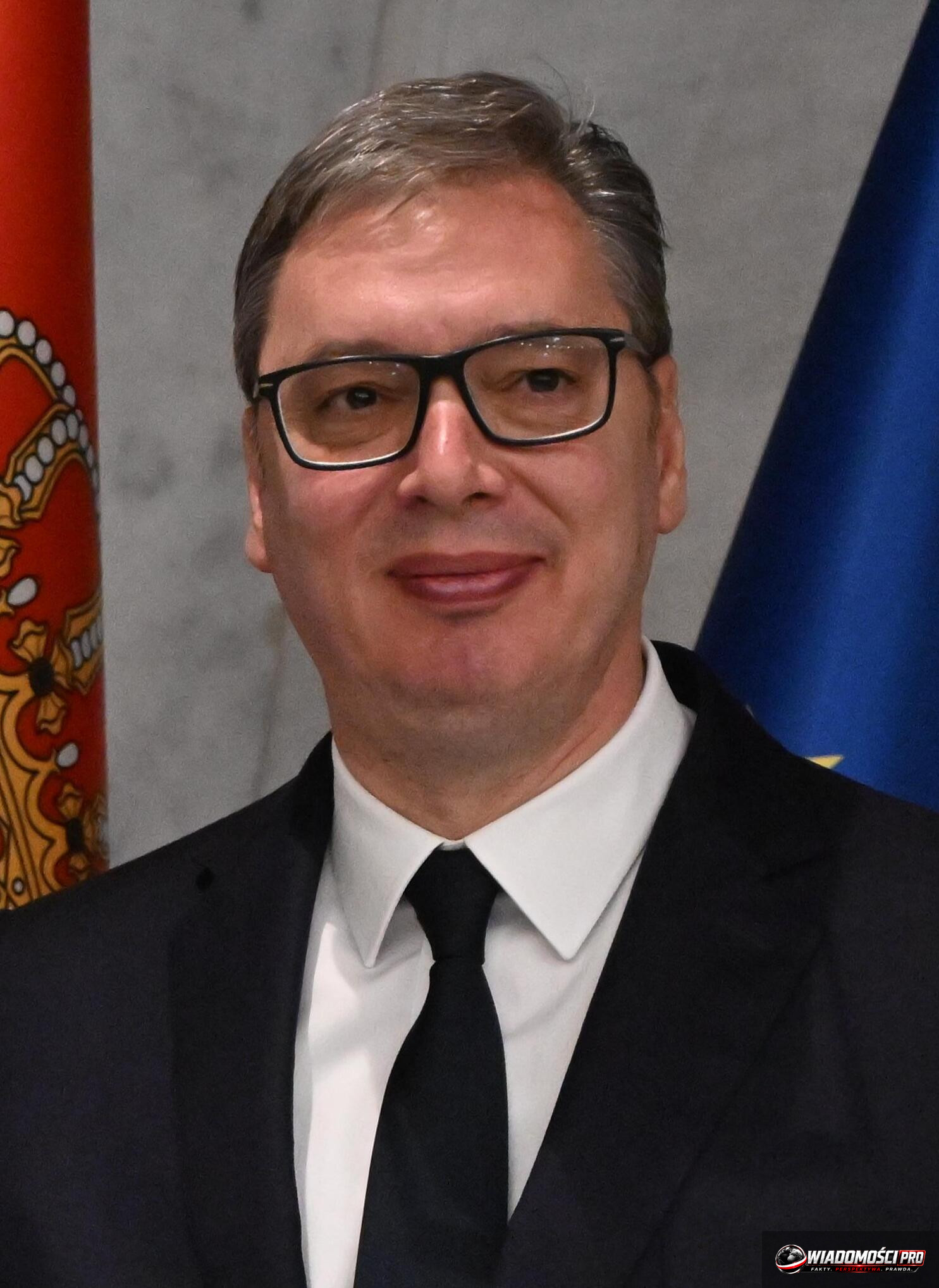
The decision to dissolve parliament on September 9, 2026, is viewed by analysts as a political ploy and a tactical retreat, rather than a guarantee that the president—who had already announced his resignation in June—will relinquish power. Aleksandar Vučić is not laying down his arms; instead, he is shifting the burden of responsibility onto new elections to extinguish social discontent. It is a move aimed at the survival of his political camp under conditions of mounting street pressure.
Chronology of the political tipping point
The situation in Serbia in 2026 requires organizing the facts that led to the current state of parliamentary suspension. Here is a timeline of events that have dominated the Serbian public debate:
- April 4, 2022: Aleksandar Vučić wins the election, building his campaign on promises of strengthening relations with Russia and positioning himself as a supporter of Vladimir Putin.
- June 27, 2026: Media outlets, including RMF24 and Interia, report on the president's first public announcements regarding a potential resignation from his post.
- June 28, 2026: "Do Rzeczy" confirms that the president is maintaining his declarations of stepping down, which is intended as a response to the ongoing protests in the country.
- July 21, 2026: "Tygodnik Powszechny" publishes an analysis titled "Serbia at a Crossroads," questioning the credibility of the president's intentions in the context of handing over the reins of the state.
- September 9, 2026: The president officially dissolves parliament. This decision, reported by wiadomosci.gazeta.pl and wyborcza.pl, is described in the media as a "triumph of the protesters" and a "political earthquake."
The mechanics of a tactical retreat
The dissolution of parliament on September 9 is not a capitulation, but a classic preemptive maneuver. Vučić, forced to act by months of protests, chose a path that allows him to take control of the change process. Instead of waiting for an escalation that could lead to the uncontrolled collapse of his structures, the president himself announces early elections.
In Balkan politics, such a move is clear. It allows for a reset of the narrative. Instead of talking about the causes of the protests, public attention shifts to election logistics, candidates, and coalitions. For the ruling camp, this is a time to regroup. Vučić, who knows social moods perfectly, knows that the anger of the street is fuel that eventually burns out. By calling elections, he gives citizens a sense of agency while securing his ability to return in a new personal or party configuration.
An analysis of the president's actions indicates that his resignation, which he spoke about in June, may be conditional. This is not a unilateral act of goodwill, but an element of a broader game in which the stake is maintaining influence after leaving the office of head of state. Observers from political risk analysis centers in Central and Eastern Europe note that in Serbia, a change of power often takes place within existing structures, rather than through their complete dismantling.
The legacy of 2022 vs. today's pressure
It is worth comparing the current situation with the foundation upon which Vučić built his position in 2022. At that time, his victory was the result of a clear message: Serbia will remain close to Russia. This pro-Russian course was his greatest asset in a country where sentiments toward Moscow are historically strong. Today, that same asset has become a burden.
The pressure that has been building since June 2026 was not just about economic or social issues. It was pressure to change the country's course. The protests that led to today's dissolution of parliament show that society has stopped accepting the current model of foreign and domestic policy. Vučić, as a skilled pragmatist, understood that sticking to the old strategy from 2022 leads to isolation.
Does this mean the president is actually cutting ties with his former allies? Nothing suggests that. It is rather an attempt to adapt rhetoric to new realities. The dissolution of parliament on September 9 is a technical step intended to freeze the crisis. The president does not have to give up power to announce a new beginning. It is enough for him to change the party name, shuffle electoral lists, or field new leaders who will be the faces of a "new Serbia," while he remains in the shadows as a strategist.
Survival strategy in the offices
Analyzing the events of September 9, one cannot ignore the fact that the president's decision was preceded by weeks of uncertainty. "Tygodnik Powszechny" aptly identified this as a moment "at a crossroads." There are many indications that Vučić used this time to probe the possibilities of maintaining his influence.
The so-called "clever ploy" mentioned by the media lies in the fact that the president himself defines the framework in which the elections will take place. Setting the date, the procedure for dissolving parliament—all of this remains in the hands of the current administration. The opposition is given a chance, but it is playing on a field prepared by the opponent.
The question of whether Vučić will really relinquish power must be weighed against the lack of an alternative. Who will take the helm after him? Do the protesters have leaders capable of managing the state at such a difficult moment? The president knows perfectly well that the answer is "no." That is why he allows for elections. He believes that the lack of a coherent alternative on the side of the protesters will force voters to return to a proven, albeit controversial, leader.
This is not the end of an era, but its next, perhaps most difficult phase. Vučić, as an experienced player, understands that in politics, the winner is not the one who is right, but the one who can survive the worst moments and emerge from them while preserving the foundations of the system.
What lies behind the facade of change
Media reporting on the "triumph of the protesters" often overlook the fact that the dissolution of parliament is a procedure that, under Serbian law, gives the president enormous room for maneuver. This is not an automatic process of handing over power. It is a process that opens the way to an election campaign in which the current government possesses incomparably greater resources than the opposition.
Doubts about the sincerity of Vučić's intentions stem from the fact that his announcements of resignation in June 2026 were very enigmatic. No specific dates were ever given, and no plan for the transfer of power was presented. It was a signal sent to his own camp: "don't worry, I have a plan." Today we see the implementation of that plan. The dissolution of parliament is part of it.
Could this fail? Of course. If social anger proves stronger than the party machine, Vučić could lose control. However, the history of his rule, starting with his victory in 2022, teaches us that the Serbian president rarely takes risks he cannot control. Every move he makes is calculated.
It is worth paying attention to the reactions of financial markets and foreign partners. For them, stability is more important than the democratic nature of elections. If the elections produce a result that calms the streets while maintaining Vučić's influence, the Western world will likely accept this state of affairs. This gives the president a huge advantage.
Questions and answers
Why did President Vučić dissolve parliament?
The decision was a reaction to the mass social protests ongoing since June 2026, which exerted enormous pressure on the president and forced him to seek a way to defuse political tension.
Is Vučić definitively leaving politics?
Although he announced his resignation in June 2026, experts assess his current actions as a strategic ploy aimed at surviving the crisis and maintaining influence, rather than a final withdrawal from public life.
What role does Russia play in Vučić's politics?
Vučić was seen as an ally of Russia, winning the 2022 election on promises of strengthening relations with Moscow, which is currently a significant point of contention in the context of Serbia's European aspirations and social pressure to change course.
Does the dissolution of parliament guarantee a change of power?
No. It is an electoral procedure that opens the way to voting, but it does not predetermine the loss of control by the current ruling camp, which still possesses resources and influence in state structures.
What is next for the protests?
The protesters managed to force early elections, which is their success, but now they must translate this momentum into a real electoral result, which will be a difficult task in the face of the president's extensive party machine.
Perspective for Serbia after September 9
Belgrade is at a turning point. The dissolution of parliament on September 9 is only the beginning of a path that could lead to change, but could also bring about the consolidation of the current system under a new banner. The elections that will be announced will be a test for Serbian democracy.
It is important to understand that politics in Serbia is not based on simple divisions. It is a complex web of dependencies in which President Vučić has built his position over the years. Every move he makes, including the one on September 9, is thought out in terms of maximizing the chances of his influence surviving. Does this mean the opposition has no chance? No, but it must prepare for a campaign in which the opponent will not hesitate to use all available means to maintain the status quo.
The uncertainty about Serbia's future is greater today than ever before. On one hand, we have a society that wants change and real democracy. On the other hand, we have a power apparatus that knows how to adapt to changing conditions. The dissolution of parliament is not the finale; it is just a change of scenery in a political theater. Whether a new actor will appear in this theater, or just a new scene with the same director—we will find out after the election results are announced.
For the Serbian citizen, the most important question remains: will the elections be free and fair? If so, the chance for real change grows. If, however, they are just another element of the "clever ploy" the media writes about, then the change will be only superficial. Observing the election process will be crucial to understanding in which direction Serbia is heading. Is it a path toward integration with Europe and true democratization, or further maneuvering between East and West under the dictates of the old order? We will only know the answer to this question after the campaign ends.
President Vučić, by announcing the dissolution of parliament, has bought himself time. This is time he can use to regain the initiative or to prepare the ground for a new stage of his rule. His moves show that he does not intend to give up the field without a fight. Serbia is entering a decisive phase, and the outcome of this game will determine the future of the entire Balkan region. Anyone following the situation in Belgrade must remember that in this game, nothing is what it seems at first glance. The president's tactical retreat may only be a preparation for a counterattack that will allow him to maintain control for years to come. Everything depends on how society reacts and whether the opposition will be able to unite around a common goal. If not, Serbia will remain on the course set by the president. A course that has been increasingly difficult to maintain since 2022.
In the face of the upcoming elections, the role of independent observers and media will become crucial. They will have to catch attempts at manipulation and inform about the real course of the campaign. Only through transparency can the electoral process bring a result that reflects the will of the nation, and not just the interests of political elites. Will this succeed? That question remains open. Serbia faces an opportunity, but the road to it is full of traps that President Vučić has set with mathematical precision. It remains to wait for developments and observe whether September 9 will indeed become the day when Serbia's history turns in a new direction, or just another entry in the chronicle of one man's political survival.
A final assessment of the president's intentions will only be possible after the elections are over. At this moment, we know one thing: Vučić is not leaving. He is changing the rules of the game to stay in it. Whether he wins depends on how determined the voters are to change the current order. Serbia in 2026 is a country where politics has become a high-stakes game, and every move of the president is analyzed through the prism of his desire to maintain power. What happens in the coming months will affect the future of the entire region. Serbia is no longer the same country it was in 2022, but its leader still uses the same methods. The question of whether these methods will still be effective in 2026 remains open. Everything depends on whether the society of Serbia will allow itself to be drawn into another political game again.
The events of September 2026 are a lesson for all who believe in simple solutions. Politics is a complicated mechanism, and leaders like Vučić can use every loophole to achieve their goals. The dissolution of parliament is just one piece of this puzzle. Will the rest of the pieces form a picture of change, or a picture of continuation? That will be the main topic of debate in the coming months. Serbia deserves a clear future, not more rounds of political chess where the future of the nation is at stake. Time will tell if this nation will be able to win this game, or if it will again be forced to accept rules imposed from above.
All these aspects make the situation in Serbia one of the most interesting and unpredictable in Europe. Observers from all over the world will watch what happens in Belgrade in the coming weeks. Will Vučić actually risk losing power, or will he manage to emerge from this crisis unscathed? The answer to this question is worth following, because it may set a new standard in Balkan politics. A standard in which protests become a tool for change, not just a temporary disturbance of the peace of those in power. If that happens, September 9, 2026, may be remembered as the day Serbia began to write its history anew. If not, it will be just another chapter in a history where political cunning wins over democratic aspirations. Everything depends on how strong the voice of the citizens is and whether it will be able to break through the noise of political maneuvering.
Finally, it is worth adding that the future of Serbia does not lie in the hands of one man, but in the hands of all its citizens. They will decide at the ballot box what kind of country they want to live in. Will it be a country ruled by one man, or a country where the government is held accountable for every decision? This is the real challenge facing Serbia. All other events, including the dissolution of parliament on September 9, are just background for this most important decision. A decision that will be made in the upcoming elections. May it be conscious and based on facts, not on the political rhetoric that has dominated the Serbian public space for years. Serbia deserves to become a country where the citizen's voice matters. Will it be so? That is a question we will soon have the answer to. The time for change has come, and whether it will be seized depends only on the Serbs themselves.
Sources
- Political shock in Serbia. President announced he will step down - RMF24
- Political earthquake in Serbia, president announces. This is the effect of ongoing protests - Interia Wydarzenia
- Serbia. Vučić bowed to the pressure of protests. Announced early elections - wiadomosci.gazeta.pl
- Vučić announced early elections. Triumph of the protesters - wyborcza.pl
- Serbia at a crossroads. Will President Vučić really relinquish power? - Tygodnik Powszechny
- Serbia: Putin supporter won the election. Promises friendly relations with Russia - PolsatNews.pl
- Political earthquake in a Balkan country. Parliament dissolved, a clever ploy by the head of state - Interia Wydarzenia
- Serbian President Aleksandar Vučić announced his resignation - Do Rzeczy
Article prepared by the Wiadomości PRO editorial team with the support of artificial intelligence. Facts are derived from the sources provided above.


Komentarze (0)
Ładowanie komentarzy...