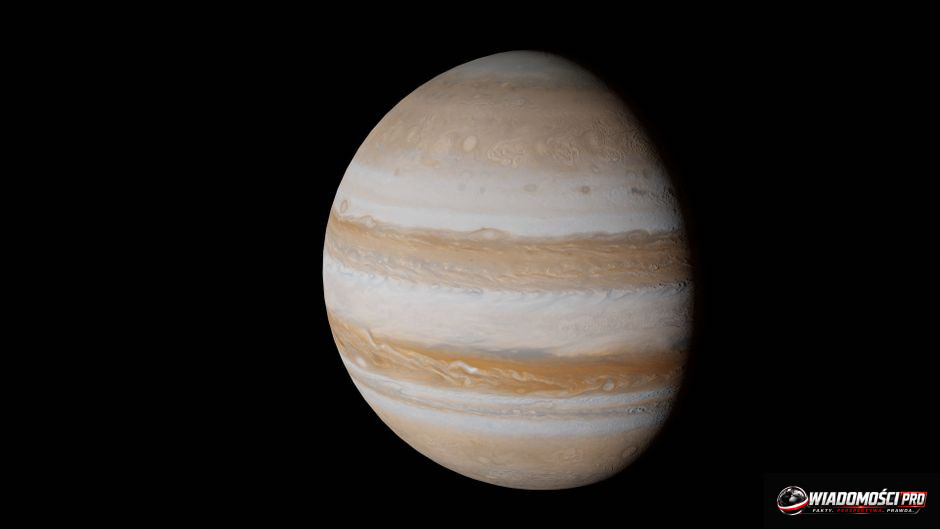
The Europa Clipper mission, which launched in October 2024, is tasked with investigating whether conditions favorable to life exist beneath Europa's icy shell, rather than directly detecting organisms. NASA is focusing on analyzing the liquid water ocean and the chemical components that could support potential biological forms. The probe does not carry microscopes or other devices dedicated to identifying living cells, which makes it an advanced diagnostic tool for the moon's entire ecosystem.
Beginning of the mission: launch toward the unknown
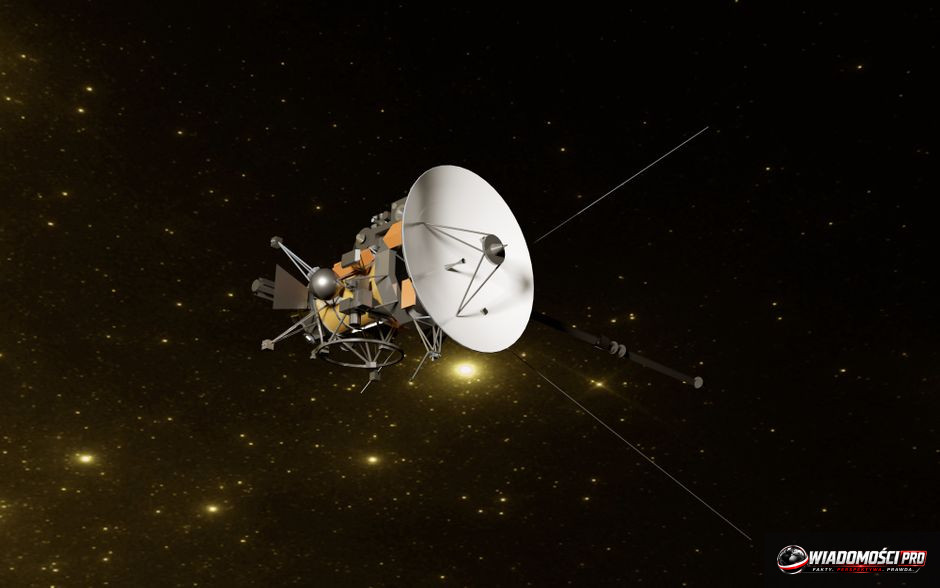
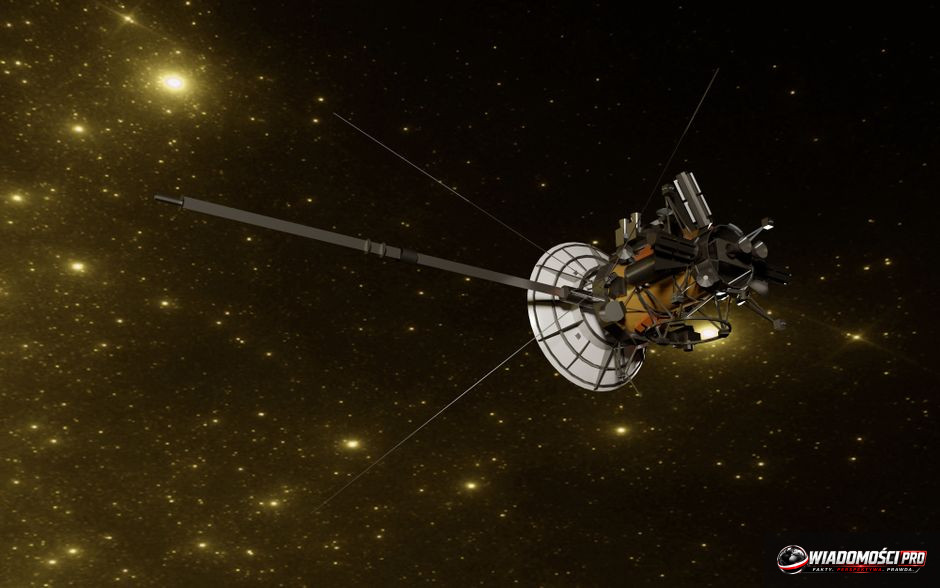
Europa Clipper left Earth in October 2024, beginning one of the most expensive and complex operations in the history of American astronautics. The total cost of the mission, including construction, launch, and years of operation, is estimated at approximately 5.2 billion dollars. This figure illustrates the scale of the challenge faced by engineers at the Jet Propulsion Laboratory in Pasadena. The probe is not a standard construction. It had to be designed in a way that would allow it to survive a multi-year journey through interplanetary space and then function in one of the most hostile environments in the Solar System.
Jupiter's orbit is a death zone for electronics. The gas giant's strong magnetic field generates intense radiation belts that can permanently damage integrated circuits in just a few weeks without proper protection. The designers of Europa Clipper decided to create a special vault to protect the probe's most sensitive components. The walls of this module are made of titanium and aluminum nearly a centimeter thick. It is in this armored command center that the "brain" of the mission is located, managing the data flowing from the research instruments.
The launch of the mission was the culmination of a decade of planning and engineering battles against budgetary and technical constraints. Industry media, such as Astronet or Kosmonauta.net, reported on the preparations with the attention due to an event that has a real chance of changing our understanding of astrobiology. NASA did not send an "alien hunter" toward Jupiter. It sent a precise physicochemical laboratory intended to answer a fundamental question: does the water that likely slumbers beneath the thick, icy shell possess the right set of chemical elements necessary to sustain metabolic processes.
We are not looking for radio signals or traces of civilization here. We are looking for raw chemistry. If the probe confirms the presence of the right energy resources, the right composition of salts, and organic molecules, it will pave the way for future missions that might one day dare to land. For now, we must be content with mapping.
Why is Europa the number one target?
Europa is not just another moon in Jupiter's collection. It is a world that has fascinated scientists for years due to its geological structure. Beneath the ice surface, which is estimated to be 15 to 25 kilometers thick, lies an ocean of liquid water. The volume of this reservoir could be twice as large as all of Earth's oceans combined. It is this enormous retention potential that has made Europa the prime candidate for searching for habitable environments.
This moon is constantly stretched and squeezed by the tidal forces of Jupiter and neighboring satellites. This phenomenon, called tidal heating, generates heat inside the globe. Thanks to it, the water under the ice does not freeze solid but remains in a liquid state. For astrobiologists, this is a key factor. Water is a universal solvent in which complex chemical reactions can occur. Without it, life as we know it would have no chance of existing.
Skeptics often raise the argument that the mere presence of water is not enough. They are right. Europa Clipper was designed not only to confirm the existence of water but, above all, to study its interactions with the rocks at the bottom of the ocean. It is there, at the interface between the rocky mantle and the water, that processes similar to Earth's hydrothermal vents may occur. If there are sources of chemical energy at the bottom of Europa's ocean, the chance of simple life forms surviving there increases drastically.
NASA does not expect quick discoveries. Analyzing the data collected during flybys will take years. Each one is only a fraction of a second in real-time when the probe is within range of its sensors. This is not a movie where we see an organism in the final frame. It is detective work based on spectroscopy and radar measurements.
American dominance in the space race
A budget of 5.2 billion dollars puts Europa Clipper at the forefront of the most expensive planetary missions in NASA's history. It is an investment meant to secure the Americans' position as leaders in the exploration of the Jovian system. The European Space Agency is also conducting its own research in this region, but NASA's strategy is based on a different philosophy. Instead of building a universal, multi-purpose orbiter, the Americans opted for a specialized set of instruments focused on one goal: verifying habitability.
The competition for primacy in space exploration has moved from the level of flags and slogans to the level of scientific data. Whoever delivers a precise chemical map of Europa's ocean first will define the future directions of astrobiology. Washington is aware of this prestige. Every stage of the mission is monitored by the control center at JPL, and the results are analyzed by the best scientific teams in the world.
Other agencies, like ESA, focus on a broader spectrum of research on the entire Jovian system. NASA, on the other hand, has "carved out" Europa as a priority. This is an "all-in" approach. If the instruments on board the Clipper do not find evidence of the chemical foundations of life, it will be a scientific failure on a scale commensurate with the billions spent. But it is also a lesson in humility. Science does not always provide the answers we expect. Often, it only provides more questions.
The political dimension of the mission is obvious. At a time when the commercial sector is taking over more and more tasks in low Earth orbit, NASA maintains a monopoly on deep scientific exploration. Europa Clipper is a manifestation of the fact that only a state giant with almost unlimited access to space technology is capable of carrying out a project of such risk and complexity.
The technological heart of the Europa Clipper probe
The probe has been equipped with nine scientific instruments that together form the most advanced research suite ever sent toward Jupiter. Each of them plays a different role, and their synergy has been designed to "see" through the ice.
REASON (Radar for Europa Assessment and Sounding: Ocean to Near-surface) is the heart of the system. It is a radar instrument that uses low-frequency waves to penetrate the icy shell. Its task is to create a three-dimensional image of the interior of the ice. The radar must distinguish pure ice from ice contaminated with salts, which is crucial for determining the thickness of the shell. If REASON shows that the ice is too thick or structurally dead, the entire concept of an ocean accessible for potential biological processes will collapse.
EIS (Europa Imaging System) is the probe's eyes. Thanks to high-resolution cameras, this system maps the moon's surface with precision allowing for the observation of meter-sized structures. Geological imaging allows scientists to understand if the surface is "breathing." They are looking for cracks from which water vapor might escape. If geysers can be detected, the mission will gain an opportunity to collect samples without the need for landing.
MISE (Mapping Imaging Spectrometer for Europa) deals with chemistry. This instrument analyzes the spectrum of light reflected from the surface, which allows for the identification of chemical components. Scientists are looking for specific compounds: salts, organic compounds, and acids. It is MISE that will answer the question of whether there are traces of material ejected from the interior of the ocean on the surface.
Other instruments, such as SUDA (Surface Dust Analyzer) and MASPEX (Mass Spectrometer for Planetary Exploration), are dedicated to analyzing dust particles and gases in Europa's exosphere. During close flybys, the probe will "comb" the space around the moon in search of particles ejected from the interior. This is the most direct way to "touch" the ocean that we currently have at our disposal. ECM (Europa Clipper Magnetometer), in turn, will measure the magnetic field induced by the movement of the ocean, which will confirm its electrical conductivity and salinity composition.
This is not "advanced equipment" in a general sense. These are specific physical tools. Each of them has its limits. Each of them could fail in extreme radiation conditions. But each of them is the pinnacle of current material engineering capabilities.
Travel schedule and current status (as of 2026)
September 2026 marks a time of intensive work for the life support and navigation systems for Europa Clipper. After launching in October 2024, the probe is in the middle of a multi-year journey, using gravity assists to gain the speed necessary to reach the Jupiter region. This flight is not a time of rest for the onboard systems. Ground control regularly performs instrument calibration tests, ensuring that after years spent in a vacuum, everything will work according to plan at the moment of closest approach.
The mission schedule is rigid. Each flyby of Europa has been calculated with kilometer-level accuracy. If the probe is seconds late, it loses the chance to collect data from key geological areas. This is logistics at an atomic level.
Project status as of September 2026:
- The probe is moving according to the designated interplanetary trajectory.
- Solar power systems are performing better than predicted in pre-launch simulations.
- The scientific team at JPL has begun the preparatory phase for data analysis, developing algorithms that will process the radar noise from REASON into readable geological maps.
There is no room for improvisation here. If, upon arrival, it turns out that the instruments are not responding as they should, NASA will not be able to send a service crew. This is a "do or forget" type of mission. Every error in the software code or every defect in the electronic solder becomes an insurmountable barrier. The probe must operate autonomously.
What's next? Perspectives for humanity
Launched in October 2024, the Europa Clipper probe is changing the paradigm of our search. Until now, astrobiology was often limited to Mars – a planet that was wet in its history but is dead, red dust today. Europa is a completely different story. It is a world that is active "here and now." If the water in the ocean is warm and rich in organic compounds, life could have been born there and evolved in complete isolation from sunlight.
The ultimate goal of the operation remains to determine whether Europa is a habitable environment. This is a fundamental verification step. If the results prove positive, all our current knowledge about the Solar System will require a thorough revision. The center of gravity in astrobiology will then shift from purely theoretical considerations to planning subsequent, much more complex lander missions.
For observers on Earth, the success of Europa Clipper is primarily a change in perspective. We are stopping looking at space as a dead void filled with rocks and gas. We are beginning to treat it as a potential home. Even if the mission does not provide definitive proof of the existence of life, the mere fact of confirming a favorable environment on Europa will mean that we are no longer as unique as we previously thought. It is a transition from guesswork to concrete chemical knowledge, which will set the research directions for the next generations of researchers.
Is this enough to satisfy our curiosity? Probably not. But for science, it is enough. It is a hard, chemical fact upon which further theories can be built. If it turns out that Europa is a biological desert, we will know that life is rarer than we assumed. If, however, it turns out that the conditions are ideal, the question "are we alone" will take on a completely new dimension. We will know the answer when the first hard data from the probe's sensors arrives.
What this means for you
This mission is a great image and scientific success for NASA, which strengthens the position of the USA in the space sector. Scientists and astronomy enthusiasts gain, while European agencies must now face the pressure to keep up with the American giant. The catch remains the enormous distance and the duration of the mission – we will have to wait a while for the final results.
Questions and answers
Will the probe land on the surface of Europa?
No, the Europa Clipper probe will conduct research from orbit, performing numerous close flybys of the moon to study its conditions without risking a landing in unknown and extremely radioactive terrain.
When will the mission reach its destination?
The mission launched in October 2024 and is currently in the multi-year cruise phase, and data from the research will begin to arrive after reaching the Jupiter region according to NASA's schedule.
Is this NASA's most expensive mission?
The Europa Clipper mission, with a budget of 5.2 billion dollars, is one of the most expensive and technologically advanced NASA projects of recent years, which is crucial for the search for conditions favorable to life in the Solar System.
Sources
- Launch of the Europa Clipper mission to Europa - astronet.pl
- Europa Clipper probe to search for life on Europa - Urania - Polish Astronomical Portal
- Launch of the Europa Clipper mission [BROADCAST]. Americans to outpace Europeans in the search for life on Europa - wyborcza.pl
- Beginning of the Europa Clipper mission - Kosmonauta.net
- Europa Clipper has launched. It will investigate whether there are conditions for life on Jupiter's moon - Polskie Radio 24
- Searching for life in the Solar System beyond Earth. NASA sends a mission - Geekweek Interia
- NASA sends a probe to Europa. Europa Clipper mission has launched - WP Tech
- Flying to search for life. NASA mission launch in just three weeks - Antyweb
Article prepared by the Wiadomości PRO editorial team with the support of artificial intelligence. Facts come from the sources listed above.
Komentarze (0)
Ładowanie komentarzy...