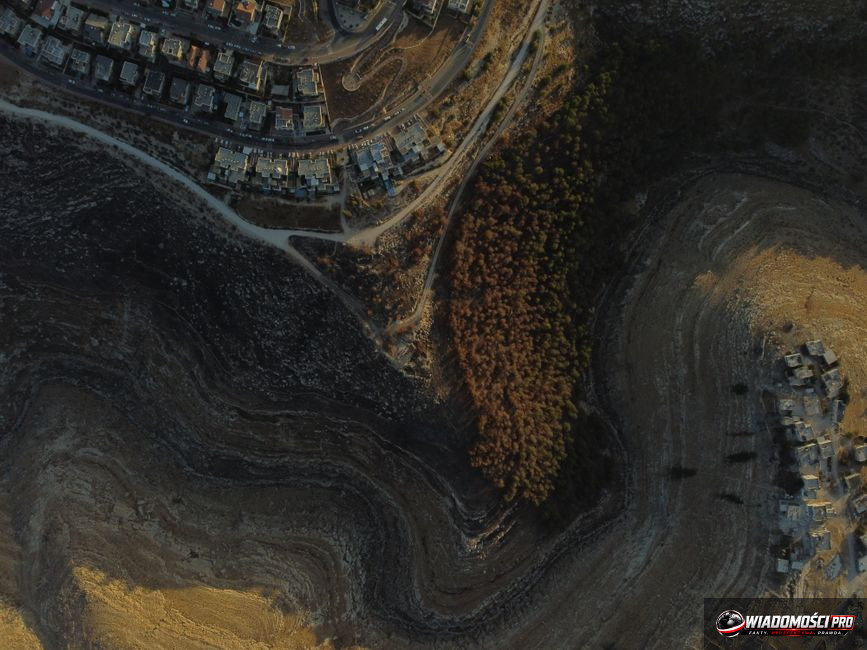
Poland and eleven other countries have imposed trade sanctions on Israeli settlers in the West Bank, sparking a sharp reaction from Jerusalem and the retaliatory closure of the British consulate. This decision, announced on September 8, 2026, constitutes a formal attempt to cut settlers off from European markets and limit their financial capabilities. The coalition, which includes Poland, the United Kingdom, France, and Germany, among others, has taken a step that directly strikes at the economic structure of Israeli settlements.
The coalition of twelve: Who imposed the sanctions and why?
Poland, acting within the framework of a broad agreement, has become one of the signatories to the decision to introduce trade restrictions against entities linked to settlement activity in the West Bank. Alongside Warsaw, the group of twelve countries includes the United Kingdom, France, and Germany, among others. This formation is not accidental – these are the countries that have been pushing hardest in recent months on the issue of respecting international law in the disputed territories.
These states argue that previous declarations regarding the stabilization of the region have not yielded results in terms of reducing acts of violence. Instead of further appeals, the coalition has opted for hard economic tools. The sanctions mechanism is based on a ban on the import of products manufactured directly in West Bank settlements and on the freezing of financial assets of individuals and companies that finance or manage settlement activities. In practice, this means that goods bearing a certificate of origin from the settlements cannot be introduced into the markets of the coalition countries. For agricultural and industrial producers from these areas, this means a loss of direct access to EU and British buyers, which translates into real financial losses.
By joining this group, Polish diplomacy has clearly declared a departure from its previous strategy of avoiding direct clashes with Jerusalem on territorial issues. This decision was made in light of reports indicating an increasing scale of extremism, which, according to the signatories, destabilizes the security of the entire region. Warsaw, like the other capitals in the group, maintains that a lack of reaction to the settlers' actions leads in the long term to an escalation, the consequences of which will be felt not only by Israel but also by Europe.
Economic mechanisms: What do the sanctions mean?
The trade sanctions imposed by the coalition of twelve countries do not cover all of Israel, but focus on precisely defined economic points. The foundation of the restrictions is a ban on the marketing of goods originating from settlements in the West Bank. This means that every product – from food items to industrial components – must have documentation confirming the place of production. If it turns out that a given product was created in an area subject to restrictions, it is subject to automatic confiscation or return to the sender, and importers may be subject to administrative penalties.
Beyond trade restrictions, the sanctions also affect the banking sphere. The freezing of assets of individuals and entities deemed to be supporting settlements is intended to cut them off from the international payment system. For specific entrepreneurs, this means an inability to make international transfers in foreign currencies, such as the euro or the British pound, which drastically limits their ability to invest and import raw materials necessary for conducting business.
Faced with these restrictions, local settler communities must look for alternative markets, which, in conditions of diplomatic isolation, is a costly and logistically complex task. Transport costs and intermediary commissions in countries not subject to sanctions make the profitability of many enterprises in the West Bank questionable. This is not a one-off attack, but a systemic effort to make settlement policy economically unprofitable for its direct beneficiaries.
Jerusalem's reaction: Retaliation and breaking off dialogue
The reaction of Benjamin Netanyahu's government was immediate and left no room for diplomatic maneuvering. In response to the sanctions, Israel decided to close the British consulate. Jerusalem deemed the actions of the twelve countries an act aimed at the state's security and an attempt to interfere with the sovereign right to manage territories.
In the view of Israeli authorities, these sanctions are a manifestation of ignorance regarding the challenges Israel faces in fighting internal threats. Netanyahu emphasized that the decision to close the consulate is an adequate response to the attempt to isolate Israeli citizens. For Jerusalem, the matter is simple: economic sanctions are not just a tool of pressure, but a form of aggression that requires an equally firm response. The choice of the British mission as the primary target of retaliation is not accidental – London was one of the most active proponents of the sanctions, which makes it, in the eyes of the Israeli government, the leader of the anti-settlement front.
From the point of view of Israeli diplomacy, trade sanctions violate existing bilateral agreements and undermine trust between states. In Jerusalem, there is a conviction that Europe, by imposing restrictions, is taking sides in the conflict while ignoring Israel's arguments regarding border security. The closure of the consulate is intended to be a signal that further attempts at economic pressure will lead to a complete paralysis of diplomatic communication with the countries that have decided to take this step.
From May to September: The evolution of sanctions
Today's situation is the result of a process that began in the spring of 2026. As early as May 11, 2026, the European Union signaled that the escalation of violence in the West Bank would have consequences. At that time, however, the narrative was limited to warnings and announcements that were treated in Jerusalem as unlikely to be implemented.
On May 12, 2026, Prime Minister Netanyahu openly opposed the EU's plans, arguing that Brussels' interference in Israel's security policy was unacceptable. Over the following months, behind-the-scenes talks took place in which Poland and a group of other countries evolved from a wait-and-see stance to an engaged party in the dispute. The failure of settlers to withdraw from controversial activities and the growing number of incidents caused European capitals to move from words to action.
September 8, 2026, proved to be a turning point. The coalition of twelve countries decided that the time for negotiations had passed. The application of trade sanctions is an attempt to force a change in policy by striking at the finances of the settlements. The history of recent months shows that Israel does not intend to yield under pressure, which puts diplomats from Warsaw, Berlin, or Paris in an extremely difficult situation. On one hand, they are bound by a common position, and on the other, they are confronted with the real risk of breaking relations with a key partner in the Middle East.
Consequences for Poland: A balance of risks
Poland's inclusion in the coalition of twelve countries imposing sanctions changes the dynamics of Polish-Israeli relations. Until now, Warsaw has tried to balance loyalty to its Western allies with maintaining good relations with the government in Jerusalem. The decision of September 8, 2026, ends this stage of policy.
For the Polish government, the key challenge now is assessing the possible retaliatory consequences. Israel has proven that it can react in an uncompromising manner, as evidenced by the closure of the British consulate. Poland must take into account that Jerusalem may limit cooperation in other areas, such as technology, defense, or trade in sectors not directly covered by the sanctions.
From the perspective of economic analysts, the risk for Poland is real, though limited to specific industries. Exports to Israel are largely based on industrial products that have no connection to settlements; however, in an atmosphere of diplomatic conflict, any trade exchange can become a hostage to politics. Polish diplomacy must now demonstrate great resilience to pressure and consistency in implementing the adopted course, knowing that any concession will be read as weakness by both sides of the dispute.
Economic perspective: Do sanctions work?
The effectiveness of trade sanctions in territorial matters is a subject of debate among economists. Historically, restrictions of this type rarely lead to an immediate change in the policy of governments that view a given area as crucial to their national interest. In the case of settlements in the West Bank, the situation is all the more difficult because these settlements are strongly integrated into the Israeli national economy.
Sanctions strike at local producers but cannot completely cut the settlements off from resources as long as the Israeli state provides them with infrastructural and legal support. This means that the economic effects of the sanctions may be felt mainly by specific companies, while the long-term political goals of the coalition may remain unachieved. There is a risk that the sanctions will mobilize settlers to seek new sources of funding within Israel, which may further strengthen the bond between the settlements and the government in Jerusalem.
For European companies operating in the Israeli market, the current situation means enormous legal uncertainty. Entrepreneurs must carefully analyze their supply chains so as not to expose themselves to consequences resulting from new regulations. The costs of audits, certification, and origin checks fall on private entities, which increases the costs of doing business in this region. In the long term, this could lead to the withdrawal of European capital from Israel, which would be disadvantageous for both sides.
The future: Is dialogue still possible?
The current state of relations between Israel and the group of countries imposing sanctions can be described as frozen. The closure of the British consulate is not just a symbolic gesture, but a real limitation of diplomatic capabilities. Without communication channels on the ground, resolving conflicts becomes even more difficult.
In diplomatic corridors, there is talk of the need to find a "third way." Is it a return to negotiations in a broader group, or perhaps an escalation of sanctions to other areas? For now, neither side shows a willingness to make concessions. Israel feels cornered, and the coalition of twelve countries believes it has exhausted all other means of persuasion.
For a Polish citizen, this means that the situation in the Middle East will become one of the significant points of debate in foreign policy over the coming months. Uncertainty regarding Jerusalem's next steps and the stability of the European coalition will determine international relations in this region. Will the sanctions bring about a change in settlement policy? We will only know the answer to this question in the perspective of the coming years, when it will be possible to assess the real impact of these restrictions on the economic situation in the West Bank. At this moment, we are dealing with a hard confrontation in which each side has dug into its positions.
Questions and answers
Why did Poland decide to impose sanctions?
Poland joined the group of twelve countries, arguing that previous diplomatic methods had not stopped violence and extremism in the West Bank, which necessitated the use of economic tools.
What specific retaliatory steps did Israel take?
In response to the trade sanctions, the Israeli government decided to immediately close the British consulate, which was considered a response to the attempt to isolate Israeli citizens.
Are these the first sanctions of this type in 2026?
No, this process began in May 2026, when the European Union announced consequences for those responsible for violence in the West Bank, which was met with fierce opposition from Prime Minister Netanyahu.
What exactly do the trade sanctions cover?
The sanctions include a ban on the import of products originating from settlements in the West Bank and the freezing of financial assets of entities and individuals directly involved in their financing or management.
Which countries make up the coalition?
The group of twelve countries that imposed the restrictions includes, among others, Poland, the United Kingdom, France, and Germany, making this group a significant bloc in relations with Jerusalem.
Sources
- Group of countries announces sanctions on Israeli settlers. Jerusalem reacts - Interia Wydarzenia
- Several countries join forces regarding the West Bank. Poland on the list, Israel furious - PolsatNews.pl
- 12 countries announce trade sanctions against Israeli settlements in the West Bank - Euronews
- Group of countries announces sanctions on Israeli settlers. Poland among them - Interia Wydarzenia
- "A stain on the world's conscience." British sanctions on settlers and Israel's immediate reaction - Bankier.pl
- Israel closes British consulate in retaliation for sanctions against settlements - Vietnam.vn
- EU imposes new sanctions. "Extremism and violence have consequences" - TVN24
- EU move infuriated Netanyahu. Where did such a reaction come from? Expert explains - Money.pl
Article prepared by the Wiadomości PRO editorial team with the support of artificial intelligence. Facts come from the sources listed above.


Komentarze (0)
Ładowanie komentarzy...