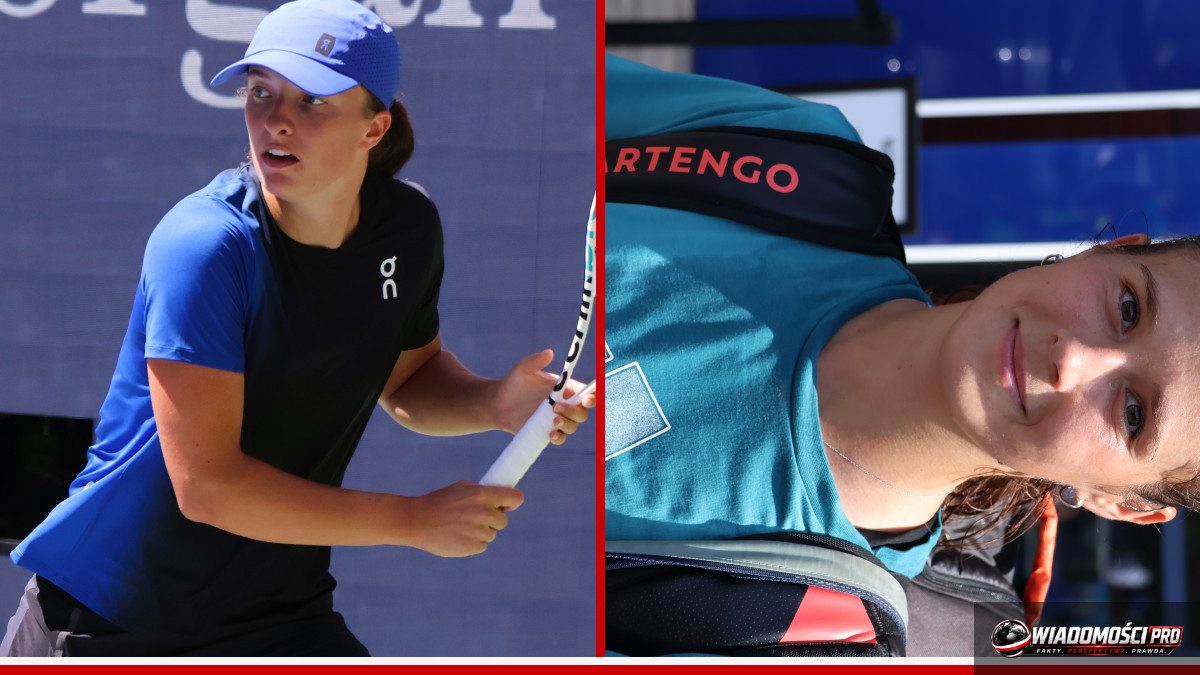
Iga Świątek defeated Daria Kasatkina 6:1, 6:0 in her final group stage match of the WTA Finals in Riyadh, which secured her a confident advancement to the tournament's semifinals. This result ends the period of uncertainty that had accompanied the Pole since the conclusion of the competition in New York. The rivalry in Saudi Arabia in 2026 left no doubts regarding the form of the world number one, who closed off the Russian's path to any attempt at a comeback in less than an hour.
Tennis is a game of errors, but against Kasatkina, Świątek minimized her own mistakes to a level that previously seemed unattainable during this season. Observers in Riyadh witnessed the execution of a tactical plan. There was no room for sentiment or giving up the initiative. The Pole set a pace that the Russian could not keep up with as early as the third game. Dominance in every element of the tennis craft — from serve to return — exerted pressure on her opponent that Kasatkina could not handle.
Advancing to the semifinals in such style is an answer to the questions posed by experts after the unsuccessful US Open campaign. The 2026 season was a sine wave for Świątek's team. On one hand, the triumph in Toronto on August 14th, on the other, painful lessons in New York. The victory over Kasatkina is a clear signal that the adjustments made after the loss to Qinwen Zheng in the US Open round of 16 have brought measurable results. The coaching staff opted for aggressive stabilization. Instead of waiting for her opponent's move, Świątek took control of the court from the very first ball.
Dawid Celt, analyzing the Pole's form in recent months, pointed to a phenomenon that plagued her during more difficult moments of the season. It was about losing concentration while leading 5:0, which in several cases ended in lost sets of 5:7. This phenomenon was the subject of heated discussions in the Polish tennis community. During the tournament in Riyadh, Świątek showed that she had learned from these lessons. The second set against Kasatkina, won to love, is proof that the mental blocks that previously took her out of matches in theoretically won situations have ceased to exist.
For fans who followed her path since the victory in Toronto, the performance in Riyadh is confirmation that Świątek has regained her killer instinct. In Canada, in mid-August, the Pole played tennis based on confidence, which had somehow faded in the following weeks. The US Open, specifically the clashes with Marie Bouzkova in the third round and the aforementioned confrontation with Zheng, exposed the fragility of that form. Each of those matches was a thriller. Each required superhuman effort from her to snatch victory from the hands of opponents who smelled blood.
In Riyadh, the situation looked different. Świątek did not have to look for a way out of trouble because she created conditions for Kasatkina in which it was impossible to play. This is the difference between winning matches by fighting oneself and winning by dominating the opponent. The coaching staff had to make difficult tactical choices after the September failures. The decision to change the approach to finishing games was risky, but it paid off in the form of advancing to the final four of the season.
Analyzing the statistics from Riyadh, one can clearly see where the line lies between the form from the US Open and her current performance. In New York, Świątek often allowed opponents to return to the match through excessive risk in situations that did not require it. It was different with Kasatkina. The Pole played deep, choosing directions that forced the Russian to run rather than counterattack. This is a simple but extremely effective strategy, provided one has the appropriate precision of shots.
The 2026 tournament in Riyadh is specific. The group stage format rewards not only wins but also the game differential, which is an unbeatable trump card in the event of equal points in the table. Świątek knew this perfectly well. The 6:1, 6:0 victory was not just a matter of ambition, but of calculation. The Pole eliminated the risk of mathematical uncertainty. Every game won in such style is a signal sent to the other semifinalists: Iga is back and does not intend to take prisoners.
It is worth returning to Dawid Celt's diagnoses. He pointed out directly that Świątek's problem was not technique, but managing emotions in situations where the score was high. A 5:0 lead often caused her to relax, which opponents immediately exploited. That is why the 5:7 losses in matches where she had previously dominated hurt so much. In Riyadh, this trend was broken. 6:0 in the second set is a result that says everything about the Pole's current mindset. There is no room for a moment of breath until the ball is hit over the net for the last time.
What does this mean for the rest of the tournament? Above all, peace in the staff. The coaches could finally breathe a sigh of relief, seeing that the work done after the US Open did not go to waste. The WTA Finals semifinal is not a place for experiments, and Świątek entered it with full conviction of her own value. The opponents who emerge from the second group certainly analyzed today's match with Kasatkina. And they certainly did not feel more confident after that analysis.
For tennis fans in Poland who have become accustomed to Świątek's dominance, this year's season was a lesson in patience. After the success in Toronto, it seemed that the road to the WTA Finals title would be simple. Reality turned out to be more complicated. Problems in the US Open round of 16 with Qinwen Zheng or difficult moments with Marie Bouzkova showed that even the best players must face crises. How the Pole handled these challenges defines her class.
In Riyadh, the courts can be specific, and playing conditions change depending on the time of day. Świątek adapted to them in an almost textbook manner. Her serve, which had been unreliable in previous months, functioned flawlessly in the match against Kasatkina. High first-serve efficiency allowed her to set up rallies according to her own rules. When the serve works, the rest of the tactics become much easier to execute.
One must ask: will this form hold in the semifinal? That will be a completely different meeting. The pressure of the result in a match for the final is incomparably greater than in the group stage. However, what we saw in the last match provides a strong basis for optimism. Świątek proved that she can manage her own match rhythm, which is a trait of absolute top players. If she maintains the same level of aggression, her opponents will have to play the best tennis of their lives to even think about winning.
One cannot ignore the context in which the tournament in Riyadh is taking place. Saudi Arabia is becoming an important point on the world tennis map, and players must face not only their opponents but also the expectations that such a prestigious event brings. Świątek, as the leader, feels this pressure the most. The 6:1, 6:0 result is the best answer to questions about her mental resilience.
Let's look at the numbers themselves again. One lost game in the entire match against a player of Kasatkina's caliber is a result that rarely happens at this stage of the season. It indicates that Świątek is physically prepared for a long tournament. There are no signs of fatigue, no lulls that could suggest conditioning problems. This is the result of the work of the staff, who ensure that the Pole is in optimal form at the most important moments of the season.
Is Świątek the main favorite for the final triumph after this match? Looking at how other players are performing in Riyadh, one can safely make such a claim. However, the WTA Finals is a tournament where one bad day can dash chances for the title. Świątek must be ready for anything. The experiences of 2026, including the less pleasant ones from the US Open, are an invaluable lesson for her, from which she has drawn the right conclusions.
An analysis of Świątek's playing style in Riyadh allows one to see an evolution. The Pole is now playing smarter. She avoids unnecessary risk in situations where playing solidly is enough. This is an attitude that characterizes mature players who understand that tennis is not just about powerful shots, but above all about strategy. Kasatkina was helpless against this change because she expected a completely different pace of rallies.
It is worth remembering that the competition in 2026 is extremely even. Each of the players in Riyadh has their strengths, but it is Świątek who possesses a range of skills that allows her to dominate in almost any conditions. If a semifinal opponent tries to impose their own conditions, the Pole already has a solution in her arsenal that she tested on Kasatkina.
For the coaching staff, led by Dawid Celt, the most important task for the coming days will be maintaining focus. After such a won match, it is easy to relax, which in the semifinal could prove fatal. The history of sport knows many cases where a great victory in the group was followed by a painful defeat in the knockout stage. Świątek, however, is an experienced enough player to realize the dangers that premature euphoria brings.
Questions about Świątek's form in 2026, which appeared after her troubles in New York, have been at least partially silenced. Of course, the real test is still ahead of her, but the path she has traveled from the tournament in Toronto to today's match shows that her form curve is going up again. This is crucial because the end of the season is the time when foundations are built for the next year.
Let's look at the road to the semifinal again. Świątek won the group stage in a way that leaves no doubt about her ambitions. There was no calculation here, no attempts to avoid specific opponents in the later part of the tournament. There was a pure, sporting desire for victory. This is an approach that impresses and builds respect among other players.
What's more, Świątek in Riyadh shows that she can win not only against opponents but also against her own limitations. The concentration problems mentioned by Celt have become history, at least for now. This is proof that the mental work the Pole is doing is bringing results. In tennis at this level, it is the head that decides the victory, and Świątek in Riyadh has hers set in the right way.
As for physical condition, there are no signs of overload. Despite the intense calendar, the Pole moves around the court with a lightness that characterized her in her best periods. This is to the credit of the medical staff and physical preparation, which allows her to maintain high intensity of play throughout the duration of the tournament.
Wondering what the semifinal will bring, one should consider several scenarios. Regardless of who stands on the other side of the net, Świątek must maintain the same intensity. The opponent will certainly look for weak points, but after the match with Kasatkina, it is difficult to point out any. The Pole is currently in a state where she controls the course of most rallies.
For readers wondering what this victory means in a broader context, the answer is simple: it is the return of the leader. After a difficult period at the US Open, where every round was a fight for survival, Świątek has regained her confidence. This is the most important gain from the tournament in Riyadh. Confidence that allows for winning matches without unnecessary stress.
However, we cannot forget that the tournament is ongoing. The WTA Finals is a marathon, not a sprint. Świątek has taken the first, most important step, but there are still two matches ahead of her that will decide the final success. Given her current form, one can expect that she will fight for victory until the last ball.
In summary, Świątek's performance against Kasatkina is a manifestation of strength. The Pole showed that she can return to the top after a series of setbacks and that she is still a player to be reckoned with. Riyadh has become the place where she regained her shine. Now it remains to wait for the semifinal and see if this form is enough for further triumphs.
If anyone had doubts about whether Świątek would handle the pressure of the tournament in Saudi Arabia, the match with Kasatkina should dispel them. The Pole played a concert, not giving her opponent the slightest chance to take the initiative. This is tennis at the level that fans all over the world expect.
For the coaching staff, the coming days are a time of analysis and preparations for the semifinal. There is no room for errors, no room for distraction. Świątek is ready for the challenges that lie ahead. It only remains to keep our fingers crossed and wait for the results, which we will know soon.
What we saw in the last match is the best preview of what may await us in the knockout stage. Świątek is in form, she is determined, and she is ready to fight for the title. If she maintains this level, her opponents will have a huge problem stopping her.
It is also worth appreciating the work that Świątek's coaching staff is doing. Their tactical decisions, made based on the analysis of errors from previous tournaments, are bringing results. This is work that is not visible at first glance, but which is the foundation of the Pole's successes.
Riyadh 2026 may turn out to be the place where Świątek redefines her position in world tennis. After the victory in Toronto, after the problems at the US Open, the time has come for stabilization. And that is exactly what we see in her game in Saudi Arabia.
There is nothing left to do but follow the Pole's next steps. Ahead of her is the semifinal, which will be another test of her skills and psyche. Given what she showed in the clash with Kasatkina, one can state with high probability that it will be a match that we will be talking about for a long time.
As for the future, Świątek in 2026 proves that she is a player who can develop and draw conclusions from every defeat. This is a trait of champions who never rest on their laurels.
The victory over Kasatkina is just one of the stages of a long road. But it is an extremely important stage, showing that the Pole has fully regained control over her game. And that is the most important conclusion from her performance in the group stage of the WTA Finals.
Questions and answers:
Is Iga Świątek already guaranteed a spot in the semifinal?
Yes, after winning against Daria Kasatkina 6:1, 6:0, the Pole secured a place in the top four of the WTA Finals tournament in Riyadh.
What were Iga Świątek's key problems in previous weeks?
The problems concerned the stability of her game, which was commented on by, among others, Dawid Celt, pointing to difficulties in maintaining an advantage, e.g., in situations of leading 5:0.
What was the most important tournament won by Świątek before the WTA Finals?
In August 2026, Iga Świątek won the WTA tournament in Toronto, which was an important point of her preparation for the end of the season.
What were Iga Świątek's main difficulties during the 2026 US Open?
Świątek struggled with problems in matches against opponents such as Marie Bouzkova in the 3rd round and Qinwen Zheng in the round of 16, which exposed her uneven form at that time.
What changed in Świątek's game in Riyadh compared to her matches in New York?
The Pole focused on greater stabilization and aggressive but thoughtful attacks, which allowed her to eliminate lulls in her game and finish games more effectively.
Why is the 6:1, 6:0 victory in the group stage so important for Świątek?
The high score improves her set and game record, which in the WTA Finals format is extremely important in the context of the table, and also sends a clear signal to opponents about her return to high form.
What is the significance of the victory in Toronto for the Pole's current performance?
The tournament in Toronto in August 2026 was the moment when Świątek built the foundation for her confidence, which, after some fluctuations in form, is starting to pay off again in Riyadh.
What role does the coaching staff play in Świątek's preparations?
The staff makes tactical decisions after every defeat, analyzing errors and adjusting the Pole's style of play, which was visible after the corrections introduced after the failures at the US Open.
What is the biggest challenge for Świątek in the knockout stage of the WTA Finals?
Maintaining concentration and tactical discipline, as in the semifinal the margin for error is minimal, and opponents will want to exploit every moment of distraction.
Does the result from Riyadh mean the definitive end of Świątek's problems from 2026?
It is a signal that the Pole has regained control over her game and learned from her lessons, but the real verification will be the knockout stage, where the pressure will be much higher.
What significance did Dawid Celt's analysis regarding lost sets have for Świątek?
This analysis helped the staff diagnose the mental causes of form fluctuations with a high lead, which resulted in improved concentration visible in the match against Kasatkina.
How do the conditions in Riyadh affect Świątek's game?
The courts in Riyadh are tricky, and changing conditions require adaptation, which Świątek handled in an exemplary manner, adjusting her style of play to the requirements of the tournament.
What is the main difference in Świątek's attitude before the semifinal compared to the US Open?
Currently, Świątek plays with greater calm and calculation, which distinguishes her attitude from the nervous thrillers that accompanied her during the struggles in New York.
Can the victory over Kasatkina be considered a turning point of the 2026 season?
It is certainly one of the most important moments of the end of the season, which confirms that the world number one is back on track before the most important decisions.
Sources
- This is not the end of Iga Świątek's troubles. A very important tournament is slipping away - Przegląd Sportowy
- Dawid Celt straight to the point. That's why Iga Świątek won 5:0, but lost 5:7 - Przegląd Sportowy
- Return to the winning path. Iga Świątek won the WTA tournament in Toronto - www.polsatsport.pl
- Iga Świątek – Qinwen Zheng. See who won the US Open match. Live result - Przegląd Sportowy
- Iga Świątek – Qinwen Zheng. See who won in the US Open round of 16. Live result - Przegląd Sportowy
- Iga Świątek – Marie Bouzkova. See who won. Live result - Przegląd Sportowy
- This is how Iga Świątek won the thriller. The Pole's breakthrough decision - Przegląd Sportowy
- Iga Świątek – Marie Bouzkova. See who won in the 3rd round of the US Open. Live result - Przegląd Sportowy
Article prepared by the Wiadomości PRO editorial team with the support of artificial intelligence. Facts come from the sources provided above.
Komentarze (0)
Ładowanie komentarzy...