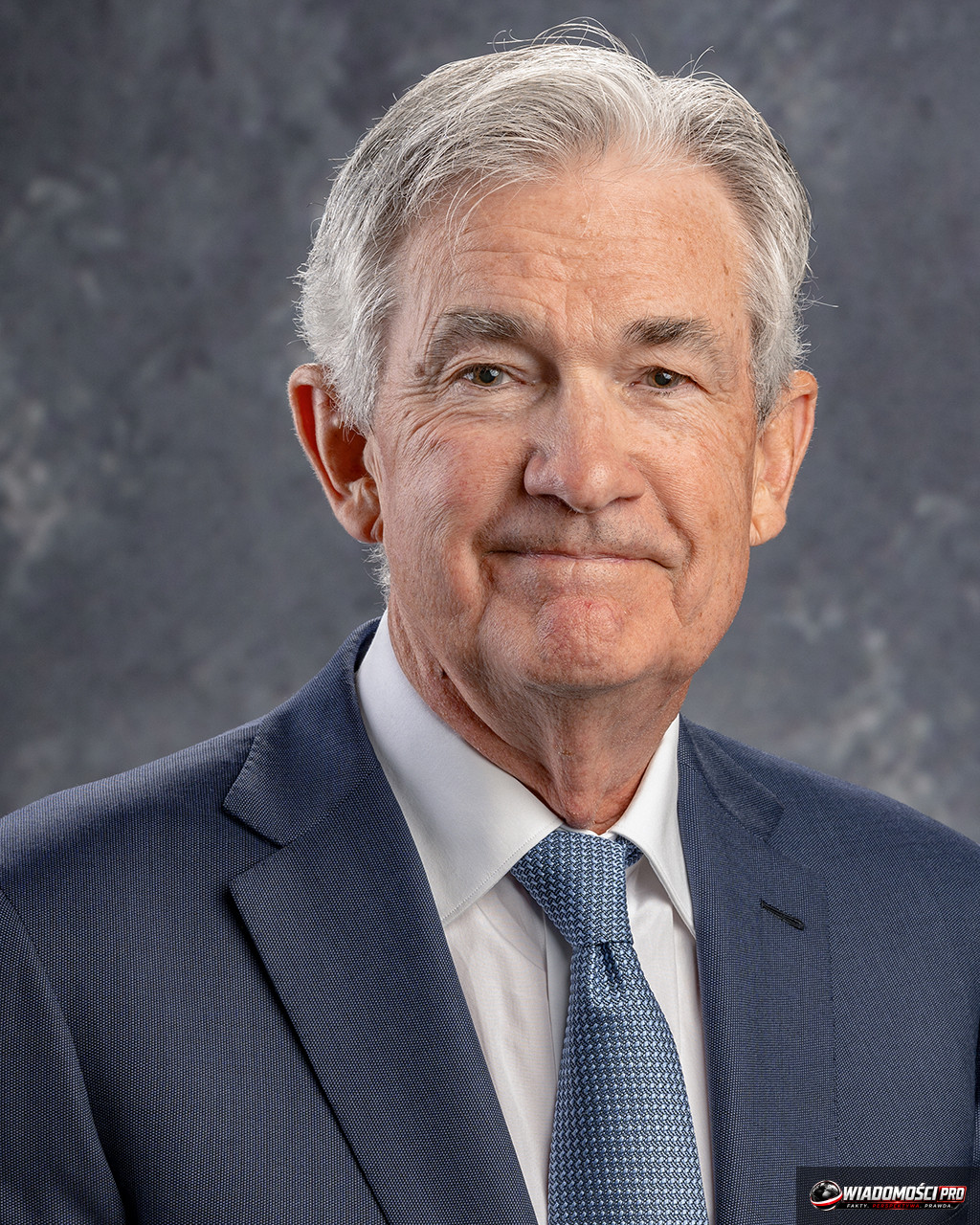
The Federal Reserve has lowered interest rates to a range of 4.75-5.00 percent, which directly reduces the cost of dollar-denominated capital and influences global asset valuations. For your portfolio, this means that the time of passively holding dollar deposits has come to an end, and investors' attention should shift toward Treasury bonds and dividend-paying companies, which gain attractiveness in an environment of falling money costs. This correction forces a revaluation of risk in equity portfolios, especially in sectors sensitive to the cost of debt, such as technology or real estate.
Jerome Powell's strategy: pragmatism over a rigid course
Jerome Powell, Chair of the Federal Reserve, has undergone an evolution in managing monetary policy. He is moving away from the rigid adherence to a restrictive course, which as recently as October 2025 was the foundation of the fight against persistent inflation. The current strategy is one of pragmatism forced by hard data from the labor market and consumption indicators. Powell has stopped operating with rigid schedules, replacing them with flexibility designed to protect the US economy from recession.
The abandonment of restrictive Quantitative Tightening is a clear signal to the market. The Fed is ending its aggressive liquidity withdrawal, fearing a fracture in the financial structure. For the investor, this means the era of the "expensive dollar" is losing momentum. Powell is walking a tightrope. If the economy proves resilient, inflation may return, forcing the Fed to tighten its belt again. However, if the slowdown accelerates, today's 50-basis-point move will prove to be just the beginning of a series of cuts.
Investors should stop treating communications from Washington as a guarantee of stability. This is a transition into a phase of uncertainty, where every subsequent piece of macroeconomic data will carry more weight than the Chair's declarations. The "soft landing" strategy is currently being tested in real market conditions, not just in central bank simulations.
History of changes: the road to the September cut
The current level of interest rates is the finale of a long process in which the Fed maneuvered between fighting inflation and concerns about cooling the economy too much. Looking back at the last two years, American monetary policy resembled a tug-of-war. In the autumn of 2024, markets were stuck in uncertainty, and the debate about cuts was more theoretical. In Poland, the Monetary Policy Council kept rates unchanged in September 2024, which indicated a clear divergence in the pace of exiting monetary restrictions between Poland and the USA.
Only a year later, in September 2025, under pressure from political signals and market data, the Fed resumed the easing cycle. It was a turning point that definitively extinguished hopes for a return to the ultra-low rates of the previous decade. January 2026 brought further expectations of stability, which were, however, verified by economic reality.
Here are the key turning points of the last two years:
- September 2024: No changes in NBP rates, confirming the caution of the Polish central bank (bank.pl, 04.09.2024).
- September 2024: Start of an intense debate around a possible rate cut in the USA (Strefa Inwestorów, 17.09.2024).
- September 2025: Official resumption of the rate-cutting cycle by the Fed, signaling a trend change (Bankier.pl, 17.09.2025).
- October 2025: Decision to continue the cycle and announcement of the end of QT (Business Insider Polska, 29.10.2025).
- January 2026: The market incorrectly priced in rate stability in the USA (Money.pl, 28.01.2026).
This summary shows that capital is returning to the market with a high degree of skepticism. Liquidity is available, but risk remains high. Investors who positioned themselves for "stability" in January 2026 were surprised by the dynamics of change, which is a lesson in humility for every portfolio manager.
Market reaction: stocks, bonds, and gold
The market reacted to the cut in a way that testifies to a lack of consensus regarding the future pace of cuts. Instead of euphoria, we saw nervousness. Capital is trying to price in whether the current cut is a rescue move or the beginning of a long cycle.
US Treasury bonds are gaining attractiveness. The drop in yields makes existing securities more desirable, which forces investors to seek returns in higher-risk assets. If you have long-term bonds in your portfolio, hold them – their price should rise along with further rate cuts.
Technology sector stocks are reacting positively to the lower cost of capital because their valuations are strongly correlated with the discount rate. However, a trap appears here: if the economy slows down too much, the profits of technology companies may fall, which will negate the benefits of cheaper money. Gold remains a safe haven in the face of a weakening dollar. In an environment where the Fed is cutting rates, the US dollar loses its interest-rate advantage, which naturally directs capital toward precious metals.
It is worth paying attention to volatility. Stock indices react violently to every piece of macro data, which is proof that the market is not convinced of the durability of current valuations. Avoid buying "at the top" in response to the mere news of a cut. Wait for confirmation of the trend in third-quarter company results.
Impact on the Polish market and currency investments
The Fed's rate cut changes the rules of the game for Polish capital. A cheaper dollar is primarily a relief for companies on the WSE that financed their development in the American currency. These companies will record a decrease in debt servicing costs, which will translate into improved financial results. If you have companies with high USD debt in your portfolio, this is a signal for them to breathe.
Individual investors should prepare for greater volatility in the USD/PLN exchange rate. Historically, loosening policy by the Fed triggers a wave of capital toward emerging market currencies. The zloty may gain in value, which is beneficial for importers but painful for Polish exporters. If your investments are mostly denominated in dollars, consider currency hedging or partial diversification toward the euro or the zloty.
Investment funds in Poland are already shifting funds from American bonds toward riskier instruments. For you, this is a signal that passively holding dollar deposits no longer makes sense. The market now rewards active exposure management. It is no longer enough to "have dollars." You need to know how to manage their cost in your portfolio.
Scenarios for the end of 2026: what could go wrong?
We are entering a phase where market optimism will collide with hard data. Jerome Powell has no margin for error. If the US economy proves weaker than forecasts assume, even lower rates will not protect valuations from a correction.
The first scenario assumes a "soft landing." Inflation fades, and economic growth remains positive. In such an environment, dividend-paying stocks and the corporate bond market will be the best place for capital allocation.
The second scenario is a "recessionary cut." The economy falls into a slowdown, and the Fed reacts with sharp rate cuts. Then gold and safe Treasury bonds win over stocks, which may lose due to falling company profits.
The third scenario, the least desired by the Fed, is "sticky inflation." Prices refuse to fall despite rate cuts, which forces the Fed to pause or even hike in the future. This is a stagflationary environment in which most assets lose. How to protect yourself? Build a balanced portfolio where gold acts as a fuse and short-term bonds provide liquidity.
Practical investment advice
Investing in the face of interest rate changes requires a cool head. Here are concrete steps you can take to adjust your portfolio to the new reality:
1. Debt review: If you have loans in dollars, consider paying them off early or refinancing them using lower rates. The cost of capital will be lower, but currency risk remains a variable you do not control.
2. Bond duration: In an environment of falling rates, extending the duration of a bond portfolio is a classic strategy. You will gain from the increase in bond value with each subsequent Fed rate cut. However, avoid the lowest-rated bonds (so-called junk bonds) if the US economy shows signs of recession.
3. Dividend stocks: At a time when interest on USD deposits is falling, companies paying solid dividends become an attractive alternative. Look for firms in the utility or consumer staples sectors that have stable cash flows.
4. Exposure to emerging markets: A cheap dollar favors emerging markets. Consider increasing allocation to emerging market ETFs, but choose those that are less dependent on exports to the USA and more on internal consumption.
5. Avoid currency speculation: Do not try to "catch the bottom" on the dollar. Short-term exchange rate changes are unpredictable. Instead, maintain a constant currency exposure consistent with your long-term plan.
6. Gold as insurance: Let gold make up 5-10 percent of your portfolio. In times of uncertainty regarding the direction of Fed policy, this metal is the most effective protection against the devaluation of fiat currencies.
What does this mean for you in practice?
The Fed's decision to cut rates is a moment when you must stop being an observer and start being a tactician. Lower rates in the USA mean that your dollar savings will work less effectively. You must look for profitability elsewhere. If your goal is capital protection, long-term Treasury bonds are your ally. If you are looking for growth, focus on companies that have strong fundamentals and do not need cheap debt to grow.
Do not be fooled by headlines about the "start of a bull market." Every rate cut is a signal of problems in the economy that the Fed is trying to address. Your task is not to celebrate cheaper credit, but to protect your portfolio from the effects of a potential slowdown. Remember that financial markets tend to overreact. When everyone is buying because "rates have fallen," you should check whether the valuations of companies in your portfolio still have real justification in profits, and not just in hopes for cheap money.
Questions and answers
Will the US rate cut affect mortgage loans in Poland?
The Fed's decision directly affects dollar rates and global capital flows. The impact on PLN loans is indirect; it depends mainly on the decisions of the Monetary Policy Council in Poland and the exchange rate of the zloty, which may react to changes in the interest rate differential.
By how many basis points were rates exactly lowered?
The Federal Reserve decided to cut rates by 50 basis points, setting the new range at 4.75-5.00 percent.
Why did the Fed decide on this move now, and not earlier?
The decision results from incoming macroeconomic data that indicated a slowdown in economic momentum. The Fed concluded that continuing to keep rates above 5 percent could unnecessarily increase the risk of recession, as also indicated by market analyses from late 2025.
Does this mean that inflation in the USA has been finally defeated?
No. The Fed clearly communicates that the fight against inflation continues, but priorities have shifted toward protecting the labor market and maintaining growth stability. The risk of so-called "sticky" inflation still exists, which limits the room for maneuver for further aggressive cuts.
Which assets lose the most from a rate cut?
Cash holders in USD lose the most, because interest on deposits and savings accounts in dollars will fall. Also, short-term bonds may become less attractive compared to longer-term assets.
Is it worth selling technology stocks now?
Lower capital costs favor technology companies, but their high valuations require further profit growth. If your technology stocks are overvalued relative to historical multiples, the rate cut may be a good time to partially realize profits, rather than counting on further, unlimited growth.
What is the main role of a "soft landing" in Powell's strategy?
"Soft landing" is a scenario in which inflation returns to target and the economy avoids a deep recession. The rate cut is intended to be a tool that will slow down inflation while providing enough liquidity so that companies can continue to invest and maintain employment.
Should investors fear a recession in the USA?
Recession is a risk that the Fed is trying to eliminate through its actions. Investors should treat this scenario as real, which is why it is crucial to have defensive assets in the portfolio that historically perform well in the economic slowdown phase, such as gold or selected Treasury bonds.
Sources
- Fed cut rates and announces end of QT - Bankier.pl
- Fed holds its breath. Market expects rate stability in the USA - Money.pl
- Another such move by the Fed. There is a decision on interest rates in the USA - Business Insider Polska
- How markets will react if the Fed returns to rate cuts - Analizy.pl
- September Fed decision may disappoint stock markets. Debate around a possible interest rate cut in the USA - Strefa Inwestorów
- Trump got his way. Fed resumed interest rate cutting cycle - Bankier.pl
- When will the Fed cut interest rates? There is an announcement from Jerome Powell - Rzeczpospolita
- RPP did not change interest rates in September '24 - bank.pl
Article prepared by the Wiadomości PRO editorial team with the support of artificial intelligence. Facts are derived from the sources listed above.


Komentarze (0)
Ładowanie komentarzy...