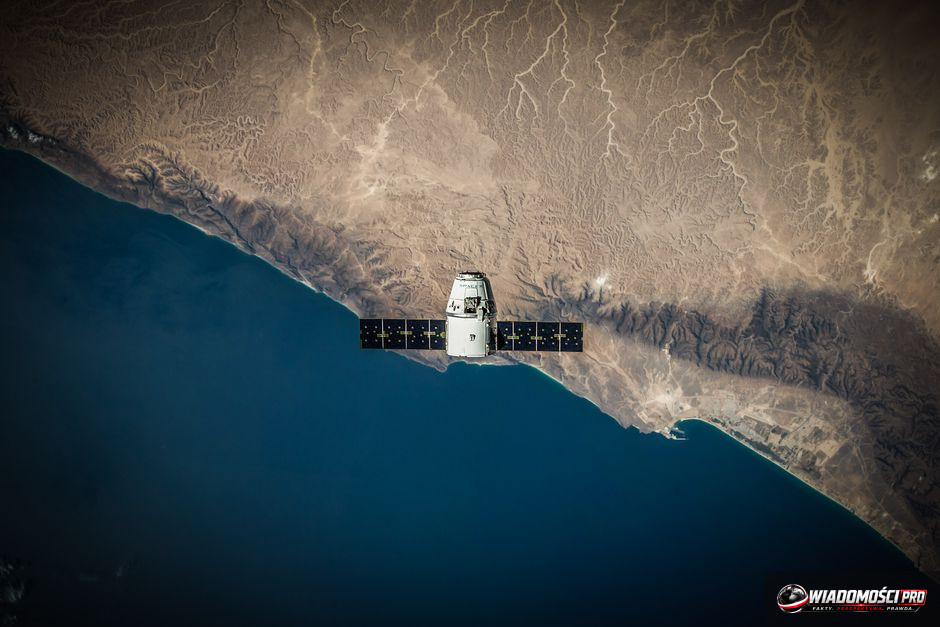
The Europa Clipper mission, with an estimated cost of over 5 billion dollars, aims to study the subsurface ocean on Europa to assess whether conditions beneath its crust could support the emergence of life. It is the most advanced undertaking in the history of extraterrestrial exploration, requiring NASA to enter the extremely harsh environment of Jupiter. The probe, launched into space in October 2024 via a Falcon Heavy rocket, will reach the Jovian system in 2030, beginning a series of close flybys over the moon's icy surface.
The choice of Europa as the primary target for exploration is no accident. This moon of Jupiter has fascinated astrobiologists for years due to its unique geological structure. According to data from previous missions, there is an ocean of liquid water beneath a dozen-kilometer-thick layer of ice. The volume of this reservoir could be twice that of all Earth's oceans combined. For science, this fact opens the door to searching for an environment that could theoretically sustain biological processes. However, Europa does not offer easy answers. The probe does not have a lander that could drill through the ice and collect samples directly from the depths.
Instead, engineers at the Jet Propulsion Laboratory have developed a suite of instruments designed to remotely "X-ray" the moon's interior. Among them is the EIS system, or Europa Imaging System, which will allow for the creation of detailed surface maps. A key tool is REASON, an ice-penetrating radar. It will allow scientists to determine the exact thickness of the icy crust and identify locations where water might be closest to the surface. Another significant instrument is MISE, a spectrometer mapping the chemical composition of the surface. Its task is to detect salts, organic materials, and other compounds that may have been brought up from the ocean interior during geological processes.
The use of such advanced equipment near Jupiter involves enormous technical challenges. The planet has a powerful magnetosphere that generates an extreme radiation field. The probe's electronics have been enclosed in a special titanium-aluminum "vault." This shield is designed to protect sensitive components from degradation. Even with such protection, the mission is a race against time. Each flyby of Europa exposes the instruments to a dose of radiation that gradually destroys integrated circuits. Engineers had to design power management systems capable of independently making decisions about power priorities in crisis situations.
The distance from Earth also imposes a requirement for autonomy. A radio signal takes several dozen minutes to cover the distance between us and the probe. In practice, this means that flight controllers cannot steer the device in real-time during maneuvers. Europa Clipper must act as an independent research unit. Every flyby sequence, every movement of the antenna, or opening of the flaps protecting camera lenses must be programmed well in advance. If an error occurs in the algorithms, the machine will not receive help in time.
In a financial context, a budget exceeding 5 billion dollars raises legitimate discussions. In the scientific world, this amount is seen as a necessary cost of entering the era of deep planetary exploration. NASA is investing not only in the probe itself but in the entire infrastructure needed to receive and process the massive amount of data expected to flow to Earth after 2030. This cost includes the multi-year maintenance of a team of controllers and specialists who will spend years analyzing every byte of information sent back. For the taxpayer, this is an investment in knowledge whose return is not measurable in dollars, but in the answer to the fundamental question about our place in the cosmos.
Skeptics, however, note that such high expenditures could become a burden in the face of shifting political priorities. If the probe does not provide groundbreaking data upon arrival, this project could be considered one of the most expensive lessons in planetary geology in history. The risk of failure is inherent in the nature of space exploration. Even with the highest standards, unforeseen phenomena in Jupiter's magnetosphere could lead to the premature loss of contact with the probe.
The rivalry for primacy in research on Europa is clear. The Americans, through the Clipper project, want to prove their technological dominance. Although international cooperation in science is widely declared, in practice, the American agency sets the pace and goals. The rest of the world in this scenario often plays a supporting role. This "first come, first served" approach drives innovation but simultaneously creates pressure for success, which may influence how the agency presents its findings.
It is worth noting the logistics of the journey itself. Launching the probe using a Falcon Heavy rocket was an operation on a scale that required perfect synchronization. Every element of the construction had to undergo rigorous vibration and thermal testing. The probe is not flying directly to Jupiter. It must use gravity assist maneuvers, flying near other planets to gain the necessary speed. This extends the travel time to 2030, but allows for fuel savings, as the amount on board is limited.
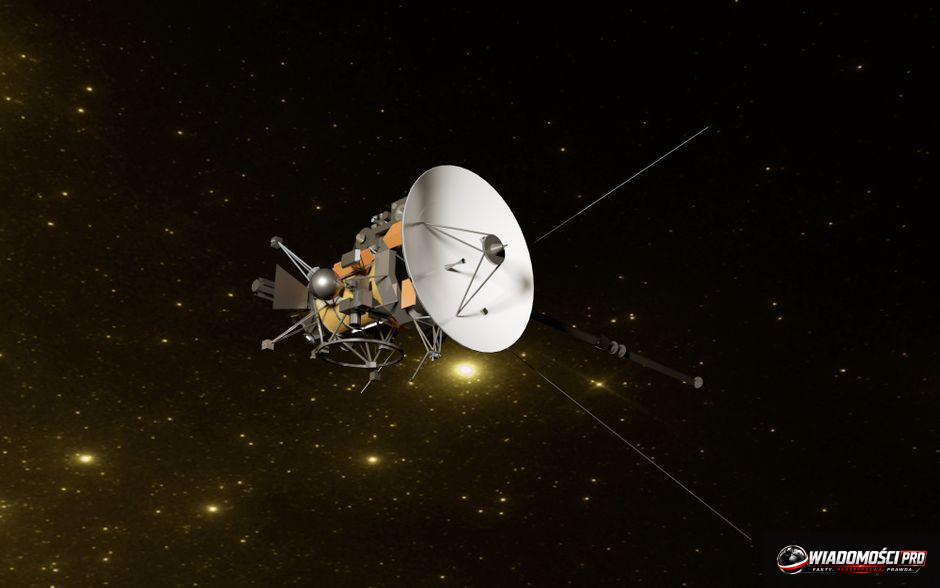
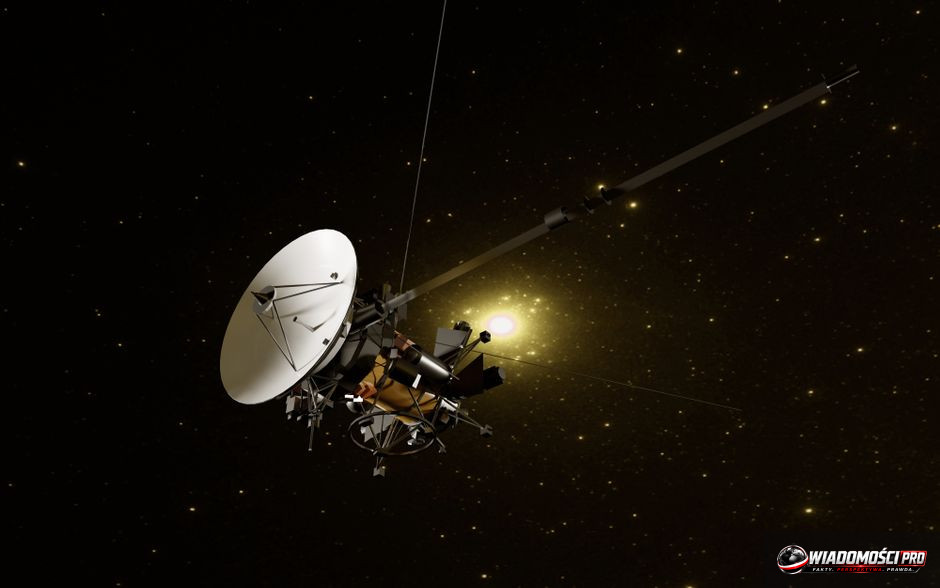
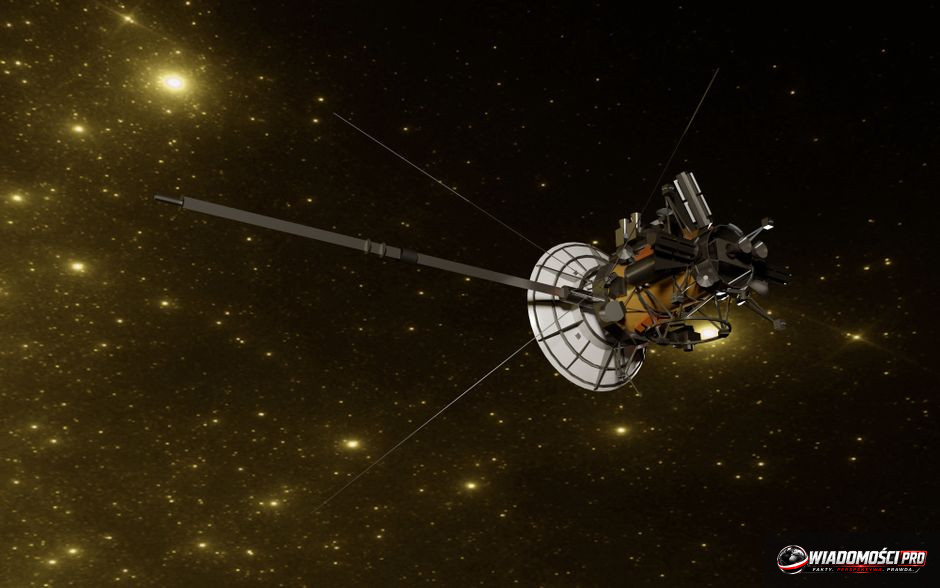
The construction of Europa Clipper itself resembles a flying laboratory more than a typical spacecraft. The span of the solar panels, necessary to power the instruments at such a great distance from the Sun, makes it one of the largest interplanetary probes in NASA's history. These huge wings are, however, also a weak point. They must survive micrometeoroid impacts and vibrations during complex orbital maneuvers. Any failure of the panels would mean a reduction in the capabilities of the scientific instruments, which in turn would translate into a poorer collection of data.
Scientists on the mission team emphasize that the main task is to assess "habitability." This concept is broader than just the discovery of microorganisms. It is about checking for the presence of water, chemical energy sources, and environmental stability. If Europa possesses all these ingredients in the right proportions, it will mean that life could exist in places we previously did not consider. In such a case, the 5 billion dollar investment will pave the way for subsequent, even more ambitious missions, perhaps involving landers capable of penetrating the ice.
From the perspective of astrobiology, Europa is considered a much more promising target than Mars. The Red Planet is a geologically dead object compared to Jupiter's moon, which is subject to constant tidal forces. These forces generate heat that keeps the ocean in a liquid state. Without this heat, Europa would be just a block of ice drifting in cold space. Understanding this mechanism is a priority for scientists who want to better understand the dynamics of the Solar System.
When the probe reaches its destination in 2030, the most exciting stage will begin. Each approach to the moon will require precise navigation. The probe will fly over Europa at various altitudes, which will allow for scanning different regions of the surface. This data will be transmitted to Earth via the Deep Space Network, a global system of communication antennas. Transmission delays will require enormous patience from the entire scientific team.
The operational costs of the mission do not end with the construction of the equipment. Maintaining servers capable of processing data, software for computer simulations, and salaries for experts are expenses that will grow with each year of the mission. Critics point out that similar funds could be allocated to climate research on Earth or other projects with a more direct impact on human life. NASA, however, argues that the development of space technologies translates into the economy. Materials used to build radiation shields or autonomous control systems often find applications in the civilian industry later on.
It should be remembered that Europa Clipper is only one of many missions carried out by the agency. However, its scale and budget make it a symbol of humanity's ambition. In an era of competition between powers for dominance in the space sector, such projects also have a geopolitical dimension. Possessing technology capable of exploring such distant and dangerous places is a benchmark of a nation's technological power. Washington understands perfectly well that the success of this mission will have huge significance for the image of American science in the world.
In the coming years, we face a period of waiting. The launch of the mission in 2024 was only a technical introduction. Real research work will begin only after the probe enters Jupiter's orbit. That is when we will find out if our theoretical models of Europa's interior had any basis in reality. If the REASON radar shows that the icy crust is thinner than assumed, the chances of finding life will increase significantly. If, however, it turns out that the ocean is isolated by a giant layer of ice, our hopes for quick discoveries may be dampened.
What might seem to the reader like just another boring report from deep space is, in reality, a record of the greatest challenge modern engineering has ever faced. The Europa Clipper probe is not just a device for taking pictures. It is a sophisticated instrument designed to answer the question of whether we are alone in the universe. Even if it turns out that there are no biological traces under Europa's ice, the knowledge itself of how this exotic world functions will be a huge leap in our astronomical education.
However, it is worth maintaining a healthy distance from media headlines that often suggest the imminent discovery of life. The data analysis process will take many years. Scientists will have to rule out all possible geochemical processes before announcing any conclusions regarding biology. In science, certainty is a scarce commodity, and in missions like Europa Clipper, this is particularly visible. Every piece of evidence will have to pass through a sieve of verification and peer review in the academic community.
There is no doubt that the year 2030 will be crucial. That is when we will find out if the billions of dollars invested in this project have brought the expected return in the form of new knowledge. Until then, we are left to observe the probe's progress and follow NASA's announcements. This mission is proof that even with enormous risks and costs, human curiosity remains the strongest motivation for crossing physical and technological boundaries.
Questions and answers
Will the probe land on the surface of Europa?
No, the Europa Clipper mission involves studying the moon during a series of close flybys, without landing on its surface. The probe is too large and complex to safely settle on the ice, and its instruments were designed to work from orbit.
When will the probe reach its destination?
The probe's journey through the Solar System will take several years. Reaching the Jovian system is scheduled for 2030, which will begin the main operational phase of the mission.
Why are we looking for life there?
Europa possesses all three key elements necessary to sustain life as we know it: liquid water in a subsurface ocean, the right chemical ingredients, and an energy source, which in this case is heat generated by Jupiter's tidal forces.
What are the main threats to the probe?
The biggest threat is the radiation near Jupiter, which can permanently damage electronics. Therefore, the probe has been equipped with a special radiation shield. An additional challenge is the need for autonomous operation at a great distance from Earth, which precludes real-time control.
What happens if the mission does not find traces of life?
Even in the absence of evidence for biological organisms, the mission will provide invaluable data on the geological structure of Europa. This will allow for a better understanding of the evolution of icy moons throughout the Solar System and improve planetary models, which in itself constitutes a scientific success worth the expenditures incurred.
Sources
- Start of the Europa Clipper mission to Europa - AstroNET – Polish Astronomical Portal
- Europa Clipper probe to search for life on Europa - Urania - Polish Astronomical Portal
- Start of the Europa Clipper mission [TRANSMISSION]. Americans to outpace Europeans in the search for life on Europa - Wyborcza.pl
- Beginning of the Europa Clipper mission - Kosmonauta.net
- Searching for life in the Solar System beyond Earth. NASA sends a mission - Geekweek Interia
- NASA sends a probe to Europa. Europa Clipper mission has launched - WP Tech
- Flying to search for life. NASA mission launch in just three weeks - Antyweb
- Probe to check if Jupiter's moon is suitable for life. Live launch - Telepolis.pl
Article prepared by the Wiadomości PRO editorial team with the support of artificial intelligence. Facts are derived from the sources listed above.
Komentarze (0)
Ładowanie komentarzy...