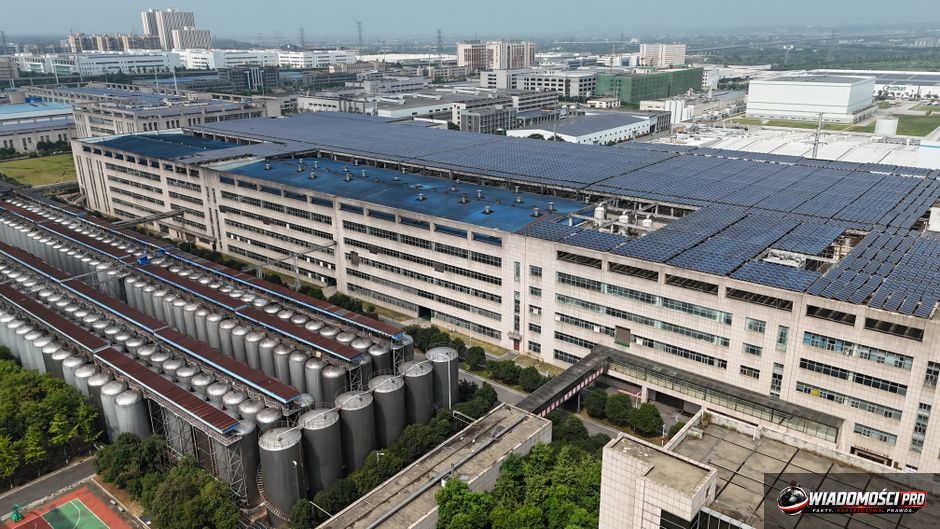
From September 20, 2026, owners of large-scale retail facilities with a building footprint exceeding 2,000 square meters will be subject to the obligation to install photovoltaic systems. This stems directly from the amendment to the Act on the Energy Performance of Buildings and technical-construction regulations, which constitute Poland's implementation of the EU's EPBD directive. This change definitively ends the period of voluntary participation in the decarbonization process of the country's commercial real estate sector.
The implementation of these requirements is not merely a technical adjustment of the law, but a radical change in the model of property management. From September 2026, possessing an efficient solar energy harvesting system becomes a condition for a facility to be approved for full operation. The legislator has precisely specified that every retail building with an area of over 2,000 m2 must be equipped with a renewable energy source (RES) installation, aimed at permanently reducing the load on the national power system.
The EPBD Directive and its impact on the Polish real estate market
The implementation of the EU's EPBD (Energy Performance of Buildings Directive) forces member states to radically accelerate energy efficiency efforts. Poland, as one of the last countries in the region, is closing the legislative process that imposes rigid timeframes on managers of large-scale facilities. For the retail industry, this means the necessity of conducting technical audits immediately.
This is not about cosmetic changes to installations. Legal requirements impose the necessity of energy self-consumption at the place of production. A retail facility must become a micro-power plant that not only covers its own electricity demand for lighting, air conditioning, or refrigeration systems but also integrates with energy storage systems. The legislator has not provided grace periods for existing facilities if their area exceeds the designated 2,000 m2 threshold. Every manager who has previously treated green energy as a branding element must now shift their approach to an operational one.
The commercial real estate market in Poland has functioned for years based on low operating costs provided by cheap fossil fuels. The current legal situation forces a departure from this pattern. Failure to install a photovoltaic system after September 20, 2026, will be treated as a violation of building law, which may result not only in financial penalties imposed by building supervision but also in problems with obtaining energy performance certificates. Without these documents, tenants of commercial space may withdraw from contracts due to growing ESG requirements they must adhere to as large enterprises.
Technical challenges and integration with energy storage
Installing panels on a roof with an area of several thousand square meters is an engineering challenge. Large-scale retail facilities, often built using older technology, rarely have the appropriate structural reinforcements to support the weight of modern photovoltaic installations along with ballast. Construction industry experts point to the necessity of conducting detailed roof strength analyses before commencing any installation work.
Another aspect is electrical infrastructure. Most existing shopping centers have switchgear designed for drawing energy from the external grid, rather than receiving large volumes of power from rooftop PV systems. Modernizing connection nodes is a cost that many owners did not include in their 2026 budgets. The estimated cost of investment in a full installation, including not only panels but also energy management systems (EMS) and energy storage, ranges from several hundred thousand to several million zlotys, depending on the capacity of the installation and the scale of the facility.
Energy storage systems are becoming an obligatory supplement to photovoltaics. The legislator wants to avoid a situation where surplus energy generated during midday hours overloads the local distribution network. Therefore, the 2026 building regulations place great emphasis on ensuring that energy is accumulated and used when the facility's demand is highest. This technical solution is expensive but eliminates the risk of the installation being disconnected by the grid operator in case of power oversupply.
For many managers, the biggest problem will be installation logistics. Introducing the obligation in such a short time creates a bottleneck in the market for installation services. Companies specializing in large-scale RES projects are already reporting full capacity for the coming quarters. Owners who delayed their decision may expect higher execution costs and problems with the timely delivery of components, which puts them in a difficult negotiating position.
Economic aspects of the energy transition
The profitability of investment in photovoltaics at current energy prices is undeniable. The cost of purchasing electricity from the grid for large retail facilities is growing at a double-digit rate, making self-production the most effective form of cost hedging. Investing in a PV installation allows for shortening the capital payback period to 5-7 years, which is an attractive result in the scale of long-term commercial property management.
However, the high entry threshold in the form of investment costs (CAPEX) remains a barrier for many entities. It is worth emphasizing that for owners of retail facilities with an area of over 2,000 m2, this modernization ceases to be a business choice and becomes a cost necessary to maintain operational continuity. Those who do not have sufficient own funds must use external financing, which, at current interest rates, further burdens company balance sheets.
Banks are increasingly scrutinizing real estate portfolios for their emissions. A facility meeting strict energy standards is treated as an asset with a lower risk profile. It can therefore be expected that properties that quickly adapt to the regulations will gain better access to preferential financing, while "dirty" facilities may encounter difficulties in refinancing investment loans.
It is also necessary to mention taxes and fees. New building regulations, combined with climate policy, may in the future introduce additional CO2 emission fees for buildings that do not have their own energy sources. Shopping center owners who ignore the obligation to install PV risk not only administrative penalties but also long-term loss of market value of their properties. The rental market is becoming increasingly aware – chain tenants, having their own decarbonization goals, will prioritize those facilities that offer cheap and green energy from the roof.
Evolution of regulations: from recommendation to compulsion
The process of implementing changes in Polish building law was long and full of ambiguities. From the first signals coming from the Ministry of Climate and Environment to the final wording of the regulations, the real estate industry had to face uncertainty. Initial reports, published in industry media as early as 2025, suggested only incentives for installing RES. However, the acceleration of legislative work in 2026, confirmed by numerous industry sources, left no illusions.
It is worth tracing this path. As late as December 2025, the public debate focused on the need to modernize the public sector. Over time, the focus shifted to the commercial sector. Materials published in May 2026 by Obserwator Gospodarczy and subsequent reports by Gramwzielone.pl clearly indicated the direction chosen by the government – photovoltaics is to become a standard in the Polish architectural landscape.
Such a drastic transition from incentives to obligation is the result of external pressures. The EU's EPBD directive imposes on Poland the obligation to achieve specific levels of energy efficiency. Failure to meet these goals threatens financial penalties, which ultimately burden the state budget. Therefore, the legislator decided to shift the investment burden directly onto the shoulders of the owners of the largest buildings.
This approach is characteristic of current climate policy. It does not seek compromises that could delay the transition, but sets rigid deadlines. For facility managers who have become accustomed to a slow pace of change, September 20, 2026, represents a turning point. After this date, any inspection by building supervision could result in an order to suspend the use of the facility if it does not meet the requirements for having a photovoltaic installation.
The role of the manager in the new legal reality
Managing a retail facility after September 20, 2026, will require completely different competencies. In addition to standard tenant service, ensuring cleanliness and safety, the manager will become an administrator of an energy system. Monitoring the performance of PV installations, managing energy storage, and optimizing self-consumption are tasks that require specialized knowledge.
Owners of large properties will need to implement building management systems (BMS) integrated with smart energy metering. This will allow for real-time tracking of electricity production and consumption, which is necessary to meet legal requirements. Some managers are deciding to outsource these tasks to specialized energy companies, which is a reasonable solution considering the complexity of the problem.
It is worth remembering that the regulations do not end with installation. Building law also imposes an obligation for periodic technical inspections of the photovoltaic installation and energy storage. Lack of documentation from such inspections can be grounds for imposing penalties during periodic checks. Managers must ensure that every installation has full as-built documentation, electrical measurement protocols, and certificates of device compliance with EU standards.
One must also prepare for insurance issues. Photovoltaic installations on the roofs of large-scale facilities increase fire risk, which forces an update of insurance policies. Insurers will demand confirmation that the installation was carried out in accordance with all safety standards and that fire protection systems in the building are adapted to the specifics of the new devices. This is another hidden cost that is often forgotten in initial financial analyses.
The future of Polish retail facilities
The prospect of September 20, 2026, stirs emotions, but from a long-term perspective, it is an inevitable step. Polish retail facilities, which for years were modernized in a selective manner, must now undergo a thorough metamorphosis. A modern retail building is not just well-exposed shop windows; it is primarily energy efficiency that allows for competing with operating costs.
Property owners who treat this obligation not as a burdensome load, but as an opportunity for modernization, will gain a market advantage. Reducing energy bills by several dozen percent annually is a measurable profit that, in the perspective of a decade, will allow for financing subsequent stages of decarbonization. The commercial real estate market in Poland is facing its biggest test since the systemic transformation.
It is also worth noting that the PV requirement is only the beginning. The next step in European legislation will be requirements regarding chargers for electric vehicles at shopping centers and further tightening of building thermal insulation standards. Facilities that invest in PV today will be better prepared for the next stages of changes that will inevitably come in the following years.
In conclusion, it should be emphasized that September 20, 2026, is not the end of the world for large-scale retail, but the day the era of "cheap energy without questions" ends. Managers who do not complete the formalities by then will be pushed out of the market by competitors who understood that the future of real estate lies in its energy independence. Decisions made today, in the shadow of upcoming regulations, will decide which galleries survive and which become a relic of the past.
Questions and answers
Does the obligation to install photovoltaics apply only to new facilities?
No, the regulations coming into force on September 20, 2026, also cover existing large-scale retail facilities with a building footprint of over 2,000 m2. Every manager of such a building is obliged to adapt the property to the new building requirements.
What are the consequences of not having an installation after September 20, 2026?
Failure to fulfill the obligation may result in problems with technical acceptance, lack of required energy performance certificates, and administrative penalties imposed by building supervision. Additionally, lack of modernization may lead to the loss of the facility's attractiveness in the eyes of tenants and problems with bank financing.
Do the regulations impose the necessity of installing energy storage?
Yes, the 2026 building regulations place strong emphasis on integrating PV systems with energy storage. The goal is systemic self-sufficiency and avoiding overloading the distribution network, which is why installing panels without the possibility of accumulating electricity may prove insufficient in light of the new requirements.
Are there transition periods provided for older buildings?
The legislator has not provided long grace periods for existing retail facilities of the indicated area. All owners must conduct audits and implement installations in an accelerated mode to avoid legal problems resulting from the non-adaptation of the facility to the amended technical-construction regulations.
Sources
- New regulations for photovoltaics from September 20. Installation owners face further changes - Forsal.pl
- Photovoltaics and energy storage will get building regulations. Government accelerates actions - Gramwzielone.pl
- New building regulations 2026. No more gas and mandatory photovoltaics - Obserwator Gospodarczy
- Photovoltaics already mandatory. Who must install it and when? - PropertyNews.pl
- Photovoltaics mandatory. For these buildings already from January 1 - Portal Samorządowy
- EPBD Directive 2024 - a new era of buildings is coming - Miasto Radlin
- Mandatory photovoltaics in 2026? Check if it applies to your home - GlobEnergia
- New regulations from 2026. Photovoltaics will be mandatory. Who will the changes cover? - kobieta.gazeta.pl
Article prepared by the Wiadomości PRO editorial team with the support of artificial intelligence. Facts are sourced from the references provided above.


Komentarze (0)
Ładowanie komentarzy...