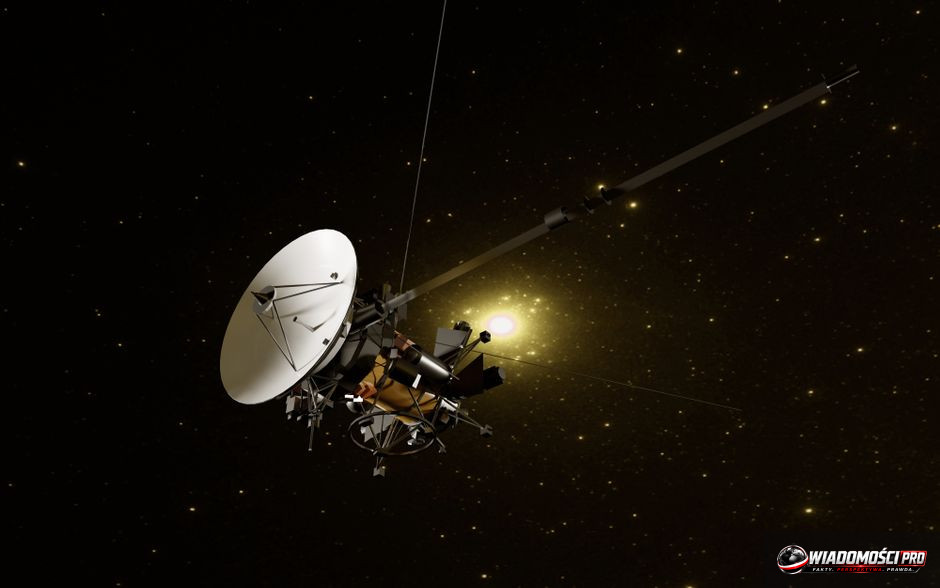
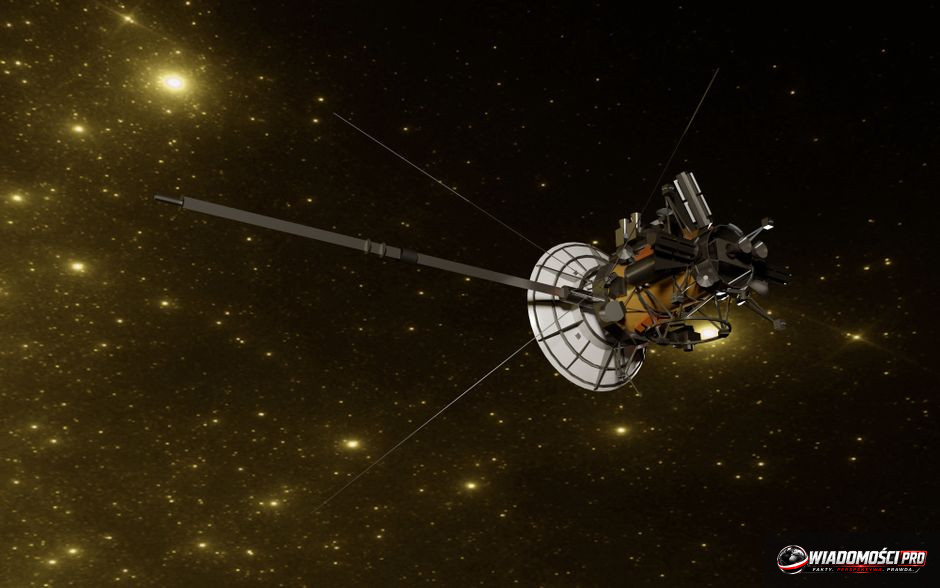
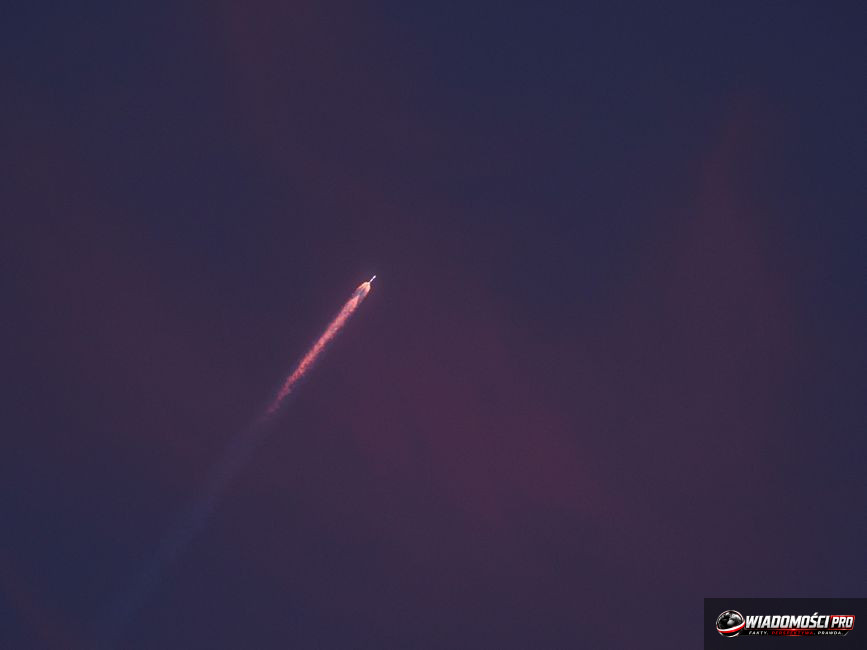
The Europa Clipper probe, launched in October 2024, is tasked with investigating whether the ocean beneath Europa's icy shell possesses conditions favorable for life, with the cost of the entire program estimated at approximately 5 billion dollars. It is the most complex spacecraft ever built to study the environment of the outer planets of the Solar System. The agency is betting everything on one card, hoping that the analysis of chemical signatures will determine whether liquid water outside of Earth constitutes an environment capable of sustaining biological processes.
Science beneath the icy shell
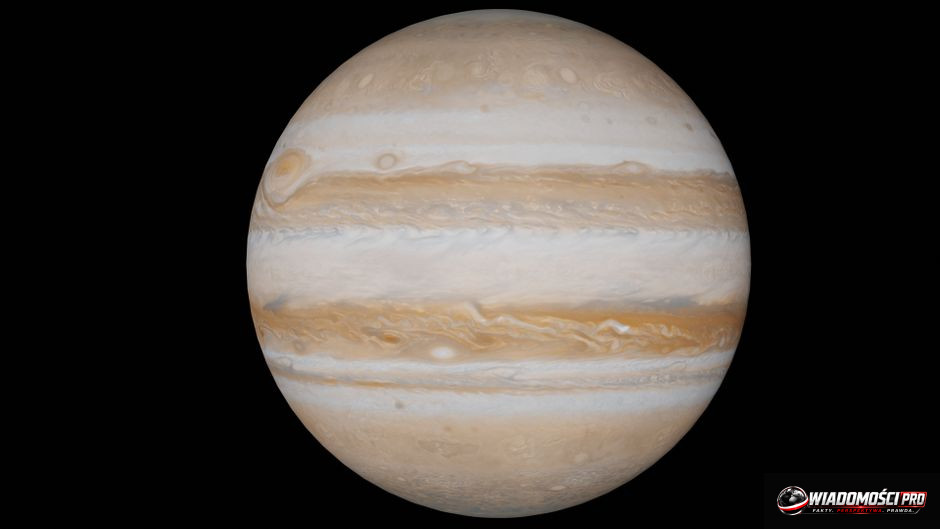
Europa, the fourth-largest moon of Jupiter, has fascinated planetary scientists for decades. Observations made by the Voyager probes in the 1970s and the Galileo mission in the 1990s suggested that a global ocean of saltwater exists beneath a thick layer of water ice. These data became the foundation for the current project. The probe is not searching for microorganisms directly, as it does not have a lander or equipment to collect samples from the depths of the ocean. Its task is to study the environment. Scientists want to learn the thickness of the icy shell, the chemical composition of the ocean, and the geological activity of the surface.
Understanding the mechanisms that heat the moon's interior is essential. Tidal forces exerted by Jupiter and neighboring moons, such as Io and Ganymede, stretch and compress Europa. This process generates heat that keeps the water in a liquid state. Without this mechanism, Europa would be a dead, frozen globe. Clipper is tasked with measuring the extent to which these forces influence the dynamics of the shell. If the ocean is in contact with the rocky seafloor, hydrothermal interactions occur. It is precisely around hydrothermal vents on the floors of Earth's oceans that life thrives independently of sunlight. Similar conditions may prevail on the floor of Europa's ocean.
The onboard instruments have been optimized for detecting so-called biosignatures. These are not direct evidence of the presence of life, but rather chemical clues. The probe will search for organic compounds, salts, and other substances that may have been brought to the surface by geological processes or cracks in the ice. If we find the right chemistry, we will be able to determine whether the ocean possesses sufficient energy and building blocks for a potential biosphere.
Research instrumentation: The probe's eyes and ears
The mission's effectiveness depends on a set of ten advanced instruments. Each of them plays a different role in collecting data during flybys. The probe will perform maneuvers near the moon, flying over various areas to obtain a full geological and chemical picture of Europa.
The most important tool for studying the interior is REASON (Radar for Europa Assessment and Sounding: Ocean to Near-surface). It is a low-frequency radar designed to penetrate through the multi-kilometer layer of ice. Thanks to it, we will learn how thick the shell is in individual regions and whether there are so-called water lenses, i.e., reservoirs of liquid water located close to the surface, inside the ice. It is a dual-frequency radar, which allows for the elimination of interference caused by the structure of the ice itself.
Another link in the system is MISE (Mapping Imaging Spectrometer for Europa). It is an imaging spectrometer operating in the infrared. Its task is to map the surface composition. MISE will allow for distinguishing between different types of ice, salts, and organic compounds. If there are places on the surface where the ocean "escapes" to the outside, MISE will identify chemical substances originating from the depths there. This tool is extremely sensitive and must operate in the extreme radiation conditions that prevail in Jupiter's magnetosphere.
E-THEMIS (Europa Thermal Emission Imaging System) is a thermal imaging camera. It is used to detect thermal anomalies on the surface. If the ice is thinner in some place or volcanic activity under the ice is greater, E-THEMIS will register a higher temperature. This allows for identifying places where material from the interior escapes to the outside, which is extremely valuable for chemical analysis.
MASPEX (Mass Spectrometer for Planetary Exploration) will handle the analysis of gases in Europa's thin atmosphere. The probe will "smell" particles ejected from the moon's surface. MASPEX will allow for extremely precise identification of organic molecules. PIMS (Plasma Instrument for Magnetic Sounding), on the other hand, is used to study the plasma around Europa. Together with the ECM magnetometer, PIMS will allow us to understand how Europa interacts with Jupiter's magnetic field. This interaction is directly related to the presence of a saltwater ocean under the ice.
Logistics and engineering challenges
The project's funding at the 5-billion-dollar level stems from extreme technological requirements. Jupiter's environment is one of the most hostile places in the Solar System for electronics. Strong radiation belts accelerate the degradation of semiconductors. Engineers had to design the probe to survive dozens of flybys, while receiving a radiation dose equivalent to millions of X-rays.
The probe has been equipped with a special "vault" made of titanium and aluminum. Inside this armored room, the most sensitive electronic components have been placed. Such a design drastically increases the mass of the spacecraft, which in turn forces the use of powerful solar panels. They are the largest ever mounted on a NASA interplanetary probe. The wingspan of Clipper exceeds 30 meters, which resembles the size of a basketball court.
The flight trajectory poses a challenge for orbital mechanics. The probe cannot simply enter Europa's orbit because it would have to use unimaginable amounts of fuel for braking, and then staying in the moon's orbit would expose it to the destructive effects of Jupiter's radiation belts. Instead, Clipper will perform flybys. It will approach Europa, take measurements, and then move away to safer regions of the Jovian system. Such a strategy allows for multiple studies of different sides of the moon without the risk of losing the probe in a short time.
Cooperation with the Deep Space Network (DSN) will proceed with delays resulting from the enormous distance. Each packet of data transmitted from Jupiter to Earth requires precise antenna alignment and enormous patience. Scientific data will flow in stages, and their analysis will take specialists years. This is not a mission that will provide ready-made answers within a few days. It is a process of gathering evidence that will change astronomy textbooks.
Finances vs. scientific priorities
The public discussion surrounding the program's costs reflects the tension between scientific ambitions and budget constraints. Five billion dollars is a sum that, in the American federal budget, must be justified by concrete benefits for knowledge about the universe. Critics point out that agency budgets should focus on projects that bring quick results, while supporters emphasize that without great exploratory missions, humanity ceases to push the boundaries of its capabilities.
These expenditures include not only the construction of the spacecraft itself but also years of tests in vacuum chambers and radiation simulators. Each of the instruments, like REASON or MISE, underwent rigorous tests, which in themselves cost millions. If the mission confirms that Europa possesses an ocean with the right chemistry, it will be the greatest discovery in the history of astrobiology. The value of this discovery is difficult to convert into dollars. The paradigm shift – moving from the question "are we alone" to "where exactly to look for life" – is worth every invested amount.
From the taxpayer's perspective, this project is an investment in long-term knowledge. The technology developed for the purpose of protecting electronics from Jupiter's radiation will find application in other fields, from medicine to energy. The probe does not operate in a political vacuum. The agency must show results to maintain funding for subsequent stages of research. If Clipper fails, future missions toward Jupiter's moons may be halted for decades.
Schedule and the future of research
The journey to the Jovian system is multi-year. The probe uses gravity assists from Earth and Mars to gain the appropriate speed. This is a complex orbital dance that allows for saving chemical fuel. Each maneuver is planned many months in advance. After reaching its destination, the probe will begin a multi-year phase of intensive observations.
The mission schedule is divided into phases:
1. Interplanetary journey: Using gravity assists to reach the Jovian system.
2. Entering Jupiter's orbit: A key braking maneuver for the probe, which will allow for stable residence in the vicinity of the gas giant.
3. Flyby phase: Performing a series of approaches to Europa, during which the onboard instruments will operate at full capacity.
4. Data analysis: A process that will last in parallel with the mission and after its completion.
Currently, the probe is on its way through the cosmic void. Each month is a test of the efficiency of power, communication, and orientation systems in space. Scientists monitor the technical condition of the instruments, preparing for the moment when the probe will be within the range of Jupiter's influence. This is a time of waiting, which for NASA engineers is a period of intensive work on software and planning measurement sequences.
Many observers ask what will happen if the instruments do not detect anything interesting. The lack of biological signatures will not mean the mission's failure. Even a negative result in science is valuable information. If it turns out that Europa is more barren than assumed, our models of the origin of life in the universe will be revised. We will know that having water and energy is not everything. This is also a valuable contribution to science.
What this means for you
The Europa Clipper mission is a technological breakthrough that may change our understanding of humanity's place in the universe. The success of the mission will strengthen the agency's position as a leader in space exploration, however, the enormous cost raises questions about the priorities of funding science in the face of challenges on Earth. We are witnessing a moment in which humanity is sending its most sophisticated tools to answer a question that has accompanied us since the dawn of time. Regardless of the result, the data collected by the probe will serve future generations of researchers.
Questions and answers
Will the probe land on Europa's surface?
No, Europa Clipper is an orbital probe that will study the moon from a safe distance during multiple flybys. Landing on Europa is currently too dangerous due to the uncertain surface structure and the lack of appropriate shielding technology for a lander.
How long will the journey to Jupiter take?
The journey is multi-year; the probe needs several years to reach the Jovian system, using the gravity assists of planets to optimize the trajectory and save fuel.
Is the mission aimed at discovering alien civilizations?
The mission focuses on studying biological potential and conditions favorable for life, not on searching for advanced civilizations. Scientists are looking for simple chemical signatures that could testify to the existence of single-celled organisms or organic processes.
The Europa Clipper probe is moving through the vacuum, carrying with it the hope of understanding the genesis of life. This is an endeavor in which engineering meets pure science in the most demanding environment that our Solar System offers. Each of the instruments, from the REASON radar to the MISE spectrometer, is a testament to the advancement of human technical thought. Even if the answer to the question about life on Europa turns out to be negative, the very attempt to find it on such a scale is proof that our curiosity knows no bounds. It remains to wait for the first data that will flow from the vicinity of Jupiter. They will be the final judge of the efforts of thousands of engineers and scientists who worked for years so that our eyes could look under the icy shell of a distant world. The cost of the mission, although stirring emotions, becomes only a background for the power of discovery, which may forever change our perception of our own place in the cosmic puzzle. Each of the devices on board is designed to withstand radiation and transmit data that will allow us to stop guessing. For years, we will observe as the probe approaches Jupiter, and each subsequent message from it will bring us closer to the truth. This is a project requiring patience, but in space science, it is time that is the most valuable resource. Europa Clipper thus becomes a symbol of our perseverance in the pursuit of knowing what is invisible to our eyes from Earth. It remains to be hoped that the data we receive will prove to be just as fascinating as the journey itself toward the icy moon. There is no room for chance here, every detail of the mission has been thought out to minimize the risk of failure. The probe is well prepared for the worst conditions that physical models predict for Jupiter's environment. Now everything depends on the quality of the data and the precision of the instruments. Humanity is looking toward Europa, waiting for a signal that may confirm that the water under the ice is not just a frozen ocean, but a home for life. This is a great challenge for astrobiology, which will be resolved in the coming decade. The probe is rushing into the unknown, and we, the observers, are witnesses to history that is happening before our eyes. Each of the devices, from MASPEX to PIMS, works in close cooperation, creating a coherent measurement system. It is precisely this integration of different technologies that makes the mission unique. We are not looking for a needle in a haystack, but methodically checking whether life can exist in the haystack at all. This approach is the foundation of modern science, which is not based on wishes, but on hard empirical data. Europa Clipper is the tool that is to provide this data, regardless of whether they confirm our hypotheses or force us to completely reject them. In each of these scenarios, the role of the probe is irreplaceable. It is thanks to it that we will learn what is hidden in the dark depths of Europa's ocean. We are one step closer to solving the riddle that has troubled humanity since the first observations through telescopes. This mission defines our approach to space exploration in the twenty-first century. We are ready for what the data will bring, even if they are contrary to our current expectations. This is the essence of scientific knowledge, which Clipper represents in its purest form. We are waiting for the first signal from Jupiter, knowing that what we find there will forever change our understanding of life in the universe. The Europa Clipper probe, launched in October 2024, is our ambassador in a world that for billions of years remained beyond our reach. Now, thanks to technology, we are approaching it to learn its secrets. Each kilometer that separates the probe from Earth is a step closer to answering the question of whether life is a common phenomenon or merely a unique coincidence on our planet. This is a challenge that we take on with full awareness of the risk and responsibility. Europa is waiting, and we are on our way to get to know it. Regardless of the final result, this mission has already gone down in history as one of the most ambitious attempts to understand the nature of life in the Solar System. The Clipper probe is not just a metal structure, it is the embodiment of the human need to discover and understand the world around us. Everything that has been done so far leads to this one, most important goal. Europa remains a target that attracts the world's attention, and we are ready to learn the truth about its oceans. In the coming years, we will witness how this extraordinary machine sends us data from the farthest corners of our neighborhood. This is a time of great discoveries, for which we have been waiting for generations. Europa Clipper, thanks to its technology and precision, will allow us to look into places that previously we could only dream of. Each of the devices on board, from the radar to the spectrometer, was created so as not to miss any significant detail. It is precisely this attention to detail that makes us look to the future with hope for success. Europa Clipper is our window to the unknown, through which we will look with bated breath. Ultimately, this is not just a NASA mission, but a joint effort of humanity in the pursuit of understanding the nature of life in the universe. The value of this undertaking goes beyond the budget that was allocated for it, because the knowledge we will gain will be priceless for future generations of researchers. Europa Clipper, the probe that carries our hopes toward Jupiter, is proof that even the most difficult goals are within our reach, as long as we have the determination and the appropriate technologies. We are waiting for the data that will allow us to answer the questions that until now remained unanswered. Europa, the icy moon, will become the center of our attention for many years, and we will follow each stage of its study. This is a time in which science crosses the boundaries of what we previously considered possible. Europa Clipper, may its mission be fruitful in discoveries that will change our understanding of the universe. Everything that has been planned is ready for implementation, and we are impatiently waiting for what Clipper will discover under Europa's ice. This is a mission that will define our understanding of life for the next decades. There is no doubt that Europa Clipper is one of the most important achievements of modern science, which will allow us to better understand our place in the cosmos. Each of us, observing the progress of this mission, becomes part of a larger story that is taking place in the heart of the Solar System. Europa Clipper, the probe that is not afraid of challenges, is ready for its task. We are waiting for the results it will bring.
Sources
- Start of the Europa Clipper mission to Europa - AstroNET – Polish Astronomical Portal
- Europa Clipper probe to search for life on Europa - urania.edu.pl
- Start of the Europa Clipper mission [BROADCAST]. Americans to outpace Europeans in the search for life on Europa - Wyborcza.pl
- Beginning of the Europa Clipper mission - Kosmonauta.net
- NASA sends a probe to Europa. The Europa Clipper mission has launched - WP Tech
- Flying to search for life. NASA mission launch in just three weeks - Antyweb
- Probe to check if Jupiter's moon is suitable for life. Live launch - Telepolis.pl
- NASA sends a "message in a bottle" into space. You can sign it! - Radio ESKA
Article prepared by the Wiadomości PRO editorial team with the support of artificial intelligence. Facts come from the sources listed above.
Komentarze (0)
Ładowanie komentarzy...