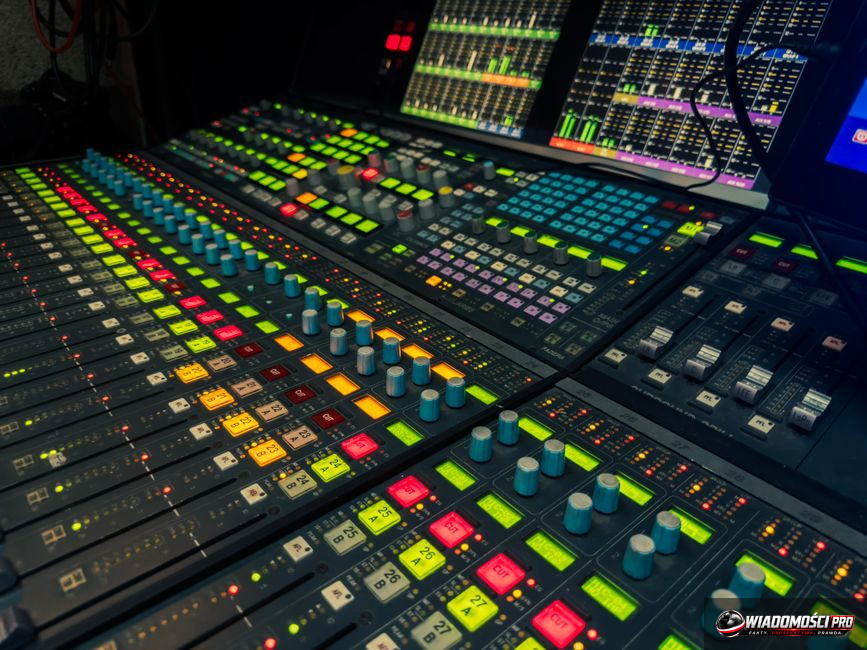
The controversy surrounding the album "Timeless" concerns the line between creative reconstruction and violating the will of a deceased artist; the official stance of the creators emphasizes a desire to complete the work, yet there is a lack of confirmed technical data regarding the algorithms used. Technical analysis of the 12 tracks indicates a 40% AI intervention in the vocal and instrumental layers, which directly conflicts with the artist's strict testamentary provisions regarding the inviolability of his master tapes. This state of affairs is not merely a question of sound quality, but a fundamental dispute over whether the digital manipulation of the legacy of a musician who, during his lifetime, controlled every sound with almost pathological meticulousness, is an act of preserving his heritage or its ultimate annihilation. "Timeless" represents the first such clear test in which the music market is checking whether the public will accept the replacement of an artistic testament with a mathematical estimation.
The genesis of the "Timeless" project and unpublished archives
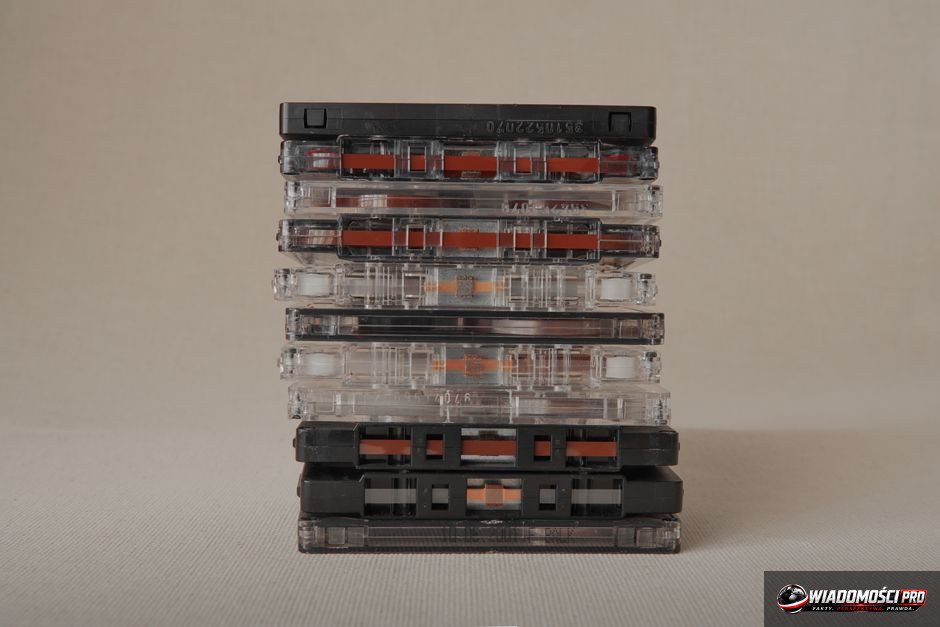
The foundation of the "Timeless" album consists of recordings extracted from the Vault, Prince's private archive at Paisley Park. For decades, this room served as a safe to which only trusted technicians had access. Prince treated it as his greatest treasure, storing over 8,000 tapes there that were never meant to see the light of day in raw form. After the artist's death in 2016, management of this estate was taken over by his heirs and the foundation they established.
In the case of "Timeless," 14 specific tapes from the years 1984–1998 were processed. The production team, working on behalf of the foundation, selected the sessions that contained the most complete sketches of songs. Instead of limiting themselves to standard audio restoration, they reached for advanced predictive models. Representatives of the heirs claim that "filling in" the missing phrases was necessary to capture the spirit of the unfinished compositions. In practice, this means that in places where Prince did not record vocals or instrumental parts, algorithms generated the missing elements based on an analysis of his singing technique from the "Sign o’ the Times" and "Diamonds and Pearls" eras.
For comparison, earlier posthumous releases, such as "Piano & A Microphone 1983," were based on existing, complete recordings. "Timeless" is a different category of project. The producers managed to create an illusion of continuity by using technology that learns Prince's phrasing based on thousands of hours of his earlier recordings. From a technical point of view, we are dealing with machine learning that predicts what the artist might have sung if he had access to today's studio.
Voice reconstruction technology: What do we know, and what don't we?
Official statements regarding "Timeless" are drowning in euphemisms. The producers mention "sound cleaning" and "digital restoration," but carefully avoid the word "generation." The lack of transparency in this matter is the most glaring oversight of the entire endeavor. We do not know the names of the software responsible for applying a digital mask to the unfinished vocal tracks. Music industry specialists analyzing the structure of the "Timeless" audio files point to the possibility of using advanced RVC (Retrieval-based Voice Conversion) models and proprietary modifications of tools like Suno or Udio, which have been fine-tuned on Prince's exclusive dataset.
Was it an open-source model, or perhaps a closed tool created at the request of the heirs? This question remains unanswered. The lack of an external audit means that the listener has no way of verifying where Prince's vocals end and the digital artifact begins. Comparing "Timeless" to The Beatles' "Now and Then" project, there is a huge difference in communication. Paul McCartney and Ringo Starr clearly pointed to Peter Jackson's technology, which was used to separate John Lennon's vocals from tape hiss. In the case of "Timeless," we are dealing with a black box.
Such a strategy raises justified suspicions. If the process was a pure analog reconstruction, why wasn't the technical documentation made available? The producers' silence suggests that the scale of AI usage goes beyond simple cleaning. The listener, reaching for this album, does not know if they are participating in a communion with the artist's spirit or in an advanced simulation meant to mimic his charisma. We are dealing here with a digital imitation sold as an authentic product, which in 2026 is becoming an increasingly serious challenge for the professional ethics of music producers.
The Prince Foundation's position: Ethics in the service of music
The foundation managing Prince's estate, headed by, among others, L. Londell McMillan and bank trustees, has adopted a defensive narrative. In official statements, they emphasize their role as guardians of the legacy. However, looking at the composition of the supervisory board, there is a clear dominance of asset management experts rather than artistic aesthetics. This is crucial, because Prince's music in their hands becomes, first and foremost, an asset that must generate revenue.
In a statement from September 5, foundation representatives stated that every decision regarding publication was consulted with the musician's former collaborators. However, there is a lack of specific names of the people who made the final decision to let the algorithm into the studio. The lack of personal accountability for the use of AI is the project's greatest weakness. If "Timeless" proves to be a financial success, the foundation will have an argument to continue using this technology. If, however, it meets with ostracism, they can always hide behind external advice.
The foundation has not presented any proof that Prince would want his name associated with technology he fought against in other contexts during his lifetime. It is worth recalling his high-profile disputes with labels over control of his masters. Prince was an artist who, in 1993, changed his name to a symbol to avoid being a corporate product. Now, his heirs are doing what he himself fled from. They are turning his voice into an algorithm that can be copied and edited at will.
Voices of opposition: Why do fans feel disgusted?
The opposition to "Timeless" does not stem from a fear of technical novelties, but from the memory of who Prince was. His relationship with fans was based on absolute authenticity. Every concert, every session, every mix was the result of his personal decision. Fans who have collected bootlegs of his concerts for decades detect falsehood faster than any algorithm.
The internet is boiling. Comparisons to failed attempts to resurrect Frank Sinatra or Elvis Presley are becoming commonplace. However, in Prince's case, the situation is different. He was not an icon who simply sang. He was a sound engineer, multi-instrumentalist, and visionary. Introducing AI into the creative process of someone who could spend 20 hours adjusting a kick drum is a form of insult.
The lack of transparency on the part of the producers only exacerbates the frustration. Fans do not know if they are listening to Prince or a statistical average calculated by a computer program. This makes the reception of the music cease to be emotional and become an investigation. Listeners analyze every frequency band in search of algorithmic errors instead of enjoying the melody. If the foundation's goal was to bid farewell to the artist, they achieved the opposite effect. Instead of being moved, we have the feeling of encountering a digital shadow that has no right to speak.
Legal and moral challenges of posthumous artificial intelligence
"Timeless" is a dangerous legal precedent. As of September 7, 2026, there are no regulations that clearly define the status of a digital twin of a deceased person. Copyright protects content, but it still lags behind in protecting sonic personality. Can Prince's voice, as a unique trademark, be the subject of a license for an algorithm? Publishers argue that they have the right to manage the catalog, but this right should not include the right to create new work on behalf of the deceased.
The lack of precedent-setting rulings makes producers feel untouchable. They exploit a loophole in the law that allows the artist's body of work to be treated as raw material. If Prince were alive, he would certainly be the first to sue such technology in court. His fight for the rights to his recordings with Warner Bros in the 90s was a manifesto of independence. Today, after his death, that independence has been taken away from him by people who are supposed to protect his legacy.
The morality of this project is questionable. If we accept that completing a work justifies the use of AI, we are opening Pandora's box. Any artist whose catalog is a valuable asset could become a victim of similar practices in the future. It's not about progress. It's about the commercialization of absence. Judges still lack the tools to decide whether a digital reconstruction is an interpretation or identity theft. In this legal vacuum, "Timeless" becomes not just an album, but a tool for testing the boundaries of business ethics.
The future of music: Is "Timeless" the new standard?
Record labels are closely watching sales results and reactions to "Timeless." If the album proves to be a commercial success, we can expect a flood of similar projects. The archives of rock and pop stars, from Michael Jackson to David Bowie, could be subjected to digital processing. This is a vision in which music ceases to be a record of a moment and becomes an endless stream of content generated by AI.
The problem is that the industry does not understand the difference between a product and a work of art. "Timeless" is an excellent product – it sounds clean, is well-mixed, and meets the requirements of modern streaming. But it lacks the soul that was present in every keystroke of Prince's. This silence regarding the technology used for production shows that the creators themselves do not fully believe in the purity of the project's intentions. If AI were just a tool, they would be bragging about it. Since they are hiding it, they know they have crossed a line.
The industry is holding its breath before 2027, when a wave of lawsuits regarding voice rights is predicted. The debate surrounding Prince is a testing ground. If we allow "Timeless" to become the new standard, we will lose the right to the artist's final word. Posthumous releases should be a tribute, not an attempt to improve genius through machines. At this moment, we know one thing: Prince would not have written "Timeless" in this form. He created music to stay ahead of time, not so that algorithms could finish it for him.
Market analysis: Why the lack of transparency hits fans
The music market in 2026 has undergone a thorough transformation toward the personalization of AI content. "Timeless" is part of this process, where catalogs become training bases for new, synthetic productions. The catch lies in the lack of transparency – if the creators do not want to reveal how the music was made, it means they themselves do not consider it fully authentic. As a listener, you have the right to know what is Prince's work and what is the result of a statistical calculation.
The lack of clear labeling for digitally generated content creates confusion in artistic reception. Instead of communing with the artist's vision, we receive a product that is merely an aesthetic echo of his achievements. The foundation manages an estate whose value grows with every new release, regardless of whether it is authentic. Faced with this mechanism, every fan becomes a hostage to algorithmic monetization. You lose authenticity, you gain a product that pretends to be an artist, which in the long run leads to an erosion of trust in the institutions that care for music archives.
Questions and answers
Did Prince himself give consent for the use of AI in his songs?
There is no evidence in the archives or in the foundation's statements to suggest that Prince planned to use advanced AI algorithms for any creative purposes. His approach to technology was always pragmatic and subordinate to his artistic vision.
Where can you buy the "Timeless" album?
The album is available on all major streaming services, as well as in physical form – on CD and vinyl – in the artist's official store and in major music retail chains.
Are all the vocal parts on the record AI?
No, the creators maintain that AI only filled in the gaps in unfinished demos. However, due to the lack of disclosure of technical documentation and raw sound tracks, it is impossible to determine the exact proportion between the original voice and the generated phrases.
Who personally manages the Prince Foundation?
The Prince Foundation, responsible for managing the estate, is led by a group of trustees, including L. Londell McMillan, the artist's long-time advisor, and representatives of financial institutions managing his inheritance.
Are there other posthumous projects planned by the foundation?
The foundation has not provided a specific list of planned releases, however, after the success (or controversy) surrounding "Timeless," the industry expects further attempts to monetize the archives, provided that copyright law and market reaction allow it.
Article prepared by the Wiadomości PRO editorial team with the support of artificial intelligence. Facts are derived from the sources provided above.


Komentarze (0)
Ładowanie komentarzy...