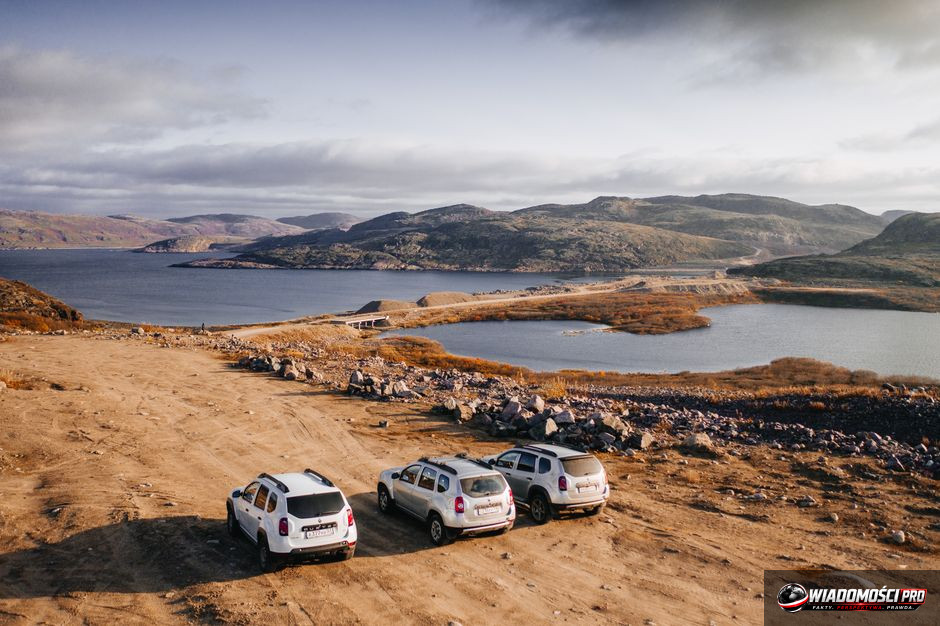
Yes, the 2026 Mitsubishi Pajero is a full-fledged fifth-generation off-roader that utilizes a durable ladder frame and chassis derived from the Triton model, making it an uncompromising 4x4 machine. The decision to bring back the legend was made at the highest levels of Mitsubishi's management, ending years of speculation regarding the future of one of the most distinguished models in the brand's history. The official confirmation, which appeared on May 29, 2026, marks a turning point in the Japanese manufacturer's strategy, shifting focus from mass-market crossovers to specialized off-road vehicles.
The genesis of the return: Why is Mitsubishi resurrecting the Pajero?
The official announcement of plans to resurrect the Pajero line, published on May 29, 2026, by TVN Turbo and other automotive outlets, was no coincidence. In recent years, Mitsubishi has struggled with the lack of a clear leader in the 4x4 segment, which weakened the brand's image as an off-road expert. After the withdrawal of the previous generation, the manufacturer's offer was dominated by urban-oriented designs. The lack of a flagship off-roader was felt not only by loyal customers but also by engineers who lost a platform to demonstrate their capabilities in four-wheel-drive systems.
The resurrection of the model is not driven by nostalgia, but by cold business calculation. The segment of ladder-frame off-road vehicles is experiencing a renaissance, and customers are increasingly rejecting delicate crossovers in favor of machines capable of heavy-duty work. Choosing a design based on the Triton model allowed Mitsubishi to significantly reduce design costs. Instead of building the architecture from scratch, the company used proven components that are already operating under heavy loads in pickups. This move provides a real advantage over the competition, which in many cases has moved away from rigid frames in favor of light, but less durable, unibody constructions.
This decision is a signal to the market that Mitsubishi intends to regain market share in the expedition vehicle segment. Unlike in previous years, the brand is not looking for compromises. The fifth-generation Pajero is intended to be a tool, not a gadget. From the perspective of brand strategy, this is a return to the roots mentioned in numerous headlines from June 2026. The manufacturer makes it clear that the Pajero will not "pretend" to be an off-roader. It will be one in every aspect of its construction.
Chassis technology: Ladder frame instead of unibody
The transition to a ladder frame is the foundation around which the entire philosophy of the new Pajero generation is built. In an era of ubiquitous electronics designed to simulate off-road capability in urban SUVs, Mitsubishi is making a radical move. The ladder frame, adapted directly from the Triton model, provides torsional rigidity that no unibody can guarantee. For the user, this means the ability to overcome obstacles that would cause other designs to suffer structural stress, leading to body deformation or door sealing issues.
Using the Triton chassis carries a number of technical consequences. First and foremost, we are dealing with a suspension designed for high dynamic loads. While the competition focuses on lowering the center of gravity to improve cornering on asphalt, the 2026 Pajero focuses on suspension travel and control arm durability. Mitsubishi engineers opted for proven solutions: a rigid axle at the rear and independent suspension at the front, which is an optimal compromise between off-road traction and stability at higher speeds on paved roads.
Another aspect is the vehicle's curb weight. A frame construction always means higher tonnage, which translates into higher fuel consumption and different driving dynamics. Mitsubishi does not hide the fact that the Pajero will not be a race car. It is a machine built for towing heavy trailers, driving off-road, and working in difficult climatic conditions. The use of a ladder frame also allows for easier vehicle modification for expedition purposes, which will certainly be appreciated by off-road enthusiasts for whom the ability to mount additional bull bars, winches, or reinforced bumpers is crucial.
Pajero vs. SUVs: Why is this car different?
The automotive market in 2026 is oversaturated with offerings that only share body styling with off-roaders. The fifth-generation Pajero stands in clear opposition to this trend. While a typical SUV is designed with comfort in mind for city traffic and low air resistance, the Pajero is built to maximize off-road parameters such as approach, departure, and breakover angles. The frame construction allows for much greater freedom in designing chassis geometry, which is not limited by the rigidity requirements of a unibody.
A key difference is the way torque is transferred. In modern crossovers, 4x4 drive is often engaged automatically by electronic systems that react to wheel slip. In the Pajero, we have mechanical solutions that allow for constant control over power delivery. This approach stems from the brand's many years of experience in off-road rallies, including the legendary Dakar. Mitsubishi is transferring this heritage to the production model, giving the user confidence that the drive system will not "overheat" after a few minutes of work in difficult terrain.
Skeptics will note that the rawness of the design may be a drawback for the average customer. The 2026 Pajero will likely be louder, less predictable in fast corners, and less intuitive to operate than modern, "digital" SUVs. However, this is an intended effect. Mitsubishi is targeting a group of buyers who consciously choose a machine that is harder to drive but more reliable. The difference between a Pajero and a typical SUV is analogous to the difference between a professional tool and a household gadget. Both items serve a purpose, but only one will stand the test of time in extreme conditions.
Technical specification: The Triton heritage
When analyzing the return of the Pajero, one cannot ignore the role of the Triton model. It is this pickup that provided the "backbone" for the new off-roader. According to available information, the Pajero uses the same chassis architecture, which means identical suspension mounting points and similar drivetrain parameters. For engineers, this means huge savings in time and resources, as components such as gearboxes, transfer cases, and half-shafts have already been tested in the toughest working conditions in Asian and Australian markets.
It is expected that under the hood of the Pajero, we will find high-torque power units, essential for efficient off-road movement. Although the manufacturer has not yet provided a full list of engines, based on the relationship with the Triton, one should expect modern, refined diesels that meet strict emission standards without losing their "workhorse" characteristics. High torque available from low RPMs is the basis for a frame-based vehicle that must cope with a high curb weight.
The chassis geometry, carried over from the pickup, gives the Pajero not only durability but also predictability. The driver receives a car whose behavior in the field is predictable. The lack of need to rely on complex electronics controlling the suspension is a huge advantage in the event of a breakdown far from civilization. The Pajero is intended to be repairable using basic tools, a feature almost unheard of in the segment of cars produced in 2026.
Brand positioning in 2026
Mitsubishi's strategy for 2026 is a clear break from trying to be a "brand for everyone." Over the last decade, the manufacturer has tried to exist in various segments, which often resulted in a dilution of identity. The return of the Pajero is an attempt to regain the status of a specialist. The company is focusing on a specific target group: people who need a car for heavy tasks, travelers, uniformed services, and companies operating in difficult terrain. The Pajero is intended to be the "flagship" that will restore luster to the brand's entire portfolio.
It is worth noting how the competition will react to this move. Other manufacturers who have also withdrawn their off-roaders from the market are closely watching Mitsubishi's sales results. If the 2026 Pajero succeeds, we can expect a wave of returns to ladder-frame designs from other Japanese and European brands. Mitsubishi is thus becoming a pioneer in the retreat from "urban dominance." This is a risky strategy because the costs of maintaining a production line for a frame-based model are higher than for cars with a unified construction, but the brand seems ready for this risk.
In terms of image, the Pajero is positioned as a car "for adults." We won't find unnecessary touchscreens here that are meant to replace physical buttons controlling the drive. Everything is intended to be clear, durable, and resistant to dust or moisture. This approach builds trust. A customer buying a Pajero in 2026 is buying a promise of durability. The company declares that this car was not designed for a three-year lease, but for a decade of intensive use in the worst possible conditions.
Debut schedule: What awaits us in the near future?
The schedule for introducing the Pajero to the market is tight and meticulously planned. Official information from sites such as drivemode.pl or Vietnam.vn indicates that the production process is already at an advanced stage. The 2026 model will be the first year to hit showrooms, with full availability of the model range planned for 2027. This makes the coming months a time for building anticipation and presenting individual equipment elements.
The debut of the off-roader is not just the premiere of one car. It is the return of an entire ecosystem of off-road-related services that Mitsubishi intends to promote along with the new model. We can expect dedicated accessories, expedition packages, and driving technique training, which is intended to strengthen the brand's bond with customers. The company understands perfectly well that selling such a specific car requires a different approach than in the case of an ordinary passenger car.
Customers should be prepared for the fact that the first production batches will sell out instantly. Interest in the return of the legend is huge, and initial purchase declarations are flowing in from markets where the Pajero has always enjoyed iconic status. For Mitsubishi, this is the perfect moment to launch an image offensive. If the first reviews confirm that the car truly offers the quality known from previous generations, the Pajero has a chance to dominate its segment for years.
What this means for you
As an editorial team, we note that the return of the Pajero is a test for the entire market. Everyone who needs a machine for heavy work wins, because the choice of ladder-frame off-roaders in 2026 was drastically limited. Conversely, those who were hoping for a luxury SUV for the city lose out – the Pajero will be too raw, loud, and demanding to drive in that environment. The catch is comfort: if you are looking for convenience, look elsewhere. If you are looking for reliability in all conditions, the Pajero may be the last such honest car in the Japanese manufacturer's offer.
The automotive market has turned too strongly toward digitalization in recent years, often forgetting that a car should primarily be a tool for transport. The fifth-generation Mitsubishi Pajero reminds us of basic values: a durable frame, solid drive, and structural simplicity that allows for repairs in any conditions. Will this be enough to convince the modern customer, accustomed to comforts and driver-assistance systems? We will know the answer to this question after the first road tests, which will show whether the balance between off-road capability and everyday usability has been maintained in a way that is satisfactory for a wider audience.
The Pajero is not a car for everyone. It is not a car meant to win fuel economy tests or interior spaciousness rankings in the family car category. It is a car meant to take the driver where paved roads end and true adventure begins. Mitsubishi's decision to return to its roots is bold and deserves respect, regardless of how the final pricing of this model is shaped. For many fans of the brand, the mere fact that the Pajero exists in catalogs again is reason enough to be happy. The question of whether this sentiment will translate into real profits and a stable position for the brand for years to come remains open.
Ultimately, the fifth generation of the Pajero may be the last "hard" model in the Mitsubishi range before the next wave of full electrification, which will inevitably reach the off-road segment as well. Using proven technologies from the Triton is the best possible step the manufacturer could have taken to guarantee the durability of the construction. This is a car built on foundations of trust, not just marketing promises. Every kilometer driven in difficult terrain will verify whether the engineers from Japan managed to transfer the spirit of the old Pajero into the reality of 2026. We will follow this debut with the utmost attention, because what is happening around this model is the best barometer of sentiment in the automotive industry.
Regardless of the final sales success, the 2026 Mitsubishi Pajero has already gone down in history as one of the most anticipated returns of recent years. It is proof that a legend in the automotive world still matters and can be a powerful asset for a manufacturer that knows how to use it properly. It remains to wait for the first production units to reach users to verify whether the legend lives up to modern expectations. All signs in the sky and on earth indicate that this will be a machine that will be talked about long after its premiere. Every detail, from the frame construction to the drivetrain systems, points to an uncompromising nature that will become the hallmark of this model against the rest of Mitsubishi's electrified range.
Sources
- New Mitsubishi Pajero returns. It has a frame and real 4x4 - drivemode.pl
- Mitsubishi brings back the Pajero. The iconic off-roader will return as early as 2026 - Autocentrum.pl
- Mitsubishi Pajero returns. Fifth generation with a ladder frame - Moto Magazyn
- Mitsubishi Pajero 2027 officially returns to the market, using the Triton chassis. - Vietnam.vn
- Mitsubishi Pajero back in the game. The iconic off-roader will revive the Japanese range - Auto Świat
- Pajero returns. Mitsubishi officially confirms the return of the legend and the entire model line - TVN Turbo
- Return of the Mitsubishi Pajero. Off-roader debut in 2026 - Francuskie.pl
- Mitsubishi Pajero returns. Here is what we know about it - Spider's Web
Article prepared by the Wiadomości PRO editorial team with the support of artificial intelligence. Facts come from the sources listed above.

Komentarze (0)
Ładowanie komentarzy...