Range Rover Electric: How far will it go on a single charge?
The electric Range Rover offers a range of 600 km on a single charge, supporting ultra-fast charging of up to 350 kW. Unlike the plug-in hybrids that introduced the brand to the world of electrification in 2017, the new model completely abandons the internal combustion engine in favor of battery-powered propulsion. This is a significant paradigm shift in the history of the British luxury SUV manufacturer.
The evolution of luxury technology
The history of Range Rover's electrification began on October 5, 2017. That was when the first plug-in hybrid model went on sale. The design at the time was merely a prelude to much more significant changes. In those cars, the electric motor played a supporting role, while the main burden of propulsion rested on the combustion unit. Drivers had to accept a limited range in zero-emission mode, which in real-world road conditions rarely exceeded a few dozen kilometers.
Nine years later, in 2026, the situation is completely different. The transition to full electrification is not just a matter of replacing the powertrain. It is the result of a decade of work on vehicle architecture, which had to be designed from scratch to accommodate high-energy-density batteries. Engineers in Solihull moved away from supporting a combustion engine in favor of a platform based exclusively on electric energy. The difference in the numbers is drastic. Instead of the limitations of a hybrid, the new model boasts a range of 600 kilometers. This is a result that would have seemed like a technological myth in the heavy SUV segment back in 2017.
A comparison of both models shows how quickly the definition of luxury in the automotive industry is changing. While the 2017 hybrid was a compromise between ecology and range, the Electric version is intended to eliminate the need for frequent stops. The British manufacturer is trying to prove that the vehicle's curb weight does not preclude high energy efficiency. This is a challenge that designers have faced since the beginning of the design process.
Physics in the service of range
Achieving a distance of 600 km on a single charge required Land Rover engineers to precisely manage every watt-hour of energy. The Range Rover is a vehicle with high aerodynamic drag. Its silhouette, while iconic, does not favor efficiency at higher highway speeds. Increasing the range to 600 km was possible thanks to the use of higher-density cells while maintaining attention to the structure's curb weight.
Every kilogram of battery puts a load on the suspension. The manufacturer had to develop chassis geometry that would neutralize the negative effects of the battery weight. The cornering stability and handling precision for which the brand is famous cannot be lost in favor of range. The answer to these challenges is advanced pneumatics, which is designed to compensate for the vehicle's inertia.
Industry observers point out that the declared 600 km range is a result obtained under specific measurement conditions. In winter conditions, with a full load of passengers and luggage, the actual distance will decrease. The manufacturer has not yet provided detailed data on energy consumption at high speeds, which remains an important factor for buyers planning long-distance trips.
350 kW charging: Theory vs. infrastructure
The ability to charge at 350 kW is the foundation of this model's utility on long trips. The 800V architecture on which the electric Range Rover is based allows for very fast energy replenishment in a short time. A stop at a DC station with such high throughput can take as long as a short coffee break. For premium segment customers, time is a scarce commodity, so charging speed becomes as important as engine power.
However, the situation in Poland verifies these ambitions. The network of 350 kW stations is still in its infancy. Although the manufacturer declares readiness to use such efficient infrastructure, market reality may force users to use chargers with significantly lower power. This is a technical limitation over which engineers have no control, and which directly affects the experience of operating the car.
The key question concerns the charging curve. The manufacturer has not disclosed how long the car is able to maintain the peak power of 350 kW. In many electric designs, this power drops drastically after exceeding 50-60 percent of the battery state of charge. Without the full specification of the charging curve, it is difficult to definitively assess how quickly the car will reach full readiness for further driving in highway conditions.
The road from design to premiere
The process of introducing the model to the market was extended over time. The first public tests of the vehicle without camouflage took place on December 1, 2024. That was when the industry first saw the final silhouette of the electric SUV. For the next two years, the manufacturer conducted intensive road tests, checking the durability of components in diverse climatic conditions.
The official technical specification, revealed on September 1, 2026, closed the period of speculation. The data regarding the 600 km range and 350 kW charging power became the official benchmark for all competitors in the class. For years, Land Rover doled out information, building tension around the project. This strategy was aimed at convincing the brand's conservative customers to change their habits.
The introduction of the model to the market in September 2026 is the result of the work of a whole team of engineers. Designers had to reconcile the expectations of users regarding a luxury Range Rover with the strict requirements of electromobility. It wasn't just about range, but also about ensuring the car retained its ability to drive in difficult terrain. Transferring 4x4 drive to electric motors with such a high curb weight was the main engineering challenge of those years.
Structural challenges and curb weight
The curb weight of the electric Range Rover remains a secret that will affect driving dynamics. Batteries with a capacity allowing for 600 km are heavy. Designers had to use lightweight metal alloys in body parts to minimize the impact of the batteries on the car's total weight. Every kilogram matters for power consumption, and thus for range.
The use of advanced composite materials in the load-bearing structure is intended to lighten the construction. The manufacturer declares that despite the electric drive, the car retains the brand's characteristic travel comfort. The question of how much the weight will affect tire and brake system wear remains open. In heavy electric SUVs, these components wear out much faster than in combustion versions.
Premium customers pay attention to every detail. Cabin soundproofing in the absence of a combustion engine becomes even more important. Land Rover had to develop active noise reduction systems for noise generated by tires and wind to maintain the brand's luxury standard. Electrification forced a change in approach to almost every element of the interior equipment.
Charging infrastructure and everyday life
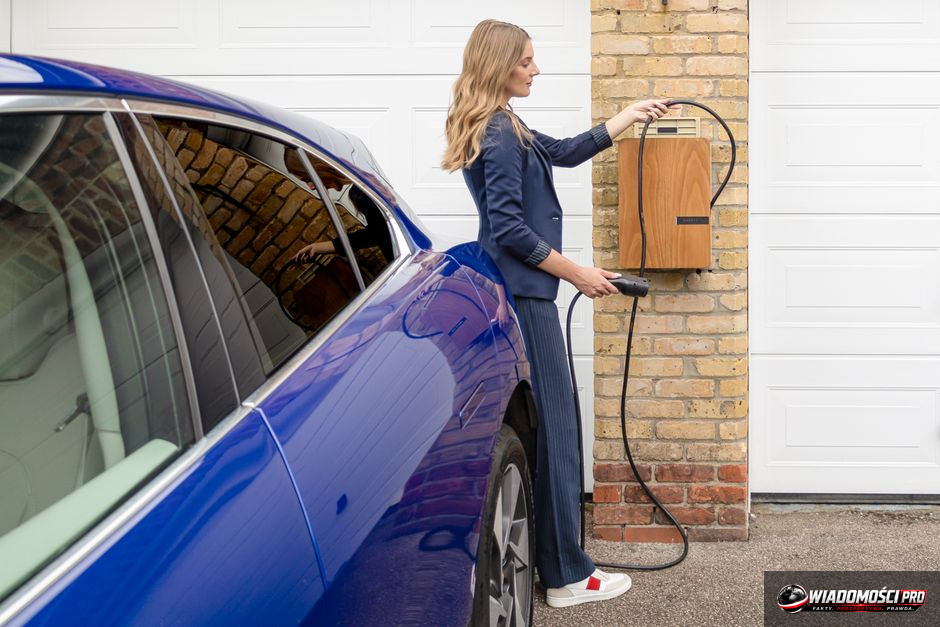
Using a car with a 600 km range on a daily basis is convenient, provided you have your own charging point. In home conditions, using a wallbox, replenishing energy to full takes all night. The problem arises on the road. The manufacturer relies on ultra-fast 350 kW charging as a solution to this problem, but the real availability of such hubs in Europe remains varied.
In Poland, the network of chargers with power above 150 kW is still developing. Drivers of electric cars often have to plan their route based on station availability, and not just based on the shortest path. The Range Rover Electric with its 600 km range minimizes this discomfort, but does not eliminate it completely. Every user will have to learn how to use charging management applications.
The car's operating system is to be integrated with the charging station network, which will allow for automatic stop planning taking into account charger power. This is a convenience for the user who does not want to spend time analyzing station maps. The manufacturer places great emphasis on digital driver support, which is a necessity in a modern electric car.
The future of the luxury electric segment
The electric Range Rover sets a new standard in its class. Competition, such as electric models from BMW or Mercedes, will have to respond to this range parameter. 600 kilometers is currently a limit that requires either huge batteries or very high energy efficiency of the system. Land Rover chose the path of optimization.
Will this car change the rules of the game? Certainly, for the brand itself, it is a milestone. The transition to electric drive allows for a completely new torque characteristic, which in the field may prove to be an advantage. Precise control of each wheel using separate electric motors gives more possibilities than traditional differentials.
For traditionalists, the lack of a combustion engine is a loss, but for new customers, it is an opportunity to experience luxury in a completely new form. SILENCE in the cabin and immediate reaction to the gas pedal are advantages that no combustion engine offers. The market will quickly verify whether these arguments are enough to attract the brand's loyal customers.
Analysis of technical parameters
The summary of the most important technical data that defines this project is based on official information from the manufacturer and media reports from September 2026:
- Official range on a single charge: 600 km.
- Maximum supported DC charging power: 350 kW.
- Electrical system architecture: 800V.
- Date of first presentation without camouflage: December 1, 2024.
- Date of official premiere and publication of specifications: September 1, 2026.
These data place the Range Rover at the forefront of the segment. However, these are not data that exempt the user from thinking about travel logistics. Even with a range of 600 km, route planning taking into account the availability of 350 kW stations remains essential.
Is it worth waiting for this model?
The decision to buy an electric SUV of this class is always a compromise between prestige and technology. Customers looking for proven solutions may feel uncertainty. Customers for whom technology is a priority will find everything they can expect from a modern premium car in this model.
The biggest challenge for the brand will be maintaining the quality of finish while introducing advanced electronics. The Range Rover must remain a Range Rover, regardless of what is under the hood. If the engineers managed to preserve the character of the brand, the success of the model is almost certain. However, if electrification has affected comfort or reliability, it could be a risky move for the manufacturer's image.
Questions and answers
What is the official range of the electric Range Rover?
The vehicle offers a range of 600 km on a single charge, which was confirmed in the official technical specification from September 2026.
With what maximum power can the battery be charged in this model?
The vehicle's charging system supports ultra-fast power up to 350 kW, which significantly shortens the stop time with appropriate infrastructure.
When did the brand start its adventure with electrified powertrains?
The first plug-in hybrids from the Range Rover brand went on sale on October 5, 2017, starting the process of transitioning to low-emission powertrains.
When was the model first shown without camouflage?
The first public information and photos of the model without camouflage come from December 1, 2024.
Is the 600 km range guaranteed in all conditions?
The 600 km range results from laboratory measurements; in real road conditions, especially at high highway speeds and winter weather, this result may vary.
What is the biggest advantage of the 800V architecture in this model?
The 800V architecture enables the use of ultra-fast 350 kW charging, which drastically reduces the time needed to replenish energy on the road.
What challenges do designers face in the context of curb weight?
The main challenge is maintaining high dynamics and handling precision with the large weight of traction batteries, which requires advanced solutions in terms of suspension and chassis geometry.
Why is 350 kW infrastructure crucial for this car?
With a range of 600 km, the ability to quickly replenish energy is essential so that the car can be used as a full-fledged vehicle for long trips, and not just in urban traffic.
Technical summary
The construction of the electric Range Rover is the result of a transition from a hybrid past to a fully electrified future. The data on the 600 km range and 350 kW charging power form the foundation on which the brand is building a new identity. The realization of these promises in everyday operation depends on the availability of infrastructure and the engineers' ability to manage the vehicle's weight.
For the end customer, this means access to luxury that finally does not require giving up performance or range for the sake of ecology. However, the issue of verifying this data in the hands of real users remains, who will be the first to check how much marketing promises coincide with everyday operation. The premium electric car market is ruthless for shortcomings, so the months following the premiere will be crucial for evaluating this ambitious project.
It is worth emphasizing that the Range Rover Electric is not a product for the masses, but for a sophisticated recipient who expects the highest level of engineering. If the promised parameters can be maintained in a wide spectrum of atmospheric conditions, this model has a chance to become a benchmark for years to come. Each element, from battery cells to energy management software, was designed with maximizing comfort in mind, which is a paramount value in the premium segment.
However, it should be remembered that this technology, despite its modernity, requires the driver to change habits. Route planning, monitoring the availability of charging points, and awareness of the impact of speed on energy consumption are new elements of the everyday life of an electric Range Rover owner. The manufacturer provides the tools, but it is the user who decides how effectively they will use them.
In this context, the premiere of September 2026 is not the end of the road, but rather the beginning of a new chapter for the brand. Range Rover enters the era of electromobility with confidence, the source of which is concrete numbers, but the real test will take place on public roads, where physics and infrastructure do not know leniency. Time will tell if this luxury SUV will become an icon of electrification or just another example of how difficult it is to reconcile size with ecology.
The final assessment of the model will depend not on advertising brochures, but on how the car behaves after covering the first 50,000 kilometers in various climatic conditions. That is when it will turn out whether the declared 600 km range is realistic in the long term, and the 350 kW charging system does not degrade the battery at too fast a pace. At this moment, we are dealing with a very promising card in the history of the automotive industry.
The manufacturer did not leave much room for errors, knowing perfectly well that the competition is not sleeping. Every aspect of this car, from aerodynamics to software, has been repeatedly optimized. It is this attention to detail that is intended to constitute the Range Rover's advantage over the rest of the field. Will this be enough to convince skeptics? We will know the answer soon, when the first units reach customers.
The electric Range Rover is proof that even a brand with as rich a history as the British manufacturer can evolve while maintaining its unique character. A range of 600 km and 350 kW power are hard facts that constitute the strength of this model. The rest, as usual in the automotive industry, depends on the experience behind the wheel.
Sources
- Range Rover revealed the specification of the electric SUV - UA.NEWS
- The first electric Range Rover is already driving. And without camouflage - MagazynAUTO
- Range Rover Hybrid plug-in – the brand's first model already on sale - Elektrowoz.pl
- VW Amarok Canyon: pickup for those who value freedom - WP Moto
- Range Rover finally electric with 600 km range and 350 kW charging - Tarantas News
Article prepared by the Wiadomości PRO editorial team with the support of artificial intelligence. Facts are derived from the sources provided above.
Komentarze (0)
Ładowanie komentarzy...