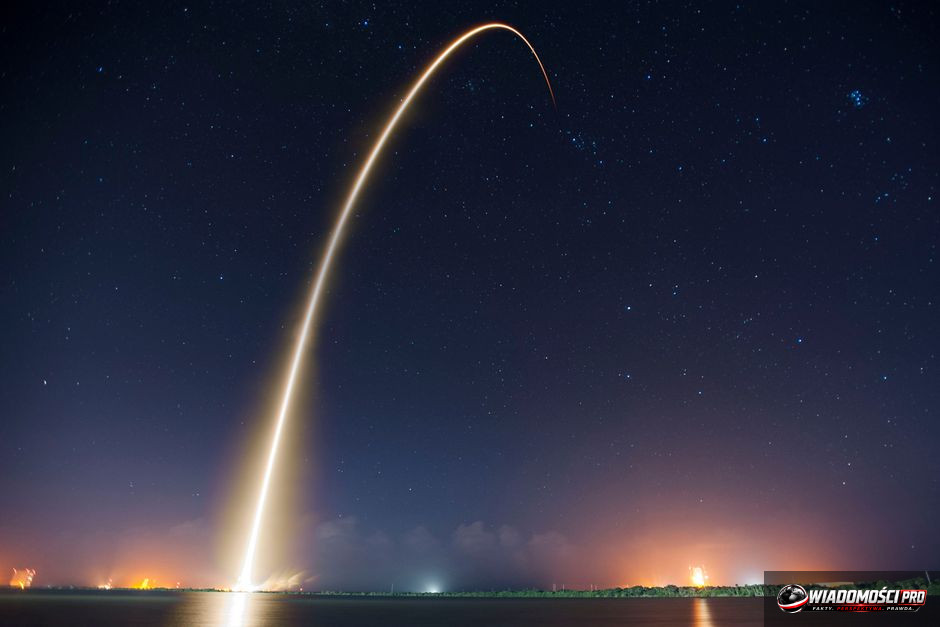
The Europa Clipper probe launched on October 14, 2024, and its main goal is to investigate whether Jupiter's icy moon, Europa, possesses conditions favorable for supporting life. This mission represents the culmination of years of NASA preparations and opens a new chapter in the search for extraterrestrial biology. Agency engineers have set an ambitious goal: to verify whether a liquid ocean actually exists beneath the satellite's icy shell, which could serve as a safe haven for simple life forms.
Launch chronology: From hurricane to success
The launch, which finally took place on October 14, 2024, was preceded by dramatic days of uncertainty. The original schedule called for a launch at the end of September, but meteorologists warning of the arrival of Hurricane Milton forced NASA to take radical measures. The decision to halt preparations at the Kennedy Space Center was dictated by concern for the safety of the most expensive planetary vehicle in the agency's history. Every hour of delay meant the necessity of reconfiguring systems and re-checking the structural integrity of the craft, which was exposed to extreme weather conditions.
In the space industry, launch windows are not merely a suggestion, but a mathematical necessity resulting from orbital mechanics. Shifting the launch date by more than two weeks forced an immediate recalculation of the flight trajectory. Engineers had to ensure that the probe, after leaving Earth's atmosphere, would be able to use the gravitational assist of planets to gain the speed necessary to reach the Jupiter region. Hurricane Milton thus became a kind of logistical stress test for the project. Instead of risking damage to solar panels or measuring equipment, mission management chose to wait for safe conditions.
For outside observers, such a delay seems like a trifle, but for the control team, it means hours of work under immense pressure. Every second of delay is a potential shift in the arrival time at the destination, which affects the entire multi-year work schedule of the probe. Space does not forgive haste, and NASA engineers approached the forces of nature with humility, knowing that equipment worth billions of dollars could not be put at risk due to time pressure. Ultimately, when the rocket lifted off the launch pad, the tension subsided, giving way to the long phase of travel through the vacuum.
Why Europa? The goal of NASA's search
Scientists have for years pointed to Europa as one of the most promising places in the Solar System outside of Earth. Beneath the thick layer of ice that envelops the entire moon lies a global, salty ocean. Its existence is almost certain thanks to data collected by the Galileo and Voyager missions, which recorded magnetic and geological anomalies. The Europa Clipper probe is tasked with moving beyond theoretical speculation and providing hard evidence that the water beneath the surface is capable of supporting biological processes.
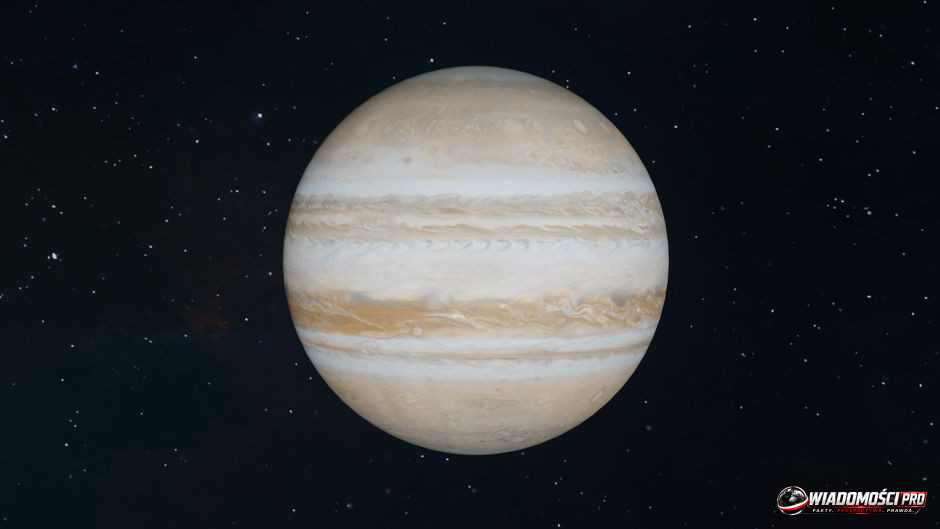
The research does not focus on searching for advanced civilizations, but on analyzing habitability. For life to exist, it needs three ingredients: liquid water, energy sources, and the right chemical elements. Europa appears to possess all these elements. Jupiter's tidal interactions cause the moon's interior to be constantly heated, which prevents the ocean from freezing completely. The probe will check whether organic substances or salts are escaping to the surface through cracks in the icy shell, which could indicate a rich interior chemistry.
The investment of 5 billion dollars in this project is an expression of the agency's deep determination to seek answers to the fundamental question about our place in the universe. Although some critics point to the enormous costs, supporters of the mission emphasize that the knowledge of whether we are alone in space is priceless. If Europa turns out to be a habitable world, it will mean that life in our planetary system is not an anomaly, but a phenomenon that may occur in every corner of the galaxy where similar conditions prevail.
Europa Clipper technology in numbers
Europa Clipper is the largest planetary probe ever built by NASA. Its dimensions, comparable to a large bus, result from the need to equip it with gigantic solar panels. In the Jupiter system, the amount of sunlight is negligible compared to Earth conditions, so the surface area of the photovoltaic cells had to be maximized to provide power for the complex research apparatus.
The heart of the mission is a set of advanced instruments. The REASON radar (Radar for Europa Assessment and Sounding: Ocean to Near-surface) will allow scientists to look deep into the icy shell. This device uses radio waves that penetrate the ice, reflecting off boundaries between layers of different density, which will enable mapping of the moon's internal structure. Another key element is MISE (Mapping Imaging Spectrometer for Europa), which will analyze the surface composition. This instrument will allow for the identification of the distribution of ice, salts, organic compounds, and other chemical substances, creating maps that will indicate potential sites of biological activity. In turn, the EIS system (Europa Imaging System) will provide high-resolution images, recording even the smallest changes in the terrain of Europa.
The mission budget, amounting to approximately 5 billion dollars, reflects the enormous technological complexity. The probe was designed to survive in the extremely hostile radiation environment of Jupiter. The electronics are enclosed in a thick-walled, titanium-aluminum "vault" designed to protect sensitive components from the destructive effects of charged particles accelerated by the gas giant's magnetic field. Every component, from correction thrusters to data transmission systems, had to pass rigorous stress tests, because in the event of a failure, repair is impossible. The probe thus becomes an autonomous laboratory that will have to operate flawlessly for years at a distance of hundreds of millions of kilometers from Earth.
Competition for discoveries: USA vs. Europe
American dominance in space exploration is clearly visible in the case of the Europa Clipper mission. NASA, by deciding to carry out such a costly undertaking on its own, is sending a clear signal to the international community. There is no talk here of slowly building a consensus with other space agencies. The United States has bet on its own technologies, its own capital, and its own scientific strategy, wanting to be the first to reach a destination that has fascinated humanity for decades.
Although Europe has its own space programs, such as the JUICE (JUpiter ICy moons Explorer) mission led by the European Space Agency, the American project focuses on a more direct and concentrated exploration of the moon Europa itself. This competition has a dimension not only scientific but also prestigious. Whoever is the first to provide evidence for the existence of an environment favorable to life will set the standards in astrobiology for the coming decades. The Americans do not want to share the glory with anyone, which is evident in the pace at which the launch was prepared after the passage of the hurricane.
Washington's strategy is clear: gain an informational advantage. Data flowing from instruments such as REASON or MISE will be analyzed for a long time exclusively by teams associated with NASA, which gives American scientists a unique chance to publish breakthrough discoveries before the competition. Is this an ethical approach in the era of global science? Opinions are divided, but in the practice of space exploration, the winner takes all. Europa Clipper has every asset to become a tool that will determine the future of research on Jupiter.
What will the probe find beneath the surface?
The task facing the probe goes beyond mere landscape photography. Scientists want to understand the dynamics of the moon's interior. Is the ocean under the ice uniform? Are there convection currents in it that transport energy from the core toward the surface? Answers to these questions will allow for the creation of a physical model of Europa. The onboard instruments have been optimized for detecting anomalies that could indicate the existence of hydrothermal vents, similar to those that support life in the total darkness of the ocean depths on Earth.
Skepticism in the scientific community is, however, advisable. Even if the probe confirms the presence of water and organic compounds, this is not synonymous with detecting living organisms. NASA builds its expectations around the concept of "habitability," which in the language of astrobiology means only the possibility of life existing. This is a subtle but significant difference. Every piece of information about the thickness of the ice, obtained using the REASON radar, will be verified with data on geological activity recorded by the EIS. If it turns out that the ice is too thick and the exchange of matter between the ocean and the surface is negligible, our hopes for finding biosignatures may be quickly cooled.
The risk of failure is inherent in this scenario. Europa is an environment with extreme radiation, which degrades materials and electronics faster than any other area in the planetary system. The probe will not enter orbit around Europa itself, but will perform a series of flybys, which allows for minimizing the time spent in the zone of highest radiation danger. Each flyby will be a nervous wait for engineers for confirmation that the equipment has survived and is sending clean data.
Travel schedule and key stages
The Europa Clipper probe is currently on a long journey through the Solar System. After the launch on October 14, 2024, the craft began maneuvers aimed at utilizing the gravitational assist of planets. Such a route is necessary for the probe to gain the speed needed to reach the Jupiter system without the need to carry huge amounts of fuel, which would drastically increase the launch mass and project costs.
This journey will take years, during which the probe will systematically turn off systems not needed in a given phase of the flight to save energy. After reaching the Jupiter system, Europa Clipper will begin to carry out its main research goal. The plan assumes several dozen close flybys of Europa. During each of them, instruments such as the EIS or MISE will work in an intensive data collection mode, scanning the surface and atmosphere of the moon.
It is worth noting that data will not flow to Earth in real time. The delay resulting from the distance means that communication with the probe takes place in packet mode. Ground teams will receive information with a delay of several dozen minutes, which necessitates a high degree of autonomy in the operation of the onboard computer. The probe must independently correct its course and react to potential technical anomalies, because the reaction time of operators on Earth is too long in emergency situations.
The long-term plan assumes that during the mission, the probe will collect terabytes of data. These will be successively processed by an international research team, which will allow for the creation of a three-dimensional map of Europa's interior. If the assumptions about geological activity are confirmed, this mission will become the most important achievement in the field of celestial body research since the Apollo program. Success, however, depends not only on technical efficiency but also on the interpretation of data, which may turn out to be ambiguous. NASA is preparing for every eventuality, including one in which Europa turns out to be a dead, albeit chemically rich, world.
Questions and answers
Will the probe land on the surface of Europa?
No, Europa Clipper is not a lander. Due to the deadly radiation in the vicinity of Jupiter and the risk of damage, the mission was designed exclusively as an orbiter performing a series of close flybys.
Why was the launch delayed?
The main cause was Hurricane Milton, which passed over Florida. NASA decided to halt preparations at the Kennedy Space Center to protect the probe from the effects of the storm.
When can we expect the first results?
The first scientific data will begin to flow to Earth after the probe reaches the Jupiter system and begins the flyby phase, which is planned for the coming years of this decade.
How much did the entire mission cost?
The budget of the entire project, including the construction of the probe, the development of the apparatus, and launch and research operations, is approximately 5 billion dollars.
Which instruments are most important for the mission?
Key are the REASON radar, the MISE spectrometer, and the EIS imaging system, which together will allow for the analysis of the structure of the icy shell and the chemical composition of Europa's ocean.
Sources
- Launch of the Europa Clipper mission to Europa - astronet.pl
- Europa Clipper probe to search for life on Europa - Urania - Polish Astronomical Portal
- Europa Clipper mission launch [BROADCAST]. Americans to outpace Europeans in the search for life on Europa - wyborcza.pl
- Beginning of the Europa Clipper mission - kosmonauta.net
- Searching for life in the Solar System outside of Earth. NASA sends mission - geekweek.interia.pl
- Hurricane Milton delays launch of NASA's largest space probe, Europa Clipper, to October 14 - Notebookcheck.pl
- NASA sends probe to Europa. Europa Clipper mission has launched - WP Tech
- Flying to search for life. NASA mission launch in just three weeks - Antyweb
Article prepared by the Wiadomości PRO editorial team with the support of artificial intelligence. Facts are derived from the sources listed above.

Komentarze (0)
Ładowanie komentarzy...