A deficit of 289 billion PLN forces the government to exercise rigorous public finance management, which, in the face of political tensions and presidential oversight, calls into question the funding of key sectors, including healthcare. This situation is not merely a technical entry in the budget act, but a turning point for the stability of the Polish economy, directly translating into the real purchasing power of money in citizens' pockets. The scale of the planned shortfall means that the state must borrow capital on an unprecedented scale, which, in market realities, leads to an increase in debt servicing costs and, in the long term, may result in pressure for rising consumer goods prices and higher interest rates that burden borrowers.
Understanding the scale of this deficit requires looking beyond the narrative of political disputes. When the state decides on such deep debt in a single fiscal year, it automatically increases the supply of treasury bonds on the market. To purchase Polish debt, investors demand higher yields, which for the government means the necessity of paying higher interest. These billions of zlotys, instead of fueling the healthcare budget, education, or infrastructure, go straight into the pockets of creditors. For the average Pole, this means that in the face of the public sector's need to tighten its belt, the real quality of services provided by the state deteriorates, even though fiscal burdens remain at a high level.
Financing mechanisms and the condition of the wallet
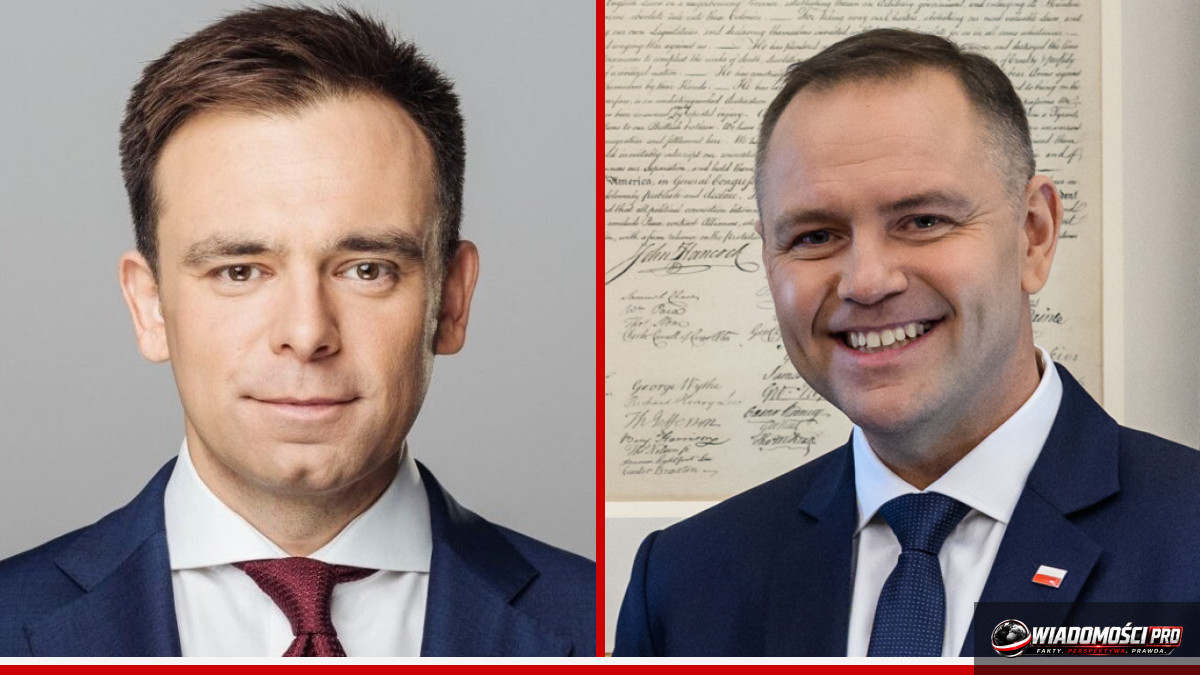
Every financial decision made at the Ministry of Finance under the leadership of Andrzej Domański is currently being analyzed through the prism of a political deadlock. The 2025 budget draft, with a deficit reaching 289 billion PLN, poses a challenge for the government to find financial liquidity while facing resistance from President Karol Nawrocki. For the household budget, this means a dangerous dependence on the stability of the zloty. If foreign investors decide that Polish finances are losing discipline, the national currency's exchange rate may weaken. A weaker zloty means more expensive imports, which directly translates into higher prices for fuel, electronics, and food imported from abroad.
Inflation is not a phenomenon that disappears the moment the budget act is approved. On the contrary, if state spending fuels demand in the economy, the National Bank of Poland may be forced to keep interest rates at a higher level than would result from the natural business cycle. For holders of variable-rate mortgages, this means no prospect of quick installment reductions. In this arrangement, it is the end consumer who finances the costs of the political dispute over the shape of the budget, paying higher interest on their credit obligations and paying more for basic products in stores.
The government received a discharge in July 2026, which in theory should have closed the discussion on past expenditures, but in practice, it only fueled accusations of "financial vandalism" coming from the opposition benches. This verbal conflict has measurable economic consequences. Capital markets price in political risk. When the rhetoric surrounding the budget becomes aggressive, the risk premium for investing in Polish bonds rises. A higher premium means more expensive credit for the state, and more expensive credit for the state means less room for any tax relief or additional social transfers for families.
President Nawrocki and the budget game
The role of President Karol Nawrocki in the legislative process goes far beyond merely signing documents. Since January 2026, when the president openly began criticizing government plans, calling them a "budget of collapse in healthcare," the situation has become a stalemate. The president has real tools at his disposal, such as a veto or referring the act to the Constitutional Tribunal, which is a clear signal to investors: uncertainty will persist.
For a patient in a Polish hospital, this dispute is not abstract. If healthcare funding becomes a bargaining chip in the hands of the president and the government, real access to medical services may be restricted. Since the budget is stretched to its limits, every adjustment in spending, forced by political compromise, will hit the most sensitive areas. The healthcare system, already underfunded in relation to rising treatment costs, lacks the buffers that would allow for a smooth transition through the period of political squabbling.
Attention should be paid to specific indicators mentioned in market analyses. Treasury bond yields are a barometer of confidence in the government's financial strategy. When analysts pointed to the risk of a market shock on January 14, 2026, it was not about theoretical considerations, but about concrete asset valuations. If the government does not work out an agreement with the Presidential Palace, debt servicing costs may rise by further basis points. On the scale of multi-billion borrowing needs, the difference between a 5% and 6% yield amounts to billions of zlotys that could have been allocated to modernizing critical infrastructure.
Discharge as a political smokescreen
The Sejm votes that took place on July 31, 2026, brought the government a discharge, but did not bring peace. The parliamentary opposition, pointing to "financial vandalism," focuses on the deficit, which in its view threatens the foundations of the state's stability. From the citizen's perspective, the most important question remains: who will pay for this? If the 289 billion PLN deficit is maintained without radical optimization reforms, the only ways out remain: increasing debt, raising taxes, or cutting public services.
Taxes are the most direct form of hitting the Pole's wallet. In a situation where the government must patch a giant hole in finances, every increase in VAT rates or social security contributions is taken into account. Even if Minister Domański declares restraint, budget reality forces the search for new revenues. This is a classic fiscal dilemma: how to finance the deficit without stifling consumption, which is the engine of the economy?
It is worth analyzing the chronology of events, which shows how much the budget has become a hostage to the political calendar. From the Sejm votes in 2025, through President Nawrocki's January 2026 warnings, to the July discharge – each of these stages was used to build a narrative of "collapse" or "responsibility." For the average recipient of this information, information chaos makes it difficult to assess the actual state of state finances. And this state is demanding: debt servicing consumes an increasing part of the budget, limiting the room for maneuver in social policy.
Healthcare sector: hostage to the budget impasse
Healthcare is the sector where the effects of the deficit are felt most quickly. President Nawrocki, pointing to a "budget of collapse," hit a sensitive point for the government. If hospitals do not receive the promised funds, the result will be longer queues for specialists and the necessity of paying for medical services out of pocket. This is a direct depletion of the wallet of every citizen who, in the face of the public system's inefficiency, will be forced to seek help in the private sector.
Analyzing statements from January 20, 2026, it is clear that the dispute over health is existential for the ruling coalition. The government must demonstrate that it can manage public funds effectively, while the president tries to prove that the current funding model is inefficient. In this game, patients become unwitting participants in a political spectacle. The lack of funds for basic medical procedures is not just a matter of statistics; it is a real threat to the quality of life for millions of people.
Funding for key sectors, including healthcare, is currently dependent on the state's ability to take on cheap debt. If markets stop believing in the credibility of the budget, financing costs will rise, which will further limit the medical budget. This is a feedback loop that could lead to a crisis of confidence not only in the government but in the entire system of public services in Poland.
Market response to the lack of consensus
Investors do not look at declarations, but at hard numbers. A 289 billion PLN deficit is a signal that Poland is entering a period of increased risk. Data published by wnp.pl in January 2026 shows that even without a formal presidential veto, the very process of legislative uncertainty is a sufficient reason for nervousness in the markets. The zloty, as an emerging market currency, is particularly vulnerable to capital outflows in times of political instability.
For an ordinary Pole who has savings in zlotys or is planning purchases requiring a loan, these market fluctuations mean concrete losses. Every percent of the zloty's weakening is an increase in fuel prices at gas stations, which in turn drives up food transport costs. Consequently, inflation, which the government is trying to control, may start to rise again, driven by external factors and the markets' lack of confidence in Polish budget policy.
It must be emphasized that Polish bonds are the main instrument financing the deficit. If foreign investors start selling off Polish debt securities, their yields will rise drastically. This means that the state will have to offer even higher interest rates to attract capital. Such a mechanism creates a vicious circle: more money from the budget goes to paying interest, less to investments and public services. This is a direct hit to the wallet of every taxpayer whose money is allocated to servicing increasingly expensive public debt.
Schedule as a tool of pressure
The legislative process on the budget in 2025, discussed in the context of the events of 2026, showed how much time pressure exacerbates errors. Work in Sejm committees, often carried out in a hurry, does not favor reliable control over expenditures. For the citizen, this means the risk that inefficient expenditures are hidden in the budget act, which would have been eliminated under normal conditions.
September and October 2026 were months in which the fate of not only the budget act but also the government's credibility hung in the balance. The opposition blocking work in Sejm committees did not do so just for pure obstruction – they did it to show that the budget is poorly constructed. Every delay in work on the act was interpreted by the Presidential Palace as proof of the incompetence of Minister Domański's cabinet. As a result, the citizen receives a budget product that is the result of political compromises, not a substantive financial strategy of the state.
What does this mean for your wallet in practice?
All these complexities translate into three main areas of your financial life. First, interest rates. As long as the budget does not inspire the confidence of the markets, there will be no cheap credit. Second, the quality of public services. A deficit of 289 billion PLN means that hospitals and offices will have to operate in austerity mode, which you will feel in long queues and limited access to services. Third, inflation. Budget instability spills over into the currency exchange rate, and that into prices in stores.
The editorial commentary is unambiguous: the biggest loser in this puzzle is the citizen, who has no influence on the decisions made in the privacy of offices, and at the same time bears the full costs of their consequences. Political players, both from the government and the opposition, use the deficit as fuel for their campaigns, while the real financial challenges of the state remain unresolved. The lack of consensus on matters as fundamental as the budget is a signal that the state is ceasing to be a stable partner for its own citizens.
Questions and answers
Is the 289 billion PLN deficit final for the economy?
The draft adopted by the Council of Ministers is only a plan. During the fiscal year, actual revenues and expenditures may deviate from the assumptions, which, with such a high deficit, creates a huge risk of the need for sudden cuts during the year.
What role does the president play in destabilizing finances?
The president, through his powers of veto and referring acts to the Constitutional Tribunal, introduces an element of uncertainty that financial markets price as additional risk, which increases the costs of the state's borrowing.
Why are accusations of "financial vandalism" so dangerous?
These accusations, although political, hit Poland's image on the international stage. Investors fear countries where the most important financial documents become the subject of a sharp ideological dispute, which may result in credit rating downgrades.
Will healthcare actually suffer from the deficit?
Yes, because in a budget crisis situation, health expenditures are easier to "freeze" than rigid expenditures on debt servicing or international obligations, which directly translates into the quality of medical services for patients.
As a citizen, do I have an influence on how the budget is passed?
Your influence is limited to electoral mechanisms and public opinion pressure. In the current system, it is the politicians in parliament and the Presidential Palace who decide on the shape of finances, often ignoring long-term consequences for the wallets of Poles in the name of current political gains.
Sources
- Government receives discharge. Opposition speaks of "financial vandalism" - businessinsider.com.pl
- Sejm makes decision on budget. Government receives discharge - Polskie Radio 24
- Sejm votes on budget. What about the government's discharge? - Dziennik.pl
- President makes decision on budget. "This is a budget of collapse in healthcare" - Rynek Zdrowia
- Polish budget in the hands of Karol Nawrocki. Decision could shake markets even without a veto - wnp.pl
- Budget in the president's hands. Unexpected scenario on the table? - Money.pl
- Karol Nawrocki threatens government over budget. Domański grits his teeth and waits in tension - wyborcza.biz
- Budget for 2026. Deputies have made a decision - TVN24
Article prepared by the Wiadomości PRO editorial team with the support of artificial intelligence. Facts are derived from the sources provided above.


Komentarze (0)
Ładowanie komentarzy...