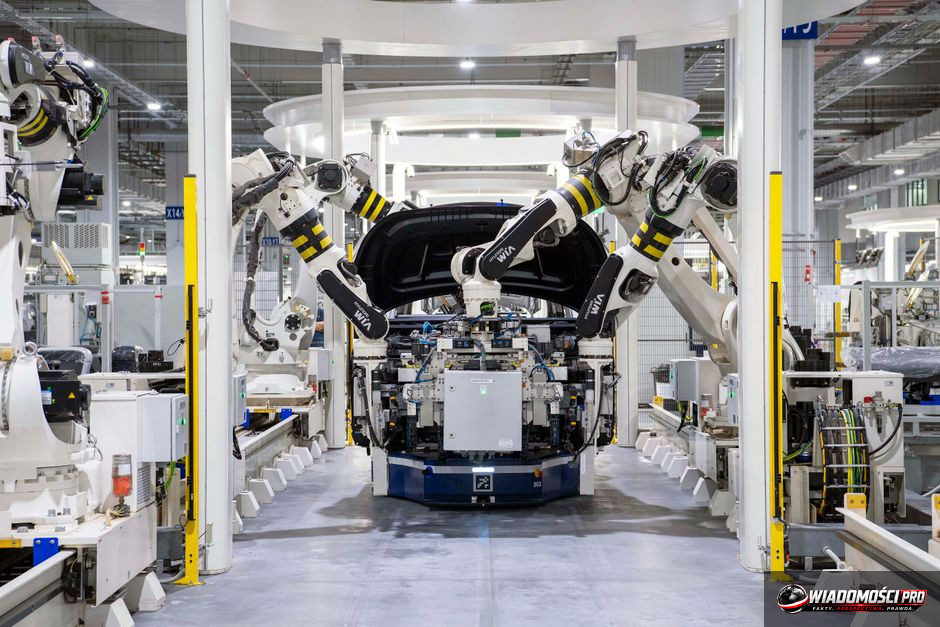
Volkswagen will cut 100,000 jobs by the end of the decade, representing the largest cuts in the history of the automotive industry, forced by a deep crisis in the European automotive sector. The company's management, led by CEO Oliver Blume and CFO Arno Antlitz, announced a plan for drastic cost reductions, which also includes phasing out half of its available car models. The Wolfsburg-based group openly admits that its current business model has lost profitability in the face of aggressive expansion by competitors from Asia and the rising costs of the energy transition.
Scale of cuts: 100,000 jobs by the end of the decade
The decision to lay off 100,000 people is not merely a statistical adjustment of employment, but a signal of a complete departure from the growth-by-scale strategy that Volkswagen has cultivated for decades. The documents presented by the management outline a plan in which job reductions will proceed in stages, reaching their peak around 2030. For thousands of engineers, assembly line workers, and administrative staff in Germany, as well as in the group's foreign branches, this means the end of the job security that was the foundation of VW's power.
Oliver Blume, taking the helm of the group, faced a task that his predecessors did not have to deal with in such a brutal form. Volkswagen's sales profitability in Europe has fallen to levels that, in the opinion of financial analysts from Frankfurt and London, are unacceptable for a publicly traded company. Personnel cuts will primarily affect plants with lower efficiency, where labor costs are not covered by production volume.
This is not a sudden process, but a systematic dismantling of structures that have become too expensive to maintain. Every thousand jobs cut is an attempt to save billions of euros, which are to be redirected toward the development of software and battery technology. Nevertheless, IG Metall trade union workers have already promised stiff resistance, pointing to the threat to the stability of entire regions where Volkswagen serves as the only significant employer.
The scale of the reduction raises questions about the quality of management in recent years. Did the group delay its departure from internal combustion engines for too long, or perhaps invest too heavily in infrastructure that is becoming a burden in the new market conditions? We will not find the answers to these questions in official statements, but we see them in the numbers. 100,000 people is an army whose absence from the labor market will change Germany's industrial structure for decades.
Why is Volkswagen cutting its offering by half?
The strategy to reduce the model range by 50 percent is the most risky element of the restructuring plan. Volkswagen, which for years prided itself on having a car in every segment – from city hatchbacks to luxury SUVs – must now make a selection. In practice, this means abandoning models that generate high homologation costs while yielding low margins.
Among the models threatened with being phased out are primarily those based on older internal combustion platforms. Models in the A and B segments, where the fight for the customer is fought solely on price, are becoming the first victims of the cuts. Volkswagen engineers have been given guidelines to focus on modular platforms that will allow for the construction of several models on a single chassis. This is the end of the era of diversity and the beginning of the era of unification.
This decision hits the foundations of the brand, which is accessibility. If Volkswagen withdraws from affordable models, it will create a vacuum that will be immediately filled by manufacturers from China. Brands such as BYD or MG are already offering electric cars at prices that the European giant cannot compete with without a radical reduction in production costs. Reducing the offering by half is an attempt to regain margins at the expense of sales volume.
In showrooms, this means fewer configurations, fewer engine variants, and fewer choices for the end customer. For the group, however, it is a way to simplify the supply chain. Instead of managing thousands of components for hundreds of different car versions, Volkswagen will focus on a few key models that are intended to form the backbone of sales in Europe, North America, and China. It is a risky bet that assumes customer loyalty to the brand will survive the reduction in choice.
Causes of the crisis in the European automotive sector
The main driver of change is shifting consumer preferences and strict emission standards imposed by the European Commission. Volkswagen, as the largest producer in the region, has borne the highest costs of adapting its fleet to the new standards. At the same time, rising energy prices in Europe have made car production on the Old Continent one of the most expensive in the world.
The crisis of the European automotive industry did not come out of nowhere. It is the sum of strategic errors, ignoring the growing role of software in a modern car, and entering the BEV (battery electric vehicle) segment too late. By the time Volkswagen tried to catch up, the competition from Asia already had ready-made, cheaper technological solutions.
It is worth noting the role of Arno Antlitz, who as CFO has consistently pushed for improved results. According to data from September 4, 2026, the group's financial situation required an intervention of unprecedented scale. It is no longer about optimizing accounting processes, but about survival in a reality where a car is becoming an electronic device, not just a mechanical means of transport.
For European partners supplying parts to Volkswagen, this means inevitable bankruptcies or the necessity of deep consolidation. If Volkswagen cuts its offering by half, it means that half of the component suppliers for these models will lose their main source of revenue. This is a chain reaction that could lead to the permanent impoverishment of Central Europe's industrial base, which has been closely linked to the German giant for years.
Are Polish factories safe?
Poland, being a key production hub for the Volkswagen Group, is at a flashpoint. The plants in Poznań and Września, which are responsible for the production of light commercial vehicles and components, cannot feel safe. The decision to cut 100,000 jobs on a global scale must translate into a revision of the production map in Europe.
The group's management has not yet provided a detailed list of factories that will be closed or where the largest layoffs will occur. The lack of transparency on this issue is causing frustration among the crews. In Polish plants, there is an atmosphere of waiting for decisions from Wolfsburg. The Polish economy, highly dependent on the export of car parts to Germany, will feel every tremor in Volkswagen's structures.
Experts point out that in the face of a crisis, corporations usually consolidate production in plants with the highest efficiency, often at the expense of those that are more flexible but less automated. Poland faces the challenge of maintaining its competitiveness not only through labor costs but through quality and technological modernity. However, if Volkswagen decides on drastic cuts, Polish plants may be forced to limit their production capacity, which will translate into thousands of layoffs in the tier 2 and tier 3 supplier sectors.
This uncertainty also has a social dimension. The regions around Volkswagen plants in Greater Poland are dependent on the company's stability. Every employment adjustment at headquarters resonates here with a delay, but with equal force. The current situation is a test for the Polish government and local authorities, who must prepare scenarios in case Volkswagen decides on a drastic reduction of its presence in Poland.
Stock market reaction: Volkswagen shares under pressure
The financial market read the announcement of layoffs as a desperate step toward saving the balance sheet. The price of Volkswagen shares, traded on the Frankfurt Stock Exchange, has been under constant selling pressure since the end of August. Investors, although they expected cuts, do not believe in the effectiveness of the management's plan in the long term.
The main reason for investor skepticism is the lack of a development vision. The market asks: what comes after the cuts? If Volkswagen cuts 100,000 jobs and half of its model offering, how does it intend to compete with the technology giants entering the automotive market? Investors fear that the group will become "leaner" but not more innovative.
Analysts from financial institutions point to the lack of specifics regarding new revenue sources. Does Volkswagen intend to make money on digital services? Or does it want to become a platform provider for other brands? For now, we only hear about savings. Such a message is perceived as defensive, which in the world of finance is treated as the first step to losing market position.
Stock prices remain hostage to the fear of deteriorating sales results in the coming quarters. Every subsequent piece of information about layoffs is accepted by the stock market as a signal that the crisis is deeper than the management officially admits. Investors are waiting for moves that will show that Volkswagen can not only cut but also build new value in a changed market environment. For now, that is missing.
The future of the European leader
Volkswagen is at a turning point that will define its role in global automotive for the next decades. The reduction of 100,000 jobs is the price the company is paying for remaining in old structures for too long. If Oliver Blume's plan succeeds, the group may emerge from this crisis as a smaller but more efficient player. However, if it fails, Volkswagen will become a warning to other European giants.
It is difficult to resist the impression that we are witnessing the end of an era. The era of mass production of cheap internal combustion cars in Europe is coming to an end. Volkswagen, which was its symbol, must now find a new identity. Will it be a premium electric car manufacturer? Or perhaps a mobility solutions provider? The answers to these questions are still not clear, and time is working against the Germans.
The key challenge remains convincing the customer that a "slimmed-down" Volkswagen still offers the quality worth paying for. If the brand loses its status as a manufacturer for everyone, it must offer something that distinguishes it from the competition from Asia. For now, however, we only see a fight for survival. This is a painful process that will affect millions of people directly and indirectly associated with the group.
Is this the end of the giant's era? The answer is: yes, if by "giant" we mean a company that dominates every market segment and employs hundreds of thousands of people in every corner of the world. A new Volkswagen is ahead of us – more digital, less numerous, perhaps more profitable, but certainly less influential on a global scale. The question remains whether Europe is ready to lose its biggest industrial champion.
What this means for you
The editorial team assesses that Volkswagen's plan is a warning signal for the entire European labor market. For the average driver, it means a reduction in the choice of cars and an increase in the prices of those that remain on offer. For investors, it is a test of patience, and for automotive sector employees in Poland – a period of high risk. The catch lies in whether the drastic cuts will not lead to a loss of the company's innovative capacity, which in the long run may be more harmful than the current financial crisis.
Questions and answers
How many people exactly will lose their jobs at Volkswagen?
The group plans to reduce 100,000 jobs by the end of the decade, which is the largest such operation in the history of the industry.
Is this the largest reduction in history?
Yes, experts confirm that the scale of these cuts exceeds all previous restructurings in the automotive industry.
Will the changes also affect Poland?
Yes, experts warn that Poland, as a key production hub for VW, is directly exposed to the consequences of these decisions, which includes both final assembly plants and the network of subcontractors.
Which models will be withdrawn from the offer?
The management has not yet provided a detailed list, however, one should expect the phasing out of unprofitable car variants from the A and B segments and models based on older internal combustion platforms.
Who is making these decisions?
The main responsibility for the restructuring program lies with the management board led by Oliver Blume and CFO Arno Antlitz.
Will Volkswagen shares continue to fall?
The market is valuing the company in terms of uncertainty regarding future profitability, which is why the stock remains under strong pressure from investors demanding a clear strategy for exiting the crisis.
Sources
- Volkswagen announced mass layoffs. 100,000 people will lose their jobs. Historic decision - Next Gazeta.pl
- Volkswagen Group to reduce employment by 100,000 employees. Will reduce car offer by half - pb.pl
- The largest restructuring in the history of automotive. Volkswagen cuts 100,000 jobs - RMF24
- Volkswagen to eliminate 100,000 jobs by the end of the decade - UA.NEWS
- Volkswagen plans giant cuts. Up to 100,000 fewer jobs by the end of the decade - Tysol.pl
- Volkswagen plans big cuts. Shares under pressure - Magazyn MANAGER+
- Volkswagen prepares huge cuts. 100,000 jobs to disappear by the end of the decade - Polonia Birmingham
- Big cuts at Volkswagen. The crisis may also hit Poland - tvp.info
Article prepared by the Wiadomości PRO editorial team with the support of artificial intelligence. Facts come from the sources listed above.

Komentarze (0)
Ładowanie komentarzy...