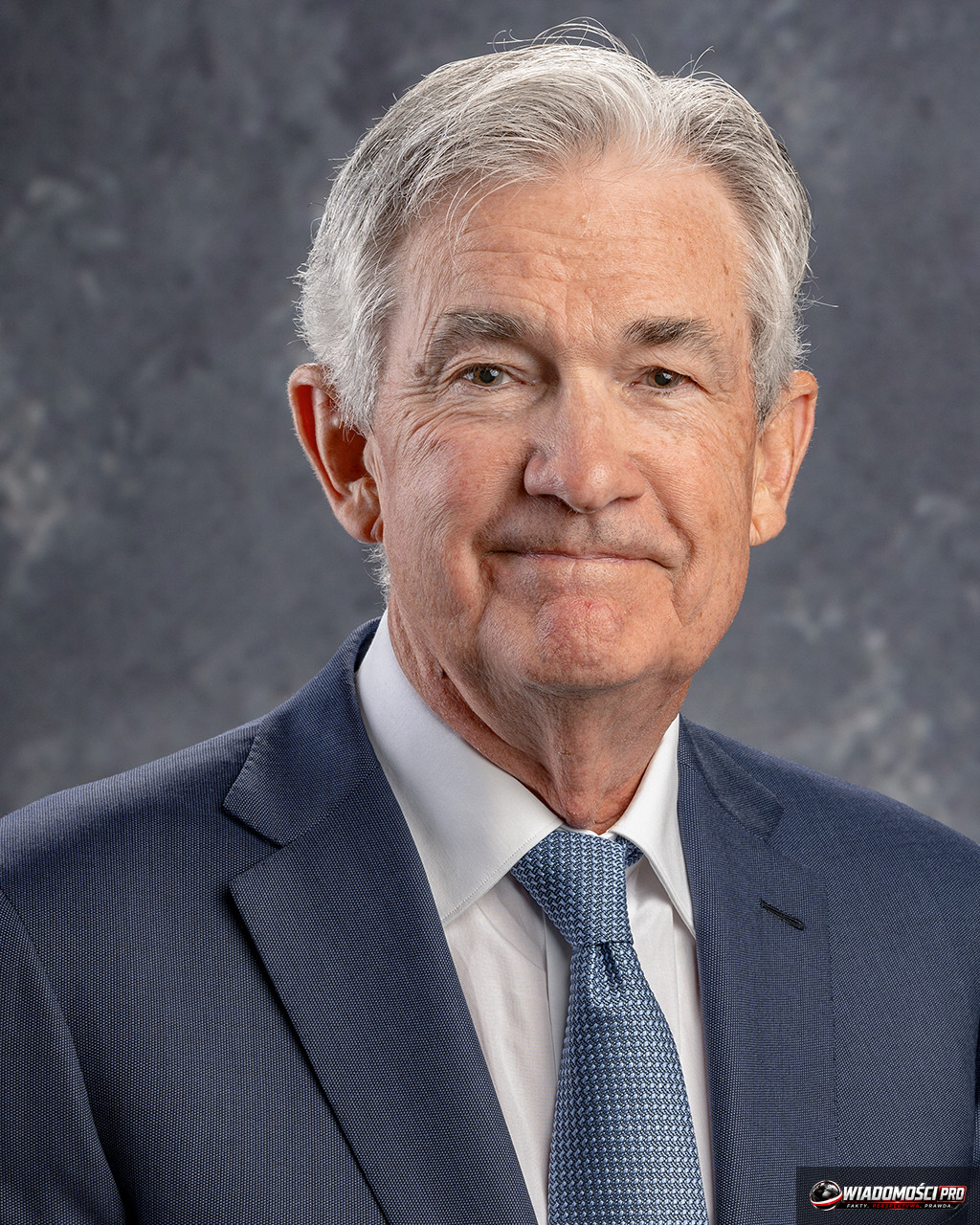
Yes, the rate cut to the 4.75-5.00 percent range marks the beginning of an easing cycle, which in the coming months will translate into lower mortgage and corporate loan interest rates in the USA. However, commercial banks will not react to this move immediately, delaying interest rate cuts on their products by about 3-6 months. The transmission mechanism between the Federal Reserve's decision and the client's wallet depends on the liquidity of the banking sector and margin strategies, which remain restrictive during periods of uncertainty.
Decision mechanism: Why 50 basis points?
The Federal Reserve decided to reduce rates by 50 basis points, setting a new range of 4.75–5.00 percent. This move ends a period of defensive monetary policy that had been stifling the American economy for many months with high capital costs. Investors, who had been watching the debate on the direction of Fed policy since September 2024, finally received a clear signal. The bond market had priced in this move well in advance, which was visible in the volatility of debt instruments over the last two years.
This decision is not merely a technical adjustment of monetary parameters. It is a reaction to the exhaustion of growth potential while rates were maintained near their peak. As early as April 2026, FXMAG analysts pointed out that the market expected more decisive moves from the Fed, indicating the need for a change in leadership of the discourse within the institution. The pressure mentioned in April reports became a reality when debt servicing costs began to threaten the stability of the corporate sector.
It is worth looking at the dynamics of change from a historical perspective. In March 2026, as reported by Vietnam.vn, the yield on US bonds exceeded the 4.3 percent barrier. This was a level at which the financial market stopped believing in "higher for longer" interest rates. Bond yields, which are a key indicator for mortgage pricing, became too expensive for the real economy. The Federal Reserve, through a 50 bps cut, is now trying to lower this cost to avoid a deeper recession that was looming on the horizon after a series of weaker macroeconomic data from the turn of 2025 and 2026.
Political conditions of the Fed's decision
The decision-making process at the American central bank has long ceased to be free from political connotations. Jerome Powell, although officially defending the institution's independence, has had to face unprecedented pressure from politicians in recent years. Donald Trump was particularly active in this regard. As early as July 30, 2025, Business Insider Polska reported on the former president's clear demands to the Fed regarding the need to loosen monetary policy to improve economic performance.
This political pressure did not go unanswered in market realities. When Bankier.pl reported on the resumption of the rate-cutting cycle on September 17, 2025, the market perceived it as a concession to political expectations intended to stimulate the economy before election and post-election cycles. The resumption of cuts at that time was a signal that the Fed was no longer ignoring calls for cheaper money. Today's 50 basis points are a continuation of this line. The institution, which theoretically is only supposed to care about inflation and the labor market, has found itself inside a political puzzle where every rate decision is analyzed through the prism of polls and voter sentiment.
This situation creates a specific risk for investors. When politics begins to determine the timing and scale of central bank moves, the predictability of Fed actions drops. Investors who in 2024 were counting on a purely technocratic approach to fighting inflation had to revise their models. Currently, every communication from Powell is filtered through the prism of whether the Fed is acting in the interest of the economy or fulfilling political goals imposed by the former president's circle. This state of affairs makes market volatility higher and trust in long-term interest rate forecasts limited.
What this means for the borrower: The math of relief
For an American borrower, a 50 bps rate cut is a real shift in the household budget, but it will not happen overnight. Commercial banks delay passing on the Fed's decision to their clients to protect interest margins. Let's look at a specific example. Assume a borrower has a mortgage of 500,000 USD taken out for 30 years at an interest rate of 7 percent. In such a scenario, the monthly principal and interest payment is approximately 3,326 USD.
If, thanks to the Fed's decision, the interest rate falls by 0.5 percentage points, i.e., to 6.5 percent, the payment for the same principal amount will be approximately 3,160 USD. Savings of 166 USD per month mean over 2,000 USD in the borrower's pocket annually. Although at first glance this amount may seem modest against a half-million debt, over the entire life cycle of the loan, this sum grows to tens of thousands of dollars.
However, we must remember the delay. Banks, faced with macroeconomic uncertainty, are in no hurry to lower offers. In the corporate sector, the situation is similar. Companies financing themselves with variable debt costs (based on Fed rates or the SOFR rate) will feel relief only after a few months, when current billing periods expire. Additionally, commercial banks often maintain higher margins, explaining this by credit risk, which is higher in the face of an economic slowdown than in periods of prosperity. Therefore, the real decline in financing costs for companies will be gradual, not sudden.
Market reaction: Bonds and stock markets
Stock markets reacted to the cut with enthusiasm, which is typical for a reaction to "cheaper money." However, history, including reports from September 2025, shows that this euphoria can be short-lived. Analizy.pl pointed out at the time that markets can fall into paranoia about inflation if there are any signs that the economy cannot handle the stimulus. Currently, the situation is even more interesting because investors are no longer looking only at inflation, but at the pace of economic growth.
The bond market, which in March 2026 trembled at yields exceeding 4.3 percent, has now begun to stabilize. The decline in US Treasury bond yields is key to lowering the cost of capital across the entire economy. If the Fed maintains its course, a further decline in 10-year bond yields should be expected, which will be a signal for banks to start real cuts in mortgage interest rates.
It is worth paying attention to the attitude of foreign investors. US bonds remain an asset with high demand, but their attractiveness depends on the interest rate differential between the Fed and other central banks. If the Fed cuts rates faster than the European Central Bank or the Bank of England, the dollar may lose value, which in turn will affect imported inflation in the USA. This is a vicious cycle that the Fed must take into account with every subsequent decision on the scale of easing.
Outlook for the rest of 2026: Is this the end?
Stabilizing rates in the 4.75–5.00 percent range is a signal that the Fed has moved into a "wait-and-see" phase. Policymakers do not want to repeat the mistake of the past, when easing too early led to a renewed inflation spike. Money.pl reported in January 2026 on the then-dominant trend of stabilization, and the market was anxiously looking for signs of a reversal. Today, this reversal is a fact, but its scale remains an unknown.
In the coming months, data from the American labor market and consumption indicators will be key. If unemployment begins to rise sharply, the Fed will be forced to make further, more aggressive cuts, regardless of whether it favors the fight against inflation. However, if the economy proves resilient, the central bank may refrain from further moves to "digest" the current cut.
For investors, this means the need to be on high alert. There is no talk of returning to the era of zero interest rates that we remember from the previous decade. The new "normal" is rates around 4-5 percent, which is still a relatively high level compared to historical averages. Companies and households must learn to manage debt in this environment, assuming that the cost of money will not fall below a certain level in the foreseeable future.
Summary: What to watch out for?
The biggest threat to market optimism is the persistence of inflation. Although rates have fallen by 50 bps, price pressure in the service sector and the labor market still exists. If prices start to rise again, the Fed will find itself in a trap: either it keeps rates at the current level, disappointing the market and risking a recession, or it continues cuts, fueling inflation.
For borrowers, this means it is worth considering refinancing debt when commercial banks start to actually lower interest rates. However, one should not count on the market returning to the conditions of the pandemic period. A cut to 4.75-5.00 percent is only oxygen intended to prevent the economy from suffocating, not a return to "free capital."
Questions and answers
Will the Fed cut affect loan payments in Poland?
Not directly, but indirectly through the zloty-to-dollar exchange rate. A stronger dollar forces the MPC to adopt a more restrictive policy to defend the domestic currency, which may affect the level of rates in Poland.
What does the 4.75-5.00 percent range mean for an investor?
It is a signal that the Fed considers current inflation under control and is focusing on preventing a recession. For investors, this is a time to revalue portfolios toward companies more sensitive to the cost of debt.
Is this the end of the rate hike cycle in the USA?
Yes, the decision to cut by 50 bps definitively closed the tightening phase that dominated the USA in recent years.
By how much will a loan payment in the USA fall?
In the case of a 500,000 USD loan, a 0.5 percent interest rate cut means savings of about 166 USD per month, assuming a 30-year loan period.
Why don't banks lower interest rates immediately?
Commercial banks protect their margins and react with a delay to protect themselves against credit risk in uncertain market conditions and due to contractual interest review periods.
Was the Fed's decision politically steered?
Although official communications speak of macro data, the political context has been present for the last few months, which was visible in the pressure exerted by Donald Trump on the institution.
What is the biggest catch of this cut?
The risk that the stimulus will lead to a return of inflation, which will force the Fed to stop the easing cycle again in a short time.
Who loses on this decision?
Primarily, holders of savings in dollars who were looking for safe havens with high deposit interest rates lose, as these will begin to systematically fall following Fed rates.
Should we expect further 50 bps cuts?
Current signals from Washington suggest caution. The Fed wants to assess the impact of the current cut before taking another, which means subsequent moves may be smaller or less frequent.
What are the forecasts for the end of 2026?
Forecasts assume a continuation of a mild downward trend in rates, provided that inflation does not rebound uncontrollably and the labor market maintains stability.
Is bond yield below 4.3 percent a good sign?
Yes, lower bond yields mean lower debt financing costs for the state and the private sector, which is necessary to sustain investment.
Why are banks more restrained than the Fed?
Financial institutions price long-term risk. The Fed reacts to the current situation, while banks must secure liquidity for years ahead.
What about the real estate market?
The real estate sector should react positively, as lower rates mean lower mortgage costs, which increases housing affordability for Americans who have previously held off on buying.
Will venture capital investors breathe a sigh of relief?
Yes, cheaper capital means a return to more active financing of innovation, which is a key growth impulse for the US startup market.
Is inflation already defeated?
According to the Fed, it is on a downward path, but recent data shows that it remains a factor that limits the room for maneuver for sharp cuts.
How will stock markets behave in the face of this decision?
Initial euphoria will give way to an analysis of company fundamentals, as the state of the American economy and the ability of companies to generate profits are more important to the stock market than the cost of money itself.
Is this the beginning of the end of expensive credit?
Yes, we are definitely entering a new cycle in which the cost of money will be lower than at the peak of tightening, which provides relief for debtors in the USA.
What about the dollar exchange rate?
Faster rate cuts in the USA than by other major market players may lead to a weakening of the dollar, which has consequences in global trade.
What role did Donald Trump play in all this?
Trump was the main political voice demanding changes, which created pressure on Jerome Powell and accelerated the decision to change the institution's rhetoric.
Is this a "soft landing"?
The 50 bps decision suggests that the Fed believes in a soft landing scenario but is taking a risk so that the economy does not slow down too much.
Will we see rates below 4 percent in 2026?
Everything depends on labor market data. If a recession becomes a real threat, the Fed will have no choice but to go below this level.
What is the sentiment among analysts after this decision?
Cautious optimism prevails, combined with uncertainty about the durability of inflation and the real political intentions behind the Fed's move.
Is it worth refinancing a loan now?
It is worth observing the market for the next 3-6 months until banks pass on the Fed's decisions to their offers, as refinancing conditions will then be significantly better than they are now.
What macro data will be most important in the coming months?
The unemployment rate, CPI inflation indicators, and GDP growth rate will set the rhythm for subsequent Federal Reserve meetings.
Is the Fed still credible?
In the eyes of the market, this institution is trying to balance between technocratic necessity and political reality, which raises mixed feelings among observers.
Is this the end of expensive credit?
In an absolute sense – yes, the era of peak rates has passed. In a relative sense – credit remains more expensive than in the 2010-2020 period.
What about market liquidity?
Lower rates should improve liquidity, which is beneficial for stock and bond markets, reducing transaction costs and encouraging investment.
What role did the market play in 2025?
The market was a catalyst for change, forcing the Fed to acknowledge that the "higher for longer" policy was no longer acceptable to the real economy.
Can politicians still influence the Fed?
Formally no, practically – as the last few years have shown – political pressure is an element that the Fed must take into account in its strategic calculations.
What is the most important conclusion for the average American?
Relief in debt servicing costs is coming, but it requires patience, as the translation of central decisions into bank offers will take at least one quarter.
Sources
- Will the Fed start cutting in September? The market expects a new boss - FXMAG
- Fed signals a halt to interest rate cuts, and US bond yields exceed 4.3%. - Vietnam.vn
- September Fed decision may disappoint stock markets. Debate around a possible interest rate cut in the USA - Strefa Inwestorów
- Trump got his way. Fed resumed interest rate cutting cycle - Bankier.pl
- How will markets react if the Fed returns to rate cuts - Analizy.pl
- Fed holds its breath. Market expects rate stabilization in the USA - Money.pl
- MPC did not change interest rates in September ’24 - bank.pl
- Federal Reserve under pressure from Donald Trump. Time for a key decision - Business Insider Polska
Article prepared by the Wiadomości PRO editorial team with the support of artificial intelligence. Facts come from the sources listed above.



Komentarze (0)
Ładowanie komentarzy...