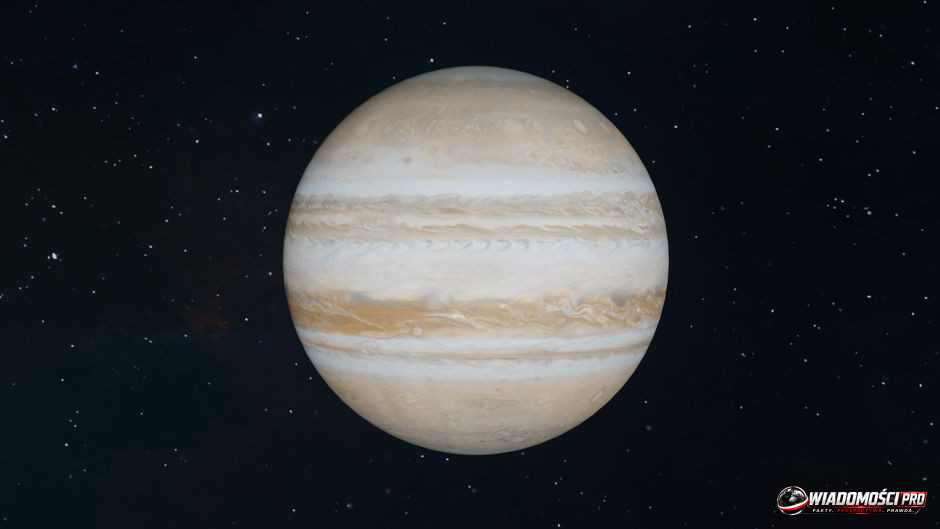
The Europa Clipper mission costs approximately 5 billion dollars, and its primary task is to investigate whether the conditions necessary to support life exist beneath the icy crust of Jupiter's moon. The probe does not possess instruments capable of directly detecting living organisms, so its role is limited to verifying environmental parameters, such as the presence of organic compounds or potential sources of chemical energy in the hidden ocean. The 5-billion-dollar cost covers the full project lifecycle, from concept to operations in space, making it one of the most expensive planetary missions in NASA's history, second only to endeavors like the James Webb Telescope, whose budget exceeded 10 billion dollars.
A technological response to Jupiter's challenges
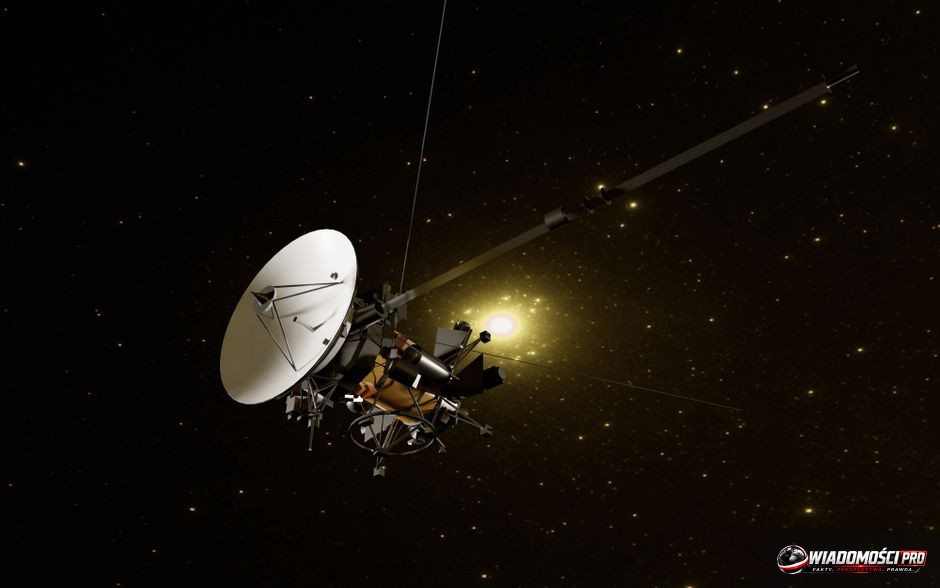
The probe is not a standard lander. Due to the extreme radiation in Jupiter's environment, staying on Europa's surface for an extended period is impossible for modern electronics. The probe was designed to perform multiple flybys near the moon, avoiding long-term exposure to the planet's lethal magnetic field. The spacecraft's construction resembles an armored bunker, where the most sensitive components are placed in a thick-walled titanium-aluminum vault. This shielding constitutes a significant portion of the probe's mass, which was approximately 6 tons at launch, a large part of which is fuel required for orbital maneuvers.
The research instruments were selected to maximize the time spent during flybys. Of key importance is REASON (Radar for Europa Assessment and Sounding: Ocean to Near-surface). This is an ice-penetrating radar tasked with examining the structure of the icy crust, which is estimated to be several to over a dozen kilometers thick. If there are reservoirs of liquid water or so-called brine lenses under the ice, the radar should identify them. Another instrument is MISE (Mapping Imaging Spectrometer for Europa). It is used to map the chemical composition of the surface through spectral analysis of reflected light. Thanks to this, scientists will be able to detect salts, organic compounds, and other molecules that may be ejected from the depths of the ocean to the surface by geological processes.
The suite also includes EIS (Europa Imaging System), a set of high-resolution cameras that will create topographic maps of the surface with extraordinary accuracy. Complementing this is the ECM (Europa Clipper Magnetometer), which measures disturbances in Jupiter's magnetic field caused by induced currents in Europa's salty ocean. It is precisely this data that will allow for the confirmation of the ocean's presence without the need to drill into the icy crust. All these devices must work together in very short time windows as the probe flies near the moon, which imposes a huge pace of work on the onboard systems.
NASA's budget and priorities
The 5-billion-dollar figure, while staggering, represents only a fraction of NASA's annual budget, which in recent years has hovered between 25 and 27 billion dollars. For comparison, the Mars 2020 mission with the Perseverance rover cost about 2.7 billion dollars. The difference in costs between Clipper and Mars missions stems from the vast distances and specific construction requirements. A flight toward Jupiter requires much heavier equipment, larger solar panels (which at this distance must be enormous to capture the faint sunlight), and advanced radiation protection, which Mars missions do not require.
These expenditures are often criticized by circles monitoring federal budgets. The primary accusation concerns the lack of a guarantee of success in the context of detecting life. If the probe finds no biological traces, these funds will be considered by some as wasted. However, proponents of the mission argue that science is not a service with a guaranteed result. This investment builds know-how in the field of radiation protection and long-range communication, which is essential for future manned missions beyond the Moon's orbit. Every technology developed for Clipper—from autonomous navigation systems to advanced power systems—will find application in the coming decades of Solar System exploration.
Hurricane and launch logistics
The mission schedule was put to the test by weather conditions. The launch planned for mid-October 2024 was halted due to the arrival of Hurricane Milton. The Kennedy Space Center, located in Florida, had to be secured against the impact of the elements. For NASA engineers, every hour of delay meant the need to recalculate the trajectory. Orbital mechanics does not forgive mistakes, and launch windows are strictly limited by the relative positions of the planets. Ultimately, after the threat subsided, the probe was launched into orbit by a Falcon Heavy rocket on October 14, 2024.
This process showed the weakness of ground infrastructure in the face of extreme weather events, which are becoming increasingly frequent. The costs associated with the launch delay, while difficult to calculate precisely, are measured in millions of dollars per day—these are the costs of operational team labor, infrastructure maintenance, and launch pad rentals. Nevertheless, the mission began successfully, starting a multi-year journey that will include gravity assists from Earth and Mars to increase the probe's speed necessary to reach the Jovian system at the end of the decade.
The "message in a bottle" myth
In the public sphere, much attention was paid to the "message in a bottle" campaign. NASA enabled the inclusion of thousands of people's names on a chip mounted inside the probe. This is a PR element intended to increase social engagement in a project that is inherently abstract for the average taxpayer. From an engineering standpoint, this chip serves no scientific function. It is merely a symbolic gesture intended to build a sense of humanity's participation in the mission. Such actions do not significantly affect the mission's costs, representing only a fraction of expenditures, but they serve the strategic goals of the agency, which must demonstrate social support in the face of the need to request funds from the US Congress annually.
No lander—a reasonable compromise or a mistake?
The main point of contention among astrobiologists is the lack of a landing module. The probe will conduct research exclusively from orbit. Critics argue that without directly collecting samples from inside the ocean, conclusions will always be indirect and uncertain. Water ejected by geysers or through tectonic processes to the surface could be subjected to intense radiation, which could destroy any biological traces, if they exist at all. If the Sun and cosmic radiation destroy organic matter on the surface, Clipper might return with data that suggests Europa is sterile, while biological processes could be occurring under the ice.
Scientists from the Europa Clipper team defend this decision, pointing to technological risk. Landing on a celestial body with poorly studied topography, in conditions of extreme radiation, would be a mission with a huge risk of failure. The cost of a lander, which would need its own survival, power, and telecommunications systems, could double the mission's budget. Instead of risking the entire budget on one potentially faulty lander, NASA chose a "study from a safe distance" strategy. If Clipper provides evidence of an environment conducive to life, the next mission could be designed specifically for a landing, with greater knowledge of the terrain.
What does the absence of life mean?
The scenario in which the mission finds no traces of life is treated by scientists as very likely. Europa has an ocean, but does it possess the mineral ingredients necessary for metabolism to arise? We do not know. If Clipper conducts a full chemical analysis and finds no amino acids or complex organic molecules, it will mean that water alone is not enough for life to exist. Such knowledge is just as valuable to biology as the discovery of life. It will allow us to narrow the definition of the "habitable zone" in other star systems. If there is no life on Europa, with its vast ocean, it might suggest that life on Earth was the result of an exceptionally rare combination of circumstances.
The 2030 perspective
Reaching the Jovian system is planned for 2030. Only then will the probe begin its proper operational phase. For several years, it will perform flybys, sending data through the giant antennas of the Deep Space Network. Every byte of data will be transmitted with a huge delay, resulting from the distance separating us from Jupiter. The scientific team will have to manage the probe's energy, which at such a great distance from the Sun is very limited.
Modern astrobiology is experiencing its golden age, but the Europa Clipper mission is its most difficult test. We are not looking for intelligent civilizations, but for chemical signatures of biological processes. If chemical reactions are occurring in Europa's ocean that go beyond pure geochemistry, Clipper should pick it up. This is an approach based on evidence, not speculation.
Questions and answers
Will Europa Clipper land on the moon's surface?
No, the probe was designed to conduct research exclusively from Jupiter's orbit through a series of close flybys of Europa. The lack of a lander stems from the high radiation risk and the desire to maximize scientific return on a limited budget.
Why does the mission cost as much as 5 billion dollars?
The costs result from the need to develop technology capable of functioning in the extremely hostile radiation environment of Jupiter. Construction, ground testing, specialized radiation shielding, and operational support for over a decade add up to this amount.
Will the probe find life?
The probe is not capable of directly detecting life. Its goal is to analyze the chemical composition of the ocean and icy crust to determine if conditions (energy, chemical ingredients, water) exist there that could support biological processes.
What happens if the mission does not confirm conditions for life?
A negative result will be just as significant for science as a positive one. It will allow for the verification of theories about the universality of life in the universe and force astrobiologists to redefine the criteria for the habitability of planets and moons.
When will we receive the first data?
The probe is expected to reach the Jovian system around 2030. That is when the actual phase of gathering scientific data will begin, which will be successively transmitted to Earth.
Which instruments are the most important?
The REASON radar, the MISE spectrometer, and the EIS camera system are key, which together will allow for mapping the ice structure and the chemical composition of the surface, which is necessary to assess the biological potential of the hidden ocean.
Why was Europa chosen, and not another moon of Jupiter?
Europa possesses a global ocean of liquid water beneath an icy crust, which makes it the most promising place in the Solar System for searching for conditions conducive to life, outside of Earth and Mars.
Is Europa Clipper competing with the European probe Juice?
Both missions are studying the Jovian system, but they have different goals. Juice focuses more on the Jupiter system as a whole (including the moons Ganymede and Callisto), while Europa Clipper is dedicated exclusively to a detailed analysis of Europa.
Is the mission threatened by radiation?
Jupiter's radiation is the main threat to the probe's electronics. Therefore, designers used advanced radiation shielding and a flight strategy involving only short, fast flybys near the moon, instead of a permanent orbit around it.
How long will the mission last?
The operational mission envisions performing dozens of flybys over several years, with the end of operations occurring after fuel depletion or the degradation of onboard systems under the influence of radiation.
A challenge for future generations
The history of space exploration shows that the greatest discoveries rarely come quickly. Clipper is a long-term project, the fruits of which we will harvest in the mid-2030s. If a power system failure does not occur along the way, the data collected by instruments like MISE or REASON could become the foundation for all future discussions about astrobiology. This is 5 billion dollars invested in knowledge that we cannot obtain in any other way. Is that a lot? On the scale of war budgets or saving financial institutions, this amount seems almost modest. On a cognitive scale, if Europa turns out to be a world capable of supporting life, it will be an extremely low price. It remains to wait for a signal from the depths of the icy moon, knowing that even silence will be an answer. Every photograph taken by Clipper, every chemical spectrum, is a step toward understanding whether Earth is a biological phenomenon or just one of many oases in the cosmic ocean. The challenge lies not in technology, but in patience, which for the modern consumer of information is the most difficult element of a space mission to accept. In a world that demands immediate results, Clipper reminds us that true discoveries require decades of preparation.
Sources
- Launch of the Europa Clipper mission to Europa - AstroNET – Polish Astronomical Portal
- Europa Clipper probe to search for life on Europa - Urania - Polish Astronomical Portal
- Europa Clipper mission launch [BROADCAST]. Americans to overtake Europeans in the search for life on Europa - Wyborcza.pl
- Beginning of the Europa Clipper mission - Kosmonauta.net
- Searching for life in the Solar System beyond Earth. NASA sends mission - Geekweek Interia
- Hurricane Milton delays launch of NASA's largest space probe, Europa Clipper, to October 14 - Notebookcheck.pl
- Flying to search for life. NASA mission launch in just three weeks - Antyweb
- NASA sends "message in a bottle" into space. You can sign it! - Radio ESKA
Article prepared by the Wiadomości PRO editorial team with the support of artificial intelligence. Facts come from the sources listed above.

Komentarze (0)
Ładowanie komentarzy...