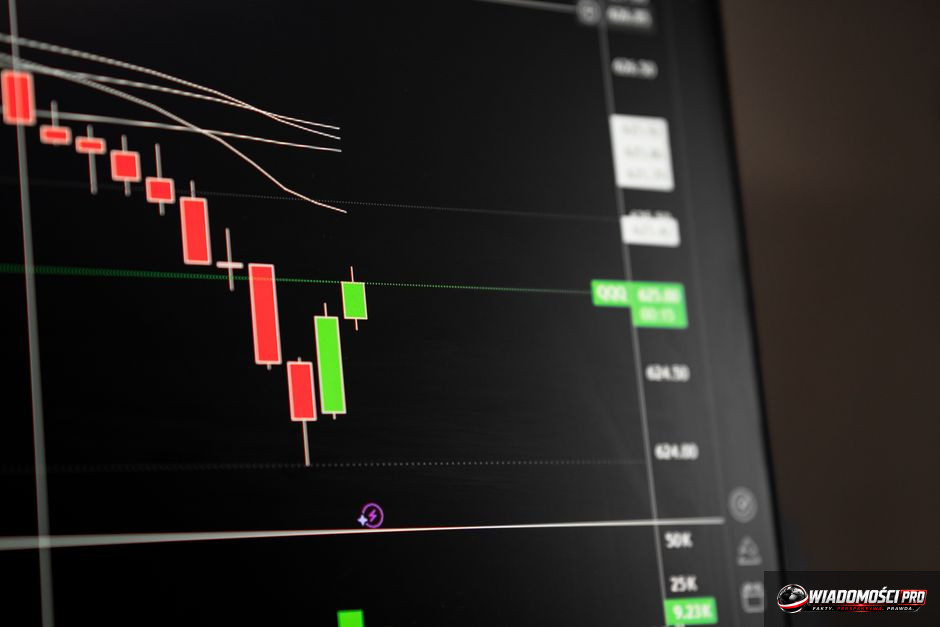
The Federal Reserve has lowered interest rates by 50 basis points to a range of 4.75-5.00%, which means cheaper credit in the US and a change in US bond yields to above 4.3%. This decision ends a period of waiting for a move from the institution, which for the past few months has been balancing between fighting inflation and pressure to stimulate a slowing economy. The half-percentage-point cut is not merely a technical correction, but a signal that Washington's priorities have shifted toward supporting business activity before the end of 2026.
For the American consumer, this change translates into concrete savings. With a $400,000 mortgage paid over 30 years, a 50-basis-point rate cut could provide a monthly installment relief of around $130–150. Although at first glance this amount seems modest, on an annual scale, the borrower's wallet gains nearly $1,800. This money returns to circulation, which is intended to drive consumption. However, borrower enthusiasm is being tempered by financial markets. Bond yields remaining above 4.3% show that investors do not believe in a permanent return to the era of cheap money. The debt market is pricing in future inflation risks, assuming that premature monetary easing could trigger a second wave of price increases.
Technical details: Fed lowers rates to 4.75-5.00%
American central bankers opted for an aggressive start to the easing cycle. The 4.75-5.00% range is the result of a direct debate that took place within FOMC committees in the third quarter of 2025. Policymakers had to take into account the slowdown, which had become a fact rather than just a theoretical threat. This change does not happen in a vacuum. It is part of a broader strategy that includes the announced end of the balance sheet reduction program, the so-called QT. Halting QT means that the Fed stops withdrawing liquidity from the system, which is a nod to the banking sector fearing a credit crunch.
The mechanism of transmitting this decision to the real economy is complex. US mortgages are often based on long-term Treasury bond yields, not directly on the federal funds rate. Since yields remain at 4.3%, commercial banks will not be inclined to radically lower loan interest rates. This discrepancy between the Fed's decision and the bond market's reaction creates a state of suspension. Investors watching the charts see that the cost of financing for the private sector has not fallen as much as the headline about the rate cut would suggest. This is a situation where the official price of money is going down, but the market's risk pricing remains unmoved.
The political dimension of the decision: Influence of the Trump administration
In the corridors of Washington, the decision to cut by 50 basis points is read through the prism of Donald Trump's political agenda. The former president has repeatedly emphasized the need for cheaper financing as a foundation for GDP growth. Pressure exerted on the Fed was visible in media reports as early as 2025, when it was suggested that the central bank must act in a way that favors the administration's economic ambitions. This situation puts the Fed in a difficult position. On one hand, there is the mandate of independence; on the other, the real need for cooperation with executive branches that expect concrete results before upcoming reckonings with voters.
Politicians need a success that can be presented in statistics before the end of the year. Easier access to capital for companies is an impulse intended to prompt businesses to invest in new production capacity. However, if this political project encounters resistance from the debt market, the Fed will find itself in a trap. If inflation does not show a downward trend after the September decision, the central bank will have to explain a decision made under the dictation of political expectations rather than pure macroeconomic data. Market observers point out that every subsequent FOMC decision will now be analyzed in terms of whether the Fed has regained control or has become a hostage to a political narrative.
Bond market under pressure: Yields above 4.3%
Maintaining US bond yields above the 4.3% level is a warning signal that cannot be ignored. The debt market is much more skeptical than stock market optimists. Institutional investors, operating with billions of dollars, are not buying the success narrative. In their view, a 50-basis-point cut is a risky step that could stoke inflation expectations. As a result, instead of buying bonds, which would lower their yields, the market is selling them off or demanding a higher risk premium.
This mechanism is devastating for borrowers. If ten-year bonds remain expensive to service, banks cannot lower rates for individual clients to the extent the average American would expect. This creates a so-called "market blockade." The Fed sends a signal: "we are cutting rates," and the market responds: "we do not believe in the durability of this move." As a result, corporate and mortgage loan costs remain at a level that does not provide the stimulus for recovery that the White House is counting on. Every basis point above 4.3% is a real barrier for an economy trying to catch its breath after a period of monetary tightening. Investors are betting that the Fed will either have to stop cutting rates or accept higher inflation in the long term.
Stock market facing changes: How risky assets react
The stock market's reaction to the rate decision in the 4.75-5.00% range is full of tension. Indices are oscillating around their previous highs, trying to price in the benefits of cheaper money. However, nervousness hides beneath the surface of the gains. Technology companies, which benefited most from low rates in the previous decade, are now looking at bond yields as an oracle. When yields exceed 4.3%, stock valuations become harder to justify fundamentally.
Individual investors, who have become accustomed to easy profits in recent years, face a dilemma. Is this the moment to increase exposure to risky assets, or rather to defensively position the portfolio? History teaches that after such sharp Fed moves as 50 basis points, increased volatility appears in the markets. This is not the time for emotional decisions. The financial sector, which spent months waiting for a clear signal, is now analyzing every labor market report and every CPI reading. If data from the real economy does not confirm that the slowdown is under control, the stock market rebound could be instantly corrected by capital fleeing to safe havens when it sees uncertainty in monetary policy.
Perspectives for the rest of 2026: What's next?
The scenario for the coming months of 2026 remains open. The Fed is on the defensive, trying to balance an economy teetering on the edge of a slowdown. Signals from FOMC meetings suggest that the central bank wants to keep the door open to stop the cutting cycle. If inflation in March or September 2026 turns out to be higher than forecasts, the Fed will have to abandon its dovish rhetoric. It is not a question of "if," but "when." Investors who were counting on a quick return to zero-rate times must confront reality. The current decision on the 4.75-5.00% range is an attempt to avoid a hard landing, not a return to stimulus policy at any cost.
The stabilization that the market has been so desperately seeking since January 2026 has proven to be an illusion. Every communication from Washington is now read with attention, and analysts are looking for clues as to the pace of further moves. If the US economy does not show signs of recovery, the Fed may be forced to take further steps, but each one increases the risk of currency and inflation destabilization. For the investor, this means the necessity of being in constant readiness. A "buy and hold" strategy may not be enough in an environment where the world's main central bank acts under political pressure and in conditions of macroeconomic uncertainty.
Impact on the dollar and global currencies
The US dollar is currently undergoing an endurance test. The rate cut to 4.75-5.00% weakens its advantage over other reserve currencies, which have been losing out to the dollar over the last few quarters. Investors who held capital in USD due to high interest rates are starting to look for alternatives. This causes capital outflows from US assets, which naturally boosts emerging market currency rates and the euro.
The situation on USD currency pairs is the most unstable since April 2026. That was when the market first began to seriously discuss a pause in Fed tightening. Today, those fears have returned with doubled force. Traders who bet on a stronger dollar based on strong data from the beginning of the year must now revise their positions, which compounds chaos in currency markets. Moreover, bond yields at 4.3% maintain a certain base of demand for the dollar, which prevents the currency from collapsing completely. We are dealing with a tug-of-war between the dovish rate move and hawkish signals coming from the Treasury bond market.
What this means for you
The Fed's decision to cut rates is a game-changer for your portfolio. If you have a variable-rate loan, you can expect a slight breather, but don't count on a radical change in the situation overnight. Commercial banks react with a delay, and high bond yields limit their room for cuts. Conversely, as an investor, you must accept that the time of easy profits on high deposit interest rates is coming to an end. Money is becoming cheaper, but also riskier. If you are looking for a safe haven, bond yields above 4.3% might be tempting, provided you believe the Fed will not let inflation spiral out of control.
For your savings, this means the need for rebalancing. Keeping cash in an account is becoming less and less profitable in the face of falling rates. In turn, company stocks require a selective approach. Focusing on companies with strong fundamentals that do not rely solely on cheap credit is becoming a strategy that will allow you to survive a period of volatility. Remember that every Fed decision in 2026 will have its consequences, and the current 4.75-5.00% range is merely a starting point for further changes in the global economy.
Questions and answers
Does the rate cut mean cheaper loans in Poland?
The Fed's decision directly affects rates in the US, which indirectly impacts global financial markets and exchange rates, including the PLN, affecting the cost of servicing dollar-denominated debt. There is no direct translation to rates in Poland, but global liquidity and the dollar exchange rate always affect the decisions of the Monetary Policy Council.
Why did the Fed decide on a 50-basis-point cut?
A 50-basis-point move to the 4.75-5.00% level is intended to quickly stimulate the economy in the face of a slowdown and market expectations for monetary easing, which is also an implementation of political demands.
Is this the end of the cutting cycle?
The Fed is signaling a flexible approach, however, bond yield data above 4.3% suggest that the central bank must remain cautious before further moves, and the debt market is pricing in inflation risk, which may force a pause in the cycle.
What risk does the persistent bond yield above 4.3% carry?
High bond yields while simultaneously cutting rates mean that the market does not believe in the effectiveness of Fed actions in fighting inflation. For borrowers, this means that loan interest rates will not fall as much as the rate decision would imply, because banks must finance themselves in a more expensive debt market.
Will the Fed's decision affect real estate prices?
Theoretically, cheaper money should stimulate the real estate market, but in practice, mortgage interest rates matter, which remain high due to bond yields. As long as yields do not start to fall, real demand for real estate may remain suppressed, despite the Fed's move toward cuts.
What should investors expect in the coming months of 2026?
One should prepare for increased volatility. Fed decisions will be largely dependent on hard inflation data from March and September 2026. If the readings are worrying, the Fed may withdraw from its dovish rhetoric, which will surprise the market and trigger a correction on stock exchanges.
How is the dollar reacting to the 4.75-5.00% rate decision?
The dollar is losing its attractiveness as a high-interest asset, which favors capital outflows to other currencies. However, market uncertainty means the dollar still acts as a safe haven, which mitigates sharp currency declines.
Does the end of the QT program matter for your portfolio?
Yes, because the end of QT means there will be more liquidity in the financial system. This reduces the risk of a liquidity crisis, which is positive for risky assets such as stocks or corporate bonds.
Is the current situation a return to "cheap money"?
Definitely not. The 4.75-5.00% range is still a restrictive interest rate compared to historical lows from years ago. It is rather an attempt to return to "neutral" policy, not an opening of an era of free financing.
What should you pay attention to in subsequent Fed communications?
The most important indicator will be the rhetoric regarding inflation and whether the central bank believes it has achieved its goals. Any mention of "necessary caution" will be a signal that further cuts may be halted.
Sources
- Fed cut rates and announces end of QT - Bankier.pl
- Fed holds its breath. Market expects rate stabilization in the US - Money.pl
- How markets will react if the Fed returns to rate cuts - Analizy.pl
- Fed must act in the dark. However, the next decision should please Donald Trump - Business Insider Polska
- September Fed decision may disappoint stock markets. Debate around possible US interest rate cut - Strefa Inwestorów
- Trump got his way. Fed resumed interest rate cutting cycle - Bankier.pl
- Will the Fed start cutting in September? Market expects new boss - FXMAG
- Fed signals halt to interest rate cuts, and US bond yields exceed 4.3%. - Vietnam.vn
Article prepared by the Wiadomości PRO editorial team with the support of artificial intelligence. Facts come from the sources listed above.


Komentarze (0)
Ładowanie komentarzy...