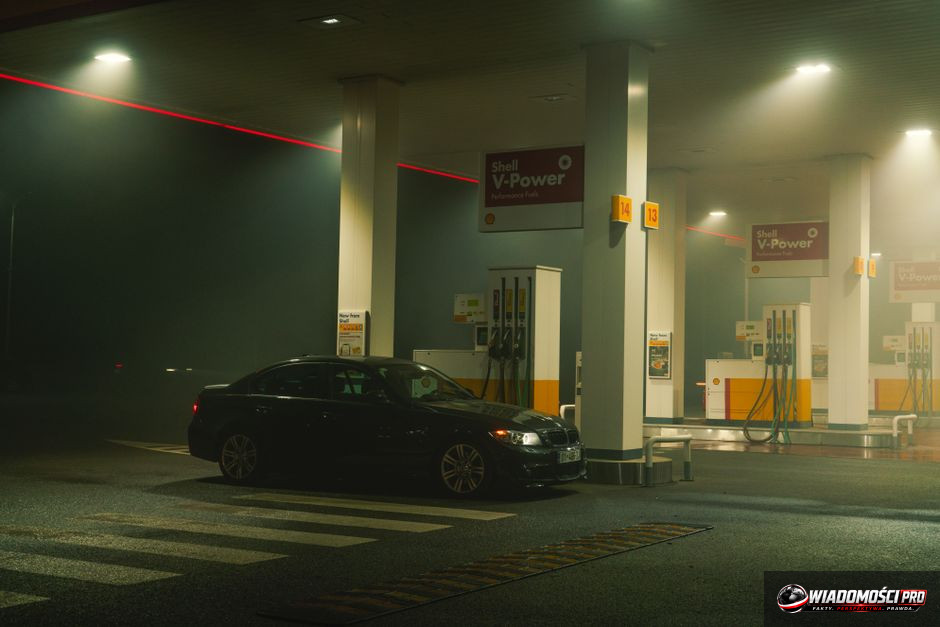
In accordance with the government's 2026 decision, a liter of 95-octane gasoline costs a maximum of 5.97 PLN, while the price of diesel has been capped at 6.71 PLN. These rigid thresholds form the foundation of the September pricing policy, intended to quell social unrest before the end of the holiday season. The Prime Minister officially confirmed these arrangements on August 13, 2026, thereby ending a months-long period of uncertainty during which the fuel market operated based on unofficial leaks and speculation.
The evolution of government intervention
The road to setting the September rates was not simple. The first signs that the state intended to actively intervene in margins at gas stations appeared as early as March 26, 2026. At that time, unofficial information from government circles suggested that the cabinet was preparing to introduce regulations to protect drivers from price shocks. The market reacted to these announcements with great reservation, mindful that any intervention in the price of a final product must be covered by the budget or passed on to station operators.
A key moment for the shaping of current fuel policy was April 22, 2026. It was then that the public learned of the specific price ceilings that were to become a shield against fuel inflation. Setting the level at 5.97 PLN for 95-octane gasoline and 6.71 PLN for diesel became a reference point for all distributors in the country. Over the following months, from April to August, the government analyzed the impact of these decisions on the profitability of the fuel sector and on the condition of state-owned energy companies, which in practice became the guarantors of price stability.
The Prime Minister's official announcement on August 13, 2026, was therefore not a surprise to analysts, but rather a formal seal on a strategy that had been tested under market conditions throughout the summer. The government chose a model of rigid control, moving away from the concept of free margin formation in favor of protecting household living standards. This decision, while beneficial to drivers, poses a number of questions for economists about the long-term effects on the liquidity of raw material supplies.
Budgetary aspects of the price freeze
Maintaining prices at 5.97 PLN for gasoline and 6.71 PLN for diesel requires a deep analysis of funding sources. The 2026 state budget reserved funds for energy price stabilization, however, liquid fuels constitute a separate expenditure category. The mechanism that has been launched is based on compensatory transfers to distributors if the wholesale price exceeds specified parameters. This means that the difference between the market price and the price at the pump is covered by special-purpose funds, which directly burdens the budget deficit.
The political context in which the current cabinet operates is important for understanding these actions. In July 2025, the public was scandalized by reports regarding the record size of the Third Polish Republic's government. An expanded ministerial structure and a large number of officials are often associated with higher administrative costs, which, combined with the need to subsidize fuel prices, creates pressure on public spending. The financing of fuel limits therefore takes place in the shadow of a debate about the state's financial capacity.
It is worth noting the role of the largest entities in the fuel sector. They, as the main links in the supply chain, must balance the losses resulting from imposed retail prices. If global Brent crude prices rise drastically, the burden of maintaining the limits will fall on state-owned companies, which will consequently limit their investment capabilities in the area of energy transition. This is a vicious cycle in which the short-term benefit to the driver may result in delays in the modernization of Polish fuel infrastructure.
Market mechanics under regulation
The introduction of a maximum price changes the rules of the game for gas station owners. Independent operators, working on low margins, are in the most difficult position. When the wholesale purchase price of fuel approaches the 5.97 PLN or 6.71 PLN level, their margin becomes negative. In such a scenario, the only salvation is compensation systems, the operational efficiency of which is often questioned by chambers of commerce.
This phenomenon leads to local shortages, which are rarely mentioned in official communications. Gas stations, not wanting to subsidize the business, may limit deliveries or shorten opening hours. Although we are not currently dealing with a supply crisis, this mechanism is very sensitive to any geopolitical shocks. Any escalation of the situation in the Middle East or disruption of supply chains in the Baltic Sea basin hits Polish price stability with double force.
An additional challenge is the issue of fuel quality under price pressure. When stations must sell the product at fixed rates, the temptation to optimize operating costs, including logistics and quality control, becomes a real threat. Drivers, while paying less, may unknowingly be refueling with fuel of borderline parameters, which in the long run will contribute to increased vehicle operating costs. This is a risk the government is silent about, focusing on the message of "securing the wallets of Poles."
Fuel policy as a tool for social stabilization
The government's actions in 2026 are not an isolated episode. They are part of a broader strategy in which fuels are treated as a strategic good, requiring protection from free-market mechanisms. The decisions of March 26, April 22, and August 13 create a coherent picture of an administration that fears losing control over social sentiment. Faced with other challenges, such as the need to clarify Russian influence in state structures or the debate over the protection of the eastern border, price stability at stations is treated as a "safety valve."
For Donald Tusk's government, the issue of fuel prices is a political "to be or not to be." Remembering previous terms and the public's reaction to high costs, the current team decided on the most predictable, albeit expensive, solution. Using the state apparatus to "manage" prices is a return to concepts from years ago, which draws opposition from liberal circles but enjoys support among lower-income groups.
It is worth noting, however, that this policy has its "dark sides." The lack of price competition means that stations stop competing with their offerings and begin to focus on selling non-fuel products – coffee, snacks, additional services. That is where they seek the profits they cannot generate at the pump. This changes the nature of gas stations in Poland, which are slowly evolving into retail and service points, where fuel is only a lure, not the main source of income.
Perspectives for transport and logistics
The transport sector, which is the bloodstream of the Polish economy, is carefully monitoring decisions regarding diesel. The price of 6.71 PLN per liter of diesel is a direct cost of doing business for thousands of transport companies. Maintaining this limit allows carriers to maintain financial liquidity, which in theory should curb the rise in goods prices in stores. However, in practice, transporters struggle with other problems – labor costs, insurance, and fleet maintenance, for which the government imposes no limits.
From an entrepreneur's point of view, freezing the fuel price is a positive action, but insufficient. If the government does not ensure stability in other areas, the low price of diesel will not save the economy from a slowdown. There is also a fear that after the protection period ends and limits are lifted, the market will react with a sharp price jump, making up for losses from the rationing period. This is a scenario that analysts fear, warning against the so-called "spring effect."
Transport companies are therefore looking for alternatives. Investments in an electric fleet or alternative fuels (LNG, hydrogen) are becoming, in this context, not just a matter of ecology, but of pure economic calculation. Government price limits on fossil fuels may paradoxically slow down this transformation, offering carriers a false sense of security. Instead of modernizing their fleet, many entrepreneurs prefer to wait out the difficult period, counting on further state interventions.
The relationship between the government and citizens
The government's communication regarding fuel prices is based on a simple message: "the state takes care of you." Using press conferences, such as the one on August 13, to announce price limits is intended to build an image of an efficient administration. However, behind this facade lies a complicated system of subsidies and market coercion, which is opaque to the average citizen. Poles see the price on the pylon and are satisfied, without analyzing how much of that price constitutes a hidden subsidy that they will pay for in taxes in the future.
The key question is: what will happen when the budget is no longer enough? History teaches that no price intervention lasts forever. Eventually, the moment of "unfreezing" will come, and then the fuel market in Poland will have to go through a painful correction. Does the government have a plan for this? Is there an exit strategy from the limit system, or are we doomed to eternal rationing? There are no answers to these questions in official government documents.
For the citizen, stability is most important. September 2026 will pass in relative calm at the pumps. This is a time when the average person can plan expenses without fearing that the price will rise by several dozen groszy tomorrow. However, this convenience is bought at the cost of market freedom, which under normal conditions is the best price regulator. Was it worth sacrificing this freedom for a few months of peace? We will only know the answer to this question when fuel inflation returns with greater force.
Summary of the market situation
Analyzing all available data, a clear division into two realities is visible. On one hand, we have drivers who have breathed a sigh of relief thanks to the decisions of April 22 and August 13. On the other – an economy that is on an "IV drip" of state subsidies and regulations. Stabilizing fuel prices at levels of 5.97 PLN and 6.71 PLN is a political success, but an economic unknown.
The condition of the economy does not rely solely on fuel prices. However, these are the prices that most quickly affect the sense of security of citizens. The Tusk government has bet everything on one card, limiting margins and taking control of the fuel market. This is an action that improves social mood in the short term, but raises questions about the long-term profitability of the state. Every liter of fuel we refuel cheaper than the market price is subsidized by our taxes.
In the coming months, it will be crucial to observe global oil prices and government decisions regarding further financing of this system. If the situation in the world calms down, it may be possible to exit the limits without major shocks. If, however, raw material prices go up, the government will face a dramatic choice: either increase subsidies or allow for drastic hikes. For now, however, 5.97 PLN for gasoline and 6.71 PLN for diesel remain the hard boundaries that set the rhythm of life for Polish drivers.
Questions and answers
What are the maximum fuel prices in Poland in 2026?
In accordance with government decisions, 95-octane gasoline costs a maximum of 5.97 PLN, and diesel 6.71 PLN per liter.
When was the final decision on fuel prices made?
The Prime Minister announced the final decision on this matter on August 13, 2026.
Do price limits apply at all stations?
Yes, the price limits result from government decisions aimed at stabilizing the fuel market nationwide and are binding for entities selling fuel.
What were the first signals about possible fuel price regulations?
The first unofficial information about government plans to tighten the margin system and introduce limits appeared on March 26, 2026.
What is the significance of the date April 22, 2026, for prices?
It was then that the public learned of the specific price ceilings (5.97 PLN for gasoline and 6.71 PLN for diesel), which became the basis for later regulations.
Is the current government the largest cabinet in the Third Polish Republic?
Yes, information about the record size of the current government appeared in the media space on July 22, 2025, which is often cited in the context of the costs of running the state administration.
What will happen if global oil prices rise drastically?
In such a situation, the burden of maintaining rigid price limits will fall on the state budget and state-owned companies, which may limit their investment capabilities.
Do gas stations make money on fuel under the limits?
Making money on fuel with fixed maximum prices is difficult, which is why stations shift the burden of generating profits to non-fuel offerings, such as gastronomy and retail.
What risk does a long-term price freeze carry?
The main risk is the so-called spring effect, i.e., a sharp rise in prices after the limits are lifted, and potential fuel shortages resulting from a lack of profitability for distributors.
Does the government guarantee maintaining these prices throughout the year?
In official communications, the government emphasizes the role of stabilization for the autumn period, however, the long-term durability of these solutions depends on global oil prices and the condition of public finances.
Sources
- There is a decision on fuel prices in Poland. The Prime Minister has just announced - Money.pl
- Today a liter of 95-octane gasoline is to cost no more than 5.97 PLN, and diesel 6.71 PLN - Rzeczpospolita
- Tusk: Stanisław Kracik will be the commissioner in Krakow - Do Rzeczy
- Unofficial: there is a government decision on fuel - Money.pl
- The largest government of the Third Polish Republic? - tvn24.pl
- Tusk invites to a rally in Warsaw. We reveal the details - Interia Wydarzenia
- Donald Tusk: A government commission will deal with clarifying Russian influence. "There will be no hunting for PiS" - Wyborcza.pl
- Has Donald Tusk genuinely changed his approach to the issue of protecting the eastern border? - RadioMaryja.pl
Article prepared by the Wiadomości PRO editorial team with the support of artificial intelligence. Facts come from the sources provided above.



Komentarze (0)
Ładowanie komentarzy...