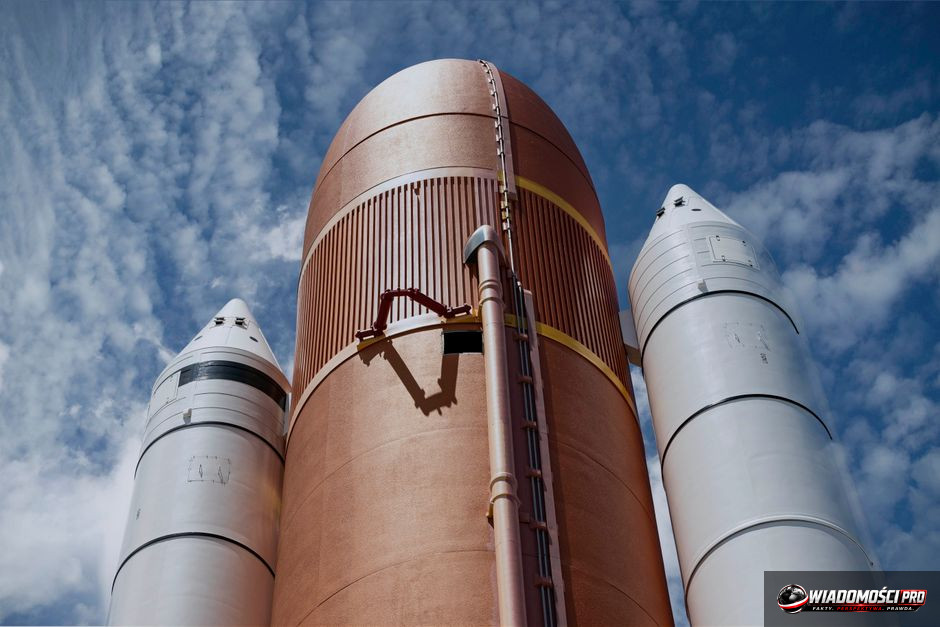
Europa Clipper, launched on October 14, 2024, is tasked with studying Jupiter's icy moon to assess whether its subsurface ocean could support life. This mission represents NASA's largest project focused on searching for conditions favorable to biological life forms beyond Earth. The probe is not searching for microorganisms directly, but rather focuses on identifying chemical building blocks, available energy, and liquid water, which together define the habitability of this distant world.
The launch of the probe from the Kennedy Space Center in Florida was the culmination of years of preparation that were nearly interrupted by the elements. Hurricane Milton, which struck the U.S. coast with extraordinary force, forced engineers to evacuate and secure equipment worth billions of dollars. The team had to postpone work, assess risks to the structure, and wait for the atmospheric threat to pass. The October 14 launch was only possible after hours of inspections that ruled out micro-damage caused by the wind. This event showed how much advanced technology remains a hostage to weather conditions on Earth.
Europa is no ordinary moon. Beneath a thick, icy crust, estimated to be tens of kilometers thick, lies a global ocean of liquid water. The amount of water in this reservoir likely exceeds the volume of all Earth's oceans combined by twice as much. Scientists suspect that the moon's interior is heated by tidal forces caused by Jupiter's gravity. This friction inside the satellite generates heat that prevents the ocean from freezing to the very bottom. If geochemical processes, such as hydrothermal activity, occur in this environment, Europa becomes one of the most promising places in the Solar System for those searching for biological evidence of life.
The Europa Clipper probe was designed to survive in Jupiter's extreme environment. The planet possesses the strongest magnetic field in the Solar System, which traps charged particles, creating deadly radiation belts. The probe's electronics are enclosed in a special, thick-walled vault made of titanium and aluminum. This solution protects the instruments from degradation that would otherwise occur in just a few months. Designers also had to solve the power supply problem. Due to the immense distance from the Sun, where light intensity is many times lower than on Earth, Europa Clipper is equipped with gigantic solar panels spanning over 30 meters. Once fully deployed in space, the surface of the collectors resembles airplane wings, making this probe the largest planetary device built by NASA to date.
The journey to the destination is a complex ballistic maneuver. The probe did not fly directly toward Jupiter. To gain the necessary speed, it will use the gravity of Mars in 2025 and Earth in 2026. Only thanks to these gravity assists will the machine reach a trajectory allowing it to reach the Jovian system in 2030. Only after entering orbit around Jupiter will Europa Clipper begin a series of close flybys of Europa. Instead of orbiting the moon itself, which would expose the electronics to excessively high doses of radiation, the probe will perform rapid "dives" toward the object, collecting data during each flyby.
The onboard instruments are the heart of the mission. The REASON radar will penetrate the icy crust, creating maps of the ice structure and looking for pockets of water hidden beneath the surface. The MISE and MASPEX spectrometers will analyze the chemical composition of the surface and gases that may be ejected through cracks in the ice. The EIS camera will provide high-resolution images that will allow geologists to understand the geological history of this world. The lack of a lander is a conscious decision by the engineers. NASA determined that with the current state of technology, landing on the unknown surface of Europa would be too risky and expensive. Instead, they opted for comprehensive remote sensing, which is intended to provide a full picture of the physicochemical conditions prevailing on the moon.
It is worth clearly stating that the mission is not aimed at directly detecting alien organisms. NASA uses the term "habitability" in this context, meaning the ability of an environment to support life. If Europa Clipper confirms that the ocean has the right chemical composition, access to energy, and stable conditions, it will be a signal for future missions that it is worth sending a lander with more sensitive biological sensors to the surface. Current research is only intended to determine if the "kitchen" for life is active at all.
As part of the project's promotion, NASA placed a symbolic "message in a bottle" on board the probe, containing the names of people who signed up for the social campaign. This is the only aspect of the mission that does not serve a scientific function, but rather serves to build public engagement in state-funded space research.
The rivalry for primacy in exploring Europa is visible on the international stage. The European Space Agency is carrying out its own JUICE mission, which is also heading toward Jupiter, although its goals focus on a broader study of the gas giant's system, including the moons Ganymede and Callisto. By sending Europa Clipper, NASA aims to take the lead in astrobiology. The American agency is sparing no resources on this endeavor, aware that every piece of data transmitted from hundreds of millions of kilometers away will define astronomy textbooks for decades to come.
Scientists working on the project emphasize that the biggest challenge is time. From the moment of launch to the first serious measurements in the Jovian system, almost six years will pass. During this time, the probe must remain fully functional, resistant to computer system failures and component degradation. Every delay in communication results from physics – a radio signal takes over an hour to cover the distance between Earth and Jupiter. The operations team on Earth cannot control the probe in real time. Europa Clipper has advanced autonomous systems that allow it to correct its course and react to unforeseen situations in space on its own.
In a scientific context, Europa is a fascinating object due to its interaction with Jupiter's magnetosphere. Jupiter constantly bombards the moon with high-energy particles, which causes the formation of a secondary atmosphere of oxygen and other elements. Analyzing these processes will allow us to understand whether organic matter can be transported from the surface to the interior of the ocean, which would be crucial for the potential maintenance of biological processes. Some researchers speculate that if life exists on Europa, it is most likely concentrated around hydrothermal vents on the ocean floor, similar to what occurs in the depths of Earth's oceans.
Skeptics note, however, that the lack of a lander is a limitation that cannot be fully offset by advanced remote sensors. If simple organisms are present in Europa's ocean but do not escape to the surface in the form of geysers, the probe may never detect them. NASA is aware of this, which is why the main goal remains to create an environmental map that will allow us to better understand if there is anything to look for under the thick layer of ice at all. Every anomaly in magnetic or radar readings will be analyzed for years, and every ambiguity will become a subject of dispute among experts.
This mission is also a test for American space engineering. After the successes of the Mars rovers, Europa Clipper is another step toward exploring celestial bodies with difficult environmental conditions. If the probe achieves its goals, NASA will prove that it is capable of conducting long-term research in remote corners of the Solar System, where sunlight is weak and radiation destroys everything that is not properly shielded.
It is also worth looking at the construction process of this machine itself. Work began in earnest in March 2022, when individual components began to be integrated into a whole at the Jet Propulsion Laboratory. Each element had to undergo rigorous testing in vacuum and vibration chambers, simulating the rocket launch and the conditions prevailing in a vacuum. Hundreds of specialists from various fields were involved in the process, from physicists to programmers and power system experts. It is this precision at the assembly stage that is the guarantee that upon arriving at its destination in 2030, the probe will be able to perform its tasks.
When Europa Clipper finally reaches its destination, the most intense phase of the mission will begin. The probe will fly over Europa nearly 50 times, each time positioning its instruments to capture as much data as possible about the moon's internal structure. Each flyby is an opportunity for a discovery that could change our perception of humanity's place in the cosmos. If it turns out that Europa's ocean is an environment conducive to life, our definition of biology will have to be expanded to include models that we currently cannot even fully describe.
In retrospect, Hurricane Milton was just a short episode in the history of this project, although in October 2024 it seemed like an event that could derail years of work. NASA learned a lesson for the future: the logistics of space missions must take into account increasingly unpredictable weather on Earth. The safety of the device became a priority that outweighed sticking rigidly to the launch window.
Finally, it is worth emphasizing that Europa Clipper is primarily a big question asked of nature. Are water, chemistry, and energy sufficient ingredients for something more than just dead matter to arise? The answer we are looking for will not appear quickly. It will be the result of tedious data analysis that will last for many years after the mission ends. But it is precisely this anticipation that is written into the nature of deep space exploration.
Questions and answers
When exactly did the Europa Clipper probe launch?
The probe was launched on October 14, 2024, after the launch date was previously postponed due to Hurricane Milton passing through Florida.
Why did NASA choose Europa for research?
Europa is the primary target of the mission because beneath its icy crust lies a global ocean of liquid water, which could potentially contain the conditions necessary to support life.
Is the probe capable of directly detecting life?
No, the probe was designed to study habitability conditions, such as chemical composition, access to energy, and the presence of water, rather than to directly search for microorganisms.
How will the probe reach Jupiter?
The probe will use gravity assists from planets, including Mars in 2025 and Earth in 2026, which will allow it to reach the necessary speed and trajectory to reach the Jovian system in 2030.
What technical challenges did the engineers have to overcome?
The biggest challenge was designing protection against Jupiter's strong radiation and ensuring power supply using solar panels at a great distance from the Sun.
Could an ordinary person take part in the mission?
Yes, NASA organized a "message in a bottle" campaign, which allowed people around the world to place their name on the probe sent toward Jupiter's moon.
Sources
- Start of the Europa Clipper mission to Europa - AstroNET – Polish Astronomical Portal
- Start of the Europa Clipper mission [BROADCAST]. Americans will beat Europeans in the search for life on Europa - Wyborcza.pl
- Beginning of the Europa Clipper mission - Kosmonauta.net
- Searching for life in the Solar System beyond Earth. NASA sends a mission - Geekweek Interia
- Hurricane Milton delays the launch of NASA's largest space probe, Europa Clipper, to October 14 - Notebookcheck.pl
- NASA sends a "message in a bottle" into space. You can sign it! - Radio ESKA
- In search of life. NASA will study Jupiter's icy moon - Space24.pl
- Beginning of the construction of Europa Clipper - Kosmonauta.net
Article prepared by the Wiadomości PRO editorial team with the support of artificial intelligence. Facts come from the sources listed above.


Komentarze (0)
Ładowanie komentarzy...