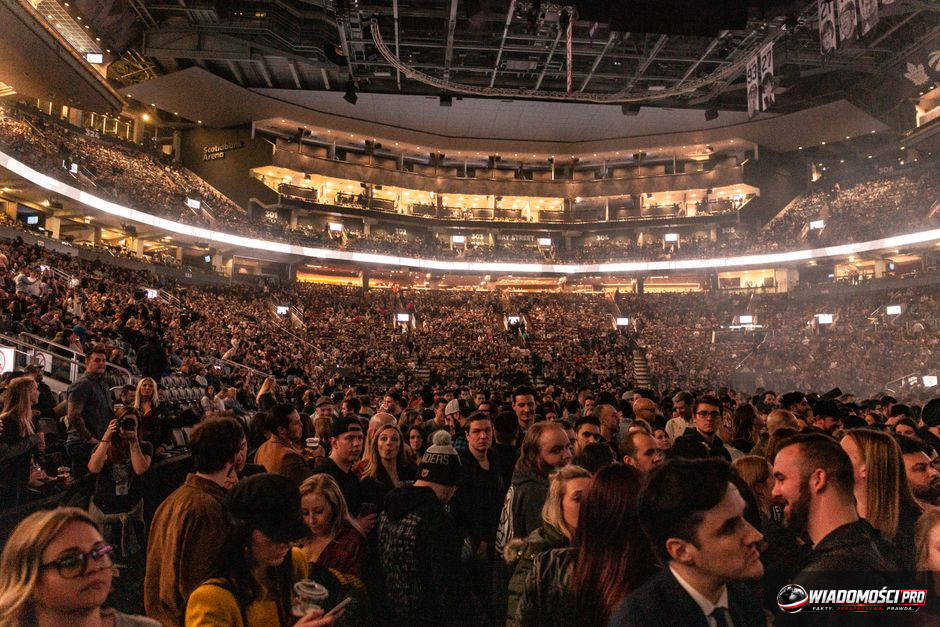
The "Obrotowy Tour" 2026 included performances in Gdańsk, Wrocław, Poznań, Chorzów, and Warsaw, attracting a total of approximately 350,000 spectators to sold-out stadiums. Dawid Podsiadło decided on seven concerts in five cities, making this undertaking the largest solo project of his career. Organizers responded to the massive demand by adding extra dates in Chorzów and Warsaw following the lightning-fast sell-out of the first batch of tickets.
Genesis and announcement of the tour
Preparations for the stadium format required months of logistical work from Dawid Podsiadło's management. The first signals regarding plans for 2026 appeared on August 31, 2025, when the eBilet service published preliminary dates and locations. The official confirmation of the project's name took place on September 1, 2025, via the Kultura Onet portal. From that day on, the production team launched processes aimed at securing the infrastructure.
The stadium format in Poland requires precise management of foot traffic. The schedule announced in the autumn of 2025 assumed that the tour would not be a one-off event, but a cycle spread over time. The organizers divided ticket sales into tranches. In this way, they avoided server overloads, which entities organizing mass events often struggle with.
In December 2025, information emerged about the need to add more concerts. The original attendance assumptions were met almost immediately after sales began. Such market moves signal to the industry that demand exceeds infrastructure availability. The artist operated in venues with capacities exceeding 50,000 spectators. This posed a logistical challenge requiring coordination with city authorities and security services.
Schedule and stadium logistics
The logistics of the "Obrotowy Tour" were based on using the highest-standard facilities in the country. Each stadium had different acoustic conditions. This forced the technical crew to reconfigure the sound system each time. The tour schedule maintained intervals allowing for the safe assembly and disassembly of the stage design.
The locations selected for the 2026 tour were:
- Stadion Energa Gdańsk
- Tarczyński Arena Wrocław
- Enea Stadion Poznań
- Stadion Śląski in Chorzów
- PGE Narodowy in Warsaw
The specificity of Chorzów and Warsaw lay in the artist's two-day presence in each of these cities. This strategy maximizes the use of equipment that must be transported to the site. Instead of building the stage for one evening, the organizers amortized logistical costs by filling the venue twice. The risk of error in the event of technical delays at a stadium scale is higher than in smaller venues.
Transporting the stage design involved dozens of trucks. Every structural element underwent strict safety checks. In June 2026, during the concert in Gdańsk, industry media noted the smoothness of the event. The venue accommodated a large number of viewers with efficient entry and exit. This testifies to the organizational maturity of Podsiadło's team.
Attendance and operational scale
Analyzing the scale of the project requires looking at the capacity of the venues used. The Silesian Stadium (Stadion Śląski) in Chorzów, one of the largest in the country, accommodates over 50,000 people in a concert configuration. PGE Narodowy in Warsaw has a similar scale. Since two concerts were held in both cities, it is easy to calculate that the artist performed before approximately 200,000 people in just these two locations.
Gdańsk, Wrocław, and Poznań added tens of thousands more fans to the list. The total number of participants oscillates around 350,000-400,000 people. This result places the "Obrotowy Tour" at the forefront of European concert tours of the 2026 season.
The interest of such a large number of people forced the introduction of advanced crowd management systems. Tickets were personalized, and sales systems were monitored for attempts at resale at inflated prices. The phased sales strategy limited the room for maneuver for scalpers. Fans received notifications about the availability of batches at specific times. This system disciplined buyers and reduced chaos.
Ticket strategy and prices
The pricing strategy during the tour was based on sector differentiation. Ticket prices for stadium tours in 2026 in Poland were generally between 180 and 450 PLN. The distance from the stage and the type of sector influenced the price. "Golden Circle" tickets or seats in VIP boxes were a marginal part of the offer, but they generated the highest unit revenue.
The absence of sudden price jumps during the sale was a conscious choice by the organizers. Podsiadło's model excluded the aggressive use of dynamic pricing, which is often a practice in Western markets. Stability of the offer builds trust in the artist's brand. Even in March 2026, when the last batches of tickets went on sale, prices remained at the level set at the time of the tour announcement.
Supply management was a continuous process. The organizers monitored interest on social media and made decisions about opening subsequent sectors. Initially, some of them were excluded from sale due to limited visibility or technical requirements of the stage. The "block opening" approach allowed for flexible responses to demand without the need for a drastic price list change.
Technical and production innovations
The technology used during the 2026 tour set a new direction for Polish stadium productions. The "rotating" nature of the stage required advanced synchronization of lights, sound, and multimedia with the movement of the structure itself. Unlike standard stages set at one end of the pitch, the rotation of the center of events allowed the artist to get closer to viewers located in different parts of the stadium.
This innovation was not just a marketing gimmick. It allowed for the equalization of the sound experience. Stadium echo is a problem that every sound engineer faces. Thanks to the dispersion of sound emission points, which moved with the stage, the listening quality in the higher stands improved compared to concerts from previous years.
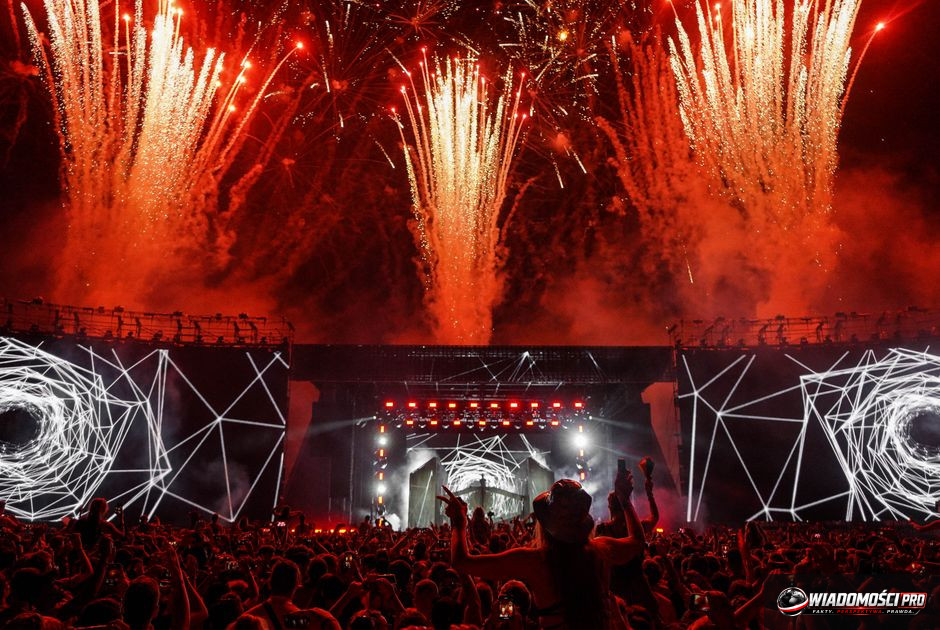
Media reporting on the concert in Gdańsk emphasized that the production did not yield to world standards. The use of high-resolution screens, integrated with the lighting system, created a coherent visual narrative. There was no room for improvisation. Everything, from transitions between songs to pyrotechnic effects, was programmed with second-level accuracy.
Market context and industry assessment
For the Polish music market, the "Obrotowy Tour" 2026 became a point of reference. Many artists watched this project, analyzing the filling of venues that a decade ago seemed unattainable for a domestic performer. The success of the tour proves that the Polish audience pays for quality, not just for a name.
However, Podsiadło's success has its shadows. The saturation of the stadium market by one artist leads to a phenomenon where smaller events lose the attention of media and sponsors. Marketing budgets shift to where attendance is guaranteed. This is a natural market process, but from the point of view of scene diversity, it poses a challenge.
The durability of stadium turf remains an issue. Concerts on such a scale require covering the pitches with specialized mats. This is expensive and risky for facility managers. Cooperation with stadium operators in Gdańsk, Wrocław, Poznań, Chorzów, and Warsaw had to proceed flawlessly so that after the tour, the facilities remained in a condition allowing for further sports use. The lack of reports of conflicts in this area testifies to the professional approach of the technical team.
Summary of the concert season
The 2026 season went down in history as a period of dominance of one concert format. Dawid Podsiadło, through the consistent implementation of the plan, proved that stadium success is a resultant of music, marketing, and raw logistical discipline. The last tickets disappeared from the market in March 2026, closing a distribution process that lasted over half a year.
This event showed that the Polish fan of popular music expects spectacles that do not require verification in the context of foreign productions. The standard set by the "Obrotowy Tour" is a bar to which all future stadium tours in Poland will be compared. This project was an example of effective resource and demand management.
It is difficult to assess whether a similar success can be repeated in a short time. The effect of freshness that accompanied the announcement of the tour in 2025 is difficult to recreate. The stadium market has its capacity and financial limits. At this moment, Podsiadło remains a leader who can attract such a large audience to stadiums while maintaining a quality that does not raise doubts even among the most demanding reviewers.
What this means for you
As a recipient, the success of this tour means access to increasingly better quality spectacles in the country. Organizers see that the Polish viewer expects world standards, so they invest in technologies that were previously reserved only for the biggest stars from abroad. Thanks to this, when buying a ticket, you get the certainty that the sound quality and visual setting will be at the level of European stadium tours, which eliminates the risk of disappointment with the low technical standard of the event. At the same time, growing expectations regarding attendance may make it difficult for young artists to start, who will have to face comparisons to such huge productions.
Questions and answers
How many concerts took place in Warsaw and Chorzów?
Two concerts were organized in both of these cities, which resulted from the huge interest of fans and the need to optimize the use of stadium infrastructure.
When were the last tickets made available?
The last batch of tickets for concerts as part of the tour went on regular sale on March 26, 2026.
How was the technical level of the concert in Gdańsk evaluated?
The performance in Gdańsk on June 21, 2026, was evaluated by industry media as a world-class spectacle, distinguished by advanced multimedia synchronization and innovative use of a moving stage.
What was the role of the announcements from August and September 2025?
These announcements were the beginning of an information campaign that allowed for early demand building and precise planning of ticket sales logistics, which was the foundation of the tour's attendance success.
Risk analysis and the future of stadiums
The organizers faced many threats. The biggest remained the weather and technical issues related to the movement of the rotating structure. In 2026, all these elements worked flawlessly, but every subsequent project of this type will be burdened with the pressure to repeat this result. The concert market in Poland has entered a phase of maturity in which production quality is a value more important than the performer's name itself. Fans have become aware of what they are paying for. This forces artist management to continuously invest in innovation.
The future of stadiums in Poland is painted in concert colors. These facilities, built mainly for Euro 2012, have found a second life as entertainment centers. Podsiadło's tour showed that filling a venue with a capacity of 50,000 people is no longer an anomaly. It has become a challenge that can be planned a year in advance. Will fans feel oversaturated? This question remains open. For now, the number of tickets sold indicates that the market has not yet reached the point of saturation. Every subsequent tour of such large momentum will be treated as an event of national rank.
Price stability despite huge demand is a rarity that in 2026 earned the artist an image as someone caring about accessibility for a wide audience. For the competition, this is a signal that customer satisfaction can be as effective a marketing strategy as aggressive pricing policy. The 2026 season ends as a lesson in professionalism for the entire entertainment sector.
From a technical perspective, the use of logistical resources was key. Technical crews worked in shifts so that each of the seven concerts took place to an identical standard. There was no talk of compromises on lighting or sound. Every stadium in Poland, from Chorzów to Gdańsk, required a unique approach to acoustics. Sound designers had to deal with sound wave reflections from concrete roof structures. They solved this by dispersing speakers across the entire rotating stage structure.
For the fan, this means a real change in the comfort of music reception. In the past, stadium concerts were associated with huge reverberation, which effectively destroyed the joy of listening to favorite songs. Now, technology has allowed for the creation of an intimate atmosphere in a space accommodating tens of thousands of people. This is the biggest change that has occurred in the Polish concert industry in recent years. Dawid Podsiadło revolutionized the way Polish stadiums handle music events.
Another aspect is safety. With 350,000 viewers across the entire tour, incidents were practically absent. Security services cooperated with the organizers at every stage. Each sector had its own coordinators, and crowd flow was regulated using modern entrance gates. Thanks to this, the waiting time for entry to the stadium was cut in half compared to events from a few years ago.
Budgeting the tour was another challenge. The costs of renting stadiums, technical support, and fees for the crew grew with inflation. Despite this, ticket prices remained at a predictable level. The organizers decided on lower unit margins in exchange for the guarantee of full venues. Such a strategy is risky, but in Podsiadło's case, it hit the bullseye. Other artists may try to repeat this model, but it requires a huge base of loyal fans.
One cannot ignore the role of social media in the sales process. Communication conducted from September 2025 built tension step by step. Fans knew when tickets would appear and how they could purchase them. The lack of information chaos meant that sales proceeded in an orderly manner. Each stage of distribution was preceded by a campaign on social networks. This made fans feel cared for throughout the entire tour planning process.
In summary, the "Obrotowy Tour" is not just a series of concerts. It is a project that changed the rules of the game on the music market in Poland. It showed that stadium spectacles can be high-quality, safe, and accessible. For fans, this is a chance to participate in events that until now were the domain of world-class stars. For the industry, this is a lesson from which all organizers will draw in the coming years.
The last piece of the puzzle is the performers themselves. Dawid Podsiadło, performing before such a huge audience, showed that he can maintain contact with every viewer, regardless of the distance from the stage. The moving stage helped in building a bond with people in the stands. This was a key element of success, which made fans not feel like an anonymous crowd. Each concert was a unique experience, which is confirmed by reviews after each of the seven performances.
It is also worth mentioning the cooperation with local governments. Cities such as Wrocław, Poznań, or Gdańsk supported the organizers in public transport logistics. Increased frequency of trams and buses after concerts made it easier for thousands of people to return home. This is an example of cooperation that should be standard for every such large event. Without the involvement of cities, attendance success would be impossible to achieve in such an efficient way.
All these elements make up the image of a tour that will long remain in the memory of participants. The 2026 season will be remembered as the year in which Dawid Podsiadło redefined the concept of stadium success in Poland. Each of the 350,000 fans could feel that they were participating in something special. It is this emotion that is the greatest capital that the artist built during these few months at the stadiums.
In the future, one can expect further attempts to refer to this format. The concert market in Poland is hungry for world-class spectacles. The Silesian Stadium, PGE Narodowy, or Tarczyński Arena are facilities that, thanks to Podsiadło's tour, have gained a new reputation. They have become centers of culture where live music sounds just as good as in the best concert halls in Europe. This is a great success that deserves to be highlighted.
Finally, it is worth emphasizing that this success would not have been possible without the discipline of the entire team. From the people responsible for stage assembly, through security, to marketers – every element had to work flawlessly. This is exactly the work culture that the "Obrotowy Tour" brought. Thanks to this, the Polish music market has become more mature and professional. This is the legacy of the 2026 tour, which will pay off for subsequent seasons.
Dawid Podsiadło's fans who bought tickets in March 2026 could be sure that they were investing in something special. The last tickets disappeared quickly, which only confirmed that the demand for high-quality Polish music is huge. The entire process – from the first announcement in 2025 to the last concert – was a display of professional management. It is no wonder that this tour became a point of reference for everyone.
Looking back at these few months, it is clear that every decision had its justification. From the choice of cities, through the concert schedule, to the ticket price. Everything was thought out so as to maximize fan satisfaction while maintaining the highest technical standards. That is why the "Obrotowy Tour" achieved such a spectacular success.
Will we see something similar in 2027? It is hard to say. But one thing is certain – the bar has been set extremely high. Dawid Podsiadło showed that a stadium is not just concrete and chairs, but a space where you can create an unforgettable spectacle. This is the greatest value that fans received as part of this tour. And it is for this that we will remember the 2026 season as the time when everything changed.
Sources
- Dawid Podsiadło for hundreds of thousands of fans. Two concerts each in Chorzów and Warsaw - Rzeczpospolita
- Dawid Podsiadło Obrotowy Tour 2026 – the biggest concert tour of the year - Kulturalne Media
- Dawid Podsiadło adds another stadium concert in 2026 [DATE, TICKETS] - open.fm
- Dawid Podsiadło released the last tickets for his stadium concerts - cgm.pl
- Dawid Podsiadło at stadiums in 2026. Get to know the dates and cities! - eBilet
- Dawid Podsiadło returns to stadiums. "Obrotowy Tour" already in 2026 - Kultura Onet
- Dawid Podsiadło thrilled the crowds in Gdańsk. He showed how to do a world-class show - Trojmiasto.pl
- Dawid Podsiadło and his 2025 festival - TICKETS. When does regular sales start? - Radio Eska ROCK
Article prepared by the Wiadomości PRO editorial team with the support of artificial intelligence. Facts come from the sources provided above.

Komentarze (0)
Ładowanie komentarzy...