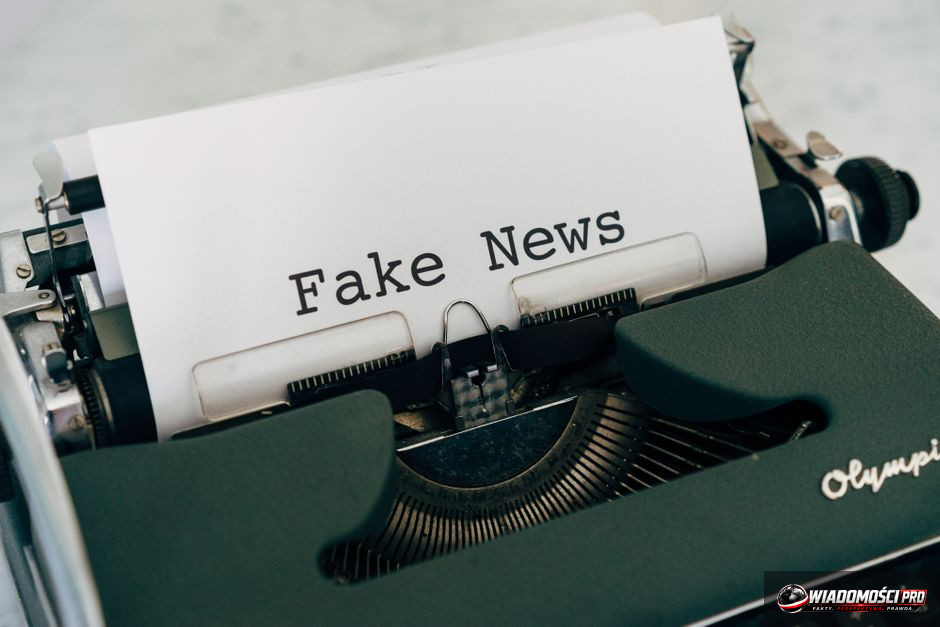
Information verification always requires an official statement from the family or an agent, as was the case with Konrad Gaca or Michael Jackson. Only direct confirmation from those in the celebrity's immediate circle constitutes a credible source in crisis situations. Any other news, even if it seems plausible, remains speculation until it is supported by a hard press release.
Journalistic integrity is based on a simple mechanism: if there is no statement, there is no story. Readers often do not realize that every minute that passes from the appearance of a rumor to the issuance of a statement is filled with chaos. This noise serves only to build reach, not to provide knowledge.
Verification checklist for the reader
Before you believe a headline, perform a quick analysis of the source. The following list will allow you to separate facts from media conjectures:
1. Does the message come from an official profile of the family, manager, or authorized press office?
2. Has the information been confirmed by a recognized press agency that has direct contact with the celebrity's agent?
3. Does the content of the statement contain specific facts, or does it operate only on vague suggestions?
4. Does the text contain the phrase "anonymous source" or "person from the inner circle"? If so, exercise extreme caution.
5. Has the information been replicated by other credible media outlets after the family issued a statement?
6. Have you checked the publication date? Often, old information is reheated on the web as new, which creates a false image of reality.
The role of the family in crisis management
The official position of loved ones is the most effective dam against disinformation. The example of Konrad Gaca, whose death was reported by the media on August 17, 2018 (viva.pl), shows how important the family's role is in taking control of the narrative. When the first reports appeared, it was the immediate family who, by issuing a statement, cut off all speculation. Their decision was a signal to the audience that only the message coming from within the family matters.
A similar mechanism worked in the case of Michael Jackson's family. After the premiere of the controversial documentary "Leaving Neverland," the artist's family reacted in a firm and direct manner (Kultura Onet, January 28, 2019). This reaction was not just a comment, but an attempt to defend the artist's legacy after his death. Paris Jackson, by deciding to check into a treatment facility, also became the object of media analysis, which once again highlighted how intimate decisions become a field for abuse if they are not commented on in an official manner.
Cristiano Ronaldo also had to face the necessity of taking a stand in 2022. After the death of his son, the footballer clearly communicated his priorities, writing: "Family is more important than everything" (Plejada, April 19, 2022). This specific message allowed for the silencing of media discussions regarding his further career. By setting a boundary, the athlete set a communication standard for public figures in the face of personal tragedy.
Private vs. professional life
Actors and artists often fall victim to rumors regarding their family life. In 2008, Kultura Onet reported on the situation of Jim Carrey, who had to publicly deny false information regarding his fatherhood. The rumor lived its own life in the media, forcing the actor to intervene in a way that should never have been necessary. This is proof that the lack of an official position at an early stage often leads to the escalation of untrue stories.
Bartek Kasprzykowski chose a different path in 2014. Instead of waiting for media conjecture, he commented on his departure from the theater himself (Kultura Onet, July 16, 2014). This approach allowed for avoiding the multiplication of theories about the reasons for this decision. An artist who takes control of information saves themselves and their loved ones unnecessary stress, and provides the audience with truth instead of conjecture.
Politics and art also intertwine in a way that often leads to sanctions. In 2016, Ukrainian actors were punished for participating in the film "Volhynia" (Kultura Onet, November 11, 2016). In this situation, the media reported on facts, not rumors, which shows the difference between reliable reporting and the pursuit of sensation. When the facts are brutal, the role of the media is to report them without embellishment, while the role of public figures comes down to accepting the consequences and potentially issuing a statement.
Rumor mechanisms in the film industry
The entertainment market lives not only on premieres, but above all on an aura of ambiguity. In November 2017, reports appeared about the return of "Red Sonja" to the big screen (Kultura Onet, November 6, 2017). The industry immediately began to speculate about the cast and budget. These types of rumors are a natural element of promotion, but distinguishing them from facts is crucial for maintaining information hygiene. A viewer who believes every piece of information about casting is often disappointed when the project does not come to fruition.
Verification in such situations involves checking statements from producers. If the studio has not issued a statement, any reports about casting are merely an attempt to build heat around the project. A journalist has an obligation to clearly indicate whether information comes from an official source or is just industry "noise." Lack of confirmation is a signal to withhold publication, not to fuel it.
Sport as a testing ground
In sports, standards are often more restrictive. When the Polish Football Association (PZPN) issues a statement, the topic of a split becomes a fact, not a subject of debate (Przegląd Sportowy). An official announcement ends the discussion because it is based on documents and binding board decisions. This is a model that shows that in professional organizations, there is no room for rumors if communication is conducted in a transparent manner.
Athletes, like the aforementioned Ronaldo, show that honesty in a statement is the best shield. When the public receives a clear message, it loses interest in seeking sensation. This is a lesson for the entire entertainment industry: the faster and more precisely the person concerned speaks, the faster the interest of tabloid media fades.
Editor's responsibility
A journalist has an obligation to distinguish rumor from fact. The Plejada portal has had occasion to report on important matters, as in the case of Cristiano Ronaldo, where a concrete position was the starting point for reliable material. If the media treated every rumor as the truth, the Kultura Onet portal would have to deny absurd reports every day, such as those about Jim Carrey's private life from 2008 or Bartek Kasprzykowski's professional plans from 2014.
Professional ethics in editorial work is not just an empty slogan. It is the daily selection of information and verification of sources, even those that seem credible. Any material that is not based on confirmation by the interested party or their loved ones is just information noise. In the era of the digital race for reach, restraint is becoming a rare but most valued virtue. Responsibility for the word does not end at the "publish" button. That is when it only begins.
Information verification always requires an official statement from the family or an agent. This is a golden rule, the breaking of which in the pursuit of clicks compromises the editorial office. History has repeatedly shown that rumors about the death of stars live their own lives until they are cut by a hard announcement. This was the case with the tragic reports regarding Konrad Gaca, where only the family's statement (viva.pl, August 17, 2018) cut off all speculation. The situation with Michael Jackson was similar, in which Kultura Onet reported on the sharp reactions of the family after the premiere of the documentary "Leaving Neverland." Reader trust is built on sources, not on conjecture.
When the media abandons verification, they lose what is most important in journalistic work – credibility. In the case of information about death, there is no margin for error. If information is not confirmed, it should not see the light of day. Anyone who decides to publish unverified reports takes on the burden of responsibility for the emotions of millions of readers. This is a price that no reach can balance.
Let us remember that the lack of a statement is a message in itself. It means that the family does not want to speak or that the situation is not ripe for public debate. A journalist who respects privacy knows how to respect this silence. Instead of looking for a hole in the whole, it is worth focusing on what has been officially said. Only then does public debate make sense.
Questions and answers
Why is an official statement crucial?
It prevents the spread of false information that can harm the family and loved ones, which has been repeatedly confirmed by cases such as the death of Konrad Gaca.
Is every piece of information about a celebrity true?
No, the example of Jim Carrey from 2008 shows that rumors about private life often have no basis in reality and require a public denial.
How to check the credibility of news about a death?
One should look for confirmation from an authorized agent or directly in a statement from the family, as in the case of Michael Jackson, where the position of loved ones was the only certain source.
Is social media a credible source?
No. Social media is a place where rumors spread the fastest, which is why every message from Twitter or Facebook must be verified in traditional, professional news services.
What to do when there is no official announcement?
One should maintain restraint and not publish the information. The lack of a position from the family or agent is a signal that the topic is not confirmed and should not be treated as a press fact.
Do dates in publications matter?
Yes, very much. Often old news, for example regarding court or health matters, is positioned on the web as new, which misleads the reader. Always check the source's publication date.
What are the consequences of publishing unverified rumors?
Loss of reader trust and potential legal consequences if the information violates the personal rights of public figures. The journalist risks lawsuits, and the editorial office risks embarrassment.
Why is it worth using a checklist?
A checklist allows for a cool approach to emotional topics. In the age of "fake news," systematic verification is the only tool for defense against manipulation.
Does every celebrity death have to be communicated by the family?
In the world of public figures, this is the standard. If the family is silent, the media has no moral or professional right to speculate on the causes or circumstances of death.
How to proceed in the case of conflicting information in different media?
One should trust only the source that cites a statement from the family or agent. If no media outlet cites an official position, all reports should be treated as unconfirmed.
Do athletes communicate differently than celebrities?
Standards in sports are often more rigorous due to contractual requirements and relationships with fans. The example of Cristiano Ronaldo shows that even in private situations, athletes can maintain a clear message that ends speculation.
Does verification always require time?
Yes, reliability requires time. Speed of publication should not be a priority when matters as sensitive as the life and health of public figures are at stake. It is better to be an hour late than to report untruths.
Can rumors become "facts" after years?
Yes, if they are not denied. That is why it is so important that official statements are archived and easily accessible to journalists, so that mistakes of the past are not repeated in the future.
What does "lack of access to information" mean?
For a professional editorial office, it means "no story." It is not an invitation for conjecture, but a clear signal that a given matter is not suitable for publication in the form of a news report.
What is the reader's role in this process?
The reader is the final link in verification. If the audience stops clicking on unverified rumors, the media will be forced to change their operating model to a more reliable one.
Can one believe "people from the inner circle"?
This term is often abused. A "person from the inner circle" can be anyone – from a distant acquaintance to an anonymous network user. Never treat this as a certain source.
Does every piece of information about a breakup have to be confirmed?
Yes, private matters, such as breakups, often become the subject of rumors. An official statement, as in the case of the PZPN, is the only way to cut off speculation.
How to evaluate statements after a film documentary?
Statements issued after the premieres of controversial productions, as in the case of Michael Jackson's family, are an important voice in public debate and should be treated as a key source of the family's perspective.
Is verification a task only for the editor?
No, it is a task for the entire editorial team. From the reporter to the publisher, everyone must ensure that the published content is based on facts, not on the reader's emotions.
Is every rumor harmful?
Most rumors regarding private life are degrading in nature. Even if they seem trivial, they build a false image of a public figure, which over time can be difficult to repair.
Does Polish law protect against rumors?
Yes, the violation of personal rights is punishable. However, trials take years, which is why the best protection is reliable journalism that does not allow for the creation of harmful materials.
Is it worth following the official profiles of stars?
This is the best strategy. In the age of social media, stars often communicate directly with fans, which eliminates intermediaries and the risk of information being distorted by gossip portals.
Does every tragedy require a statement?
If death is a fact, the family must always issue a statement to avoid chaos. However, if the family does not want to do so, the media should respect this right to silence.
Why do so many media outlets replicate rumors?
The main reason is the pursuit of clicks. On the internet, reach counts, and sensational headlines generate it the fastest. However, this is a short-sighted model that destroys the media brand in the long term.
How to recognize a reliable medium?
A reliable medium always cites the source of its information. If an article does not cite anyone specific, it is a signal that it is not worth trusting.
Can social media be a source of information?
Only when the information comes from a verified profile (the "blue checkmark") belonging to the person in question or their official representative.
Is it worth reading "behind-the-scenes reports"?
Usually, these are contents based on speculation. Reading them for entertainment does no harm, as long as the reader is aware that these are not facts.
Does every news item need a photo?
A photo often validates a rumor in the eyes of the reader. It should be remembered that a photo is not evidence, but merely an illustration, which is often taken out of context.
What is the significance of "no comment"?
If the editorial office sent an inquiry to an agent, and they refused to comment, this is information that should be included in the text. "The agent did not respond to our questions" is an honest message for the reader.
Does media history teach us anything new?
It teaches us that despite technological development, the mechanism of rumor remains the same. Only the speed of its spread has changed. The basic principle – verification at the source – has remained unchanged for decades.
Sources
- Breakup! There is an official statement. PZPN announces - Przegląd Sportowy
- Family issued an official statement regarding the death of Konrad Gaca! - viva.pl
- Cristiano Ronaldo quits playing after the death of his son. "Family is more important than everything" - Plejada
- "Red Sonja" back on the big screen - Kultura Onet
- Jim Carrey will not be a father - Kultura Onet
- Bartek Kasprzykowski commented on his departure from the theater - Kultura Onet
- Sharp reaction of Michael Jackson's family after the premiere of the documentary "Leaving Neverland". Paris checked into a treatment facility - Kultura Onet
- Ukrainian actors punished for participating in "Volhynia" - Kultura Onet
Article prepared by the Wiadomości PRO editorial team with the support of artificial intelligence. Facts come from the sources provided above.


Komentarze (0)
Ładowanie komentarzy...