The Europa Clipper mission has consumed approximately 5 billion dollars and aims to determine whether conditions favorable to life exist beneath the icy shell of Jupiter's moon. The probe set off toward the Jovian system in October 2024, beginning one of the most ambitious journeys in the history of deep space exploration. It is an investment that goes beyond standard planetary research, aiming to answer the question of the universality of biological processes in the universe.
The road to launch: How Hurricane Milton changed NASA's plans
Preparations for the launch of the Europa Clipper probe faced a serious meteorological threat in October 2024. Hurricane Milton, which struck the coast of Florida, forced NASA leadership to revise the launch schedule, which had been precisely calculated for orbital windows. The Kennedy Space Center, a key operational hub for the agency, found itself in the path of the storm, necessitating the securing of equipment worth billions of dollars. Engineers had to assess the risks associated with potential damage to the launch vehicle and the probe itself, which had been assembled and tested in sterile rooms for many years.
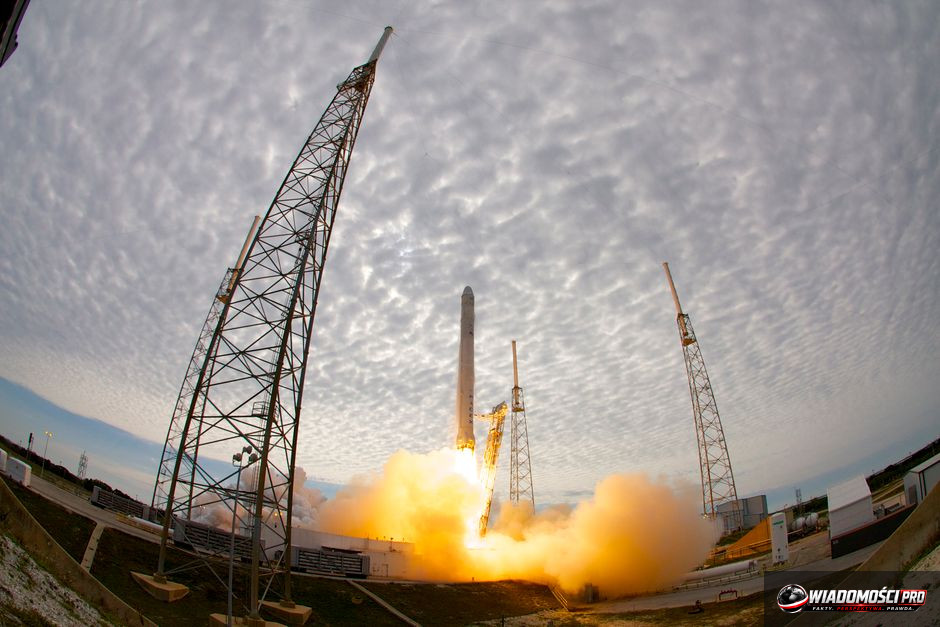
Infrastructure safety became a priority, forcing the evacuation of personnel and the suspension of technical operations. Every hour of delay in such a complex undertaking means not only logistical complications but, above all, the need to recalculate the flight trajectory, which is dependent on planetary alignments. After the hurricane passed, technical teams conducted a meticulous inspection of the rocket and all of the probe's onboard systems. Only after confirming that the equipment had not suffered from external factors was the decision made to resume launch procedures. The launch in October 2024 was the culmination of years of logistical effort, requiring the synchronization of thousands of subcontractors, scientists, and orbital mechanics specialists. This event showed just how dependent space missions remain on terrestrial atmospheric conditions, despite the technological advancement that allows probes to travel hundreds of millions of kilometers in a vacuum.
Mission budget: What was the 5 billion dollars spent on?
The total cost of the Europa Clipper project, amounting to approximately 5 billion dollars, reflects the scale of the engineering challenges the probe's creators had to face. This funding covers not only the construction of the vehicle itself but also decades of research, the design of unique measuring instruments, and ground operations that will continue throughout the duration of the mission. The probe was designed as the largest spacecraft built by NASA for a planetary mission, which necessitated the use of materials with exceptional durability and electronic systems capable of operating in conditions of extreme radiation.
The environment of Jupiter is one of the most hostile places in the Solar System for electronics. The gas giant's strong magnetic field accelerates charged particles to enormous speeds, creating radiation belts that can permanently damage sensitive components. The mission budget largely covered the costs of developing special radiation shields that protect the heart of the probe from the destructive effects of ionization. Taxpayer money was also allocated to the development of advanced communication systems, allowing for data transmission from vast distances, where a radio signal takes many minutes to reach receiving stations on Earth.
This investment also covers a wide spectrum of scientific activities, including the development of research equipment with unprecedented sensitivity. Each instrument, from ice-penetrating radars to mass spectrometers, had to undergo rigorous testing in chambers simulating the space environment. The logistics of maintaining such an extensive research team and ensuring power continuity throughout a multi-year journey are other pieces of the cost puzzle. NASA is betting on this project because Europa is considered a priority target in the search for life beyond Earth. Funding this mission is therefore not just a cost of technology, but above all, the cost of gaining knowledge that could revolutionize our perception of biology on a cosmic scale.
Technology on board: What is Europa Clipper studying?
The Europa Clipper probe is equipped with a suite of scientific instruments tasked with conducting a detailed physicochemical analysis of the moon. The main goal is to study the thickness of the icy shell and the characteristics of the ocean that is likely located beneath its surface. Engineers installed a radar on board that will allow them to "look" deep into the ice, identifying potential pockets of liquid water and determining the geological structure of the surface. This data is essential for understanding how heat from the moon's interior, generated by Jupiter's tidal forces, interacts with the icy shell.
Another key element of the equipment is the spectrometers, which will study the chemical composition of particles ejected from Europa's surface into space. Scientists hope that by analyzing this material, they will be able to identify the presence of organic compounds, which are the essential building blocks of life as we know it. A high-resolution camera will map the moon's surface, documenting cracks, craters, and other formations that may indicate geological activity. Understanding surface dynamics is crucial for determining whether water from the subsurface ocean can be transported outward, which would enable its analysis without the need to drill through the ice.
The probe was not designed to land, which is a significant limitation, but also a decision dictated by safety and costs. Instead, Europa Clipper will perform a series of close flybys, collecting data during each one. This approach allows for the study of different areas of the moon, offering a fuller picture of its structure than a stationary lander would. Power systems, based on massive solar panels, must cope with significantly weaker lighting near Jupiter than in the vicinity of Earth, which required an innovative approach to optimizing energy consumption by research instruments.
Europa versus the rest of the system: Why this moon?
The choice of Europa as the target for the Europa Clipper mission is not accidental. Of all of Jupiter's moons, this object exhibits features that most closely resemble environments conducive to the formation of biological processes. The existence of a global ocean of liquid water, hidden under a multi-kilometer layer of ice, makes Europa a unique place in the Solar System. This water, kept in a liquid state thanks to energy from Jupiter's tidal interactions, may contain nutrients necessary for the survival of microorganisms.
Unlike other moons, Europa has a relatively young surface, which suggests that geological processes are still occurring. Telescopic observations have shown the presence of traces of salts and other chemical substances on the surface, suggesting that material from deep within the moon may be escaping to the outside. This phenomenon gives hope that the Europa Clipper studies will provide direct evidence of what is hidden in the subsurface ocean.
Comparing Europa to other targets, such as Mars or Enceladus (a moon of Saturn), scientists point to the enormous scale of the ocean on Europa, which may contain more water than all of Earth's oceans combined. This makes this moon the object with the highest biological potential in our immediate neighborhood. This mission is intended to verify hypotheses regarding the stability of this environment over time, which is essential for the development of life. If it turns out that the ocean is capable of sustaining complex chemistry for billions of years, Europa will become the most important point of reference in astrobiology.
The race for discovery: NASA versus European agencies
Exploration of the Jovian system has become an area of intense technological competition between leading space agencies. NASA, through the Europa Clipper mission, aims to obtain the most accurate data possible about this moon, utilizing its largest budget and advanced engineering. At the same time, the European Juice (JUpiter ICy moons Explorer) mission, carried out by the European Space Agency, also targets Jupiter's icy moons, creating a race for scientific priority.
Both missions have different specific goals, but their paths in the Jovian system will cross. NASA focuses almost exclusively on Europa, while Juice also plans to study Ganymede and Callisto. This competitive correspondence drives progress, as each agency strives to optimize its tools to provide the most unique results possible. Washington treats the Europa Clipper mission as a flagship project for its presence in the outer Solar System, which translates into enormous financial outlays and political support.
In scientific circles, there is debate over whether these two approaches – NASA's specialization on Europa versus ESA's broader approach – will bring synergy or lead to a duplication of efforts. From a scientific perspective, international cooperation is inevitable, as data from both probes will complement each other. However, the Americans do not hide their ambition for their probe to be the first to provide groundbreaking information about the chemistry of Europa's ocean. The 5 billion dollars spent is the price for maintaining a leadership position in planetary research, which for NASA is a matter of national prestige.
Mission schedule: What awaits us in the coming years?
The journey of the Europa Clipper probe to its destination is a multi-stage process that will take many years. After launching in October 2024, the probe began a long flight through the Solar System, using gravity assist maneuvers. Gravity assist involves using the gravitational field of planets, such as Earth or Mars, to gain speed with minimal fuel consumption. It is a technique requiring extraordinary computational precision, where an error of a fraction of a second can determine the success of the entire mission.
The interplanetary cruise phase is a period of constant monitoring for engineers. The probe's systems must be kept in a state of readiness, and any anomalies must be resolved remotely from a distance of millions of kilometers. Upon reaching the vicinity of Jupiter, the probe will enter a complex orbit that will allow it to safely maneuver near Europa while avoiding the destructive influence of the radiation of Jupiter's magnetosphere.
The schedule provides for a series of close flybys, each of which will aim to perform different measurements. While some flybys will focus on mapping the surface, others will be devoted to magnetic studies, which are intended to confirm the existence of the ocean. Data collection is a continuous process that will not end after the first flyby. Over the coming years, the probe will send gigabytes of data to Earth, which will be analyzed by teams of scientists around the world. This multi-year undertaking requires patience that many other technological projects lack. Only after collecting a complete set of data from the series of flybys will astrobiologists be able to state with high confidence whether Europa is a habitable environment.
What this means for you
The presence of the Europa Clipper probe in space is a signal that humanity has stopped treating the search for life as purely theoretical speculation. The 5 billion dollar investment changes the rules of the game in the space research sector, imposing a new cost standard for missions searching for biological signatures. Taxpayers, who are funding this project, receive in return not only raw data, but above all, an answer to the fundamental question about our place in the cosmos.
For the technology sector, this is a testing ground where systems for radiation resistance and autonomous navigation are being tested. If the mission is successful, the knowledge gained during the design of Europa Clipper will be used in the construction of future orbital stations or landers on other icy moons. On the other hand, for skeptics who raise the issue of costs, this mission remains a flashpoint in the debate about budget priorities. Is it worth spending such large amounts on studying a distant moon when there are a number of economic challenges on Earth? The answer to this question depends on whether we consider the need for exploration and learning the truth about the universe to be paramount over immediate investment needs. Europa Clipper will not bring immediate material benefits, but its impact on the development of science and technology will be felt for decades.
Questions and answers
Will the probe land on the surface of Europa?
No, the probe was designed exclusively for flybys of the moon. Landing would involve enormous technical risk due to the unknown surface structure and the need to ensure power in conditions of strong radiation near the moon's surface.
Why was the mission launch delayed?
The launch was postponed in October 2024 due to Hurricane Milton, which threatened infrastructure in Florida. The safety of the probe and the launch vehicle was a priority for NASA, which forced a temporary suspension of preparations.
How long will it take for the probe to reach Jupiter?
The probe's journey is a multi-year one. Using gravity assist maneuvers at inner planets allows for fuel savings, but extends the flight path to the Jovian system. The exact arrival time at the destination is closely linked to the chosen trajectory and the corrective maneuvers that will be performed during the flight.
What exactly does "conditions favorable to life" mean in the context of this mission?
In the context of Europa Clipper, these conditions include the availability of liquid water, the presence of biogenic elements (such as carbon, hydrogen, nitrogen, oxygen, phosphorus, and sulfur), and the appropriate temperature. The probe is to check whether the subsurface ocean has stable chemistry that allows for the functioning of simple life forms.
Is this mission a rivalry with Europe?
Relations between NASA and ESA regarding the study of Jupiter are described as a scientific competitive correspondence. Both sides strive to achieve research successes, which mutually stimulates the development of technology and the pace of work, although officially the agencies emphasize cooperation and the exchange of scientific experience.
What is the biggest technical difficulty of this mission?
The biggest challenge is the operation of the probe's electronics in conditions of strong radiation near Jupiter. The probe must have advanced radiation shields that protect measuring instruments from degradation, which directly affects the mass and cost of the entire device.
Will we know if life exists after the mission ends?
The mission will provide data that may point to the presence of favorable conditions, but it does not provide a one-hundred-percent guarantee of detecting life itself. Interpreting the results will take specialists many years after the probe's work is finished.
Sources
- Start of the Europa Clipper mission to Europa - AstroNET – Polish Astronomical Portal
- Europa Clipper launches. A key task ahead - geekweek.interia.pl
- Start of the Europa Clipper mission [BROADCAST]. Americans will overtake Europeans in the search for life on Europa - Wyborcza.pl
- Beginning of the Europa Clipper mission - Kosmonauta.net
- Hurricane Milton delays the launch of NASA's largest space probe, Europa Clipper, until October 14 - Notebookcheck.pl
- The probe will check if Jupiter's moon is suitable for life. Live launch - Telepolis.pl
- In search of life. NASA will study Jupiter's icy moon - Space24.pl
- Beginning of the construction of Europa Clipper - Kosmonauta.net
Article prepared by the Wiadomości PRO editorial team with the support of artificial intelligence. Facts come from the sources listed above.


Komentarze (0)
Ładowanie komentarzy...