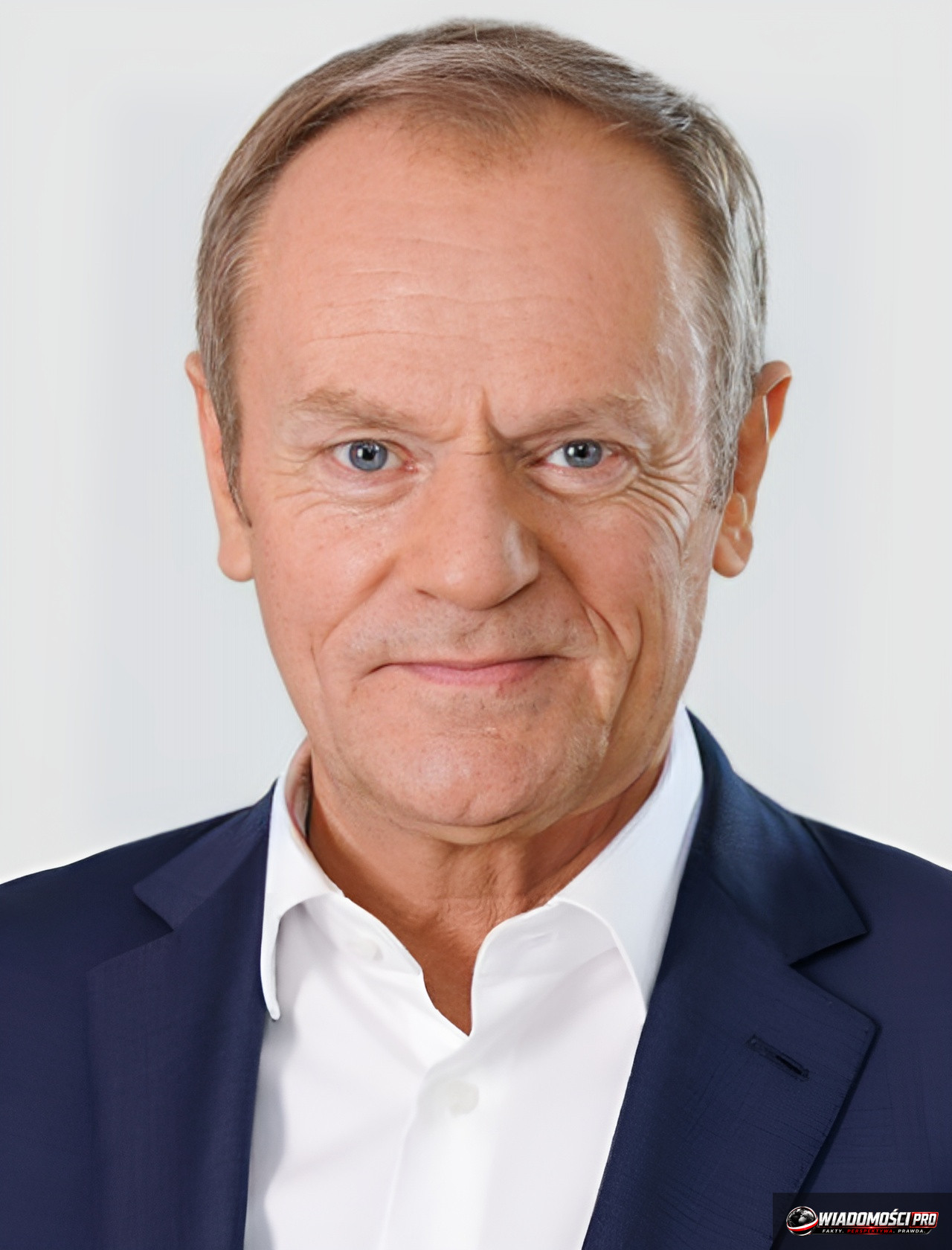
In 2026, Donald Tusk's government set rigid fuel price limits at 5.97 PLN per liter for 95-octane gasoline and 6.71 PLN for diesel, which forms the foundation of the cabinet's anti-inflation policy. Simultaneously, the administration maintained oversight of the commission on Russian influence, declaring a departure from personal vendettas, and formalized the appointment of Stanisław Kracik as commissioner in Krakow. In the diplomatic sphere, Warsaw officially confirmed it would not agree to the arrest of Benjamin Netanyahu on Polish territory, prioritizing its own interpretation of state security over the warrants of the International Criminal Court.
The economy in the shadow of price caps
The introduction of rigid price caps on fuel in April 2026 is a signal that the government is abandoning liberal rhetoric in favor of direct market intervention. A price for 95-octane gasoline not exceeding 5.97 PLN and diesel at 6.71 PLN are tools intended to extinguish social unrest before the upcoming election period. This decision is not merely a pro-social move, but an attempt at technocratic control of inflation, which has been the main challenge to the country's budgetary stability since the beginning of Tusk's term. Limiting fuel distributor margins shifts the burden of stability onto energy companies, which in the long term forces the state to seek new sources of funding for infrastructure investments.
Managing energy prices in 2026 shows that the cabinet is looking for a middle ground between market logic and the need to maintain social approval. Every penny above these limits would be direct proof to voters of the government's policy ineffectiveness. Tusk perfectly understands that the citizen's wallet is more important this year than theoretical debates about the free market. This is pragmatism intended to maintain the coalition's ratings, even at the cost of tensions with the fuel sector.
CPK: Half a century of unfulfilled promises
The Central Communication Port (CPK) in 2026 has become a symbol of state impotence that has dragged on for five decades. Debates that began in the 1970s have still not reached a conclusion in the form of operational infrastructure. The current government, instead of demolishing its predecessors' plans, is trying to implement them in a way that does not cause decision-making paralysis. This is no longer a question of choosing between political options, but a test of the efficiency of the Polish administration in the face of a gigantic investment.
Analyses from August 2025 indicate that the historical weight of this project is so great that every subsequent decision to "continue" is perceived by the market as an act of political courage. Tusk avoids grand announcements, preferring technical audits that are intended to prove that the airport near Baranów is a safety element, not just a political monument. In 2026, for the government, the CPK is primarily a logistical challenge, where concrete and steel must be converted into real profits from the hub's capacity. If this project stalls again, it will be a failure not only of a specific ministry but of the entire concept of an efficient state that was promised after the 2023 elections.
Influence commission: From settlements to audit
Clarifying Russian influence in state structures in 2026 has taken the form of a government audit, which represents a clear turn away from the actions taken at the beginning of the term. Prime Minister Donald Tusk, distancing himself from the rhetoric of hunting for opponents, has created a framework in which the commission deals with facts rather than political games. This approach is intended to calm the emotions that dominated the media in 2024, creating an image of a state focused on the future instead of the past.
The technocratic nature of the commission's work allows the government to save face while avoiding accusations of revanchism. In 2026, when infrastructure and diplomatic stability are the priority, there is no room for long-term trials that could deepen social polarization. Those in power have decided that national security requires calm in institutions, not constant parliamentary hearings. Is this enough to convince skeptics? Probably not. Supporters of radical settlements from the PiS era may feel disappointed, but from an administrative perspective, switching to an audit mode is the only way to close matters that have paralyzed the work of security ministries for years.
Diplomacy in the face of the ICC
Poland's position on the warrants of the International Criminal Court, presented in January 2025, is proof of how much the definition of sovereignty has changed in Polish foreign policy. The refusal to arrest Benjamin Netanyahu at the request of the court is a signal that state security interests are paramount for the Tusk government over international legal bodies. This decision, although controversial in the eyes of some European partners, stems from cold political calculation.
Warsaw does not want to become a hostage to legal disputes that could destabilize its relations in the Middle East. This is hard realism that has replaced the idealism of the first months of the government. Polish diplomacy in 2026 is balancing on a thin line: on one hand, it declares loyalty to Western structures, and on the other, it selectively complies with rulings that could strike at strategic alliances. It is a game played on several pianos, where the margin for error is minimal. Every move by the Prime Minister in this matter is analyzed by security analysts as a signal that Poland is ceasing to be just an executor of EU guidelines and is becoming a sovereign player looking after its own interests, even at the cost of image in Brussels.
Personnel management: The case of Krakow
The appointment of Stanisław Kracik as commissioner in Krakow in May 2026 is a clear example of the centralization of personnel decisions. Faced with tensions in the ruling coalition, Donald Tusk cannot afford chaos in the largest metropolitan areas, which are key to implementing strategic investments. Kracik, a figure with extensive administrative experience, is to act as a "guardian of peace" who will extinguish local disputes between political factions.
This move shows that the government in the second half of its term is relying on proven people whose loyalty to the center is unquestionable. Krakow, as a city of enormous importance for regional stability, has become a testing ground for a new strategy of local government management. Warsaw is not waiting for bottom-up initiatives, but is itself indicating who should manage crises. For local elites, this is a clear message: the autonomy of cities ends where the government's interests in investment and security begin. Kracik is primarily to ensure the fluidity of decisions, which in practice means subordinating local government to Tusk's nationwide agenda. This is a mechanism designed to prevent political shocks before the next parliamentary elections.
Intra-coalition relations: The end of the honeymoon
The ruling coalition, which was celebrating unity as late as the end of 2024, entered a phase of sharp competition for the electorate in 2026. Szymon Hołownia and Donald Tusk are no longer partners in an ideological community, but competitors who must prove to their voters that their vision of the state is more effective. This change is visible in how they share influence in ministries and local governments.
The fierce campaign, which was already being written about in December 2024, has become an everyday occurrence. Every government decision, from fuel prices to appointments in Krakow, is now calculated in terms of potential gains in the polls. The coalition is struggling with image problems because the first hundred days of government, summarized by the disappointment of part of society, forced politicians into defensive mode. Now, every project, including the CPK, must be packaged in a promise of success that can be sold to the voter. The lack of "games" in the form of investigative committees is compensated for by intensive crisis management, which is intended to prove that the government is coping in the face of permanent threat.
The eastern border: From emotions to pragmatism
Border protection in 2026 no longer resembles the debate of 2024, when politicians argued about the ideological foundations of migration policy. Today, it is pure logistics and a matter of infrastructure security. Donald Tusk, who had to face accusations of a lack of consistency on border issues, operates in 2026 in a reality where border stability is an inseparable element of defense plans.
The transition from rhetoric to pragmatism was necessary. The government realized that voters no longer expect discussions about morality, but hard evidence that the border is sealed and the country is safe. This approach aligns with the cabinet's other actions: from the CPK to price policy. All this creates a system in which security, infrastructure, and price stability are to act as a shield against geopolitical uncertainty. The administration is not looking for applause, but is building foundations that are meant to stand the test of time. This is a technocratic change in the definition of governance, where the priority is efficient administration, not ideological declarations.
Budget analysis and the challenges of 2026
In 2026, Donald Tusk's government faces the challenge of maintaining budgetary discipline in conditions where spending on security and infrastructure is growing faster than tax revenue. Keeping fuel prices in check requires huge outlays from the state, which forces the Ministry of Finance to seek savings in other ministries. An analysis of budget expenditures points to the shifting of funds from "soft" projects to those that have a direct impact on the daily lives of citizens.
This approach is extremely risky. If inflation accelerates again, the government will have to either raise energy prices, which will ruin its ratings, or increase debt, which in turn will expose it to criticism from financial institutions. Tusk is choosing the path of balancing on the edge. The stability we are observing in 2026 is expensive and is based on the assumption that the economy will not fall into recession. However, any turbulence in the international market could thwart these plans. Those in power are aware of this, which is why they place such strong emphasis on appointing proven people in local governments and silencing internal conflicts. Every zloty spent in 2026 is now being scrutinized from every angle, and the government's priorities are subordinated to one goal: surviving until the end of the term in a state of political calm.
Questions and answers
Is the government planning further fuel price freezes?
In 2026, the government set rigid price limits for 95-octane gasoline (5.97 PLN) and diesel (6.71 PLN), which is a key element of the country's economic stabilization in the current term.
What is the current status of the commission on Russian influence?
The commission functions as a government body whose goal is a technocratic audit of state security, with Prime Minister Tusk clearly declaring a resignation from political settlements.
Why was Stanisław Kracik appointed commissioner in Krakow?
This appointment, announced in May 2026, is part of the government's strategy of staffing key urban centers with experienced administrators to ensure stability and avoid decision-making paralysis.
What is Poland's position on the ICC in the context of Benjamin Netanyahu?
Prime Minister Donald Tusk officially stated that Poland will not arrest Benjamin Netanyahu at the request of the International Criminal Court, arguing this is due to the overriding interest of state security.
Have discussions about the CPK in 2026 yielded concrete results?
The CPK remains in the phase of advanced audits, and the government treats the project as an element of the country's strategic infrastructure, trying to end the 50-year-long process of debates over its shape and legitimacy.
How have relations within the ruling coalition changed?
After a period of early cooperation, relations between Donald Tusk and Szymon Hołownia in 2026 have evolved toward sharp competition for the electorate, which is the result of the approaching election date and the need to demonstrate concrete investment successes.
Has the policy toward the eastern border evolved?
Yes, since 2024 there has been a clear transition from ideological disputes about border protection to a pragmatic policy of security management, in which the border is treated as an integral element of the state's defense logistics.
Does the government foresee changes in fiscal policy?
Faced with the need to finance rigid fuel prices, the government is forced to pursue a restrictive budgetary policy, limiting spending in ministries not related to infrastructure and security.
What are the main goals of Donald Tusk's government for 2026?
The main goals are infrastructure stabilization (including the CPK), managing diplomatic challenges, and maintaining social cohesion through the control of energy commodity prices and the strengthening of local government administration.
Are we observing an increase in the centralization of power?
The appointment of commissioners, such as Stanisław Kracik, indicates the government's tendency to directly influence the management of key cities, which is intended to limit local conflicts and implement the state's strategic goals.
Does Poland still recognize the jurisdiction of the ICC?
Poland remains a signatory to the agreements, however, the Tusk government in 2026 has clearly set boundaries for the application of ICC warrants, prioritizing its own interpretation of the country's strategic interests over the automatic execution of the court's rulings.
What is the biggest challenge for the government in the second half of the term?
The biggest challenge remains maintaining budgetary stability while simultaneously implementing expensive infrastructure projects and the need to manage tensions within the ruling coalition.
Will the topic of Russian influence still be used politically?
All signs indicate that the government is striving to silence this topic by formalizing the commission's activities, which is intended to avoid further polarization before the next elections.
What are the forecasts for the CPK for the coming months?
The government is continuing audit processes, aiming to develop an operational model that will allow for a transition from the planning phase to the implementation phase, while avoiding image-related mishaps.
Can citizens count on the continuation of price policy?
Maintaining fuel prices within the designated ranges is a priority for the government, although it depends on the financial condition of energy companies and the situation in international markets.
Has the change in approach to the border affected security?
According to the government narrative, the transition to pragmatic border management has increased the integrity of the state security system, which is key in the face of the unstable situation in the region.
What role does the Prime Minister's image play in 2026?
Donald Tusk positions himself as a stable manager who, in difficult times, is capable of making unpopular but necessary decisions, distancing himself from the radicalism of his predecessors.
Is the coalition capable of surviving until the end of the term?
Despite the sharp intra-coalition campaign, common political interests and the need to maintain power mean that the coalition remains durable, although decision-making processes are becoming increasingly tense.
Do local governments still have an influence on investment decisions?
The influence of local governments is being limited by central personnel and strategic decisions, which forces local authorities to coordinate more closely with the government on infrastructure issues.
What do voters expect in 2026?
Voters are focusing on economic issues, mainly energy and fuel prices, and on ending the political disputes that have dominated public debate for years.
Sources
- Today a liter of 95 gasoline is to cost no more than 5.97 PLN, and diesel 6.71 PLN - energia.rp.pl
- Tusk: Stanisław Kracik will be the commissioner in Krakow - Do Rzeczy
- The time of "love" between Tusk and Hołownia is coming to an end. A fierce campaign lies ahead - Interia Wydarzenia
- Donald Tusk: A government commission will deal with clarifying Russian influence. "There will be no hunting for PiS" - Wyborcza.pl
- Has Donald Tusk genuinely changed his approach to the issue of protecting the eastern border? - radiomaryja.pl
- Tusk: Netanyahu will not be arrested in Poland at the request of the International Criminal Court - OKO.press
- 100 days of Tusk's government. "Those who believed may be experiencing disappointment" - Money.pl
- 50 years of talks about a central airport in Poland. Who really invented the CPK? - pap.pl
Article prepared by the Wiadomości PRO editorial team with the support of artificial intelligence. Facts come from the sources listed above.
Komentarze (0)
Ładowanie komentarzy...