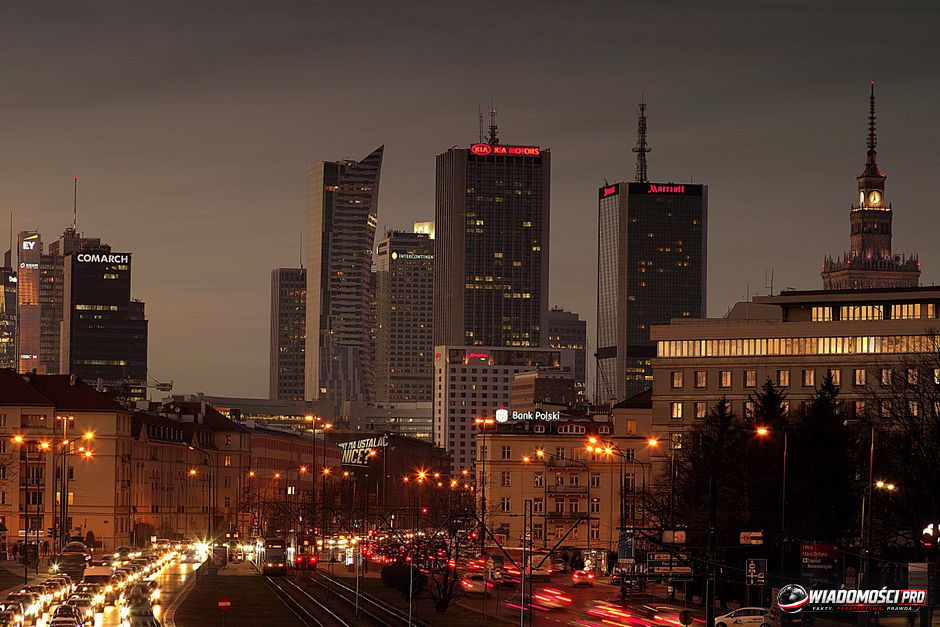
The Monetary Policy Council maintains a cautious approach, and economists forecast that the economy will reach the optimal interest rate level no sooner than the end of 2026. Policymakers on Świętokrzyska Street in Warsaw are prioritizing stability at the expense of a rapid reduction in the cost of money. The July 2026 meeting confirmed that arguments for maintaining rates at the current level outweigh the pressure for cuts.
The evolution of interest rates: from 5.75 percent to the challenges of 2026
The history of recent years in Polish monetary policy is a story of balancing the need to fight inflation with the desire to stimulate economic growth. November 2024 brought the decision to keep rates at 5.75 percent. At that time, the market treated this as a hardening of the stance intended to prevent the economy from overheating. Over the following months, Council members analyzed incoming macroeconomic data, weighing the risks associated with domestic consumption and price stability.
Autumn 2025 brought a change of course when the MPC decided to cut interest rates. This move, described in bank reports as the second autumn quarter-point cut, became a turning point for holders of variable-rate loans. It was believed at the time that this opened the way to a cycle of regular easing that would quickly reduce the debt burden on households. However, reality proved more demanding. Instead of a smooth transition to lower debt servicing costs, markets began to face new external variables that forced policymakers to slow the pace of their actions.
The Council's current strategy is the result of hard financial mathematics. Every decision to cut rates must be measured against inflation forecasts for the coming quarters. If the cost of money falls too quickly, there is a risk of reigniting price pressure. From the central bank's perspective, the priority is the permanent anchoring of inflation at the target set by the NBP. Therefore, 2026 is characterized by a defensive stance, in which every subsequent decision is preceded by months of observing the macroeconomic environment.
Geopolitics and the Polish zloty: why is the MPC restrained?
The Polish currency does not function in isolation from global conflicts. Members of the Monetary Policy Council are well aware that the stability of the zloty is one of the foundations of successful monetary policy. The influence of external factors on our currency became more noticeable in 2026 than ever before.
A key element influencing MPC decisions is the US-Iran relationship. Every escalation of tension in the Middle East triggers an immediate reaction in currency markets. Foreign capital, seeking safety, flows out of emerging markets—which include Poland—toward hard assets such as the dollar or gold. This situation causes the zloty to lose value, which directly translates into more expensive imports. As a result, inflation, which could be suppressed by lower rates, is fueled by a weak currency.
The Council does not want to risk a situation where overly rapid rate cuts would lead to a drastic weakening of the zloty. Such a scenario would mean rising prices for imported goods and, consequently, a return to higher inflation readings. From the perspective of MPC members, it is better to keep rates at a higher level, thereby protecting the purchasing power of money, than to undertake risky experiments that could destabilize the domestic financial market. It is this calculation that has made restraint a hallmark of the current term.
Forecasts and comparison: from optimism to realism
Comparing the sentiment of autumn 2025 to the state of mid-2026, a clear correction in expectations is visible. Back then, the market assumed that cuts would proceed on a quarterly basis. Today, we know that this path was interrupted by unforeseen external shocks.
Financial experts analyzing the Council's recent meetings unanimously admit that previous forecasting models required revision. In November 2025, after the announcement of cuts, rapid relief for the wallets of Poles was predicted. However, data from July 2026, indicating no change in the level of rates, show that the Council's priorities have shifted from actively stimulating the economy to maintaining the status quo.
A comparison of these two periods reveals a fundamental difference in risk management:
- November 2025: The MPC saw room for cuts, which was read as the beginning of the end of high loan costs.
- July 2026: The Council shifted to a defensive mode, reacting to geopolitical volatility and pressure on the zloty.
Economists in their latest reports indicate that the optimal interest rate level will be reached no sooner than the end of 2026. This means that the market must accept a long-term period of stabilization. All bets on rapid cuts in the third quarter of 2026 proved wrong because they did not account for the scale of tensions in the Middle East. Currently, forecasts suggest a "higher for longer" scenario, in which interest rates will remain at levels close to the current ones for the coming months. For investors, this means the need to revise portfolios, and for the banking sector—the stabilization of interest margins at a higher level.
The impact of MPC decisions on mortgage installments
For millions of Poles paying off mortgages, the decisions of the Monetary Policy Council are the most important indicator of the health of the household budget. In 2026, the situation of borrowers became a hostage to global uncertainty. Since the MPC is keeping interest rates unchanged, debt servicing costs are not showing a downward trend.
The mechanism is simple: the amount of an installment on a variable-rate loan depends directly on the level of WIBOR market rates, which in turn react to the Council's decisions. No change in the level of rates means that banks have no basis for lowering loan interest rates. As a result, those who counted on 2026 bringing significant relief must face the fact that their installments remain at their current high level.
It is worth noting that this situation is not equally painful for everyone. People with savings in bank deposits benefit from keeping rates at a high level, as banks still offer relatively attractive interest rates on deposits. However, the balance for borrowers is clear—the lack of a decision to loosen monetary policy means the necessity of further limiting consumer spending.
Risks for the Polish economy in the second half of the year
The second half of 2026 is marked by structural challenges. Beyond the geopolitical situation, the MPC must take into account wage dynamics and state budget expenditures. Each of these factors could force the Council to change its rhetoric at any moment.
The main threat to the cut scenario is the risk of the labor market overheating. If wage pressure remains at a high level, the MPC will have no arguments for lowering rates, even if the international situation improves. The Council must ensure that the growth in household income does not translate into too rapid a growth in demand, which in turn could trigger another wave of inflation.
An additional factor is fiscal policy. State spending on armaments and investments in energy infrastructure generates a significant demand impulse. The MPC must neutralize this through restrictive monetary policy. This makes the room for cuts even more limited. In this puzzle, every basis point of a rate cut is the subject of long discussions and disputes within the Council.
Unofficial voices from analytical circles suggest that if the situation in the Middle East does not calm down by October 2026, the chances of any changes in rate policy this year will drop almost to zero. The market must therefore prepare for a variant in which we close December 2026 with the same credit parameters that apply today. This is a painful scenario, but from the point of view of macroeconomic stability—a likely one.
What does this mean for you?
For the average Pole, the current situation means, above all, the need to maintain financial discipline. If you have a mortgage, the forecasts offer no hope for a quick improvement in financial liquidity through lower installments. The most reasonable strategy in the current conditions is to assume that loan costs will remain high for the coming months.
People planning new investments should take into account the cost of money, which will not fall quickly. It is also worth paying attention to bank offers regarding switching to a fixed interest rate if the current level of installments is too much of a burden on the household budget. On the other hand, for savers, the current period is an opportunity to build capital with still relatively high interest rates on deposit products.
The key lesson from 2026 is that monetary policy has become a tool of global protection. It is no longer just a matter of internal inflation indicators, but a reaction to shocks reaching us from distant markets. Understanding this mechanism allows for better anticipation of the Monetary Policy Council's moves and avoiding disappointment related to unrealistic expectations.
Questions and answers
Will interest rates fall sharply in 2026?
There is no chance of that. The process of adjusting the rate level is gradual, and economists unanimously predict that the economy will reach the optimal rate level only at the end of 2026, assuming the stabilization of the geopolitical situation.
How do MPC decisions directly affect mortgage installments?
MPC decisions shape the reference rate on which variable-rate loans depend. Maintaining rates at 5.75 percent (or lower depending on recent decisions) means there is no pressure to lower debt servicing costs for millions of Poles.
Why is the situation in Iran so significant for Polish interest rates?
Conflicts in the Middle East destabilize the zloty exchange rate and increase the risk of imported inflation. The MPC, in the interest of currency and price stability, must keep rates at a higher level to counteract the negative effects of currency fluctuations.
Can we expect changes in rate policy before the end of the year?
Everything depends on macroeconomic data and calm in international markets. Currently, forecasts point to a stabilization scenario, with any escalation of tensions on the international stage pushing the chances for cuts into subsequent quarters of 2027.
Who loses the most from the Monetary Policy Council's current strategy?
The most affected are borrowers with variable-rate obligations, for whom every decision to keep rates unchanged means freezing high debt servicing costs.
Can savers feel safe?
People with deposits and savings accounts in the current interest rate environment can count on stable profits, which for them acts as a counterweight to the high costs of credit in the economy.
What does the market expect from the MPC in the coming months?
The market expects, above all, clear communication. Investors need a clear signal whether the Council prefers to focus on fighting inflation or supporting growth, which in current conditions is mutually exclusive.
Will 2027 bring more freedom for cuts?
Much depends on how the Polish economy ends 2026. If inflation remains in check and the situation in the Middle East does not deteriorate, it can be estimated that in 2027 rates could fall at a pace of 25 basis points per quarter, which would be a noticeable relief for debtors.
Why doesn't the MPC react more aggressively to the slowdown?
The Council fears that aggressive cuts in the face of global instability would lead to capital flight from Poland, which would trigger a drastic drop in the zloty exchange rate and thus even higher inflation, which could not be controlled without drastic rate hikes in the future.
What is the main lesson for borrowers for the near future?
The most important lesson is to abandon the assumption of a quick return to the era of cheap money. A household budget strategy should be built on the assumption of maintaining current interest rates for at least the next few quarters.
Finally, it is worth emphasizing that the Polish financial market is in a phase of "hard landing" of expectations. While in previous years one could count on rapid cycles of cuts, the current year defines a new reality: caution is the currency we pay for the country's macroeconomic stability. For many households, this is a difficult time, but from the perspective of the stability of the zloty—a necessary one. Every subsequent decision of the Council will be analyzed through the prism of whether external risks still outweigh the benefits of lower costs of money. The market, although impatient, must adapt to this pace, because in the current international environment, haste in monetary policy could have the opposite effect to that intended, permanently striking at the foundations of the national economy. In this situation, patience ceases to be just advice and becomes a financial necessity for anyone managing debt or savings in Poland. It remains to wait for data from the autumn of 2026, which will be the first signals indicating whether the optimism regarding 2027 has any real basis in economic fundamentals, or whether it will remain merely a wishful thinking of the market.
Sources
- MPC keeps rates unchanged – will escalation in Iran bring hikes? (ANALYSIS) - Parkiet
- See what happens with your loan! MPC has made a decision - wGospodarce
- USA and Iran are at daggers drawn, and the MPC is not cutting rates. Zloty under pressure - INNPoland.pl
- Interest rate value September 2026. Forecasts and current information on interest rates in Poland - TotalMoney.pl
- The Monetary Policy Council cut interest rates in November 2025. This is the second autumn quarter-point cut - Bankier.pl
- Interest rate forecasts for 2026 - Direct Money
- The interest rate cut cycle continues, but it is too early to rejoice. Economist: "We will reach the optimal level no sooner than the end of 2026" - Forbes
- MPC interest rate decision is in. It is now known what happens next with loan installments - Business Insider Polska
Article prepared by the Wiadomości PRO editorial team with the support of artificial intelligence. Facts come from the sources listed above.



Komentarze (0)
Ładowanie komentarzy...