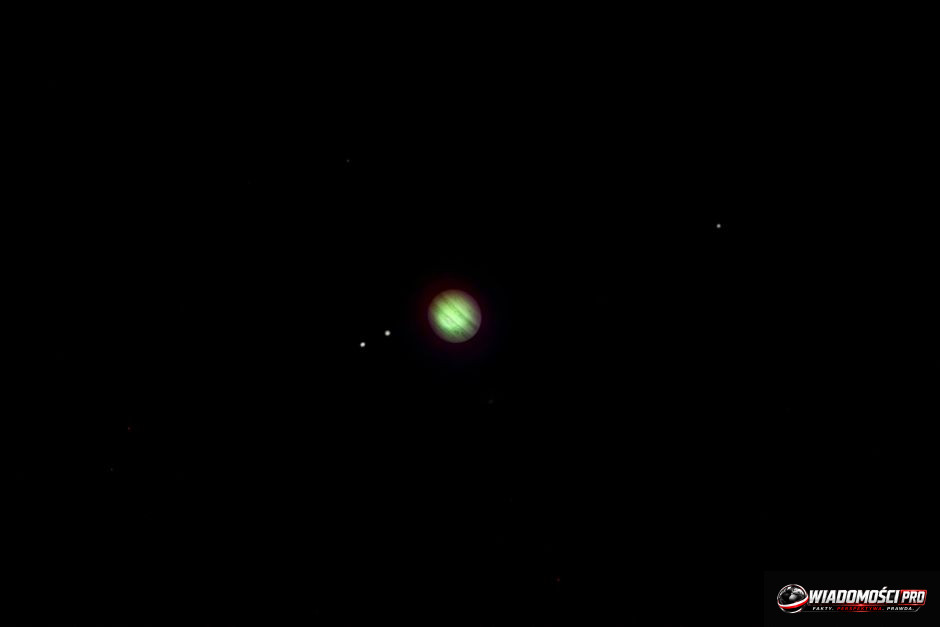
The NASA Europa Clipper mission costs approximately 5 billion dollars and is tasked with investigating whether conditions favorable to life exist beneath the icy shell of Jupiter's moon. The probe is verifying the presence of liquid water and the appropriate chemical ingredients necessary for the formation of organisms. This is the most advanced endeavor in the history of planetary system exploration, aimed at answering one of humanity's oldest questions: are we alone in the universe?
Delayed launch and logistical challenges of the mission
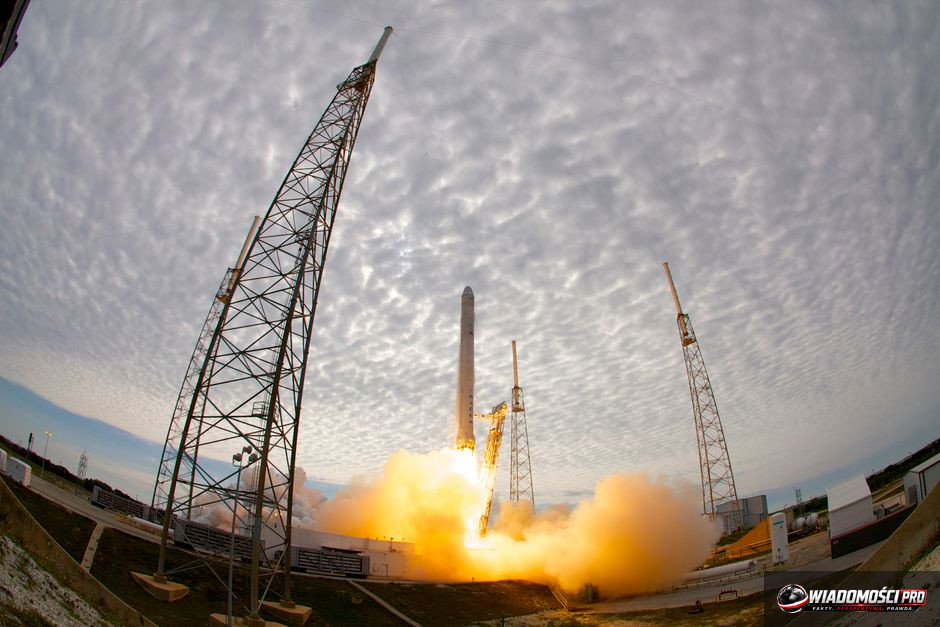
The launch of the probe, scheduled for October 2024, became a testing ground for the team led by Jordan Evans, project manager at the Jet Propulsion Laboratory. Hurricane Milton, which hit the Florida coast just before the planned date, forced engineers to evacuate and halt work at the Kennedy Space Center. For NASA, this was not just a matter of schedule, but of the safety of equipment worth billions of dollars. Postponing the launch by a few days, to October 14, required recalculating transfer windows, which are unforgiving in orbital mechanics.
The Falcon Heavy rocket carrying the probe had to launch at a precisely defined moment to utilize the gravitational assist of Earth and Mars. Any delay under such conditions risks losing the ideal trajectory. The technical team had to demonstrate almost surgical precision, checking the technical condition of the probe after it passed through strong winds and atmospheric pressure changes in the vicinity of the launch pad. The decision to launch on October 14 was the result of a risk analysis conducted by experts who determined that the probe's shielding systems were ready for the rigors of an interplanetary journey.
The logistics of this mission represent years of preparation. The probe, which weighed over 6 tons at the time of launch, is the largest device ever sent toward the outer Solar System. For it to even begin its journey, it was necessary to coordinate the work of thousands of subcontractors. Designing and assembling components that must survive decades in the extreme radiation conditions of Jupiter necessitated the use of materials that had not previously been used on such a wide scale.
Why is Europa the number one target for astrobiologists?
Europa, a moon of Jupiter, has intrigued scientists like Curt Niebur, the program's lead scientist, for decades. The surface of this globe is covered by a thick layer of ice that hides an ocean of liquid water. The volume of this reservoir could be twice as large as all of Earth's oceans combined. It is precisely the presence of water in a liquid state, heated by the tidal forces of Jupiter, that makes Europa the most important astrobiological target.
The probe's task is not to directly find living organisms. The probe is to conduct an inventory of chemical ingredients. Life as we know it is based on four pillars: water, an energy source, a stable environment, and elements such as carbon, hydrogen, nitrogen, oxygen, phosphorus, and sulfur. The onboard instruments have been designed to analyze the chemical composition of the ice and particles ejected from the surface into space. If the probe detects complex organic compounds combined with the appropriate salinity of the water, the evidence for potential habitability will become undeniable.
The biggest challenge for astrobiologists, however, is radiation. Jupiter possesses an extremely strong magnetic field that accelerates charged particles, which bombard the surface of Europa. This environment is lethal to electronics. The probe has therefore been equipped with a special vault made of titanium and aluminum, which protects the processors from degradation. Engineers had to balance the mass of the shields with the weight of the scientific instruments. Every gram matters, which is why only those devices that will provide the most critical data on the structure of the ice shell were chosen.
Studies indicate that Europa's ice shell may be 15 to 25 kilometers thick. Beneath it lies an ocean that could be up to 100 kilometers deep. The existence of active geological processes in this location, such as cryovolcanism, gives hope for the transport of minerals from the depths of the ocean to the surface, where the probe can examine them during its numerous flybys. The probe will not orbit Europa itself, because the strong radiation would destroy it within a few months. Instead, it will orbit Jupiter, performing nearly 50 close flybys of the moon over several years.
Course of the journey: success of the Mars test
In August 2025, the probe passed its first major test in deep space. During a flyby of Mars, engineers activated the full range of onboard instruments to calibrate the sensors under real-world conditions. This test confirmed that the communication, power, and measurement systems were working flawlessly. This success was crucial, as the distance from Earth is beginning to make signal transmission difficult, and the communication delay is becoming noticeable.
Mars was the first stop in the gravitational assist maneuvers. To reach the speed necessary to reach Jupiter, Europa Clipper must utilize the gravitational fields of planets. After Mars, the probe will head back toward Earth to use its pull for a second time, which will ultimately give it the necessary momentum toward the outer regions of the system. This complicated orbital dance allows for saving huge amounts of fuel that would otherwise have to be consumed by rocket propulsion.
During the flyby of Mars, the mission team from JPL monitored the status of the solar panels. Europa Clipper has some of the largest solar panels ever mounted on an interplanetary probe. They have a span of over 30 meters. In the vicinity of Jupiter, the intensity of sunlight is 25 times lower than near Earth, which is why such a huge active surface is necessary to power the instruments. Tests confirmed that despite the significant distance from the Sun, the panels provide enough energy to maintain all subsystems.
The operational success of August 6, 2025, confirmed NASA's belief that the choice of technology was correct. There were no failures in the key power blocks, and the navigation control software corrected the course with millimeter accuracy. This gives scientists confidence that upon reaching the Jupiter system in 2030, the probe will be fully functional and ready to begin the main phase of research.
Technical specifications of NASA's largest probe
The construction of the probe is a masterpiece of engineering. The launch mass of 6,000 kilograms includes not only fuel but, above all, a set of ten scientific instruments tasked with scanning Europa. Among them is the ice-penetrating radar REASON (Radar for Europa Assessment and Sounding: Ocean to Near-surface). It will allow for looking beneath the surface of the ice shell and creating a map of its internal structure.
Another significant element is the imaging spectrometer MISE (Mapping Imaging Spectrometer for Europa). It will study the chemical composition of the surface, searching for traces of salts, organic molecules, and other substances that may indicate an exchange of matter between the ocean and the surface. In turn, the EIS (Europa Imaging System) camera will take high-resolution photos that will allow geologists to understand the tectonic processes occurring on the moon. The probe also has a dust and plasma detector that will analyze particles striking the probe during flybys.
Bob Pappalardo, the project scientist, has repeatedly emphasized that Europa Clipper is not a mission searching directly for life, but a mission searching for a "habitable environment." This distinction is extremely important for assessing costs. A budget of 5 billion dollars includes not only the hardware itself but also the maintenance of a large research team that will analyze the streams of data flowing from Jupiter over the next decade.
The probe was designed with redundant systems in mind. In space, there is no possibility of maintenance, so every critical component has its backup. In the event of a main computer failure, the backup unit takes over. Such a design philosophy significantly increased costs, but minimizes the risk of losing the mission as a result of a single malfunction.
Competition for discoveries: NASA versus European agencies
The race for Europa does not take place in a vacuum. The European Space Agency (ESA) is carrying out its own mission called JUICE (Jupiter Icy Moons Explorer), which is also heading toward the Jupiter system. Although both missions have slightly different goals – JUICE will focus more on Ganymede, Callisto, and Europa as a whole, while Europa Clipper is dedicated exclusively to Europa – there is a natural competition over who will be the first to provide breakthrough data on subsurface oceans.
The Americans, by investing 5 billion dollars, have bet everything on one card. NASA wants to prove that their approach to exploring the outer Solar System is the most effective. International cooperation exists at the level of scientific data exchange, but at the technological level, we are observing a clear clash of two schools of space engineering. The instruments of the Europa Clipper probe are more specialized in studying surface chemistry, which gives the American mission an advantage in analyzing biological potential.
This competition translates into the pace of work. NASA, after the delays associated with Hurricane Milton, had to make up for lost time in the preparation phase for tests. The European JUICE mission, which launched earlier, is following its own schedule. Both agencies know that the world is watching them with huge expectations. The discovery of traces of life or conditions favorable to life on one of Jupiter's moons will be the greatest achievement in the history of modern science. This makes every engineering decision made by the teams in Pasadena analyzed in terms of maximizing the chances of success.
Schedule: what awaits us in the coming years?
The journey to Jupiter will take the probe several years. After the maneuvers at Mars and Earth, the probe will enter Jupiter's orbit in 2030. Then the most intensive stage of the mission will begin. The probe will perform flybys of Europa at intervals of several weeks. During each of them, the instruments will be turned on for a short time to avoid excessive exposure to radiation.
The data collected during these flybys will be sent to Earth using a high-gain antenna system. Due to the vast distance, the link bandwidth will be limited, which means that scientists will have to carefully prioritize the transmitted data packets. The first research results will be published in stages as the probe gathers further evidence of geological processes beneath the ice.
The schedule assumes that the mission will last at least four years from the moment of entering Jupiter's orbit. During this time, the probe will perform dozens of close flybys, approaching Europa's surface to as close as 25 kilometers. It is precisely at these moments that the sensors will have the chance for the most accurate measurement of the atmosphere and surface composition. If everything goes according to plan, by 2034 we will have the most detailed chemical map of Europa in history.
For the general public, the success of the mission will be measured by the quality of the photos and chemical discoveries. However, for scientists, the data from the REASON radar will be the most important. If it confirms the existence of "pockets" of liquid water inside the ice shell, it will mean that Europa is much more geologically active than previously thought. Every subsequent year after 2030 will bring us closer to the final verification of the hypothesis about extraterrestrial life.
What this means for you
The investment of 5 billion dollars in the Europa Clipper mission is an expense that, spread over the years of the project's duration, constitutes a small fraction of the defense budgets of the largest powers. For the average person, this means that in our generation, we may receive an answer to the question of whether we are the only civilization in this part of the galaxy. Even if the probe does not find traces of life, it will provide knowledge about planetary processes that may be key to understanding the evolution of Earth itself.
This research pushes the boundaries of what we understand by a "life environment." If life can exist in the dark, hidden-under-ice oceans of Europa, it means that there are many more potential places to inhabit in the universe than we ever assumed. The success of this mission will not only change biology and astronomy textbooks but will influence the philosophical perception of our place in the universe.
Questions and answers
Will Europa Clipper land on the surface of the moon?
No, the probe was designed as an orbiter that will perform multiple, close flybys of Europa, collecting data from a safe distance to avoid destruction by Jupiter's strong radiation.
How long will it take for the probe to reach Jupiter?
The probe will reach the Jupiter system in 2030, using a series of gravitational assists at Earth and Mars along the way, which will allow it to reach the appropriate speed with minimal fuel consumption.
Is the mission searching directly for life?
The mission is not designed to detect living organisms, but to study the conditions favorable to their formation and survival, such as the presence of liquid water, chemical energy, and essential elements beneath the ice shell.
Why was Europa chosen?
Europa has an ocean of liquid water beneath a thick layer of ice, which makes it one of the most promising places in the Solar System in terms of astrobiology, especially since Jupiter's tidal forces provide the energy necessary to keep this ocean in a liquid state.
What happens if the probe does not find evidence of habitability?
Even in the absence of confirmation of conditions for life, the mission will provide a huge amount of geological and chemical data about Europa, which will allow for a better understanding of the evolution of icy moons in our planetary system and the improvement of future research instruments.
Sources
- Start of the Europa Clipper mission to Europa - AstroNET – Polish Astronomical Portal
- Europa Clipper launches. A key task ahead - Geekweek Interia
- Europa Clipper probe performed a test, passing Mars - Science in Poland
- Europa Clipper probe will search for life on Europa - Urania - Polish Astronomical Portal
- Start of the Europa Clipper mission [TRANSMISSION]. Americans will outpace Europeans in the search for life on Europa - Wyborcza.pl
- Beginning of the Europa Clipper mission - Kosmonauta.net
- Europa Clipper probe will search for life on Jupiter's moon, Europa - Wszystko co najważniejsze
- Hurricane Milton delays the launch of NASA's largest space probe, Europa Clipper, to October 14 - Notebookcheck.pl
Article prepared by the Wiadomości PRO editorial team with the support of artificial intelligence. Facts come from the sources provided above.


Komentarze (0)
Ładowanie komentarzy...