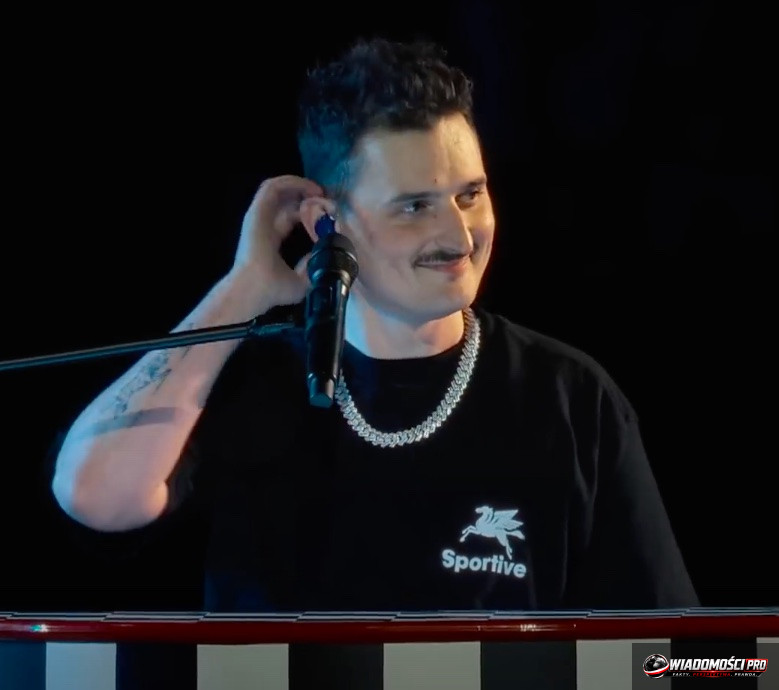
As part of his stadium tours, including the record-breaking "Obrotowy Tour 2026," Dawid Podsiadło visited seven major cities in Poland, including Chorzów, Gdańsk, Poznań, Warsaw, Wrocław, Kraków, and Szczecin. This list of locations forms the logistical foundation of his concert dominance in the domestic market, while simultaneously setting a ceiling for the sales potential of Polish artists. The scale of this undertaking is not a coincidence, but the result of a precisely designed mechanism that has transformed musical performances into mass events of unprecedented intensity.
The phenomenon of Podsiadło's stadium tours
The stadium era in Dawid Podsiadło's career began with a paradigm shift in how tours are planned. Instead of promoting subsequent albums through a series of concerts in smaller arenas, the artist decided to concentrate his efforts on the largest venues. Such a decision carries financial risk calculated in thousands of empty seats; however, in the case of the "Obrotowy Tour 2026," the profit and loss statement proved to be exceptionally favorable. The music industry noted this success as a benchmark for new logistical standards.
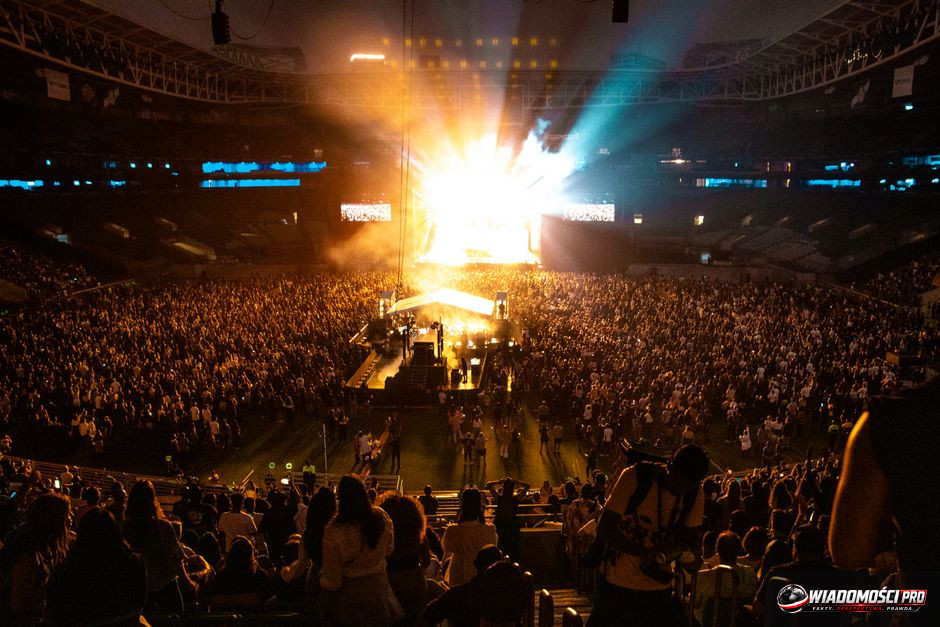
The basis of this model is the maximization of attendance while simultaneously limiting technical transport costs. Moving production to stadiums requires handling dozens of trucks with equipment, qualified technical crews, and precise crowd management. Each of the seven cities on the tour had to be prepared to host tens of thousands of spectators in a short time. From an organizer's point of view, the logistics of seven points on the map are more predictable than breaking a tour into twenty smaller venues, where the margin from each individual performance is drastically lower.
Podsiadło's success in 2026 was fueled by the skillful rationing of information regarding ticket availability. When the official sales results were announced on September 4, 2025, the market reacted with disbelief. Demand exceeded supply so sharply that it became necessary to launch additional dates. This was not merely a matter of the musician's popularity, but the effect of scarcity management. Fans, seeing sold-out stadiums, felt the pressure of time, which drove further sales.
From a statistical point of view, the "Obrotowy Tour 2026" became the largest concert operation of the year. Beyond the music itself, a key element here was marketing based on exclusivity. An artist who can fill the seven largest arenas in the country ceases to be just a performer and becomes a central point of the national entertainment industry. It is worth asking, however, where the limit of this model lies. Does the market in Poland have a sufficient number of high-capacity stadiums to support such a scale of operations in the long term? The sales data alone does not provide the answer to this question, as the mathematics of sold-out seats does not account for potential audience fatigue.
Schedule and locations: Analysis of the concert trail
The list of seven cities that hosted the "Obrotowy Tour 2026" reveals a strategy based on geographic reach. The choice of Chorzów, Gdańsk, Poznań, Warsaw, Wrocław, Kraków, and Szczecin allows for serving almost every region of Poland, minimizing the need for fans to travel long distances. Such a map of performances is the result of months of negotiations with stadium operators, who had to allocate appropriate time windows in their calendars for such a prestigious project.
Chorzów gained importance as the place where the artist decided on a historic expansion of the tour. The decision on December 5, 2025, to add a second concert date at the Silesian Stadium was a clear signal to the industry. It showed that even the most powerful venues in Poland might not be enough to satisfy the ambitions of listeners. From an operational perspective, adding a concert in the same place is the most effective form of revenue growth, as the cost of dismantling and transporting the set design is eliminated.
Gdańsk, with its high-standard stadium infrastructure, became the point connecting the "Obrotowy Tour 2026" with upcoming festival plans. The choice of this city confirms the role of the northern part of Poland as a key market for mass-scale events. Poznań, meanwhile, despite a smaller seating capacity compared to Chorzów, regularly achieves record sales results, making it a permanent point on every Podsiadło concert trail.
The remaining four locations – Warsaw, Wrocław, Kraków, and Szczecin – complete the logistical grid. Each of these cities has infrastructure allowing for the organization of events with a high degree of technical complexity. It is worth noting that organizing a stadium tour is not just about ticket sales, but also about managing the safety of thousands of people. The responsibility resting on the artist's staff in these seven locations is incomparable to organizing concerts in arenas or clubs. Any mistake in these centers could result not only in financial losses but also in the loss of a reputation built over years.
Success in numbers: Data from 2025–2026
An analysis of operational data from the "Obrotowy Tour 2026" allows for conclusions regarding the health of the Polish concert market. Sales information that reached the media at the turn of 2025 and 2026 indicates a drastic disparity between ticket supply and demand. On September 4, 2025, the moment the full sell-out of the tour was announced, it became clear that Dawid Podsiadło operates in a different league than most domestic creators.
Key operational data:
- Number of main stadium locations: 7.
- Date of announcement for the additional concert in Chorzów: December 5, 2025.
- Status of the tour in September 2025: complete sell-out.
- Date of the announcement of the Gdańsk "Zorza" project: February 25, 2025.
These numbers are not just statistics; they are proof of the professionalization of the artist's career. Each of the seven concerts required the involvement of hundreds of people, from security to technical stage support. It is worth noting that stadium production costs grow exponentially with every additional technological element added to the show. Podsiadło, deciding on such a scale, had to guarantee the highest visual quality, which, at ticket prices accessible to a mass audience, is an economic challenge.
However, the income from such sold-out tours is not the only indicator of success. The monetization of the artist's brand itself during the tour is also significant. The release of the "Mori" clip in December 2025, just before the announcement of additional concerts, was an element of a well-thought-out strategy to maintain interest. This is an example of synergy between audio-visual content and concert activity, which in Podsiadło's case works flawlessly. Skeptics may argue that such a scale is unsustainable, but the numbers from the "Obrotowy Tour" suggest that the ceiling has been moved much higher than industry analysts predicted.
"Zorza" Festival: A new chapter in his career
The transition from a stadium tour to an original festival is a natural step in the development of an artist with such an established position. "Zorza," the plans for which were announced in February 2025 in the context of Gdańsk, is not just another stop on the map. It is an attempt to take control of the full audience experience. Instead of renting a stadium for a few hours, the artist creates his own environment at the Muchowiec Airport in Katowice, where the next edition of the event will take place in 2027.
Choosing an airport as a festival site is a risky but logical decision. A stadium has its structural and acoustic limitations. An airport offers space that allows for much greater freedom in designing set pieces, catering zones, and entrance logistics. For fans, this means a change in the atmosphere of the event – from sitting in the stands toward a more raw, festival format. If the Katowice edition of "Zorza" is a success, it could mean that Podsiadło will permanently withdraw from traditional stadium tours in favor of his own original events.
Why is this important? Because a festival allows for greater artistic diversity. A stadium is usually one main performer and a possible support act. A festival is the curation of the entire line-up, which gives Podsiadło a tool to shape the musical tastes of his audience. It is also a way to become independent of stadium schedules, which are often occupied by football matches and other sporting events. Katowice, due to its central location and accessibility, is becoming an ideal hub for this type of venture.
Concert strategy: Why stadiums?
The transition from arenas to stadiums is not just a matter of prestige, but primarily of attendance mathematics. Dawid Podsiadło, by visiting seven major cities in Poland, filled a gap in the entertainment market. Previously, artists of this caliber were often forced to perform in smaller venues, which limited their reach. The stadium strategy allows for reaching a huge number of people at once, which, in today's pace of life, is the only opportunity for many fans to see the artist live.
The logistics of the "Obrotowy Tour" were optimized for maximum equipment utilization. Every element of the set design, from lighting to sound systems, had to be scalable. The choice of the seven largest centers – Chorzów, Gdańsk, Poznań, Warsaw, Wrocław, Kraków, and Szczecin – is the result of analyzing ticket sales data from previous years. The artist knew perfectly well where his music enjoyed the greatest interest, which allowed him to minimize the risk of poor attendance.
It is worth looking at this process through the eyes of an organizer. A stadium is a huge fixed cost. Renting the field, securing the area, preparing the facilities – all this costs millions of zlotys regardless of whether 5,000 or 50,000 people show up. Podsiadło, thanks to his popularity, shifts this cost onto attendance, which in his case is guaranteed. This is business calculation, which in the music industry is called professionalism, although for people outside the circle of fans, it may look like cold calculation.
However, the technical aspect cannot be ignored. Stadium sound is a challenge for every sound engineer. Large, open spaces generate echoes that can destroy even the best song. Investing in advanced sound systems, which were present during the "Obrotowy Tour 2026," is further proof that the artist did not skimp on quality. In the music industry, it is said that "the stadium verifies everything" – if the sound is poor, fans will feel it. Podsiadło passed this verification successfully, as confirmed by numerous technical reviews after the concerts.
Plans for the future: What after the 2026 tour?
The conclusion of the "Obrotowy Tour" in 2026 poses new challenges for the artist's staff. Maintaining such a high pace of work for subsequent years is physically and logistically exhausting. Dawid Podsiadło now faces the task of rebuilding his concert image so as not to fall into a routine. Organizing the "Zorza" 2027 festival at the Muchowiec Airport in Katowice is a clear signal that the artist is looking for freshness.
In the coming months, the key challenge for the team will be maintaining the balance between scale and authenticity. Fans expect closeness from Podsiadło, which is almost impossible with stadium-sized momentum. The festival format offers a chance for a certain change. Instead of one big show, the artist can offer an experience that extends over an entire day or weekend. This allows for more nuanced contact with the audience, which may prove to be a godsend in the face of potential stadium fatigue.
The music industry is watching closely to see how the situation in Katowice will develop. If the festival turns out to be a hit, Podsiadło will set another trend – this time in the direction of leading artists creating their own festival brands. Such a change could completely eliminate the need for traditional concert tours. Instead of traveling around Poland, the artist invites Poland to him. This is a model that the biggest names in the USA or Western Europe use, and now it is becoming a real option for the Polish market.
However, success does not exempt one from responsibility. The concert market in Poland is very sensitive to ticket prices. The "Obrotowy Tour" showed that fans are willing to pay a lot for a ticket, but only in exchange for quality. Every subsequent attempt to raise the bar will require even greater investments in technology and production. The question is, will fans be ready for further price increases in the face of rising costs of living? We will only know the answer to this question when tickets for "Zorza" go on sale in 2027.
What this means for you
Dawid Podsiadło's success is a signal that the Polish music market has matured to a global level. For the average fan, this means the opportunity to participate in spectacles that, in terms of production, do not differ from concerts by stars like Coldplay or Ed Sheeran. On the other hand, the mass nature of these events brings difficulties in obtaining tickets and the necessity of dealing with crowds, which for some listeners may be an insurmountable barrier.
For the cities where the concerts take place, Podsiadło's presence is a huge injection of cash for local catering, hospitality, and transport. The service sector records growth on these days that often exceeds standard forecasts. This is a phenomenon that local authorities are increasingly trying to use to promote their regions. The stadium era of Podsiadło is therefore changing not only the musical landscape but also the economic one of the largest Polish metropolises.
It is worth remembering, however, that behind every sold-out stadium lies risk. An artist who has reached the top once must stay there. The pressure to maintain quality is enormous, and every stumble can be exaggerated by social media. For fans, this means that every subsequent tour will be even more refined, but also more unpredictable in terms of ticket availability. Stadium concerts have ceased to be a simple job for a musician and have become a complicated mechanism in which every detail matters for the final reception by tens of thousands of people.
Questions and answers
In how many cities did Dawid Podsiadło perform as part of his stadium tours?
As part of his stadium tours, the artist visited seven major cities in Poland, including Chorzów, Gdańsk, Poznań, Warsaw, Wrocław, Kraków, and Szczecin.
Were there additional concerts held as part of the tour in 2026?
Yes, due to record interest in the "Obrotowy Tour 2026," the organizers decided to add more dates, including a second concert in Chorzów, which was confirmed in December 2025.
Where will the "Zorza" festival take place in 2027?
The next edition of the "Zorza" festival, which is Dawid Podsiadło's original project, is scheduled for 2027 at the Muchowiec Airport in Katowice.
What was the significance of the "Mori" clip in the context of the tour?
The publication of the "Mori" clip in December 2025 served to maintain fan interest and was an element of the campaign promoting additional stadium dates, which allowed for effectively managing the demand for tickets.
Why did the artist choose stadiums instead of arenas?
The choice of stadiums allowed for serving a larger number of fans while optimizing technical logistics, which, in the case of a tour as large as the "Obrotowy Tour 2026," was the most effective business model.
Did the sources provide ticket prices for the tour?
The available source materials do not contain detailed data on ticket prices, focusing mainly on the tour schedule, sales statistics, and festival plans.
What distinguishes the "Zorza" festival from stadium concerts?
The "Zorza" festival gives the artist greater independence in terms of shaping the line-up and the ability to use airport spaces, which allows for organizing events with different dynamics and scale than traditional stadium performances.
What was the role of the sales data in September 2025?
The data from September 4, 2025, was a turning point that confirmed that the demand for Podsiadło's concerts significantly exceeded the available supply, which forced the organizers to react quickly and expand the tour schedule.
Was the "Obrotowy Tour 2026" financially risky?
Yes, organizing stadium concerts involves high fixed costs; however, due to the artist's immense popularity, this risk was minimized through high attendance, which made the tour a commercial success.
What is the main goal of changing the strategy to a festival format?
The main goal is greater control over the quality of the audience experience and independence from the infrastructural limitations imposed by stadiums, which allows for the further development of his concert career in a more original direction.
Sources
- ZORZA 2027 Festival in Katowice – Dawid Podsiadło at Muchowiec Airport - Radio Piekary
- Dawid Podsiadło publishes concert clip "Mori". Announcement of the second stadium concert in Chorzów 2026 - Open FM
- Dawid Podsiadło sold out the "Obrotowy Tour 2026" in record time. The musician announced an additional concert! - Radio Eska ROCK
- Dawid Podsiadło is organizing a festival in Gdańsk. We know the details of "Zorza" - trojmiasto.eska.pl
- Dawid Podsiadło Obrotowy Tour 2026 – the biggest concert tour of the year - Kulturalne Media
- Dawid Podsiadło with great success. He had already made history before - kultura.onet.pl
- Popular artist in Poznań again. We know where and when - TVP Poznań
- Where will Dawid Podsiadło and sanah perform in 2025? - Rzeczpospolita
Article prepared by the Wiadomości PRO editorial team with the support of artificial intelligence. Facts come from the sources listed above.
Komentarze (0)
Ładowanie komentarzy...