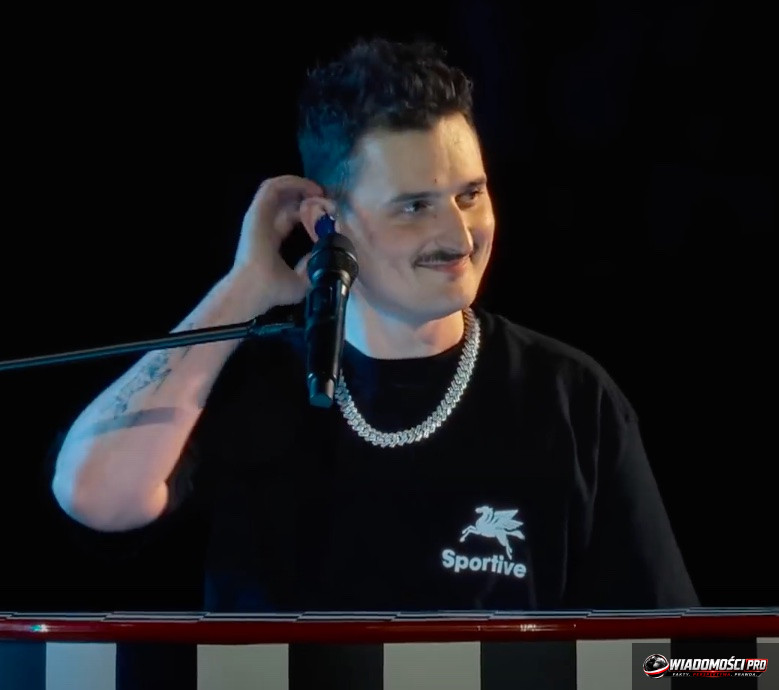
Dawid Podsiadło sold out all tickets for his stadium tour in 2024, gathering, among others, 90,000 people in Chorzów, and is currently continuing his success as part of the "Obrotowy Tour 2026". This achievement has permanently changed the architecture of the Polish concert market, shifting the focus of event organization from indoor arenas to open-air stadiums. The sell-out mechanism was based on a dynamic ticket pool control system, which allowed organizers to react immediately to demand by launching additional dates, as was the case with the Polsat Plus Arena Gdańsk.
The road to stadium dominance
In December 2023, the artist announced a seventh concert as part of his stadium cycle, commenting that he did not expect a more intense month in his life than June 2024. The market reacted to this demand in a way previously unseen in Polish popular music. The scale of interest forced promoters to open additional dates, which is an operation fraught with enormous logistical and financial risk in the event industry. Each additional concert requires securing infrastructure at a venue that, under normal conditions, is not adapted to hosting music events of such a large scale.
The concerts that filled stadiums in 2024 were not a matter of chance, but the result of a long-term strategy of building presence in the consciousness of the mass audience. Dawid Podsiadło ceased to be an artist associated with niche festivals or arena tours, becoming an economic entity capable of operating at venues with a capacity exceeding 50,000 seats. In June 2024, when 90,000 people appeared at the Silesian Stadium in Chorzów, the music industry in Poland had to admit that a new benchmark had been created. For comparison, most Polish artists are still struggling to fill venues holding 10,000-15,000 spectators.
Logistics of records: engineering challenges
Organizing an event for 90,000 people goes beyond artistic issues. It is an engineering operation that requires the involvement of a technical staff of several hundred people. A standard stadium tour of this scale involves the arrival of 40 to 60 trucks with equipment, which must be unloaded and assembled within a period not exceeding 72-96 hours before the show begins. The technical crew includes specialists in sound, lighting, visual systems, and crowd safety.
The challenges that the organizers had to face in Chorzów became a lesson for the entire industry. Sounding a stadium with such a vast surface area is a battle against the laws of physics. Sound reflections from concrete structures, signal delays in distant sectors, and the need to ensure vocal clarity mean that even the best equipment can fail if it is not correctly configured in an open space. Media reported on sound quality issues, which became a source of frustration for some of the audience. This is a clear signal that at a stadium scale, the quality of music reception becomes a scarce commodity that organizers must deal with.
In 2026, during the "Obrotowy Tour", these standards were put to the test in new locations. Each stadium has different acoustic characteristics, which forces technical teams to create individual sound maps for each concert. There is no room here for copying solutions from previous cities. Sound engineers must work with line-array systems, which require precise setting of speaker tilt angles to minimize the risk of unwanted wave phenomena in a crowd numbering tens of thousands of people.
Obrotowy Tour 2026: continuation of the strategy
The announcement of the "Obrotowy Tour 2026" on September 1, 2025, ended speculation regarding the artist's possible withdrawal from large venues. The decision to return to stadiums after the successes of 2024 was a move confirming that the foundation of Podsiadło's career is now a large-scale model. The industry watched this with great interest, analyzing whether the audience would feel oversaturated with the form of stadium spectacles.
Information about the tour published by websites such as Spider’s Web Rozrywka, Kultura Onet, or 4FUN.TV created an aura around the project as an event that cannot be missed. In 2026, the "Obrotowy Tour" is no longer an experiment, but a proven product. The artist maintains his position as a popularity leader, and his team manages the tour with corporate precision. From the editorial perspective, it is clear that Podsiadło has shifted the center of gravity of Polish pop. Currently, every subsequent concert tour of this artist becomes a benchmark for other Polish performers who aspire to enter stadiums.
However, these successes carry risks for the rest of the market. The monopolization of the largest venues by one artist limits the availability of stadiums for other events and absorbs fans' budgets that could have been spent on smaller concerts. This is a phenomenon that requires deeper economic analysis. Is the Polish market able to maintain such dynamics for the coming years, or are we approaching a saturation point where even the most popular name will begin to feel a decline in interest? For now, the numbers remain on the artist's side, and the attendance at this year's concerts confirms that the stadium mechanism is still working efficiently.
Technical cracks in the stadium monolith
The events in Chorzów in 2026, during which fans sang "Sto lat" to Maja Chwalińska, also show the more human side of these huge spectacles. Despite the technical shortcomings written about in the context of stadium acoustics, audience engagement remains at a record level. This is a sociological phenomenon. Fans accept technical difficulties in exchange for being part of the communal experience that Podsiadło's concerts have become.
However, organizers must remember that the audience's patience has its limits. Sound problems, if repeated, may over time affect the image of the concert brand. In the event industry, technical quality is a currency as important as the artist's charisma. The organizers of the "Obrotowy Tour 2026" certainly learned from the criticism that appeared after 2024, which can be seen in the increased attention to logistical details and communication with fans.
One cannot ignore the fact that at such a huge scale, every minor technical glitch is exaggerated by the media. This is the price one pays for being at the top. Dawid Podsiadło, playing for nearly one hundred thousand people, has become a hostage to his own success. Every next step must be taken flawlessly, and the audience's expectations grow with each subsequent sold-out tour. Is Polish stadium infrastructure ready to host even larger productions in the future? This is an open question, the answer to which we will likely learn during the artist's next projects.
Impact on the industry and the future of stadiums
The concert market in Poland in 2026 looks completely different than a decade ago. Podsiadło's successes prove that a Polish performer can be the main magnet for a stadium audience. This change forced promoters to professionalize their services. Companies handling the artist's tours had to invest in more modern sound systems capable of handling 90,000-strong crowds, which in turn raised the bar for the entire sector.
This impact is visible not only in technology but also in sales strategy. Dynamic systems, which were a novelty in 2024, have become a standard today. They allow for revenue optimization and better management of ticket traffic. Concert organizers in Gdańsk or Wrocław, who in the past had trouble filling venues, are now using the experience gained during Podsiadło's tours.
For the reader, this means one thing: the quality of spectacles is growing, but the costs of entering the market are as well. Smaller promoters, lacking the financial backing necessary to handle stadiums, must look for a niche, because competition with giants like Podsiadło is impossible. This is a natural process of consolidation that is progressing at a rapid pace in the Polish showbiz industry. The catch is whether, in the pursuit of the number of tickets sold, it will be possible to maintain the intimacy and quality of contact with the fan that was the foundation of the artist's early career.
Summary: maintaining the leader status
Dawid Podsiadło in 2026 is in a place that every pop artist strives for. His path, from local successes to stadium records, is analyzed by music marketing specialists as a model example of career building. Selling out the tour in 2024, including the record-breaking 90,000 people in Chorzów, was not the peak of his capabilities, but proof that the stadium is a natural place for his work.
Current activities as part of the "Obrotowy Tour 2026" confirm that interest in the artist is lasting. We are not dealing with a passing fad, but with a generational change in the way live music is consumed. Fans expect spectacles that are not just concerts, but full-scale multimedia shows. The artist delivers what the market needs, and stadium logistics become for him merely a tool for realizing an artistic vision.
Key takeaways from the tour:
- Podsiadło's stadium strategy has become a new operational standard for the Polish concert industry.
- The use of dynamic systems in ticket sales allows for effective demand management and maximization of attendance.
- Technical challenges, such as sound reinforcement for open spaces, are the price paid for the massiveness of the spectacles.
- Maintaining a leadership position requires the artist and his staff to continuously improve logistics to prevent a decline in the quality of audience reception.
What happened in June 2024 became the foundation upon which Podsiadło's current position is built. The artist not only fills stadiums but sets standards that will apply in Polish music for years to come. The industry is carefully watching every next stop of the tour, wondering if after 2026 the artist will decide on another step towards an even larger scale, or if he will focus on the evolution of the concert form.
What this means for you
Dawid Podsiadło's success is a signal to the market that the Polish listener is ready for world-class spectacles. You, as a fan, gain by receiving a show that does not need to be compared to foreign productions. Cities gain, as they receive promotion and revenue from event tourism thanks to concert tours. The catch is that at such a large scale, technical quality can be uneven. As a listener, you have the right to demand more – not only from the artist but above all from the companies responsible for acoustics in stadiums. It depends on your opinions and attendance whether standards will continue to rise, or whether organizers will rest on their laurels, counting on the artist's name to sell the ticket on its own.
Questions and answers
How many people took part in the concert in Chorzów?
90,000 fans took part in the concert in Chorzów.
When was the Obrotowy Tour 2026 announced?
The Obrotowy Tour 2026 was officially announced on September 1, 2025.
Were all tickets for the 2024 tour sold out?
Yes, Dawid Podsiadło sold out all tickets for his stadium concert tour in 2024.
What were the main technical problems during the 2024 concerts?
The main problem was the acoustics of the stadium venues, which was pointed out in media reports as a challenge in ensuring sound quality for every sector.
Do the artist's successes affect other Polish performers?
Yes, these successes raised the attendance and logistical bar for the entire Polish concert sector, changing audience expectations towards Polish stars.
How many trucks with equipment are usually needed to handle such a tour?
A standard stadium tour of this scale requires the involvement of 40 to 60 trucks with technical equipment, which shows the scale of the logistical undertaking.
Who was the first to report on the 2026 tour?
The first information about the "Obrotowy Tour 2026" appeared on September 1, 2025, on the Spider’s Web Rozrywka website.
Are more tours planned after 2026?
At this moment, there is no official information about concert plans after the end of the "Obrotowy Tour 2026", however, the artist's strategy to date indicates a high regularity of activities.
Did the organizers learn from the acoustic problems?
The experiences from 2024 became a lesson for the technical team, which can be seen in the greater attention to the configuration of sound systems at subsequent venues in 2026.
What significance did the announcement of the seventh concert in 2023 have for the artist?
It was a signal of unprecedented demand, which forced organizers to redefine plans and increase the scale of the tour in 2024.
Sources
- Nearly one hundred thousand Dawid Podsiadło fans sang "Sto lat" to her. How Maja Chwalińska reacted - cgm.pl
- Dawid Podsiadło and his stadiums. In numbers - Red Bull
- Dawid Podsiadło. Tickets sold out! There will be an additional concert at Polsat Plus Arena Gdańsk! - Gdańsk - official city portal
- Podsiadło put on a show in Chorzów for 90,000 people. It's a pity that half of them couldn't hear him - naTemat.pl
- Dawid Podsiadło returns to stadiums. He announced the Obrotowy Tour 2026 - Spider's Web Rozrywka
- Dawid Podsiadło announces seventh stadium concert on the tour! "I doubt that there will ever be a month in my life like June 2024" - Tarczyński Arena Wrocław
- Dawid Podsiadło returns to stadiums in 2026. Where and when will he play? - 4FUN.TV
- Dawid Podsiadło returns to stadiums. "Obrotowy Tour" in 2026 - Kultura Onet
Article prepared by the Wiadomości PRO editorial team with the support of artificial intelligence. Facts come from the sources listed above.


Komentarze (0)
Ładowanie komentarzy...