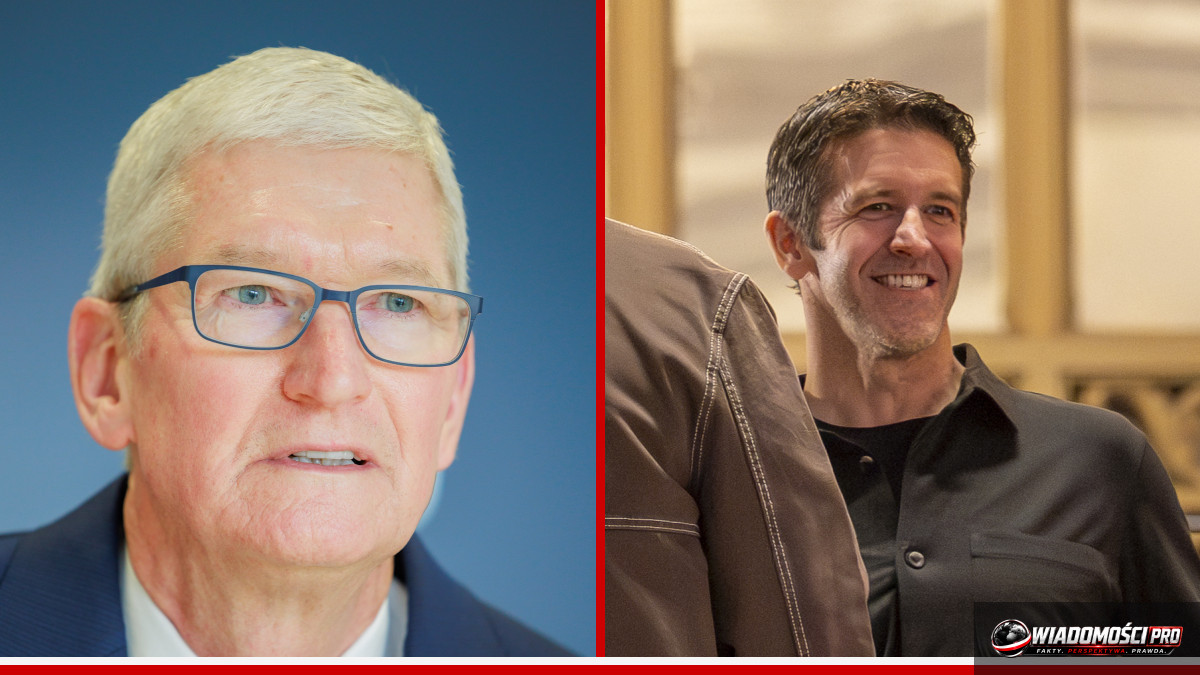
During Tim Cook's long tenure, Apple's value grew by 1000%, and John Ternus, known as the creator of the iPhone Air, took the helm of the company on September 1, 2026. This change concludes a succession process that began in April and electrified financial markets. Cupertino enters a new stage, bidding farewell to the architect who transformed a computer manufacturer into the most profitable corporation in history.
Tenure balance sheet: A decade of 1000% growth
Managing Apple under Tim Cook was not just about selling millions of devices. The foundation of success was the company's transformation from a hardware manufacturer into a subscription service provider. In 2011, Cook took over a company dominated by Steve Jobs' product engineering. His own contribution was creating an unrivaled supply chain and monetizing the user base through the services segment. It was thanks to iCloud, Apple Music, and App Store commissions that the company's margins ceased to be dependent solely on the launch of a new iPhone model.
For years, investors watched the Cupertino giant lock users into a so-called "golden cage." The ecosystem, in which a watch, tablet, and phone communicate flawlessly, created a barrier to entry impossible for the Android sector to break. Cook optimized operating costs to a level that previously seemed unattainable for a corporation of this scale. Every dollar invested in production was analyzed for return. This approach led to Apple becoming the most profitable machine in stock market history, generating billions of dollars in free cash flow every quarter.
The transition from a purely hardware model to an ecosystem-based model allowed the company to survive periods of smartphone market saturation. When device sales slowed down, services took over as the main engine of growth. Analysts note that it was this change in strategy that allowed for such a high market valuation. Cook proved that a technology company does not need to introduce a revolution every year to increase its value, as long as it has a loyal customer base willing to pay for digital conveniences. Ternus inherits this model, but must face the question of whether, in an era of market saturation, such a strategy will be enough for the coming decades.
John Ternus: Apple's new helmsman and father of the iPhone Air
John Ternus took the position of CEO at a time when Apple is facing the need to redefine its role in the world of mobile technology. His reputation as the lead engineer behind the iPhone Air is no coincidence. This device revolutionized consumer expectations regarding the thickness and weight of hardware, becoming a symbol of the company's technical perfection. Within the corporation, Ternus was recognized as a man who could combine design vision with brutal engineering constraints.
Choosing an engineer for the position of CEO is a clear signal to the market. Apple is suggesting that it does not intend to stop at the financial optimization associated with Cook. Ternus is tasked with breathing new life into the hardware division. His experience working on projects that pushed the boundaries of component physics gives him a unique perspective on what can be achieved in the labs in Cupertino. The team under his leadership is to focus on products that will not just be another iteration of current solutions, but a real shift in the technological frontier.
However, moving from being the head of the hardware division to being the face of an entire corporation is a challenge of a completely different scale. Ternus must now manage not only engineering processes but also a complex network of relationships with investors, regulators, and international markets. His career to date has been focused on the inside of the device; now he must focus on the external business environment. Will a man who spent his whole life drawing technical schematics find his way in the world of global economic policy? This is a question investors are looking for answers to in every quarterly report issued by the company.
Market reaction: How did the stock market take the changing of the guard?
The first stock market listings after the announcement of Ternus's nomination showed how deeply rooted uncertainty is among shareholders. Investors who for years treated Apple shares as a safe haven had to recalculate the risks associated with Cook's departure. The stability offered by the previous CEO was a cornerstone of the portfolios of many pension and investment funds around the world. The change at the top forces a revaluation of long-term strategies.
Investment funds that have built their positions over the years based on the predictability of Apple's financial results are approaching the management changes with great caution. Every quarter under Ternus's leadership will be analyzed through the prism of whether the new CEO can maintain the operating margin that the market has become accustomed to under Cook. If there are signs that investments in research and development of new hardware are eating into profits, the stock market may react nervously. Speculation regarding a potential price correction stems precisely from these fears about upsetting the balance between innovation and financial discipline.
For the individual investor, the situation is clear: Apple is entering a phase of testing its resilience. Is the brand strong enough to maintain its dominant position without its long-time leader? History teaches that the stock market rarely forgives mistakes, especially in companies with such large capitalization. Every move Ternus makes – from dividend policy to acquisition strategy – will be subjected to meticulous analysis. Current fluctuations in listings reflect the struggle between sentiment for the "Cook era" and the hope that a new engineer at the helm will bring a breath of fresh air that will allow the company to avoid stagnation.
Tim Cook's new role: Cooperation with Donald Trump
Tim Cook's departure from Apple does not mean his complete withdrawal from the public sphere. On the contrary, the former CEO has decided on a step that seems controversial to many observers in Silicon Valley. Cook's involvement in Donald Trump's administration is a signal that the former Apple CEO wants to take his experience in supply chain management to a higher level – the state level. This transition from the private to the political sector is a rare case of using technological expertise in the service of government administration.
This cooperation raises numerous questions about how the US approach to technological regulation will change. Cook, who for years had to maneuver between Apple's interests in China and Washington's expectations, possesses unique knowledge about global trade. His role in the Trump administration may focus on optimizing the country's industrial policy, which, in the face of rising trade tensions, could be crucial for American tech giants. This is not a typical retirement, but an attempt to influence the shape of the economy from a completely different position.
For Apple, this situation is a double-edged sword. On one hand, the company gains an informal ally in government circles, which may facilitate dialogue on antitrust or tariff issues. On the other, there is a risk of politicizing the brand. If the actions of the Trump administration involving Cook are perceived negatively by customers, it could affect Apple's image as a neutral company. Ternus will have to demonstrate great dexterity to maintain Apple's independence from the political actions of his predecessor. This is a challenge Cook never had to face in such a direct way during his work in Cupertino.
Challenges for the new CEO: What awaits Ternus?
John Ternus faces a task that goes beyond simple corporate management. His main challenge is to maintain high profitability of services while introducing products that will once again attract user attention. The market is saturated with devices, and the pace of innovation in the smartphone industry has slowed. Consumers no longer replace their phones every year, which forces Apple to change its business model. Ternus must decide whether the company should more aggressively enter new segments, such as augmented reality, or rather focus on deepening the integration of the current portfolio.
Another issue is margin management. Cook was a master of cost optimization. Ternus, as an engineer, may be inclined to invest more funds in the development of new technologies, which in the short term may lower profits. Investors will carefully watch whether these expenditures translate into real revenue growth. If Ternus's new vision proves too costly, the company may lose its status as a "money-making machine." Balancing technical vision with Wall Street expectations will be the main test of his leadership skills.
One cannot ignore the legal and regulatory issues in the European Union and the United States. Apple is under constant fire from regulators who question the company's practices regarding the App Store and its closed ecosystem. Ternus takes over the company at a time when pressure to open the platform is growing. He must find a golden mean between maintaining the integrity of the ecosystem and avoiding heavy financial penalties. This is a task that requires diplomatic skills, not just engineering ones. If he fails to handle this challenge, Cook's legacy could be quickly squandered.
The end of an era: Cook's legacy in Cupertino
The handover of the helm on September 1, 2026, is a caesura that definitively ends the stage of Apple's aggressive financial expansion. Under Cook's leadership, the company became a global hegemon, and its capitalization grew by 1000 percent. This is a result that has permanently written him into business history. However, this history is not just about financial successes. It is also a story about building an organizational culture that survived the death of its founder and was able to transform at the right moment.
The succession process, initiated on April 20, 2026, was prepared with extreme precision. Apple does not like surprises, which is why the change at the top took place in a way intended to reassure investors. Industry media, from Geekweek Interia to Rzeczpospolita, emphasized that the choice of Ternus was the most logical step for the board of directors. He was involved in the most important projects of recent years, which provided a guarantee of continuity of product vision.
Now, however, the situation is changing. Ternus is not Cook. He has a different approach to management and different priorities. Apple is entering a phase where it must prove that it can grow not only thanks to excellent logistics, but thanks to innovations that are ahead of the market. Will the new CEO's engineering pragmatism be enough to meet the demands of the modern consumer? We will know the answer to this question in the coming years, observing whether the company under his leadership will continue to set standards in the technology industry. Cook's legacy is a powerful foundation, but for Ternus, it is also a heavy burden.
What this means for you
As a consumer and user of Apple devices, this change should prompt you to watch upcoming launches. If Ternus focuses on hardware development, you can expect more radical changes in the design and functionality of iPhones or iPads. For shareholders, this means a period of increased uncertainty – the previous 1000% growth model was based on services and optimization, and the new era may bring higher engineering expenditures, which will affect dividends. The catch remains Cook's political involvement, which may affect how Apple is treated by the American government in the coming years.
Questions and answers
Who replaced Tim Cook as CEO of Apple?
The new CEO of Apple is John Ternus, who was previously responsible for key engineering projects, including the iPhone Air. The official handover took place on September 1, 2026.
Is Tim Cook retiring completely from professional life?
No, Tim Cook is taking on new professional challenges related to Donald Trump's administration, which is an unprecedented move for the former head of such a large technology corporation.
Why is the change of Apple's CEO being commented on so much in the stock markets?
The decision on succession is stirring emotions because investors are worried about maintaining the growth pace of a company that gained 1000% in market value under Cook. The market expects confirmation of whether the new CEO will maintain the profitability of services and Apple's dominant position.
What distinguishes John Ternus from other CEO candidates?
Ternus is an engineer, not a financier. His name is inextricably linked to the iPhone Air project, which suggests the company's return to a strong emphasis on hardware innovation.
Was the succession process at Apple sudden?
No, this process was initiated on April 20, 2026, which gave the markets time to prepare for the changing of the guard. Today's date is merely the operational conclusion of this process.
What challenges await the new CEO in the regulatory context?
Ternus must manage growing legal pressure from antitrust authorities in the EU and the US regarding the functioning of the App Store and the closed nature of the Apple ecosystem.
What was Tim Cook's role in building the current Apple?
Cook transformed Apple into a global profit-generating machine through supply chain optimization and the development of the subscription services segment, which allowed the company to become independent of the cyclicality of hardware sales.
Should investors fear the change in the CEO position?
Market reactions indicate caution. Investors are watching to see if Ternus can maintain the operating margins that his predecessor accustomed them to, and whether his vision for hardware development will prove financially effective.
Will Cook's political involvement affect Apple?
There is a risk that Cook's relations with the Trump administration could affect the perception of Apple as a neutral brand. Ternus will have to demonstrate great dexterity to maintain the company's independence from the former CEO's political actions.
What can be expected under Ternus's leadership?
One can expect a greater emphasis on engineering and the development of new hardware technologies, which may bring more innovative products, but also entails greater risk for short-term financial results.
Was the iPhone Air a decisive factor in Ternus's nomination?
Yes, his role as the architect of the iPhone Air allowed him to gain recognition in the eyes of the board of directors, who see him as a person capable of revitalizing the company's hardware division.
What is the new CEO's main goal for the coming months?
Ternus must prove to investors that his engineering vision is as profitable as the Cook era, while managing stock market expectations and regulatory challenges.
Will Apple change its services strategy?
This strategy remains the foundation of the company, however, Ternus will have to decide whether it should be further expanded or whether to focus on more aggressively introducing new hardware solutions within the ecosystem.
How did the media react to the news of the CEO change?
Publications in outlets such as Geekweek Interia, Press.pl, and Rzeczpospolita emphasized the significance of this change as the end of the era that began in 2011 and the need to redefine the giant's strategy in the face of a new decade.
Is Apple planning to move away from its current business model?
There is no official information about a change in the business model, however, the change in the CEO position suggests an evolution toward a greater emphasis on hardware technology, which may affect the company's investment priorities in the coming years.
Sources
- Apple has a new CEO. Tim Cook steps down, John Ternus takes the helm - Geekweek Interia
- Tim Cook steps down as Apple CEO! What awaits the giant's shares? - Comparic.pl
- Apple: Tim Cook steps down, John Ternus is the new CEO - Press.pl
- Revolution at Apple. Tim Cook steps down at the end of August 2026 - Rzeczpospolita
- Tim Cook steps down as Apple CEO after 1000% growth; John Ternus is his successor - Investing.com Poland: Currency rates, cryptocurrencies, stock quotes
- The end of the Tim Cook era. A big change at Apple - Money.pl
- Apple has a new CEO. The old CEO got a task related to Trump - Komputer Świat
- Tim Cook hands over the helm, creator of the iPhone Air is the new Apple CEO - iMagazine
Article prepared by the Wiadomości PRO editorial team with the support of artificial intelligence. Facts come from the sources listed above.
Komentarze (0)
Ładowanie komentarzy...