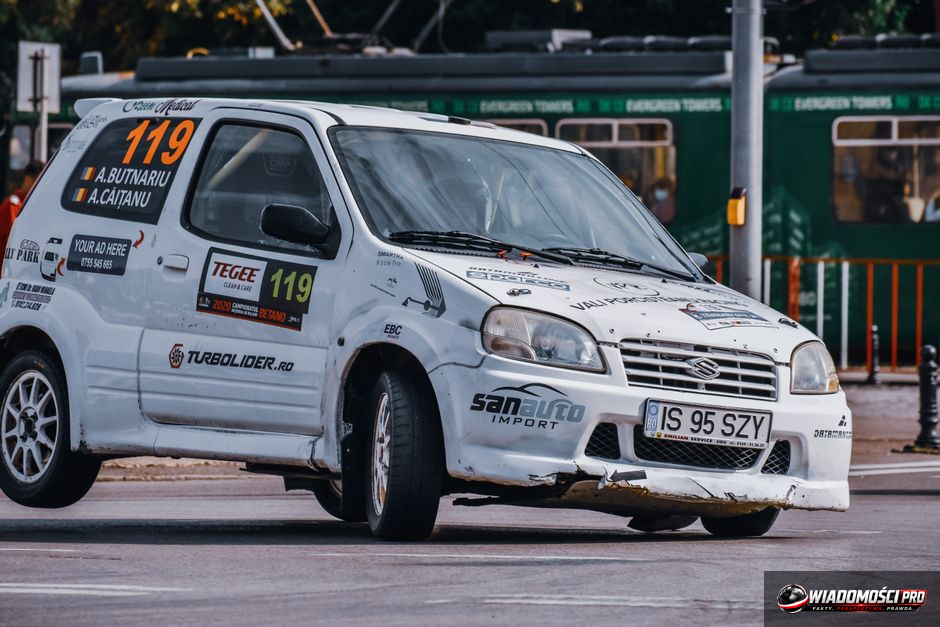
Young drivers will be subject to a new probationary period, and gross recklessness may result in a lifetime loss of driving privileges and a prison sentence. The regulations will come into force in 2026, tightening sanctions for the most serious traffic offenses. These changes represent a direct implementation of EU guidelines on road safety, ending a long-standing waiting period for stricter rules for novices, which had been repeatedly postponed by legislative bodies.
Probationary period: A new standard for novices
September 2026 marks a turning point in the Polish legal system regarding the issuance of driving licenses. Anyone who obtains a category B driving license after this date will automatically be subject to a two-year probationary period. According to the assumptions of the amendment to the Act on Vehicle Drivers, supervision over a new driver does not end at the moment of receiving the document. The system records all violations in real-time, which in practice means that the margin of error for a person with little experience is drastically smaller than for experienced road users.
In its assumptions for the project, the Ministry of Infrastructure points to statistics according to which drivers aged 18–24 are responsible for a disproportionately high number of fatal accidents. The probationary period mechanism assumes that during the first 24 months of holding a driving license, the driver is subject to stricter control regimes. Exceeding the penalty point limit or committing an offense classified as a gross safety violation results in an immediate referral to a re-education course or the mandatory revocation of driving privileges.
The implementation of these regulations stems from a broader EU plan aimed at reducing the number of road fatalities to zero over the coming decades. Poland, as a member of the community, has been obliged to harmonize its regulations with EU directives, which particularly emphasize the responsibility of those just entering the road traffic system. This is not merely an administrative change. It is, above all, a change in legal philosophy, in which a driving license ceases to be treated as an inalienable right of a citizen and becomes a conditional privilege.
Lifetime loss of privileges and prison sentences
The introduction of prison sentences for traffic offenses that were previously classified as misdemeanors shifts the center of gravity of responsibility toward the Penal Code. From September 2026, for acts such as participating in illegal street races or intentionally creating a danger of a disaster in land traffic, the perpetrator will not just receive a fine. The court will impose a prison sentence, and in the case of recidivism or gross recklessness, also a lifetime ban on driving motor vehicles.
Previous regulations, which came into force in stages, including the changes from September 10, 2024, paved the way for the current amendment. In publications from November 2025, Gazeta Prawna indicated that legislation is moving toward the absolute elimination from traffic of individuals who consciously ignore safety rules. Lifetime loss of privileges is no longer just a theoretical deterrent, but a real tool for the court, which, based on collected evidence, including recordings from urban monitoring systems, can permanently exclude a driver from participating in traffic.
Here is a summary of the most serious offenses and their assigned sanctions in the new legal system:
| Offense | Sanction (Probationary period) | Sanction (Experienced driver) |
| :--- | :--- | :--- |
| Participation in illegal races | Lifetime ban + prison | Lifetime ban + prison |
| Speeding by >50 km/h in a built-up area | Loss of privileges for 6 months | Loss of privileges for 3 months |
| Driving under the influence (>0.5‰) | Lifetime ban + prison | Lifetime ban + prison |
| Fleeing from police control | Lifetime ban + prison | Lifetime ban + prison |
| Causing an accident while under the influence | Lifetime ban + prison | Lifetime ban + prison |
The table above shows that the legislator has equalized responsibility in the most drastic cases. A young driver, entering the probationary period, is treated by the system with even greater severity in the case of recidivism. Any offense that would normally end in a fine can, during the probationary period, be the basis for a thorough analysis of the driver's behavior by supervisory bodies.
Prison for recklessness: A new definition of crime
The definition of recklessness in 2026 ceases to be a subjective concept and becomes a specific description of a prohibited act. The legislator specifies that recklessness is not only high speed, but also conscious ignoring of road signs, overtaking in prohibited places, and demonstrating a lack of elementary caution in dangerous situations. In light of the regulations that have come into force, the perpetrator of such an act becomes a criminal within the meaning of the Penal Code.
This change is a consequence of years of observing the behavior of drivers who, based on previous tariff schedules, calculated the profitability of risk. If the financial penalty was lower than the potential gain from fast driving, drivers chose recklessness. Now, when a real prison sentence is at stake, the economic calculation ceases to matter. The state has eliminated the loophole where one could "buy their way out" of responsibility for dangerous behavior on the road.
The tightening of regulations mentioned in media sources, including materials from June 2024, is a response to social pressure. Citizens expected that the justice system would not be lenient toward those who treat public roads like racetracks. From a legal perspective, shifting responsibility from the Code of Petty Offenses to the Penal Code is the strongest possible signal the state can send to citizens. It forces young drivers to maintain full attention from the very first kilometer behind the wheel.
The impact of EU directives on Polish regulations
The integration of Polish law with European Union requirements regarding road safety is a process that gained momentum after February 2024. Brussels guidelines, known as the "Zero Accidents" strategy, impose specific technical and legal frameworks on member states. Poland, by implementing these solutions in 2026, had to abandon many existing privileges that were treated as part of automotive culture.
A key element of the EU strategy is the unification of the examination system. It is not just about the difficulty of the theoretical or practical exam, but about the supervision system after obtaining the license. The European Union requires every country to have an early warning system for dangerous drivers. In Polish realities, this means full computerization of databases, where every speed camera ticket is immediately assigned to the driver's profile during the probationary period.
For a young driver who obtained a driving license in another member state, these rules may also apply when attempting to exchange the document for a Polish equivalent. The harmonization of regulations makes the penalty system predictable and uniform for all road users in Europe. This has eliminated so-called road tourism, where drivers hoped that in another country, the consequences of offenses would be less severe.
Schedule of changes in 2026
The process of implementing tightened regulations did not happen in a vacuum. It was the result of a series of amendments that began even before 2024. The first warning signal for drivers was the changes to the examination system on January 1, 2024, reported by Dziennik.pl. That was when a rigorous approach to errors during the practical exam was first introduced. The next step was the amendment of September 10, 2024, which organized the issues of penalty points and their cancellation.
The final shape of the regulations in force in 2026 is the result of all these processes. The Ministry of Infrastructure, after a series of social consultations and analyses conducted by driver training centers, decided to introduce provisions on the lifetime loss of privileges. Every candidate for a driver should be aware that the date of September 1, 2026, is the moment when Polish roads became an area of the highest legal discipline.
It is worth noting that driver training centers (WORD) had to adapt their curricula to the new requirements. Trainees no longer just learn maneuvers, but go through simulations of hazards that can lead to the loss of a driving license. This is a fundamental change in the approach to education. Examiners no longer check only technical skills, but also the predisposition for safe behavior in road traffic in a predictable manner.
How to avoid losing privileges during the probationary period?
Avoiding serious legal consequences during the probationary period requires a young driver to change their thinking about driving itself. It is no longer a matter of "mastering the machine," but a matter of "mastering one's own recklessness." Every maneuver, from overtaking to parking, must take place within the limits of the regulations, which in 2026 were designed to catch even minor offenses during the probationary period.
The basic rule is to avoid any conflicts with traffic law. During the first two years, a driver should not allow themselves to speed, even to a degree considered "acceptable" by more experienced drivers. The monitoring system, based on a network of speed cameras and section speed measurements, works flawlessly. Every violation is recorded in the central system, and subsequent penalty points bring the driver closer to a visit to the communications department to surrender their driving license.
Another issue is the technical condition of the vehicle. Many offenses that end in the retention of the registration certificate are automatically linked to the owner's data. A young driver moving in a car with faulty lighting or exceeded exhaust emissions also becomes a target for inspection. During the probationary period, such an inspection can end in a stricter penalty than in the case of an experienced driver, because it is treated as a manifestation of a lack of care for safety standards.
What this means for you
For every young driver entering adulthood behind the wheel in 2026, this means the necessity of full concentration. The state no longer offers a "grace period." Every movement on the road is recorded, and every decision to speed could be the last one that ends in the revocation of privileges. The gain for society is intended to be a drop in the number of accidents, but for the individual, it means a very high cost of entering the system.
Skeptics note that such a drastic tightening of regulations may lead to the phenomenon of "fleeing from responsibility." If the penalty for an offense is as severe as the penalty for a crime, a driver who makes a mistake may attempt to flee to avoid detection. This, in turn, increases the risk of accidents during police chases. Nevertheless, the legislator remains adamant, pointing to the necessity of protecting the lives of other road users as a value superior to the comfort of a young driver.
It should also be remembered that insurers in 2026 have fully integrated their systems with the CEPiK database. This means that every young driver who falls into the "traps" of the probationary period not only loses their driving license but also drastically increases their insurance premiums. The cost of owning a car thus becomes not only a matter of fuel but also of risk, which is priced by insurance algorithms. Every road incident, even if it does not end in the revocation of privileges, will be reflected in the driver's wallet for many years.
Questions and answers
From when exactly do the new rules for young drivers apply?
The regulations come into force on September 1, 2026, which is the result of the amendment to the Act on Vehicle Drivers, aimed at implementing EU safety standards.
Is there a lifetime loss of a driving license for every offense?
No, the lifetime loss of privileges is reserved for the most serious acts, such as participating in illegal races, driving under the influence of alcohol, or causing an accident while intoxicated.
Do the new regulations limit the right to participate in races?
Yes, participation in illegal street races is now treated as a crime, punishable by imprisonment and a lifetime ban on driving vehicles.
What does the probationary period entail?
The probationary period lasts two years from the date of issuance of the driving license and involves stricter supervision over the driver, which means that every serious offense during this time is treated more severely than in the case of drivers with more experience.
Does the change in regulations apply only to young drivers?
The tightening of penalties for recklessness and illegal races applies to all road users, however, young drivers in the probationary period are subject to additional, rigorous supervisory procedures.
What happens if a young driver commits an offense during the probationary period?
Depending on the severity of the offense, they may be referred to additional training, receive higher financial penalties, or in extreme cases, lose their driving privileges permanently.
The situation of young drivers in 2026 is unprecedented in the history of Polish motoring. While previous regulations were often criticized for their inconsistency, the current system is highly formalized. The legislator makes it clear that the era of leniency for "youthful recklessness" has come to an end. Anyone who decides to drive a vehicle must accept these rules of the game.
It should be emphasized that the effectiveness of these regulations will be verified by accident statistics in the years 2027–2028. If the data confirms that the system is airtight, further tightening of penalties can be expected in other areas, such as using phones while driving or ignoring traffic lights. The state, through these regulations, assumes the role of the ultimate arbiter of safety on the road, eliminating from it individuals incapable of adhering to social norms.
For future generations of drivers, the driving test will become only the first stage of competency verification. The real test will take place daily, in normal traffic conditions, under the watchful eye of a digital surveillance system. This is a new reality to which young Poles must get used to if they want to maintain the right to move independently using motor vehicles. It is also worth noting that the development of public transport and alternative methods of movement may in the future constitute a safer alternative for many people than risking the loss of privileges during the probationary period.
The added value of these changes is the potential reduction in healthcare costs associated with road accidents. Fewer victims mean less burdened hospitals and fewer family tragedies. From this point of view, the severity of the law finds its justification in the public interest. However, whether the price paid by young drivers – in the form of constant stress and the threat of losing life plans – is adequate to the achieved goal will remain a controversial issue in public debate for many years.
In summary, 2026 is the year in which young drivers must demonstrate the highest maturity. Lack of knowledge of regulations, recklessness, or ignorance of traffic rules will no longer be excused by "lack of experience." Every mistake will be considered in terms of guilt and punishment, which definitively closes the chapter of Polish motoring full of chaos and impunity. The challenge is huge, but the goals set by the law are clear: safety is the priority, and the price for violating it has never been higher. Every trainee taking the exam after September 2026 must be aware of these consequences, because from that moment on, every turn of the key in the ignition is an act of personal responsibility before the law.
Sources
- Driving test rules at the last minute - Rzeczpospolita
- New driving test rules. Changes already on January 1, 2024 - Dziennik.pl
- New regulations will hit young drivers. Better to get a driving license quickly - Interia Motoryzacja
- New regulations 2026: Lifetime loss of driving license, prison for recklessness, ban on racing - Gazeta Prawna
- You will lose your driving license for this offense. There will be new regulations - TVN24
- Big changes in driving licenses ahead. This is the European Union's plan - Forsal.pl
- Changes for drivers. New rules regarding driving licenses from September 10, 2024 - motofakty.pl
- Drivers will breathe a sigh of relief. New regulations from September 10 - Gazeta Prawna
Article prepared by the Wiadomości PRO editorial team with the support of artificial intelligence. Facts come from the sources listed above.

Komentarze (0)
Ładowanie komentarzy...