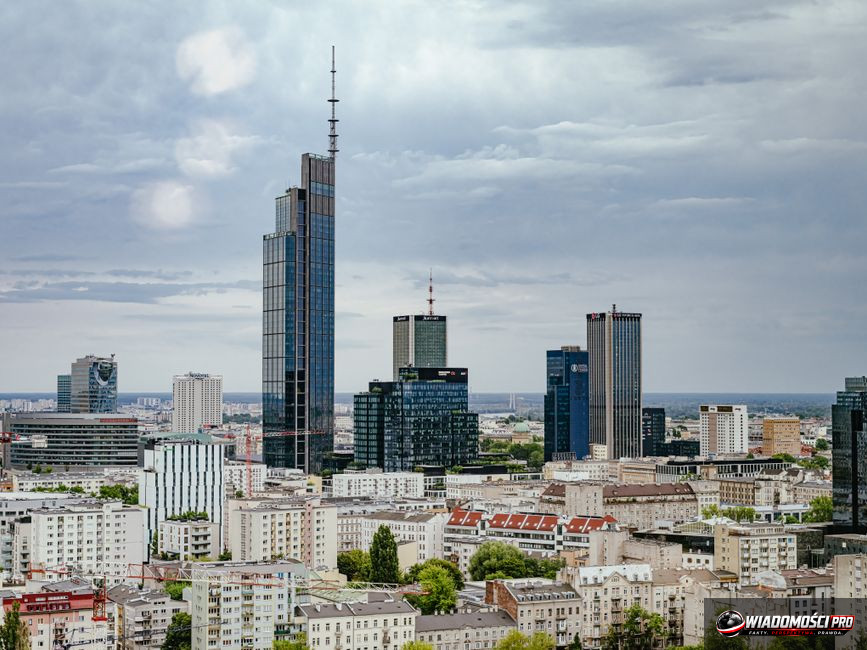
In July and August 2026, the MPC kept interest rates unchanged, reacting to geopolitical tensions between the USA and Iran, which are putting pressure on the zloty. The National Bank of Poland's main reference rate remained at 5.75 percent. This freezing of the cost of money is a direct result of concerns about further depreciation of the national currency, which, in the face of global unrest, is becoming a higher-risk asset for foreign investors.
The Monetary Policy Council's decision ends the period of hope for a quick return to a cycle of cuts, which seemed certain in the last quarter of 2025. Instead of further easing, we are dealing with tough crisis management. Members of the Council, observing the zloty's exchange rate and price dynamics in commodity markets, concluded that any interest rate cut under conditions of escalating conflict in the Middle East would be premature.
For the economy, this means the necessity of operating in an environment of relatively expensive capital. Maintaining the reference rate at 5.75 percent translates directly into the cost of debt servicing – both public and private. From the central bank's perspective, the priority remains stabilizing the exchange rate, which in Poland's case acts as a buffer for imported inflation. When the zloty loses value, the costs of purchasing energy and raw materials denominated in dollars rise, which automatically translates into prices in Polish stores.
Economists point to the transmission mechanism of these decisions. In a situation where the NBP decides on a pause, the debt market prices future rate paths with greater caution. Investors who, as recently as April 2026, assumed a scenario of quickly reaching lower interest rate levels, had to revise their portfolios. The lack of movement in July and August 2026 is a signal that the central bank is not comfortable with the current volatility of the USD/PLN pair.
The mechanics of 5.75 percent: Why the MPC cannot afford more
Maintaining interest rates at 5.75 percent is a decision resulting from the mathematical necessity of protecting the purchasing power of money. In November 2025, when the MPC made its second consecutive rate cut, the atmosphere in the financial sector was euphoric. Many analysts believed that the Polish economy had entered a phase of a permanent downward trend in loan costs. The reality of 2026, however, proved to be much more demanding.
The key problem is the so-called "pass-through," i.e., the degree to which changes in the exchange rate translate into the domestic CPI index. With current tensions between Washington and Tehran, any decision to cut rates would be read by the market as a sign of weakness. The valuation of the zloty could collapse drastically, which would trigger an immediate jump in inflation. The Monetary Policy Council, by choosing stabilization, is choosing the lesser evil: higher loan servicing costs in exchange for avoiding a devaluation spiral.
For a mortgage holder with a variable interest rate based on the WIBOR rate, the current situation is clear. Since the reference rate is 5.75 percent and the bank's margin remains constant, the installment amount will not move downward. It is worth remembering that as early as December 2025, despite rate cuts, some borrowers felt disappointed when their installments remained at a similar level. Now the situation is even more rigid. The lack of cuts in July and August 2026 means that for the coming months, household budgets will be burdened just as they were in the past half-year.
If we assume a standard mortgage of 400,000 zlotys taken out for 25 years, with an interest rate of about 8-9 percent (taking into account current margins and WIBOR), the installment oscillates in the range of 3000-3300 zlotys. Every 0.25 percentage point rate cut would mean savings of several dozen zlotys per month for such a borrower. Keeping rates at 5.75 percent means that this money remains in the bank, not in the consumer's wallet.
Geopolitical conditions and NBP decisions
The US-Iran conflict is not just a military or political matter. For the Polish central bank, it is a macroeconomic variable of the highest priority. Tensions in the Middle East traditionally cause capital flight to so-called safe havens, such as the US dollar or the Swiss franc. In this setup, emerging market currencies, which include the Polish zloty, lose their attractiveness.
In its communications from July and August 2026, the Monetary Policy Council places clear emphasis on the fact that external conditions are currently the main constraint on monetary policy. This is not just rhetoric. The NBP has limited tools to fight global uncertainty. If the market begins to sell off the zloty en masse, the only effective response – apart from currency interventions – remains maintaining high interest rates to increase the profitability of assets in the Polish currency and thereby curb capital outflow.
The wait-and-see strategy adopted by MPC members is correct from the point of view of orthodox monetary policy. Attempting to stimulate the economy at a time when the currency is under pressure could lead to a situation where inflation spirals out of control faster than forecasts assume. This is a systemic risk that no central bank wants to take. The zloty, although recently under pressure, remains stable in relation to major currency baskets only because investors see the NBP's determination to maintain the current level of the cost of money.
Economists' perspective: When will the breakthrough happen?
Skepticism about rapid changes currently dominates the analytical environment. As recently as April 2026, Direct Money forecasts suggested that 2026 would be a year of gradual easing. Today, these predictions are being updated toward a "higher for longer" scenario. Even Forbes analysts, who as early as November 2025 pointed to the end of 2026 as the moment to reach an optimal level, today emphasize that this threshold may be pushed further back.
An economist quoted in reports emphasized: "We will reach the optimal level at the earliest by the end of 2026, provided that external factors do not destabilize the foundations of the economy." These conditions were not met in July and August 2026. On the contrary – the geopolitical situation became more tense, which effectively blocked the path to cuts.
For the financial market, this means the necessity of a paradigm shift. Investors have stopped pricing in aggressive cuts in every subsequent quarter. Currently, the base scenario is to maintain rates at 5.75 percent until the end of the year, with a possible, very cautious downward correction only after the conflict in the Middle East subsides. This means that for the next few months, we will witness stabilization, not dynamic changes.
This approach is also a response to data on economic activity. Despite high loan costs, the Polish economy shows some resilience, which gives the Monetary Policy Council the comfort of maintaining a restrictive policy. If data from the real economy – such as retail sales or industrial production – began to fall sharply, the pressure on the NBP to loosen policy would be much greater. For now, however, these indicators remain in a zone that does not force the bank to take radical action.
What does this mean for the borrower in the second half of 2026?
July and August 2026 are a time when hopes for "cheap credit" have been shelved. Borrowers must come to terms with the fact that their installments will not fall in the near future. For many households, this means the necessity of maintaining budget discipline. If someone planned to gain additional funds in their household budget thanks to rate cuts, they must revise those plans.
It is worth remembering that the situation is not black and white. Maintaining rates at 5.75 percent also protects Poles' savings. People with bank deposits can count on maintaining interest rates on deposits at a level that partially compensates for price increases. In the world of finance, every decision has two sides of the coin. The borrower pays more, but the saver receives fair compensation for capital.
This situation forces Poles to take greater responsibility when planning obligations. In times when interest rates can change dynamically depending on events in distant corners of the world, the predictability of loan servicing costs becomes crucial. This is why loans with a periodically fixed interest rate are becoming increasingly popular, as they allow for the elimination of the risk of sudden installment spikes, even if they cost slightly more than variable-rate loans at the time of taking out the loan.
For people who already have loans based on WIBOR, the coming months will be a test of patience. There are no indications that the NBP will make a sharp downward move in the next meeting as long as the zloty exchange rate reacts to every dispatch from Tehran or Washington. Stabilization is currently the greatest value for the central bank, even if the price for this is a certain stagnation in loan costs.
Summary: What to expect from meetings at the end of the year?
The end of 2026 will be marked by the observation of two key indicators: CPI inflation and the zloty exchange rate. The Monetary Policy Council will not make a decision to cut rates until it is certain that the pressure on the Polish currency has subsided. This means that every subsequent decision will be preceded by a thorough analysis of the geopolitical situation.
Investors should prepare for the fact that communications from the NBP will be very subdued. One should not expect a "hawkish" or "dovish" turn, but rather the maintenance of the current, wait-and-see stance. The market will have to accept the fact that monetary policy in Poland is currently a hostage to events over which the NBP has no influence.
For the average citizen, this means a continuation of the costly status quo. Poles' wallets will remain under pressure, and loan installments will not undergo significant changes. The stability of rates at 5.75 percent is an anchor intended to prevent the Polish economy from drifting toward greater uncertainty. Is this approach enough to protect the country from the effects of a global crisis? This is a question the answer to which we will only know next year, when the dust settles in the Middle East.
It is worth adding, however, that in this complicated puzzle, there is always a margin for unexpected events. If there were a sudden and lasting de-escalation of the conflict, the space for cuts would open up almost immediately. The NBP is prepared for quick action, provided that macroeconomic parameters allow it. At this moment, however, caution remains the only rational strategy for the Polish central bank.
Questions and answers
Were interest rates changed in August 2026?
No, the Monetary Policy Council decided to keep interest rates at an unchanged level during its August 2026 meeting, with the reference rate at 5.75 percent.
Why is the MPC not cutting rates, even though there was a cycle of cuts earlier?
The main reason is the escalation of geopolitical tensions between the USA and Iran. This conflict destabilizes financial markets and puts strong pressure on the zloty exchange rate, which forces the NBP to take a defensive stance to avoid imported inflation.
When do experts expect the optimal interest rate level to be reached?
Economists' forecasts, including those cited by Forbes, pointed to the end of 2026 as a possible date for reaching the optimal level, but due to the current geopolitical situation, these dates are currently being revised toward more distant ones.
What does the MPC decision mean for people paying off mortgages?
Maintaining interest rates at 5.75 percent means no decrease in installments for loans based on variable interest rates. Borrowers must prepare for a continuation of current debt servicing costs in the coming months.
Does the NBP have room for maneuver regarding interest rates?
The room for maneuver is currently limited by the zloty exchange rate. Too-fast rate cuts could trigger a sell-off of the Polish currency, which would be unfavorable for price stability in Poland, which is why the central bank prefers to avoid sharp moves.
What factors will determine future MPC decisions?
Key factors will be CPI inflation data and the durability of the pressure on the zloty exchange rate. If the situation in the Middle East calms down, the NBP will be able to return to considering interest rate cuts to support the domestic economy.
Can one expect surprises in monetary policy this year?
In the world of finance, there is always a risk of variables that cannot be predicted, but the base scenario remains the stabilization of the cost of money. Every NBP decision will depend on the development of the international situation, which currently dominates domestic economic indicators.
Is the Polish zloty safe under current conditions?
The zloty shows resilience thanks to the NBP's determination to maintain high interest rates, which makes assets in the Polish currency more attractive than in the case of an aggressive rate cut, which could lead to a sudden weakening of the exchange rate.
What are the forecasts for the economy in the context of interest rates?
The economy shows some resilience to high loan costs, which allows the Monetary Policy Council to conduct a restrictive policy without the risk of a deep slowdown. Rate stability is seen as a safety fuse for the country's macroeconomic foundations.
Is it worth counting on installment cuts in the near future?
Taking into account current geopolitical conditions, experts advise against an overly optimistic approach to the issue of imminent cuts. Stabilization remains the dominant scenario, and any changes will be point-based and very cautious.
Why does the NBP not intervene directly in the currency market?
Currency interventions are a last resort. The central bank prefers to use interest rates as a tool for indirect influence on the exchange rate, as this is a more predictable and long-term solution for the economy than directly entering the market with capital.
Was November 2025 a breakthrough for interest rates?
November 2025 was significant because the MPC then began an easing cycle that raised hopes for quick cuts. The current situation in 2026, however, is completely different due to new geopolitical risks that have halted that positive trend.
Sources
- MPC keeps rates unchanged – will escalation in Iran bring hikes? (ANALYSIS) - Parkiet
- See what's happening with your loan! MPC has made a decision - wGospodarce
- Interest rate value August 2026. Forecasts and current information on interest rates in Poland - TotalMoney.pl
- USA and Iran are at daggers drawn, and the MPC is not cutting rates. Zloty under pressure - INNPoland.pl
- Interest rates down. Some loan installments won't budge - TVN24
- Monetary Policy Council cut interest rates in November 2025. This is the second autumn quarter - Bankier.pl
- Interest rate forecasts in 2026 - Direct Money
- Interest rate cut cycle continues, but it's too early for joy. Economist: "We will reach the optimal level at the earliest by the end of 2026" - Forbes
Article prepared by the Wiadomości PRO editorial team with the support of artificial intelligence. Facts come from the sources provided above.

Komentarze (0)
Ładowanie komentarzy...